/pic7908662.jpg)

























The Anarchy Deep Dive
What the Community Thinks About The Anarchy
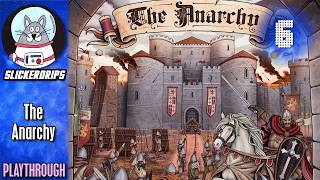
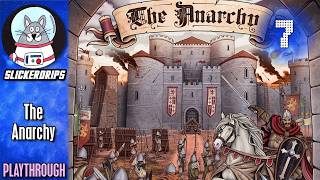
The Anarchy has captivated board game enthusiasts since its arrival as a spiritual successor to the critically acclaimed Hadrian's Wall. Designed by Shem Phillips and S.J. Macdonald and published by Garphill Games, the game has drawn keen interest from players who appreciate its mechanical depth and thematic immersion. Reviewers consistently praise its engaging asymmetrical gameplay and satisfying resource management systems, positioning it as a standout entry in the modern flip-and-write genre. Its reception reflects appreciation for a game that manages complexity without sacrificing accessibility.
Core Mechanics That Define The Anarchy
Resource Management and Combo Chaining
At its heart, The Anarchy operates as a sophisticated resource management puzzle wrapped in historical theming. Players spend and convert limited resources including workers (surfs, craftsmen, patrons, knights, and soldiers) and materials (food, wood, silver) through carefully planned actions. The real magic emerges when these resources chain together into cascading combos. Filling one track triggers bonuses that unlock new actions, which in turn generate additional resources needed elsewhere on the board. This interconnected system creates moments where players lean forward in discovery, spotting the perfect sequence that amplifies their progress. Each decision to spend resources on one track opens or closes opportunities on others, making every action consequential and rewarding.
Simultaneous Action Selection with Flip-and-Write Framework
The Anarchy employs a simultaneous action system where all players work independently on their own sheets during the action phase. Players gain income at the round's start, draft path cards that provide both starting resources and endgame objectives, then spend actions using their accumulated resources to advance various tracks. The flip-and-write mechanic means players mark boxes on their sheets to progress, crossing tracks for fortifications, production, and tactical development. Each marked box delivers immediate rewards while contributing toward larger scoring tracks. This streamlined approach keeps turns flowing smoothly, avoiding the downtime that plagues heavier games.
The Anarchy Experience
Building a Medieval War Economy
The thematic framework centers on 12th-century England's civil conflict between King Stephen and Empress Matilda. Players assume roles as Stephen's nobles, and their primary objectives involve defending castles from escalating attacks while simultaneously assaulting Matilda's fortresses. The game translates this historical backdrop into mechanical systems where attack defense requires building fortifications (walls, gates, towers, moats) and training military forces. Simultaneously, players advance through leadership tracks (governance, warcraft, worship, entertainment) that unlock buildings and abilities. The dual-sheet structure divides gameplay between immediate tactical defense and long-term economic strategy, creating satisfying layers of decision-making that mirror the complexity of medieval military administration.
Campaign Play and Spatial Defense Puzzles
The Anarchy distinguishes itself with a comprehensive solo campaign featuring 20 unique chapters, each with different setups and victory conditions. Rather than forcing solo players into multiplayer-designed mechanics, this campaign rewrites the game's rules for compelling single-player experiences. The spatial defense system adds another dimension to gameplay, where players position soldiers and knights on four quadrants of their castle board based on known and hidden attack patterns. Some attacks are face-up, revealing which portions of the castle are targeted, while others remain hidden unless players spend resources on spies to gather intelligence. This tactical layer demands both long-term planning and moment-to-moment problem-solving.
What Makes The Anarchy Stand Out
Strategic Variety and Replayability
The game supports multiple winning approaches, encouraging experimentation across sessions. Players can prioritize wall building and structural defense, develop elite military forces, or specialize in specific tactical advantages. The path card drafting system ensures no two games follow identical progressions, as the five endgame objectives shift each session. Variable difficulty settings and the extensive solo campaign transform The Anarchy from a single experience into a framework for hundreds of hours of engaged play. Reviewers note that the game feels fresh even after multiple plays because the interlock between different strategies remains deep enough to sustain genuine decision-making.
Satisfying Progression and Mechanical Polish
From the first round to the final round, players experience tangible progression. Early games involve filling scattered boxes on mostly empty sheets; by round five, those sheets bloom with interconnected systems firing in sequence. This escalating sense of mastery creates deeply rewarding turns where multiple tracks suddenly align. The dual-sheet design elegantly separates concerns: the left sheet focuses on defense and production, the right sheet on leadership advancement. This architecture prevents overwhelming cognitive load while preserving the game's richness.
Potential Drawbacks
Component Density and Cognitive Demand
The Anarchy presents visual intimidation despite its streamlined turn structure. Two massive sheets per player contain numerous tracks, symbols, and interconnections that demand careful attention. Newcomers may feel overwhelmed during their first session, even though the actual turn sequence proves straightforward once learned. The sheer number of available actions creates decision paralysis for some players, particularly those who enjoy games with fewer viable strategies. While tutorial videos and reference cards mitigate this issue, the game's complexity ceiling remains genuinely high.
Multiplayer Solitaire Nature and Limited Direct Interaction
The simultaneous action system means players rarely interact during the core gameplay phase. While this eliminates the painful downtime of sequential turn games, it also removes meaningful negotiation, blocking, or head-to-head tension. Players focused on their own puzzles may barely notice opponents' progress until scoring. Some reviewers acknowledge this as a feature rather than a bug, noting that the game honestly acknowledges its solitaire-friendly design through comprehensive solo content. However, players seeking rich player interaction or confrontational gameplay will find The Anarchy cold.
If You Enjoy The Anarchy
Players who love The Anarchy should explore Hadrian's Wall, its predecessor from Garphill Games, which shares the core flip-and-write loop but focuses on building defensive infrastructure rather than managing warfare. Twilight Inscription and Planet Unknown represent similar design philosophies, combining card drafting with simultaneous action and satisfying resource conversion chains. Carnegie offers comparable strategic depth with a different thematic wrapper. Those drawn to The Anarchy's medieval setting might consider Shem Phillips' other designs, which consistently explore historical periods through engaging mechanical systems.
What Reviewers Are Saying
"The Anarchy is an absolute banger. If you liked Hadrian's Wall, you got to try the Anarchy. It's better in every way. I think it's like the 2.0 level up from Hadrian's Wall."
— The Brothers Murph
"You start with just a few modest marks on your sheet, and by the end, it feels like you've built an empire with systems leading into each other, combos firing off like fireworks, and your wealth and power exploding in every direction."
— TheGameBoyGeek
"The Anarchy is incredible. I highly recommend checking it out. It's a satisfying engine-building game where every turn feels like it matters, and every choice pushes your engine just a little bit further."
— Totally Tabled