/pic5657331.jpg)














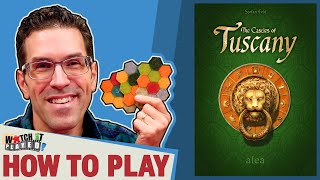






The Castles of Tuscany Deep Dive
What the Community Thinks About The Castles of Tuscany
The Castles of Tuscany occupies a unique position in board gaming: it is a lighter, faster spiritual successor to The Castles of Burgundy that simplifies some of that classic game's systems while introducing new strategic depth through its compound scoring track. Channels like Chairman of the Board and No Pun Included consistently praise its streamlined turn structure, quick play time, and accessible ruleset, even as they grapple with how it compares to its celebrated predecessor. The game has found an audience among both players seeking a gateway euro and experienced gamers who appreciate its elegant design.
Core Mechanics That Define The Castles of Tuscany
Tile Placement and Card-Driven Building
At its heart, The Castles of Tuscany is a tile-placement game where players draw hexagonal tiles and place them into their personal regions. The core innovation, from designer Stefan Feld, is the card system: each turn, players choose between drawing cards, taking a tile, or playing a tile. To place a tile, they spend two cards matching the tile's color, though they can also substitute cards in clever ways. This creates a constant tension between accumulating the right cards and seizing opportunities when desirable tiles appear in the market. The game typically plays in 45 minutes to an hour, making it refreshingly snappy compared to heavier alternatives.
Engine Building Through Tile Bonuses
Each tile type grants a different bonus when placed. Quarries produce marble, which allows an extra action; villages generate workers that act as wild cards for paying tile costs; monasteries draw additional cards; and other tiles reveal yield cards with various benefits. Red city tiles unlock bonus upgrades that amplify future production. This creates an engine-building layer where early choices cascade into powerful turns later in the game. Strategic players focus their efforts on specific tile colors and bonuses, building increasingly potent combos as the game progresses.
The Castles of Tuscany Experience
Quick and Satisfying Turns
Turn structure is remarkably clean. Each player simply draws cards, takes a tile from the common area, or places a tile from storage. There are no complicated phases, minimal bookkeeping, and turns resolve in moments, so downtime is virtually nonexistent. Players report that turns feel filled with excitement, whether they are triggering satisfying tile bonuses or orchestrating chain placements to complete multiple regions at once. Even the turns where a player simply draws cards carry a sprinkle of hope that they might draw exactly what they need.
Compound Scoring Creates Urgency
The game's most distinctive feature is its two-track scoring system. Players accumulate points on one track throughout each round, then transfer those points to a second track at the end of each round, leaving the first track in place to score again. This means points earned in round one count multiple times by game end, while points earned later count fewer times. The result is a game that rewards early aggression: players who score quickly create a compounding advantage that keeps the pace brisk and the tension high from the opening turn.
What Makes The Castles of Tuscany Stand Out
Accessibility Without Sacrifice
For a Stefan Feld game, The Castles of Tuscany is remarkably easy to teach. The core rules fit into a few minutes of explanation, yet the depth emerges naturally as players discover the interplay between tile bonuses, card management, and placement. This makes it an ideal bridge game for players easing into more complex euro-style design without feeling oversimplified for experienced gamers.
Generous Gameplay Rewards Participation
The game is exceptionally generous in how it makes players feel empowered. Almost every turn offers something good to do, and even if the market does not contain a tile you want, drawing cards or claiming a tile keeps you progressing. The bonuses fire frequently enough that players experience the satisfaction of triggering effects regularly, creating a steady stream of rewarding moments rather than long stretches of setup.
Potential Drawbacks
Runaway Leader Problem
The compound scoring system, while excellent at creating urgency, can produce situations where a player who reaches their scoring milestones early becomes difficult to catch. If one player establishes a strong lead by the second round, the final round may not provide enough room for others to mount a comeback, particularly when the score gap widens before the multiplier effects end.
Limited Endgame Novelty and Familiar Strategic Paths
After multiple plays, some reviewers noted that the strategic landscape begins to feel predictable. While different bonus tile selections create variation, the core approach remains relatively consistent: players tend to prioritize drawing cards early and competing for valuable tiles throughout. The absence of end-game scoring conditions or events that shift the meta means experienced players may gravitate toward similar strategies across plays, reducing long-term replayability.
If You Enjoy The Castles of Tuscany
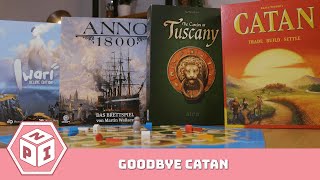
Players who love this game should explore The Castles of Burgundy, the original Feld design that shares much of its DNA but adds dice rolling and more complexity. Those seeking similar tile-placement with a different rhythm might investigate Carpe Diem or Notre Dame, two other mid-weight Stefan Feld titles. For a gentler, more accessible experience with set collection, Catan offers a familiar gateway, while players wanting more tactical territorial play should consider Iwari.
What Reviewers Are Saying
"Mechanically it's very smooth in terms of your actions. There's no scope for misinterpreting the rules here: draw the cards, take a tile, or place the tile, simple as that. Which is very nice, clean, and easy to explain."
— Chairman of the Board
"Ninety percent of your turns are filled with excitement, and the other ten are you just drawing cards, but even that has a sprinkle of hope, because you might just get the exact right thing you need."
— No Pun Included
"The Castles of Tuscany is an easier game to get to the table than Castles of Burgundy is, and it does a lot of really cool things. You feel overpowered when you get the right color tile and are able to chain that into a bunch of different things."
— All You Can Board