/pic1685805.jpg)
The year is AD 79. Pompeii, sitting at the foot of Vesuvius, is at the high point in its development. People come to the city from far and wide to try to make their luck in the city. So far nobody has dreamed of the danger that will bury all of their dreams under mountains of ash just ten years later. Who will survive the eruption of Vesuvius unscathed?
The simple rules make it easy to get started with The Downfall of Pompeii, a game in which a lot of tactical know-how is required – along with a little luck – in order to bring your pieces out of the city at the right time.
The game falls into two halves: before and after the eruption of Vesuvius. Before the eruption, players play cards to place their pieces in buildings. After the first eruption, they can also place as many relatives as the number of pieces already in the building they placed their piece in. When Omen cards are drawn, the player can take any opponent's piece and throw it into the erupting volcano. In this manner, players try to get as many pieces onto the board as close to the exits from the city as possible.
After the second eruption, the game changes. Now each player places a lava tile, which kills any pieces on that square and may block exits from the city. Then they move two pieces toward the exits, moving them a number of squares equal to the pieces on the square from which they started. The player who gets the most pieces out of the city wins.
•••
The 2013 second edition of The Downfall of Pompeii includes three dual vent tiles and a new "Dual Vent" variant.

- Did not make the current list
- Shakespeare
- Rococo
- Isle of Skye
Mechanics (from transcript analysis)
Video topics + discussion points
Quotes (from this video)
- It's just fun, lighthearted, dice rolling, points multiplying kind of game.
- And the fun thing is, is that you draft all these dice, you roll them, you get a bunch of stuff.
- One major way to get points is to get runs of dice.
- He just was like, I'm getting every bad hazard dice.
- It's great. Yeah, it's great. It's like Hartie's fun. It's it's a light game on the light side and yeah. It's good fun.
- I think it's just a light, silly, fun, dice rolling game that I just have always enjoying.
- It's barely, but it's an experience.
- You never know what I need to keep you interested.
- was a fun game.
- That was a great game.
- didn't make my list, but I've only played it once.
- Isla Sky didn't make the list and now I'm thinking, oh, man, I love Isla Sky.
- And Shakespeare is on the list.
- And Rococo, Shakespeare, Roco, Isle of Sky, the downfall of Pompeii, all these games, there's so many great games that I feel could have just been on the list that I just chose different ones this time, really.
- I like all these games. Obviously.
- I am not saying you will like them. I like them. But I don't know you.
References (from this video)

- fantastic game
- devious but it's light
Mechanics (from transcript analysis)
- placement and removal — described as placing people on the board in the first half and removing them in the second half
Video topics + discussion points
Quotes (from this video)
- i wish i knew castles of burgundy had a newer release
- it's an absolute cutthroat game
- it's devious but it's light
- oh yeah have a massive stack of battlestar galactica
- i know i haven't got tamsk but it's not technically part of the gift series but i still obviously still want it
- Vegas Showdown's a really good bidding game
- i did want to buy a copy of hero quest which i thought was really good for 20 quid when it was completely out of print and was never getting reprinted again
- i wish i could guarantee i liked that game before i bought it
References (from this video)
Mechanics (from transcript analysis)
Video topics + discussion points
Quotes (from this video)
- i'm a big fan of light games with hidden depth
- hidden gem
- learning the rules really really well because that makes everyone happier at the table
- the burden of owning the board games
References (from this video)

- Very chaotic.
- So much fun.
- Super fun game.
- volcanic eruption escape
- Pompeii
Mechanics (from transcript analysis)
- Area Placement — The cards you're going to be playing down are going to allow you to place out your people into the town into specific areas.
- Bag Building — Once they've moved their meeples, they will draw a volcano tile out of a bag.
- Hand Management — You have three cards in your hand at all time. And every time you play a card, you're going to draw cards.
- Movement — Players are going to be moving their meeples a certain amount of spaces based off of how many meuples are in the space that that mele's in.
Video topics + discussion points
Quotes (from this video)
- April was crazy when it came to board games.
- I played a ton of new to me games, which was so much fun.
- Leaf has always been a game that has really intrigued me because it has such a cool mechanism with these different leaves that you're going to be able to play a card that'll then get you a specific leaf shape.
- And overall, it's such a simple game, but it is just so lovely.
- I am obsessed with this game. I really want to play this one solo.
- If you enjoy games where you are bumping tracks, this game right here is the ultimate bumping tracks game.
- This is such a good game. I am in love with this game.
- It revolves around this seven bridge theory or concept where there are seven different bridges and you can only go over a bridge once.
- And this game is a one versus many where the one player and very cool part of this game is you play it in the pitch dark. So fun.
- It has a very sketched kind of art style to it, which I've always loved. And that game is just so beautiful.
- And during this game, we were all just being so chaotic and just ending the game just like very abruptly and people just like not being prepared for it and just being chaotic and it was just the funniest thing.
- And this game really messed with my brain.
- Can't get enough of it. It's my most played game of April.
- And this one I did a preview for. is a solo only game from Salt and Pepper Games where you are running a bakery or bake shop and you're trying to achieve these different um customers orders by first folding this piece of pastry which I think is such a unique part of the game.
- Three Sisters is one of my favorite Roland rights.
- I'm so sorry that I decided to do 10 games for this video. I will try for future months to only stick to five so these videos aren't too crazy long, but I just could not not talk about all these games cuz I just had a great month of gaming.
References (from this video)
- Creates tension through expanding hazards
- Dynamic board state changes
- Strong thematic gameplay
- Volcano eruption and survival
- Ancient Pompeii
- Thematic
- Survive: Escape from Atlantis
Mechanics (from transcript analysis)
- Tile Placement — Players add lava tiles to the board to block exits and trap other players' pieces, creating dynamic gameplay where the board changes throughout the game
- Tile placement/addition — Players add lava tiles to the board to block exits and trap other players' pieces, creating dynamic gameplay where the board changes throughout the game
Video topics + discussion points
Quotes (from this video)
- that sense of destruction sheer destruction of the playing space and you don't get that much in board games
- i think that's a really nice level of interaction in games because it's not mean spirited it's not vindictive but it still means you've got to constantly keep thinking
- i've got my own deck that alone is exciting and different to the vast majority of games that i had played in the past
- the deck is created as we play we're buying cards from a central pool
- everybody's got a bit of the same information a bit of different information and it makes the game really really intriguing
- everybody's running around a table shouting over each other trying to find the people with the same card
- i've played it with my german family and my english family who can't speak to each other because i don't speak the same language but they could all play happy salmon together
- everyone's got their own set of poker dice and they're rolling them all at the same time you're not having to wait for somebody else
- these are just the most fantastic little components that i've i've found in games i absolutely love them
- it takes six minutes to play which is three rounds of drawing one minutes each and three rounds of guessing one minute each
- it's so frustrating it just gets in the way it's not fun
References (from this video)
- Engaging two-phase structure that feels natural
- High drama and tension with engaging narrative
- Dark theme treated humorously rather than mean-spirited
- Clever transition between phases
- Smooth gameplay progression
- Dated production value looks like previous era of board games
- Uncertain availability due to Mayfair Games ceasing operations
- Could benefit from more lavish production
- Evacuation from natural disaster
- Ancient Pompeii during volcanic eruption
- Thematic with dark humor
- Carcassonne
Mechanics (from transcript analysis)
- Area Control — Placing lava tiles to block opponent exits
- Blocking/Area control — Placing lava tiles to block opponent exits
- Card Play — Playing cards to place people in city
- physical component interaction — Dropping blamed pieces into 3D volcano structure
- Two-phase game — First half: placing people; second half: escaping and blocking
Video topics + discussion points
Quotes (from this video)
- the artwork is is odd it's a bit ugly and so but in a really sort of cute way i i like it it's got a lot of personality
- there's a lot of drama a lot of tension in there but it's also abstracted that it doesn't feel dark and mean and nasty
- babylonia harks back to that older era where board games were trying to look serious and historical
- it's a strange game in that it's got two different games essentially you know you start out playing one thing and then it switches to something else about halfway through but that switch is not clunky it feels very natural
- ultimately this is a push your luck game uh which is a type of game that i really really enjoy
- the game looks odd it looks like a game for children it's got this weird cartoony artwork but the gameplay is not really like that at all
- this is one i frequently come back to okay a couple of times a year i'll i'll be looking for what should i play there we go if wishes were fishes
- it's really good it's it's hard to explain why it's good but it's really good
- i've talked previously about the fact that i like dice games that don't rely on the yahtzee mechanism and this is one of those
References (from this video)
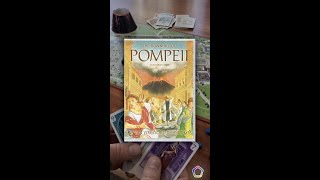
- Humorous tone that makes the game entertaining rather than grim
- Strong thematic alignment with Pompeii and volcanic eruption
- Beautiful visual components that evoke the period
- Clear separation between strategic placement and escape mechanics
- Reminiscent of classic games like Puerto Rico in component feel and card art
- Accessible weight that appeals to mid-weight euro players
- Engaging player interaction during the placement phase, with blocking and opportunistic moves
- High replayability due to variable card orders and lava tile draws
- Good pacing between planning and tension in the escape phase
- Luck elements in card draws can disrupt planned strategies
- Two-phase structure may feel repetitive for some players
- Flavor text and thematic narration could be stronger compared to heavier euros
- Disaster, survival, and urban planning under imminent catastrophe
- Ancient Pompeii on the eve of a volcanic eruption; players manage a population and a city under threat as lava threatens to swallow the streets; the two-phase structure mirrors planning and evacuation efforts.
- Lighthearted yet tense, with humor that comes from escalating lava and the frantic rescue attempts, framed by a strategic placement rhythm
- Pandemic
- Carcassonne
- Puerto Rico
Mechanics (from transcript analysis)
- Card-driven meeple placement — Players select and play cards that influence where they can place their meeples in the Pompeii map, creating tactical tension and blocking opportunities for rivals.
- Tile placement (lava flow) during eruption — Lava tiles are added in the second phase, gradually reshaping the board, threatening exposed meeples and forcing recalculation of escape routes.
- Two-phase play cycle with escape race — First phase emphasizes placement and risk distribution, second phase becomes a race to exit the city with lava blocks and trapped meeples being affected by lava flows.
Video topics + discussion points
Quotes (from this video)
- the downfall of pompeii is a competitive game
- it's basically like pandemic if you took away the cooperative aspect
- this is no less than entirely hilarious
- beautiful components are a trend
- these basic components will remind you of puerto rico and other classics
- for theme i give it a four
- the game is played in two phases
References (from this video)

- engaging volcano mechanic
- memorable theme and pacing
- older art style may feel dated
- not as widely available as newer designs
- hasty evacuation and population management
- Pompeii during volcanic eruption
- competitive but lighthearted
Mechanics (from transcript analysis)
- push-your-luck / take-that elements — lava flow decisions influence outcomes
- tile/area placement — placing people on cards and managing lava flow
Video topics + discussion points
Quotes (from this video)
- the artwork sold you
- it's the perfect game to teach people who don't play games
- volcano chits and lava flows
- it's like mafia
- the cards you mix them into a faction and now you have like ninja ghosts or like fairy dragons
References (from this video)

- Accessible tile-placement with a volcanic twist
- solid two-phase structure
- Not as widely recognized by later awards; may feel uneven to some players
- city-building under imminent disaster
- ancient Pompeii with volcanic eruption theme
- two-phase gameplay with strategic sacrifice of citizens to the volcano
- Carcassonne
- Tikal
Mechanics (from transcript analysis)
- Set Collection — building placements open different options and victory conditions
- set collection / resource management — building placements open different options and victory conditions
- Tile Placement — placing citizens in buildings opens up strategic options
- tile placement / area influence — placing citizens in buildings opens up strategic options
Video topics + discussion points
Quotes (from this video)
- it's a fantastic alternative to Scrabble
- it's not heavy on the awards
- a real simple introductory card drafting game
- this is a fantastic alternative to Scrabble
- the garden is home to an antagonistic Gardener and Panda
References (from this video)
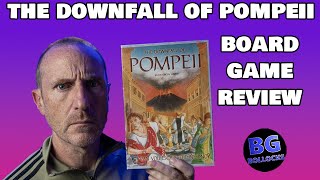
- Clear two-phase structure that links planning with execution in phase two
- Opportunity for take-that play that is balanced with strategy
- Relatives mechanic adds depth and strategic decisions
- Reasonable playtime (~45 minutes) with tight pacing
- Memorable thematic flavor without requiring minis or heavy components
- Aging aesthetics; looks outdated visually and could benefit from a modern reprint
- Can feel unfair if repeatedly targeted in phase two
- Omen cards feel somewhat random and may create imbalance
- Graphics and production values may disappoint modern gamers
- Disaster management and evacuation with take-that interactions
- Ancient Rome during the eruption of Mount Vesuvius, in Pompeii
- historical disaster scenario with Euro-style mechanics and humor
- Galaxy Trucker
Mechanics (from transcript analysis)
- Card-driven action selection — Play one card from your hand to place a citizen in a building and then redraw to four cards; card color and number influence building choice.
- Lava tile phase and escape — Six lava tiles are placed; in phase two, draw lava tiles and move two of your pieces per turn, aiming to escape via gates.
- Omen cards with targeted disruption — Omen cards allow removing an opponent's citizen or manipulating the board in various ways.
- Piece placement and building occupancy — Place citizens into buildings; if a building is already occupied, move relatives to other buildings, determining further options.
- Relative placement across color/neutral buildings — Relatives can be placed in same color buildings or neutral buildings; additional copies come from existing occupancy.
- Relatives economy — Relatives are earned when adding citizens to colored or neutral buildings, allowing reinforcement of occupancy across color blocks.
- Tile/Map Shifting — Six lava tiles are placed; in phase two, draw lava tiles and move two of your pieces per turn, aiming to escape via gates.
- Two-phase structure — Phase one builds the board state, then AD79 triggers phase two with lava tiles and movement.
- Variable Phase Order — Phase one builds the board state, then AD79 triggers phase two with lava tiles and movement.
- Wild cards and board intrusion — Wild cards let a player place a piece in any free space in any building regardless of color.
Video topics + discussion points
Quotes (from this video)
- Downfall of Pompei is worth your time and bother years after its release.
- This game fools you into thinking that the plans you make in the first half of the game will follow through in the second half.
- You get to be a bastard in this game, with take-that elements balanced by strategy.
- The two-phase structure lets you see your early plans come to fruition in phase two.
- Galaxy Trucker is a useful comparison: you plan ahead, then the board changes drastically with lava tiles.
- Life tends to be cyclical; perhaps simple games like this deserve their moment again.