

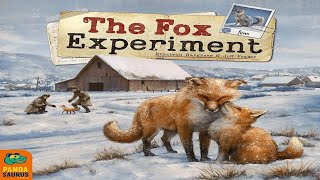
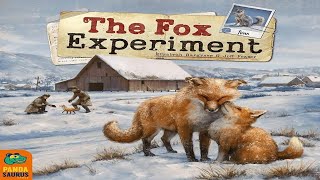












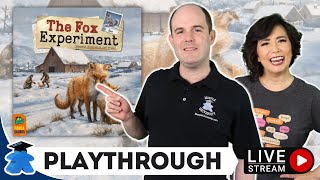
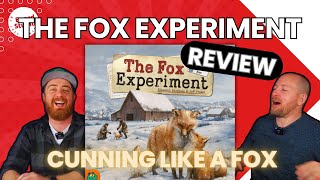






In 1958, Demitri Belyaev and Lyudmila Trut started an experiment on domestication. From a large group of foxes, they selected the ones that reacted to humans with more curiosity and less aggression. In each generation, they selected only the friendliest pups to become parents — hoping to recreate the process that originally led to domestication thousands of years ago. The experiment made stunning progress. Even though the foxes were chosen only for their friendliness, they soon started to get many of the physical traits that we associate with domesticated animals — like spots, floppy ears, and curly tails. As communication opened up, the foxes made major contributions to our understanding of how these traits are expressed. The experiment continues to this day.
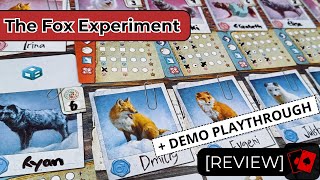
In The Fox Experiment, you’ll breed your own domesticated foxes. In each round you'll select a pair of fox parents who have certain traits. You'll gain those specific trait dice, roll them, then try to move them around to make complete trait symbols which you'll then mark off on your pup card. You'll then gain trait tokens depending on how many traits you marked off which you'll use to upgrade tracks on your personal player board.
At the end of the round, the previous generation of foxes will be cleared and all of the new pups will be moved to the kennel — thus becoming candidates to be chosen as parents in the next round. The game ends after 5 rounds and you'll gain points for pleasing patrons (end of game scoring bonuses), studies completed (personal player objectives), if you ever won the friendliest fox award, upgrades on your personal player board, and extra tokens. The player with the most points wins!
—description from the publisher
- Intriguing premise based on a real scientific experiment
- Beautiful production (Kickstarter edition)
- Engaging drafting and pacing with family play
- Luck-based elements (dice) can be frustrating
- Endgame fatigue if luck dominates
- friendliness traits and trait-driven scoring across generations
- A scientific breeding premise inspired by real fox domestication experiments in Russia
- dice-driven breeding with evolving scoring through generations
Mechanics (from transcript analysis)
- dice drafting / trait rolling — Different dice represent trait types; players roll to breed and select traits.
- generational drafting — Breeding successful foxes moves traits into a drafting pool for future generations.
- set collection / goal-oriented scoring — Players aim for trait sets that maximize points, with a focus on 'friendliest' traits.
Video topics + discussion points
Quotes (from this video)
- This is the only game that we like to fight about.
- The kids request it anytime we pull it off their shelves to play two-player, which is how we would prefer to play this game.
- It's brutal when you play four players.
- The premise is actually really interesting where it's based on an actual scientific experiment.
- It's not a real deep game, but it's still really enjoyable.
- Rolling Heights is sticking around for now.
References (from this video)
- engaging roll-and-write feel with thematic depth
- smooth, accessible rules and a crisp play flow
- vibrant production, strong art, and quality components
- broad audience appeal with solid two-player and solo variants
- clear escalation across generations that remains intuitive
- dice-based randomness can limit strategic mastery
- perceived ceiling on optimal play and long-term optimization
- board can appear busy even when the mechanics are straightforward
- domestication and genetic trait selection in fox populations
- Siberia, late 1950s, during a fox domestication study
- semi-scientific, documentary-inspired
- Wingspan
Mechanics (from transcript analysis)
- dice drafting and rolling — choose parental dice and roll them to generate offspring traits across generations
- Dice rolling — choose parental dice and roll them to generate offspring traits across generations
- end game bonuses — patron tokens/cards provide end-game scoring bonuses and strategic pathways
- end-game patron scoring — patron tokens/cards provide end-game scoring bonuses and strategic pathways
- Flip/Roll and Write — record outcomes on puppy cards and attribute them toward scoring and future generations
- generation-based escalation — as generations progress, more dice appear and scoring options expand
- genetic trait representation — dice colors correspond to genetic traits; offspring result is a combination of parent dice
- Roll-and-write progression — record outcomes on puppy cards and attribute them toward scoring and future generations
Video topics + discussion points
Quotes (from this video)
- This is a game about experiments on foxes
- The dice in this game represent various genetic traits
- there are some really interesting elements of roll and write
- it's a very good game
- there's a ceiling to how good you can get at it
- it's crisp there's not spare fat on this game
- it's fast 60 Minutes
References (from this video)
- Strong thematic authenticity rooted in nature and lineage, consistent with Elizabeth Hargrave's design philosophy
- Open drafting provides clear, engaging decisions and mitigates negative player interaction when a top option is taken
- Name-your-pups feature adds personality and personal investment in the board state
- Generational breeding creates a sense of progression and replay value
- Solid production values and accessible concept for lighter gamers and families
- Too streamlined for a heavier game; the core idea is not deeply integrated beyond basic mechanics
- Gatekeeping friction for new players due to multi-phase structure and verbose setup
- Solo mode becomes overly burdensome due to admin-heavy tasks and lengthy playtime
- Limited variety in upgrades and a relatively small decision space outside drafting and dice outcomes
- Breeding, lineage, and mutual interdependence across generations; a nature-forward theme expressed through card art and mechanics.
- Three generations of fox families in a natural ecosystem, with two parent foxes producing pups who become parents in the next generation.
- Thematic progression through family lineage; pups naming and evolving relationships provide a living narrative.
- Ticket to Ride
- King Domino
- Cascadia
- Wingspan
- Kazone
Mechanics (from transcript analysis)
- Breeding / pup generation — Two parent foxes are drafted to create a unique pup; in the next generation, those pups become the parents, establishing a lineage mechanic that links generations.
- dice-driven outcomes — A dice phase introduces variability and risk, with Wilds providing moments of high impact or strategic tension.
- open drafting — Three separate pools of cards/resources are available each round, and players must draft one item from each pool in sequence, creating tension and strategic choice.
- Solo-mode AI — In solo play, AI takes two of each option per turn, increasing administrative load and shifting the balance of tension toward bookkeeping.
- upgrades — Players acquire upgrade options to differentiate their play style and optimize future breeding outcomes; upgrades are limited but meaningful.
Video topics + discussion points
Quotes (from this video)
- it's a great theme the theme really comes through
- the core idea here of drafting two parent foxes and then using them to create a unique pup
- it's fantastic you really get to watch as the foxes get more and more friendly throughout the generations
- open drafting is handled the idea of having these three completely separate groups of things that you can draft
- it's extremely light you're drafting three things you're rolling dice with very little opportunities for manipulation
- the solo mode exasperates that problem
- I wish that the heart of the game this core mechanism of drafting two parents and making a unique pup I wish that that was handled just in a more interesting way
- I think I would have loved if they had taken the inspiration from the Rolling of the dice where you're already matching up half symbols together to make a full symbol
- standup moments I really wanted more gameplay and more innovation with the breeding phase
References (from this video)
- Accessible lighter euro with strong theme
- Beautiful art and production
- Unique blend of euro and roll-and-write flavor
- Dice randomness may affect outcomes
- Might be light for some euro fans
- Domestication, genetics, trait development
- Russia; domestication experiments across five generations
- Generational breeding with trait progression
- Wingspan
- Mariposas
Mechanics (from transcript analysis)
- dice drafting — Roll dice and place on a personal board to acquire fox traits.
- dice drafting / placement — Roll dice and place on a personal board to acquire fox traits.
- generational progression — Track five generations of foxes and evolving traits.
- set collection — Choose trait cards to influence breeding outcomes.
- trait acquisition / set collection — Choose trait cards to influence breeding outcomes.
Video topics + discussion points
Quotes (from this video)
- "The Fox Experiment is our most popular game of the weekend"
- "This released in September, just last month"
- "we've got a lot of new games that we brought this year"
- "Emergence is gorgeous table presence, a table runner board"
- "you could actually play with your whole family"
- "Localizing a lot of games, bringing a lot of games from the EU to the US"
- "we actually already have an expansion and development already too"
- "NARAKK and Far Away are lined up"
- "UK Games Expo next year? maybe"
References (from this video)
- innovative drafting mechanic that links past rounds to future dice
- family/offspring mechanic adds a unique, evolving puzzle
- complexity may require a couple of playthroughs to grok
- biology-inspired genetics with dice drafting
- fox-family genetics / breeding with offspring drafting
- playful, narrative naming of babies
Mechanics (from transcript analysis)
- dice drafting — parents generate offspring; dice determine gene placement and offspring babes that drive next round drafting
- roll-and-write with parent-offspring drafting — parents generate offspring; dice determine gene placement and offspring babes that drive next round drafting
Video topics + discussion points
Quotes (from this video)
- I really really enjoyed it
- I absolutely love this one I love the art of this one too and this one will definitely be one that I choose to bring traveling and stuff in the future. I really really like it
- I freaking loved it. I am so, so happy that I have it in the collection
- I absolutely love it and I'm excited to hop into those
- I love engine-building games
- I absolutely love the solo I've heard a ton of good things about the solo from a few of the people in the board game Garden solo community
- I think it's very cool that you can name the baby too; it just makes me very happy
References (from this video)
- Clear, instructional solo playthrough with in-game rule teaching
- Engaging blend of drafting, breeding, and dice-based resolution
- Strong thematic coherence around fox traits and study-based progression
- Rule depth can be intimidating for complete beginners
- Solo AI behavior may feel deterministic in some sequences
- scientific curiosity, ethics of experimentation, animal breeding
- 1950s-era domestication and ethical exploration of fox breeding in a fictionalized setting
- solo playthrough with on-screen narration and rule explanations
Mechanics (from transcript analysis)
- Breeding phase — AI-driven breeding of pups using the chosen foxes, with trait scoring and pup naming.
- Compound Scoring — Points come from pups’ trait achievement, tokens, study progress, and endgame bonuses.
- deck drafting / parent selection — Draft male and female foxes and place on the turn order track to shape the next generation.
- dice resolution — Wild dice determine trait outcomes; certain cards allow changing die faces or adding dice.
- kennel/administration phase — Reset and reposition pups and parents, advance generations, and prepare round-end scoring.
- patron tokens and upgrades — Tokens earned from round play can unlock upgrades or endgame scoring opportunities.
- scoring system — Points come from pups’ trait achievement, tokens, study progress, and endgame bonuses.
- study cards and tokens — Study cards set trait goals for pups and provide tokens that upgrade abilities or endgame scoring.
Video topics + discussion points
Quotes (from this video)
- we're breeding our own domesticated foxes over five generations
- after rolling a pup change one die to any face
- this is our setup complete we're ready to begin the game
- the four colors represent four traits that we want to see in our foxes
- this one says after rolling a pup change one die to any face
- we've got two brown tokens and one blue token
- the AI always does the breeding in the solo game
- and we end the game with 37 points
References (from this video)
- Clever dice-driven breeding model that feels natural and fast
- Simultaneous rolling accelerates decision-making and reduces downtime
- Drafting focus stays central to strategy, with upgrades providing meaningful choice
- Clear visual encoding of traits on cards helps players evaluate options quickly
- Dice luck can significantly influence early rounds, potentially skewing early momentum
- There is a non-trivial learning curve around trait notation and card wording
- End-game scoring and upgrade interactions may require careful tracking or reference cards
- Genetics, domestication, and trait expression
- A genetics-themed breeding table where players breed foxes across generations to optimize traits
- Procedural breeding simulation with trait-driven outcomes
Mechanics (from transcript analysis)
- dice drafting — The offspring generated become the pool from which players draft in the next phase.
- Dice rolling — Offspring trait outcomes are determined by rolling trait dice tied to parental traits; more pronounced traits yield more dice of that type.
- Dice Rolling for Traits — Offspring trait outcomes are determined by rolling trait dice tied to parental traits; more pronounced traits yield more dice of that type.
- drafting — Players draft from the previous generation or position in turn order each round, shaping future offspring quality and scoring opportunities.
- Trait-based Draft Pool — The offspring generated become the pool from which players draft in the next phase.
- Turn-based Pace with Simultaneous Components — Although turns exist, the dice rolls for trait generation are experienced in a shared, fast-paced manner to keep tempo brisk.
- Upgrades and Objectives — Players pursue upgrade options and complete objectives to influence end-game scoring.
Video topics + discussion points
Quotes (from this video)
- Rolling offspring traits from two parents feels natural because everyone does it at once.
- What makes the fox experiment shine is its clever use of dice to model breeding.
- The game stays quick, keeping strategy focused on drafting, upgrades, and objectives.
- Rolling feels deterministic enough to be satisfying, yet random enough to spark tension.
References (from this video)
- beautiful production with bright visuals
- unique color-genetics dice mechanic
- satisfying drafting/collection loop
- some players may find dice-driven design limiting
- weight is modest but can feel dense for new players
- genetics and breeding
- fox genetics lab/testing environment
- puzzle-like breeding optimization with evolving generations
Mechanics (from transcript analysis)
- card_or_token_placement — place genetics onto fox cards to build generations
- dice_mechanics — dice rolled to generate genetics that are drafted into your board
- end_game_point_structure — end-of-game scoring based on completed fox generations and genetics
Video topics + discussion points
Quotes (from this video)
- Darwin's Journey is my number one game of 2023
- Raising Robots is wonderful
- this is such a good game
- Barcelona is absolutely stunning and the chaining is satisfying
- Expeditions is not like Scythe
- the art project is absolutely fantastic
References (from this video)
- Engaging dice-chucking mechanic and satisfying engine-building
- Beautiful production with clear iconography and no text on the board
- Accessible rules, language-independent components, helpful reference card
- Occasional narrow decision space; some players might desire more path options
- Incest rule may be off-putting to some players
- Similar fox variants could reduce variety for some players
- Selective breeding and domesticating traits in foxes, exploring friendlessness and physical traits
- Wintry Russian town where scientists study domestication of foxes
- Educational, lighthearted, science-inspired
- Wingspan
- Dinosaur Island
- Race for the Galaxy
- Cascadia
Mechanics (from transcript analysis)
- dice based endgame scoring and patron interactions — Patrons provide end-game bonuses; upgrades create extra scoring opportunities.
- end game bonuses — Patrons provide end-game bonuses; upgrades create extra scoring opportunities.
- engine building — Personal boards track resources and upgrades unlock more foxes, dice, studies, and patrons.
- engine building via tracks and upgrades — Personal boards track resources and upgrades unlock more foxes, dice, studies, and patrons.
- open drafting / selection phase — Players simultaneously draft male/female fox parents or turn order for the next round.
- pup selection and kennel pool — New fox pups join kennels and become candidates for the next generation.
- set collection and scoring Studies/Patrons — End-game scoring through studies, patrons, and upgrade bonuses.
- trait dice driven breeding — Breeding phase yields trait dice that determine fox attributes and how traits accumulate into symbols.
Video topics + discussion points
Quotes (from this video)
- Fistfuls of dice.
- It's an absolutely fantastic game.
- Engine building dice chucking mechanisms.
- It's immediately accessible to a wide range of people.
- There's no spare fat on it.
- A generous game so open to a wide range of players.
References (from this video)
- Strong thematic integration with breeding and domestication concepts
- Engaging two-player mode with AI for asymmetrical play
- Clear upgrade ladder and multi-card scoring system
- Dynamic drafting and simultaneous scoring phases
- Color naming and token nomenclature (beige vs brown) can be confusing
- Rule complexity may be intimidating for new players
- Endgame bookkeeping can be meticulous
- Domestication and selective breeding of foxes to create friendly pups; performance over generations.
- Snowy northern environment; five generations of fox breeding starting around 1958 in a simulated lab/field study.
- Educational, experimental narrative that tracks progress through rounds, pup cards, and upgrades.
- Wingspan (board game by Elizabeth Hargrave)
Mechanics (from transcript analysis)
- breeding/pups — In each round's breeding phase players create pups by combining trait dice from their parent fox cards.
- drafting — Draft one male fox, one female fox, and a start position on the supply/turn-order track; AI participates as a drafting opponent.
- end-of-round / administration phase — Rounds end with cleanup, new pups added to display, and turn order tokens reset.
- patron cards and endgame scoring — Patrons provide endgame scoring criteria; players place fox meeples to claim scoring tracks.
- pup/trait tokens and upgrades — Trait tokens represent permanent upgrades; tokens are used to unlock improvements on the player boards and to influence endgame scoring.
- study cards and thresholds — Study cards provide thresholds that, when met by pups and traits, grant points at scoring.
Video topics + discussion points
Quotes (from this video)
- we are scientists trying to experiment and cross breed different foxes to see if we can domesticate them
- the game is played over the course of five rounds
- breeding phase we're going to breed our two parent foxes
- ties are friendly
- the AI isn't competing against us, they're just basically going to simulate another player
References (from this video)
- engaging theme tied to a real-world topic
- educational and entertaining
- heavy rule set for new players
- hidden details may slow teaching
- fox breeding and trait selection
- Genetic experiment in Siberia context
- scientific, experimental
Mechanics (from transcript analysis)
- trait selection/dice-driven growth — choose traits and outcomes for fox pups; progression via traits.
Video topics + discussion points
Quotes (from this video)
- blob party is one of those really interesting games where a single component really elevates the entire experience
- there's only nine rounds in this game you better figure out what you want to do
- Sea Salt and Paper... I love the form factor of the box it's so tiny
- Daybreak is a Cooperative uh game where players are leveraging current and future Technologies and policies to try to solve the problem of an ongoing and changing climate
- Thunder Road Vendetta ... racing game where you it's like you're just purposefully getting in each other's way basically
- it's a flip and right uh where the game has like these kind of it's like a network of transit systems
- my island is uh also sort of like a tile placing game where you're building out an island a deserted island
- Dune Imperium the deck-building plus worker placement game
- Nucleum is a real heavy game about an alternate reality where we discovered nuclear power way earlier
References (from this video)
- cute theme
- methodical gameplay
- excellent pup naming mechanic
- thematic breeding simulation
- breeding foxes based on historical experiment
- fox domestication
- methodical family building
Mechanics (from transcript analysis)
- breeding mechanics — selecting male/female fox and rolling dice for traits
- five round structure — phased rounds for clear progression
- trait collection — creating friendlier pups through trait management
Video topics + discussion points
Quotes (from this video)
- it's not just like how good is this game it's like how is our experience playing it
- a lot of these ranking lists people rank for different criteria mhm our criteria is primarily around fun fun and experience
- it might be my favorite polyomino game
- I love the theme I love that it's like this magical Library
- the mechanisms match the theme so well
- it gave me slay the Spire feel feelings
- my favorite solo button shy game ever
- chaos incarnate
- one of the best gaming experiences I've had this year
- if you love puzzles if you love those deduction style games like I think you'll love this
- I am a big fan of area control um and games that can do two-player area control well are very rare
References (from this video)
- Theme and mechanics align so well that you notice the theme rather than the mechanics.
- Smooth, fast gameplay with meaningful decisions at multiple stages.
- Excellent production quality and strong component upgrades (neoprene mats, etc.).
- Two-player games may rely on AI; some players dislike solo/AI variants.
- Fox breeding with trait emphasis; a light historical backdrop.
- 1950s fox breeding/domestication research.
- theme-forward with trait-driven progression.
- KBON
Mechanics (from transcript analysis)
- Dice drafting / rolling — Players select male and female foxes and roll dice to generate pup traits.
- Trait-based scoring — Pups acquire traits; scoring is tied to the traits and goals.
- Upgrade / progression — A personal board provides upgrade options that boost scoring and breeding.
Video topics + discussion points
Quotes (from this video)
- I freaking love this game
- highly recommend if you're looking for a holiday themed game
- it's oozing and dripping with theme
- I freaking loved it
- it's very simple
- I love set collection games
- this is a great little game