/pic4203279.png)
/pic3302748.png)
/pic5980577.png)
/pic5591143.png)
/pic4203279.png)













































The Game Deep Dive
What the Community Thinks About The Game
The Game stands as a cooperative puzzle that consistently captures reviewers' enthusiasm through repeated plays. Channels like Watch It Played and Before You Play describe a compact card game that players return to dozens of times, one that simply does not get old. Reviewers emphasize that The Game delivers fresh strategic tension on each session, despite its deceptively simple appearance and quick playtime.
Core Mechanics That Define The Game
The Four-Pile Challenge
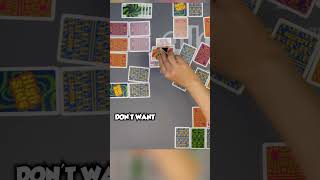
At its heart, The Game, designed by Steffen Benndorf, revolves around a numbered deck spanning 2 to 99. Players cooperatively work to play every card onto four piles in the center of the table. Two piles build upward in value from 1, and two build downward from 100. On each turn, players must play at least two cards to these ascending or descending stacks. Victory comes only by emptying the entire deck before any player becomes unable to play the required minimum. The moment someone cannot legally place cards on a turn, the cooperative effort fails.
The Backwards-10 Rule
A single mechanic transforms The Game from a straightforward exercise into a genuine puzzle. If a card is exactly ten higher or lower than the top card of a pile, it can be played against the direction of that pile. On an ascending pile showing 16, a player may drop a 6 to slow the progression. On a descending pile with a 23, playing a 33 works. This backwards-10 rule provides the critical tool for managing the relentless advance of the piles, allowing teams to reset momentum and extend their window to victory.
The Game Experience
Intense Teamwork Under Communication Restrictions
Players cannot name exact card values in their hands. The only permitted communication is vague advice: saying a hand is good or bad, warning teammates to avoid playing on a particular pile, or hinting at how urgently a card is needed. Reviewers describe heated moments near the end of games where only a few cards remain in each hand and communication devolves into tense exchanges. By the endgame, when players hold only two or three cards each, The Game can feel almost like The Mind, with a heavy reliance on intuition and risk assessment. Despite the restrictions, the game encourages constant dialogue about strategy and need, creating moments of genuine tension as teams push toward the final cards.
Puzzle Satisfaction and Replayability
Every play presents a fresh puzzle because card order and player hands are never the same twice. Reviewers consistently report playing The Game in two-player matches dozens of times without fatigue. The experience is described as an activity rather than a traditional game, built on the shared drive to beat a challenge together. Players study their cards, consider combinations, and plan how to deploy the crucial ten-point offsets to keep piles manageable. The satisfaction of successfully emptying the deck is tangible, and losses sting immediately when a player reveals an inability to play.
What Makes The Game Stand Out
Elegant Simplicity Masking Depth
The ruleset fits on a single page, and setup takes moments. There are no special powers, variable player abilities, or luck-based elements beyond the deck draw order. Yet within this minimal framework, emergent complexity arises naturally. The interaction between communication limits and the backwards-10 mechanic creates a constant tension between the information players want to share and what the rules permit. Reviewers highlight this as the game's greatest strength: anyone can teach it in five minutes, but mastery unfolds across dozens of plays.
Physical Compactness and Travel-Friendliness
The Game's tiny footprint and quick runtime make it perfect for convention play, travel, or game nights where setup time must be minimal. The contents are nothing more than a deck of cards, so it goes anywhere as a go-to filler or closer to any gaming session, and it rarely wears out its welcome even after many plays. For a game that costs so little and packs so small, reviewers note the amount of tension and teamwork it generates is remarkable.
Potential Drawbacks
Punishing Difficulty and Sudden Losses
The Game can be genuinely hard, and a run of awkward draws can end a session abruptly. Because you cannot share exact numbers, a teammate may unknowingly play a card that strands you, and the loss arrives the instant someone cannot meet the minimum. Players who prefer a gentle cooperative experience may find the swing from "we've got this" to defeat too sharp.
Comparison to The Mind
While The Game and The Mind share cooperative, limited-communication DNA, reviewers observe that The Game requires more active table talk and strategic discussion. Some may perceive this as less pure or less tense than The Mind's extreme minimalism, though many in the community favor The Game for its richer decision space and repeated playability.
If You Enjoy The Game
If The Game captivates you, explore The Mind, a kindred silent-cooperation experience that strips communication down to its absolute minimum. Arboretum offers thinky card play in a similarly compact box. For cooperative puzzle-solving with limited communication, The Crew extends the concept into trick-taking missions, and Tranquility applies the same ascending-order tension to a fully silent format.
What Reviewers Are Saying
"We'll be learning the one-to-five-player game The Game, designed by Steffen Benndorf. Prepare to test your planning and problem-solving skills in this cooperative challenge."
— Watch It Played
"This is one of those games where there's very limited communication. It's fully cooperative, and essentially there are cards that go from 2 to 99, and there are four different piles. Two piles you're trying to play cards ascending, and two piles descending, and the goal is to try to get through the entire deck."
— Before You Play
"This game is probably our most played game of the year so far. There are four piles of cards you're trying to play to: two are ascending, the other two descending. You're trying to play out the entire deck, but if you can play a card that is exactly 10 lower than the card that's there, you can play it to decrease the pile and increase the amount of time you have to keep going."
— Before You Play