/pic3364797.jpg)

















The Godfather: Corleone's Empire Deep Dive
What the Community Thinks About The Godfather: Corleone's Empire
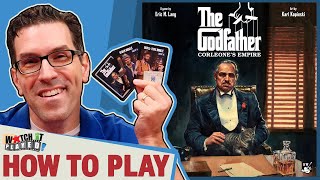
The Godfather: Corleone's Empire stands as a quiet achievement in board gaming. When reviewers first approached Eric Lang's 2017 CMON release, many doubted whether a licensed mafia game could rise above theme-as-decoration. That skepticism dissolved quickly. Board Game Replay, Meeple Mountain, Board Stupid, and No Rolls Barred all converged on the same conclusion: this is a surprisingly tight, highly interactive worker placement game that sells the fantasy of running a crime family. Its strength lies less in leaning on Godfather lore and more in translating the feel of that universe into mechanical tension and meaningful conflict.
Core Mechanics That Define The Godfather: Corleone's Empire
Worker Placement and Area Control in Tandem
The game's central nervous system is deceptively simple. On your turn, you place a thug or a family member on a space in New York City, take the location's action, and gather resources or complete objectives. That simplicity masks layers of decision-making. Placing first at a location secures the resource but paints a target for removal, while holding territory across rounds generates control bonuses and income when opponents work those spaces. Board Game Replay emphasized that area control proves far more valuable than it first appears, a lesson that reshapes strategy across repeated plays as the early-game scramble for cash gives way to mid-game positioning.
Money, Jobs, and the Hidden Suitcase Economy
Winning requires the most laundered cash, not the most cards in hand. Money earned during play sits vulnerable in hand, and only currency sealed in your suitcase counts toward victory. Completing jobs for Don Corleone demands resources spent from hand, while area control and extortion refill those hands with cards you must eventually decide to bank or risk losing. Extortion cards sharpen this tension, pulling money out of a rival's bank and forcing it back into the open where it cannot be immediately laundered. Game Night Picks at Pair of Dice Paradise stressed how the locations, cards, and options intertwine so that every action ripples outward, creating a web of indirect conflict that demands constant reassessment.
The The Godfather: Corleone's Empire Experience
Cutthroat Interaction Without Negotiation
Reviewers arrived expecting negotiation to drive conflict and instead found that jobs and card play deliver the vicious moments. Car bombs wipe out multiple pieces at once, drive-by shootings clear thugs across the city, and extortion raids unbanked money, none of it requiring a single word of table talk. The game achieves real confrontation through information asymmetry: because suitcases stay sealed, no one knows exactly what anyone has banked, breeding paranoia around the final count. Meeple Mountain described the moment mid-game when every player suddenly grasps the stakes and the table descends into uneasy, scheming silence punctuated by laughter.
Scaling Across Player Counts with Dramatic Shifts
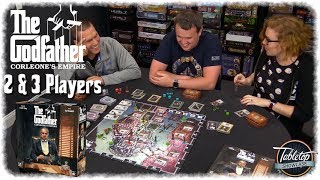
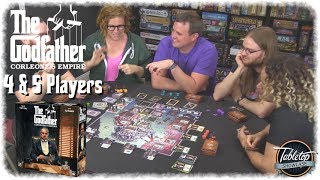
Board Game Replay's extended coverage showed how player count reshapes the strategic landscape. At four players, territory feels less contested and a skilled player can carve out economic dominance. At five, resources tighten sharply as thugs and family members fight for the same pool of locations, making early aggression riskier and positioning more critical. Ally cards also appear at uneven rates from game to game, skewing valuations and forcing players to recalibrate mid-session. This variability keeps the game from settling into a solved state, since every location shuffle and ally deal signals a new economic environment to navigate.
What Makes The Godfather: Corleone's Empire Stand Out
Component Design That Reinforces Theme
CMON's production choices serve the game beyond aesthetics. Each player receives a small suitcase to hold money cards, a seemingly unnecessary flourish that breeds genuine suspicion at the table. No Rolls Barred noted that the sealed suitcase sitting in front of each player adds real mystery, elevating what could have been a plain screen into a thematic centerpiece. Unique family sculpts give each faction visual identity, while the generic thugs reinforce their disposability. This habit of form following function is a hallmark of Eric Lang's design work.
Strategic Variety from Limited Options
The game achieves breadth without overwhelming complexity. Each turn essentially comes down to choosing a location and collecting its action, with the variability flowing from map randomization and job availability rather than dozens of card powers. One path emphasizes early area control and income, another prioritizes job completion and resource conversion, and a third banks early and plays defensively. Board Game Replay reflected that each play feels completely different, with one winning run built on area control and final-turn bonuses and the next leaning entirely on banking and jobs. This replayability without mechanical bloat is a signature of mature design.
Potential Drawbacks
Analysis Paralysis and Decision Fatigue
The number of moving parts, from locations and jobs to ally cards, extortion threats, territory, and hidden money, can overwhelm new players. While the core turn is simple, the board evaluation that precedes it grows complex as the acts progress, and by the second act players feel the cognitive load. For casual tables or analysis-prone groups, this can slow pacing considerably. The game rewards quick, instinctive play and punishes deliberation, which is not every group's preference.
Randomness in Map Layout and Card Availability
Location tiles are placed randomly each game, and which ally cards appear can dramatically shift economic viability. A setup might offer abundant money-conversion actions or very few, and job availability swings the objectives on offer. While this variance prevents solved states, it can occasionally leave a player so disadvantaged by an early reveal that catching up feels difficult. Reviewers framed this as a feature, since the game expects players to adapt on the fly, but groups that prefer tight mechanical predictability may find the swings frustrating.
If You Enjoy The Godfather: Corleone's Empire
Eric Lang's other designs share the same philosophy. Blood Rage and Rising Sun use similar action sequencing and asymmetric factions while rewarding tight positioning and punishing overextension. Chaos in the Old World applies that tension to a darker, more confrontational theme. Beyond Lang, players drawn to the cutthroat interaction should explore El Grande, which delivers area-control combat without the suitcase economy, and Brass: Birmingham, which offers comparable economic depth with networked, indirect conflict. Each rewards the same instinct: read the table, strike at the right moment, and never reveal your hand.
What Reviewers Are Saying
"This game has so many moving parts. There's so many things to think about that by the time you're done, not only are you thinking about the way to maximize your points."
— Board Game Replay
"Even the best laid plans can be blown to smithereens by the drop of a card or a car bomb card, and this results in continual interaction, engagement, and cold sweats by all the players even when it's not their turn."
— Game Night Picks
"It's a surprisingly easy to pick up worker placement game, lean but cruel like a calzone. You take your workers, you place them in that section, that section does an action. It's a glorified worker placement style mechanism, but it is a really fun implementation of it with lots of cascading effects, very interactive."
— No Rolls Barred