


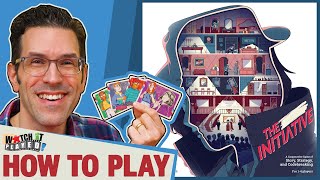
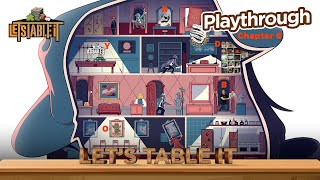
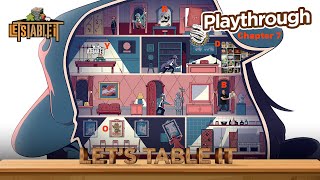
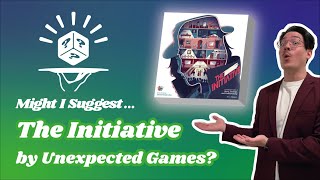








The Initiative — a unique co-operative board game of story, strategy, and code-breaking — lets players take on the role of teenagers in 1994 who have found a mysterious board game called "The Key". Not only will they play The Key, but players will help the teens through a pivotal chapter of their lives by following a series of missions linked together via an interactive comic book.
The game's campaign is broken into a number of chapters, each taking 30-60 minutes to complete and each starting with you reading a page of the comic book. The story advances even if players fail a mission, but winning may provide a reward in the future. Each chapter builds on the knowledge and story from previous chapters, weaving narrative, code-breaking, and mystery into one thrilling game experience.
- engaging cooperative puzzle design
- varied clue types and cipher challenges
- strong teamwork and discussion dynamics
- early rule learning can be opaque
- heavy reliance on communication can slow pace for some groups
- potential for information asymmetry without careful coordination
- cooperative deduction and puzzle-solving under time pressure
- A collaborative, puzzle-driven mystery-solving setting with cipher-based exploration
- puzzle-led progression with cipher-based clues and code-breaking
Mechanics (from transcript analysis)
- Area movement — Players move through rooms to access new information, trigger effects, and collect clues
- area movement / room traversal — Players move through rooms to access new information, trigger effects, and collect clues
- cooperative planning — Players coordinate actions to optimize cards and positioning to advance the shared goal
- hand management — Players select and discard cards to shape actions, often balancing immediate gains against future needs
- hand-management — Players select and discard cards to shape actions, often balancing immediate gains against future needs
- Intel actions / information gathering — Actions that reveal or manipulate information about the board state, safes, or trapped clues
- puzzle solving / cipher decoding — Players decipher codes and cipher sequences to reveal clues and progress the story
Video topics + discussion points
Quotes (from this video)
- the initiative again great game
- we have won three and lost two and again we are still learning the game
- crypt the code then decrypt that answer using a different cipher
- the answer is six here
References (from this video)
- engaging cooperative puzzle-solving
- tense, team-based decision making with clear progression
- unlocking doors and managing alarms adds thematic tension
- rule density can feel confusing or chaotic at times
- requires clear communication to avoid missteps
- hand management and puzzle pacing can create bottlenecks
- cooperation under pressure, puzzle-solving, uncovering hidden layers
- Modern/mystery setting where players explore a secret board game to uncover clues and progress through rooms
- story-driven, puzzle-focused with evolving clues and room-based progression
Mechanics (from transcript analysis)
- Area movement — players move through connected rooms using card values and movement rules
- area movement between rooms — players move through connected rooms using card values and movement rules
- deck/hand discard mechanics — certain actions require discarding or resetting cards (e.g., top card discard) and special abilities modify this
- hand management — players manage a hand of numbered action cards to perform moves and actions
- Intel vs Gather actions — distinct actions to reveal information (Intel) or collect resources (Gather)
- key cards and lock doors — progression gating via key cards that unlock red doors or access to new areas
- secret codes and cipher puzzles — puzzles requiring decoding or deciphering clues to advance and unlock outcomes
- trap tokens and security alarms — rooms can trigger alarms and cameras; trap tokens move into rooms and affect play
- Word Deciphering — puzzles requiring decoding or deciphering clues to advance and unlock outcomes
Video topics + discussion points
Quotes (from this video)
- we cracked the code on that one
- we're getting the hang of this
- this is confusing I don't like it
- we're going to play another one
References (from this video)
- Engaging cooperative puzzle flow that encourages team discussion
- Strong narrative atmosphere informed by comic-chapter structure
- Appealing to family play through approachable yet challenging mechanics
- Rule complexity can be a barrier for new players
- Pattern/deduction patterns require careful tracking and can feel opaque without careful play
- Potential variability in how quickly chapters progress depending on card draws
- Array
- Fictional mystery-adventure setting explored through comic chapters
- Chapter-based, comic-inspired puzzles and branching decisions
Mechanics (from transcript analysis)
- Card-driven actions — Players use a hand of action and utility cards to influence movement, reveals, and clues.
- Cooperative Game — Players collaborate to solve sequential puzzles and manage resources to complete chapters.
- cooperative play — Players collaborate to solve sequential puzzles and manage resources to complete chapters.
- Pattern recognition — Players deduce sequences and patterns to determine progression and clues.
- pattern recognition / deduction — Players deduce sequences and patterns to determine progression and clues.
- Resource management — Managing the discard/deck and time/resource cards to avoid peril and missteps.
- Resource management and risk control — Managing the discard/deck and time/resource cards to avoid peril and missteps.
- Turn-based tactical movement — Players move through rooms up to a limit, choosing actions per turn and coordinating positioning.
Video topics + discussion points
Quotes (from this video)
- mission three let's do it
- end of chapter okay so we did the second one right
- stay with us for chapter 4 with our next video thank you for watching
References (from this video)
- strong episodic structure for a show format
- high engagement due to ongoing narrative arc
- campaign length can be lengthy for a regular weekly show
- availability of expansions can be variable
- mystery and deduction within a shared universe
- team-based, puzzle-solving superhero campus framework
- episodic investigation and scenario-driven play
- Clank Legacy
- Pandemic Legacy: Season Zero
Mechanics (from transcript analysis)
- Cooperative Game — players collaborate to solve objectives within modular chapters.
- cooperative_play — players collaborate to solve objectives within modular chapters.
- puzzle_solving — game encourages deduction and sequencing to advance.
Video topics + discussion points
Quotes (from this video)
- What a bone head move, though.
- Wow, you did all your Marvel United movies. That's fantastic.
- I want to do the Batman uh Hush as an episode.
- This has been kind of a relaxing paint stream.
References (from this video)
- A truly unique proposition that fuses multiple mechanics—legacy progression, cipher puzzles, and cooperative play—into a cohesive experience that feels distinct from other games.
- The Initiative blends elements from escape-room puzzle games, sequence-creation titles, and light-genre mashups into one cohesive package, offering a fresh, innovative feel.
- Accessible for a younger or more casual gaming audience, with 30-minute missions and easy setup that make it a strong gateway into other legacy games.
- High-quality components and artwork, with a tactile feel that adds immersion; the comic book guidebook and companion art elevate the narrative experience.
- Post-game objectives help extend the game's shelf life beyond the main campaign, providing continued engagement after the 14 missions.
- Strong thematic vibe—nostalgia, mystery, and 1990s adventure—coupled with puzzle-driven gameplay that many players enjoy.
- Some parts of the game feel like they could better synergize—the different moving parts (cipher puzzles, tile tricks, action economy) can occasionally feel disjointed.
- A notable component tolerance issue with the main mission console card holder; inserting the map and cipher cards can be fiddly and frustrating for some players.
- The game’s strength in narrative and puzzle emphasis may not resonate with hardcore gamers seeking heavier strategy or more depth in combat mechanics.
- Because the setup and flow depend on a lot of moving pieces, solo or small-group play requires careful management to avoid downtime during transitions between missions.
- Mystery-solving, friendship, coming-of-age curiosity, and a retro-teenage adventure vibe with a strong emphasis on cipher puzzles and narrative progression.
- A 1990s-inspired, kid-led adventure where four children in 1994 stumble upon a mysterious board game that pulls them into a hidden world of secrets, ciphers, and narrative-driven puzzle mysteries.
- Comic-book style back matter that doubles as a guide to the mission flow, alternating between game sessions and illustrated narrative pages that advance the meta-story.
- Unlock series
- Cantalope
- Lost Cities
- The Game
- Betrayal at House on the Hill
- Horrified
Mechanics (from transcript analysis)
- action and hand-management — On a turn, players play one or two actions by spending number cards (played card numbers must ascend for the same action later in the round). Actions include Run, Gather, and Intel, with a Regroup option to refresh a pile. Discarding two cards activates a special power, tying resource management to puzzle progression.
- cipher solving / cipher-based puzzles — A core meta-mechanic where deciphering word scrambles or number sequences unlocks progress toward the main cipher. Incorrect solutions end the current round, increasing risk and tension.
- Cooperative Game — Players cooperate as four kid-characters to solve cipher puzzles, gather glyphs, and complete objectives. The group must coordinate actions and information to move the story forward, with failure impacting the narrative path.
- cooperative play — Players cooperate as four kid-characters to solve cipher puzzles, gather glyphs, and complete objectives. The group must coordinate actions and information to move the story forward, with failure impacting the narrative path.
- hand management — On a turn, players play one or two actions by spending number cards (played card numbers must ascend for the same action later in the round). Actions include Run, Gather, and Intel, with a Regroup option to refresh a pile. Discarding two cards activates a special power, tying resource management to puzzle progression.
- in-game component maze: the Key — Inside the broader game is a sub-game called the Key. Players set up a board with file-folder tiles containing symbols used to solve ciphers. Tiles can also be traps, adding risk to exploration.
- Legacy game — The Initiative is structured as a mission-based legacy campaign consisting of 14 missions with post-game objectives that extend playability. Progression persists between sessions, and the comic-book guidebook functions as the narrative spine between missions.
- legacy progression — The Initiative is structured as a mission-based legacy campaign consisting of 14 missions with post-game objectives that extend playability. Progression persists between sessions, and the comic-book guidebook functions as the narrative spine between missions.
- narrative guidebook as gameplay mechanic — The mission guidebook doubles as a nostalgic comic book that informs the narrative between missions, bridging the gameplay loop with story beats and puzzle hints.
- progressive difficulty and time pressure — Time pressure is embedded via blue Time cards; if time symbols accumulate and the cipher is not solved, rounds end in failure. Players must balance speed and accuracy to progress through each mission.
- real-time — Time pressure is embedded via blue Time cards; if time symbols accumulate and the cipher is not solved, rounds end in failure. Players must balance speed and accuracy to progress through each mission.
- Unique player powers — Each player has a unique power tied to the mission progression. Powers are unlocked (or activated by specific actions such as discarding two cards) and influence how players approach cipher solving and map exploration.
- Variable player powers — Each player has a unique power tied to the mission progression. Powers are unlocked (or activated by specific actions such as discarding two cards) and influence how players approach cipher solving and map exploration.
- Word Deciphering — A core meta-mechanic where deciphering word scrambles or number sequences unlocks progress toward the main cipher. Incorrect solutions end the current round, increasing risk and tension.
Video topics + discussion points
Quotes (from this video)
- The Initiative is a unique proposition I can confidently say that I've never played a game like The Initiative before.
- I've definitely played games like parts of it—the secrets and ciphers felt like other escape room games like the Unlock series.
- The card game portion of it felt like other sequence-creation games like Lost Cities or The Game.
- The actual move and reveal portion of it felt like a mix between Betrayal and Horrified.
- Overall, it’s an undeniably innovative game that stands alone in its class.
References (from this video)
- Tense, blended action and puzzle elements
- Campaign box adds replayable puzzles
- Can be dense for new players
Mechanics (from transcript analysis)
- two-layer puzzle / narrative campaign with comic book — campaign arcs embedded in a comic, with puzzle varieties and code-decoding elements
Video topics + discussion points
Quotes (from this video)
- it's a treasure trove of puzzling riches and i love it
- this box is the campaign that takes the form of a delightful comic
- a gorgeous game unlike any i've played this year or most other years
- it's an app-driven competitive storytelling game which just boggles my mind a little
- it's all about family
References (from this video)
- unique, memorable experience
- strong for players who enjoy puzzles
- some may prefer more direct confrontation
- not ideal for non-puzzle fans
- interactive, experiences-driven mystery
- code-breaking and puzzle-solving
- cooperative, investigative
- Cipher City
- Escape Room board games
Mechanics (from transcript analysis)
- code-breaking / cooperative puzzle solving — players decode clues and work together to solve a mystery
- code-breaking / puzzle-solving — decode clues and coordinate actions with teammates
Video topics + discussion points
Quotes (from this video)
- it's board game adjacent let's just say it's kind of like an activity where you've got a big map on the table and you're trying to solve crimes
- i really really like tapestry
- it's simple but fun
- the fan track keeps you relevant when you're behind
- it's a bundle of fun
- i love calico
- radlands is a fantastic two-player card dueling lane fighter
References (from this video)
- cooperative with campaign-like replayability
- accessible for families and groups
- less appealing for players who prefer competitive play
- teamwork and problem-solving
- cooperative puzzle-solving adventure
- campaign-like progression with puzzles
Mechanics (from transcript analysis)
- cooperative puzzle-solving — players work together to solve puzzles and advance a campaign
Video topics + discussion points
Quotes (from this video)
- Cascadia is an excellent starter game for your collection.
- Just start small.
- Anybody can play it.
- I think it's a perfect starter game for your collection.
- Can't Stop is possibly objectively, in my opinion, the best push your luck game.
- Just One is a classic party game. Everybody can play this.
References (from this video)
- amazing_cooperative_experience
- excellent_at_two_players
- escape_room_like_gameplay
- puzzle_focused
- recently_acquired
- unique_mystery_theme
- full_review_coming
- too_many_cooks_at_higher_player_counts
- better_with_two_than_four
- 1990s_mystery
- secret_board_game
- clues_and_codes
- puzzle_solving
Mechanics (from transcript analysis)
Video topics + discussion points
Quotes (from this video)
- no guilt no shame no mercy
- it is pure magic pure gold
- build like a mortal win like a god
- tiny box biggest table presence experience
- this is a game i wouldn't want to play at higher than two
- jamie knows when she's one and i can see it in her face
- i have a very difficult time comparing games that are that drastically different
- castles of burgundy is heavier therefore i put castles of burgundy at one
- i know myself well enough by now you know i've got 34 years into this body i know i know what i'm into
- don't be a meanie or weenie it's okay to hate things
References (from this video)
- Rich, interconnected campaign with a surprising amount of depth for a co-op game.
- Dynamic, move-based action economy that creates a satisfying sense of progress and risk.
- Can feel overwhelming for players who prefer lighter games or stand-alone plays.
- Campaign length may require a substantial time commitment across sessions.
- crowd-sourced mystery solving with secrets woven into a comic narrative
- cooperative map exploration with a modern, detective-adventure flavor
- campaign-driven, serial mysteries told through a comic interlude and linked mission structure
- Pandemic
Mechanics (from transcript analysis)
- campaign-linked mysteries — the box contains a central comic and a set of missions that connect to form a larger narrative arc.
- case-file token economy — each game yields tokens that unlock secrets and reveal answers; time pressure is reintroduced through a ticking clock mechanic.
- cooperative map movement — players move around a map using cards and tokens to uncover case details and collect clues.
Video topics + discussion points
Quotes (from this video)
- mystery games are the best
- mind-bendingly wonderful stuff
- this game is cool though like elenoir the chisel can make the suspects lie to the players when questioned
- you've cracked the case
- they push the boundaries of what you can do with bits of paper
References (from this video)
- Engaging two-player experience
- Surprising moments and discovery
- Spoiler-sensitive and potentially short playtime
- Mystery-solving with cooperative play
- Code-breaking mystery with a collaborative twist
- Narrative-driven, experiential puzzle
- Exit: The Game
Mechanics (from transcript analysis)
- Code-breaking — Players decipher codes to advance a shared story.
- Two-player puzzle experience — Coop-wide codes and enigmas designed for two players.
Video topics + discussion points
Quotes (from this video)
- it's our list let it be
- we're here today with a very exciting video so exciting jeff can't even open his eyes
- this is the most immersive experience
- it's a brain burning game
- I freaking love Role Player Adventures
References (from this video)
- cool escape-room style adventure
- works well for small groups (2-4 players)
- cooperative puzzle solving with narrative-driven progression
- A cooperative escape-room style adventure for two to four players
- story-driven puzzle progression with collaborative problem solving
Mechanics (from transcript analysis)
- Cooperative Game — Players work together to solve a series of puzzles and advance the story.
- cooperative play — Players work together to solve a series of puzzles and advance the story.
- Narrative choice — Gameplay advances through a narrative framework, guiding player decisions.
- Story-driven progression — Gameplay advances through a narrative framework, guiding player decisions.
Video topics + discussion points
Quotes (from this video)
- it's freaking sick dad
- Between two castles is a perfect mashup of its predecessors between two cities and castles of mad king ludwig
- i love the working together with your neighbors aspect of between two cities
- these cards represent the influence of irish gods and heroes so it's only fitting that they could turn the tides
- ambush cards being able to tamper with your opponent's map from time to time really gives cartographers a much needed dose of player interaction
- nobody knows what anybody else's role is
References (from this video)
- Puzzles described as excellent and engaging
- Strong balance between challenge and solvability
- Cohesive integration of card play with puzzle solving
- Difficult to gauge replayability for some players
- Rule explanations can be dense for newcomers
- Puzzle solving and narrative-driven co-op
- Fictional modern-day puzzle/adventure setting
- Puzzle-first, story-light
- The Key
- Echoes of the Dancer
Mechanics (from transcript analysis)
- Card-driven actions — Action resolution and puzzle progress are mediated through card play.
- cooperative play — Players work together to overcome challenges rather than compete.
- Puzzle solving — Players collaboratively solve evolving puzzles presented by the game.
Video topics + discussion points
Quotes (from this video)
- the puzzles were excellent as far as for our intellect being able to figure them out
- the card play is just so clever
- field rotation and having to clear the rocks
- six ways to score; putting out tiles; very competitive
- Clash of Cultures Monumental Edition … congratulations
References (from this video)
- multiplayer collaboration
- puzzle variety across scenarios
- learning curve for new players
- puzzle spoilers risk if shared casually
- team-based puzzle-solving across scenarios
- story-driven cooperative adventure
- story-led, solvable puzzles
Mechanics (from transcript analysis)
- cooperative puzzle solving — players collaborate to solve puzzles across scenarios
Video topics + discussion points
Quotes (from this video)
- Canvas is a really cool hand management set collection game with these really awesome transparent painting type cards that you layer on top of one another to score points
- the art is just absolutely amazing
- Wingspan continues to be one of my favorite games of all time
- this game is perfect for anyone who's interested in escape rooms or ciphers and puzzles
- it's really easy to get to the table which is one of the reasons why we played it so often
References (from this video)
- strong cooperative feel
- campaign-like progression
- cool app/board integration
- could be intimidating for casual players
- puzzle density varies
- puzzle-solving teamwork with a mysterious plot
- cooperative deduction and puzzle-solving
- campaign-like clues and team-solving
- Destinies
- Chronicles of Crime
Mechanics (from transcript analysis)
- cooperative puzzle solving — players work together to deduce a code and solve the mystery
- role-based play — players assume roles and share information
Video topics + discussion points
Quotes (from this video)
- patchwork is a great game for couples
- it's a great first date game
- the app, the narration is pretty good on the app
- silver bullet obviously... it is literally the best game
- villainous is in my opinion one of the most perfect games for couples