/pic7803070.png)


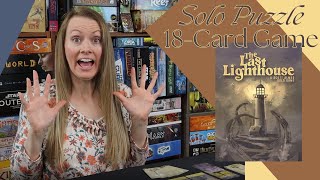

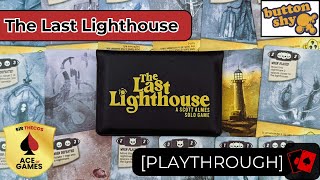








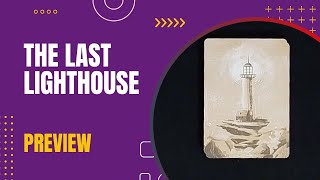
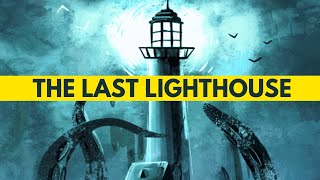



The Last Lighthouse Deep Dive
What the Community Thinks About The Last Lighthouse
The Last Lighthouse has earned genuine appreciation from board gamers across several channels. Reviewers like Sir Thecos and One Stop Co-op Shop consistently praise it as an elegant, quick experience that delivers surprising tactical depth despite its compact size. One reviewer called it their favorite Button Shy game at the moment, noting its elegant design and thematic execution, while another praised it as a game that becomes more of a favorite with repeated plays. The consensus is that this small card game manages to be both accessible and strategically rich, fast enough for casual play yet challenging enough to hold experienced players.
Core Mechanics That Define The Last Lighthouse
Action Economy and Trap Placement
Each turn, players have exactly two actions to spend however they choose. The first action type is placing a trap card into the sea, the row of cards in front of the lighthouse. When you place a trap, you can position it anywhere in the row, pushing other cards to either side to make room. Each trap has a range value on its left and right sides, determining how far it can shoot in each direction. The tactical puzzle begins immediately: where you place a trap determines which nightmares it can reach and whether it will be in range on your next action. The cards you hold matter enormously for your survival strategy.
Nightmare Defeat and Card Duality
The second action type is defeating a nightmare using your traps. Each nightmare shows a number of skulls representing its health, and each trap in range deals one damage to it. Only when a nightmare takes enough total damage to equal or exceed its health is it defeated, at which point it flips over and becomes a trap card that enters your hand. This creates the core push-pull of the game: defeating nightmares gives you more tools, but it can also remove enemies from positions where they were absorbing damage meant for the lighthouse. Traps can have when-placed abilities that trigger immediately, while nightmares have when-defeated abilities that fire only when you kill them.
The Last Lighthouse Experience
Escalating Pressure and the Tide
After your two actions, a new nightmare is drawn and added to the rightmost position of the sea, then all nightmares attack. Each nightmare tries to hit the lighthouse first if it has the range; if none can reach it, they attack your traps from left to right. This means the physical position of your cards constantly matters. After the attacks, the tide changes: the leftmost card in the sea is removed. If it is a trap, it is discarded; if it is a nightmare, it cycles to the far right, pushing back toward the lighthouse. The pressure builds across the game as the sea grows more crowded and threats become harder to manage.
Quick Play and Puzzle Depth
The game is genuinely quick, taking around 15 minutes, which makes it ideal for a break or before bed. That brevity masks significant tactical complexity. Every placement has consequences several turns later: you must think ahead about which traps will arrive as defeated nightmares, how placement now affects future range, and whether you can afford to delay killing a high-threat enemy. One reviewer noted that the game is swingy, since strong or weak starting hands change your outcome, but the swinginess rarely feels unfair because the core decisions remain meaningful throughout. The satisfaction comes from finding a clever sequence of plays that threads the needle between victory and defeat.
What Makes The Last Lighthouse Stand Out
Elegant Card Duality and Spatial Economy
Each card serves double duty: one side is a creepy, thematic nightmare, and the reverse is a trap. This duality keeps the deck lean and purposeful, delivering a complete experience from a small pool of cards. The sea is not a fixed grid but a row where physical distance matters, and cards can be pushed left or right to make room, creating a fluid but tight spatial puzzle. Nightmares are live cards with individual abilities rather than numbered positions, so each encounter feels distinct rather than mechanical.
Ability-Driven Interactions and Theme
Nearly every card has a when-placed or when-defeated ability, or both. One trap might lower all nightmares' health for a turn when placed; another might deal extra damage. A nightmare might remove an adjacent trap when defeated. The abilities are thematic and specific, not generic, so nightmares feel dangerous and traps feel like tools you can manipulate. Reviewers praise how quickly you can teach the game and how the lighthouse-versus-nightmares theme is felt in every mechanic rather than serving as mere window dressing.
Potential Drawbacks
Swinginess and Luck-Driven Outcomes
The game can be quite swingy. Some trap cards, when they appear in your starting hand, are extremely powerful and can turn a difficult position into a winnable one with a single placement, while other hands leave you scrambling from the first turn. Reviewers note that the strongest cards tend to be balanced by tougher enemies in the deck, but the effect is still noticeable. If you draw poorly, a single mistake or an unlucky nightmare ability can snowball quickly into defeat.
Difficulty Sensitivity and Limited Variance
The difficulty adjusts by changing how many nightmares and traps you start with, and some players find it too easy on the gentler settings and brutally hard on the toughest, with less middle ground. Once you own the base game, the core experience does not change much between plays beyond the random draw. The expansion adds alternate lighthouses and new card types to extend the experience, but the base game's mechanical possibilities are not limitless, so some players may tire of it without additional content.
If You Enjoy The Last Lighthouse
If The Last Lighthouse resonates with you, explore other tight, tactical card games. Skulls of Sedlec, also from Button Shy, shares that company's philosophy of delivering a complete game in a tiny footprint. Aeon's End offers cooperative deck-building with ability-driven threats and careful resource management, while Spirit Island provides a richer cooperative challenge where positioning and ability timing determine victory.
What Reviewers Are Saying
"The Last Lighthouse might be my favorite Button Shy game at the moment. It's elegant, thematic, quick to set up, and quick to tear down, and filled with meaningful decisions. Despite its small footprint, it offers surprising depth and tactical nuance. This is a game I'll be playing for many years to come."
— Sir Thecos
"This game is great. I liked it okay when I previewed it, but playing it now with the final version is a lot more fun. The game is very swingy. It's quick, it's tactically fun, and the expansions are great. It becomes more and more of a favorite as I play it more."
— One Stop Co-op Shop
"It's a pretty interesting game. You definitely have to manage your hand very, very well. My first impression is that this is a very strategic game and it requires a lot of pre-planning, although you can't always predict what nightmare will come out, and that's really the only luck factor there."
— DaniCha