/pic8662670.png)
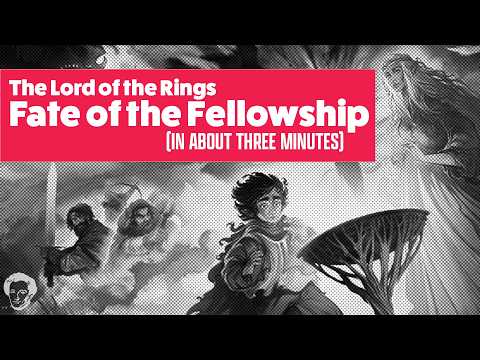



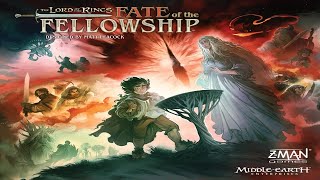












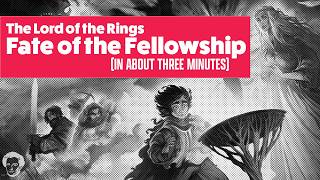

The Lord of the Rings: Fate of the Fellowship Deep Dive
What the Community Thinks About The Lord of the Rings: Fate of the Fellowship
The Lord of the Rings: Fate of the Fellowship has earned strong praise from the board gaming community as a cooperative experience that genuinely earns its license. Reviewers describe a game that uses the Pandemic system as a foundation, then pushes it in directions that feel specific to Tolkien's world rather than borrowed from it. Channels like Shelfside and BigPasti praise the game for its thematic coherence, while Board Stupid awarded it their seal of excellence and called it their favorite game in the Pandemic lineage.
The consensus is that publisher Z-Man Games has delivered something that satisfies both cooperative game enthusiasts and Lord of the Rings fans. The game manages a difficult balance: mechanically engaging enough for experienced gamers, thematically resonant enough that the IP feels earned rather than decorative. Watch It Played, which featured an extended rules walkthrough with the designers, highlighted how intentional the design choices were in bringing Middle Earth to the cooperative genre.
Where reviewers disagree is on difficulty and randomness tolerance. Some find the escalating threat systems and search dice exhilarating, generating the sense of desperate struggle the source material demands. Others find consecutive bad rolls frustrating, particularly late in a session when hope is low and a single failed search can unravel a well-executed game plan. Most reviewers ultimately land on the side of recommending the experience.
Core Mechanics That Define The Lord of the Rings: Fate of the Fellowship
Cooperative Game
Fate of the Fellowship operates as a fully cooperative experience where all players share a single win or loss condition, working against the game itself rather than each other. Every turn, the shadow deck drives enemy movement and reinforcement across Middle Earth, while a threat rate that starts at 2 and escalates whenever a Skies Darken card is drawn determines how many shadow cards resolve each round. Players must complete four objectives, finishing with Frodo destroying the One Ring at Mount Doom. If hope drops to zero, everyone loses. Meeple University's tutorial breakdown emphasizes how the interlocking systems create constant pressure: hope drains from lost havens, from empty player deck draws, and from failed searches, meaning no single threat can be ignored while others are managed.
Asymmetric Player Powers
Each character in the Fellowship brings distinct abilities that shape how players approach objectives, movement, and combat. Players control two characters each, choosing from a drafted pool whose complement changes the team's strategic options. Frodo operates under a separate set of rules entirely: he is hunted throughout the game, with the active player forced to spend stealth or roll a search die whenever Frodo moves. The Forces of Shadow target him through special orders on black banner shadow cards, advancing Nazgul toward his position and making his journey genuinely more dangerous than any other character's. Shelfside noted that this asymmetry creates moments of real tension where the group must decide whether Frodo pushes forward or shelters while others complete objectives across the map.
The The Lord of the Rings: Fate of the Fellowship Experience
Foreboding
Reviewers consistently describe a sense of mounting dread throughout each session. The threat rate climbs as Skies Darken cards surface, shadow troops advance along battle lines, and Nazgul close in on Frodo's position. BigPasti articulated this as a game that creates the feeling of providence working against the Fellowship, where every decision feels like it carries weight because the game is always one or two bad draws from cascading into catastrophe. Board Stupid described sessions where everything felt under control until a string of search failures and shadow card draws shifted the board state dramatically, producing the kind of desperate late-game scramble that makes cooperative games memorable. The hope track functions as a slow countdown, and watching it tick toward zero captures the tone of Tolkien's story more effectively than most licensed games manage.
Collaborative
Because open communication is fully permitted, the game rewards groups who coordinate their character movements, resource management, and action priorities together. Before You Play's playthrough captured how two players discussed every decision, trading cards through the fellowship action, timing the prepare action at havens to bank tokens before hitting hand limits, and debating whether to push toward an objective or reinforce a threatened haven. Meeple University noted that characters present during battles and searches contribute by spending resources even though they cannot fight independently, making every player feel relevant even when the dice are rolling against them. The game consistently generates table conversation, which reviewers identify as one of its genuine strengths.
What Makes The Lord of the Rings: Fate of the Fellowship Stand Out
The Hunt for the Ring
Frodo's hunting mechanic sets Fate of the Fellowship apart from other Pandemic-system games in a meaningful way. The search roll, triggered every time Frodo moves, requires rolling one die per Nazgul in his region and per shadow troop in his location, up to a maximum of seven dice. Each weary result costs a hope, each exposed result costs a hope unless Frodo is in a haven, and each recall sends a Nazgul back to Mordor. Combined with the Skies Darken mechanic that moves the Eye of Sauron directly to Frodo's region, the game creates a separate subsystem of pursuit and evasion that runs parallel to the main cooperative objectives. Watch It Played described this as one of the most thematically satisfying design choices in the game, because the tension of Frodo's journey feels mechanically distinct from everything else happening on the board.
Thematic Cohesion and Emergent Stories
Reviewers emphasize that the game generates stories that feel earned rather than incidental. BigPasti described sessions where individual character moments, Aragorn arriving to defend a threatened haven, Gandalf racing to complete an objective while Nazgul converged on Frodo, felt like scenes from the books rather than arbitrary game events. The card economy reinforces this: friendship, stealth, valor, and resistance as the four resources map naturally to different aspects of the Fellowship's journey, and converting cards to tokens at havens captures the idea of the group preparing at safe resting places before pushing into danger. Board Stupid noted that the game's production design supports the theme without overwhelming the mechanics, keeping the experience grounded in play rather than spectacle.
Potential Drawbacks
Randomness and Difficulty Swings
The game's reliance on dice for both search rolls and combat means that a strong strategy cannot guarantee victory. Shelfside noted that objective combinations drawn at setup can create significantly different difficulty levels, and that experienced players learn to read which objective sets will stress the group hardest. The search mechanic is particularly vulnerable to variance: consecutive weary or exposed results when Nazgul are present can drain hope faster than the team can compensate, especially late in a session when the threat rate has climbed and shadow cards are resolving at maximum intensity. Players with low tolerance for outcomes that feel outside their control may find this frustrating despite making correct decisions throughout.
Board Congestion and Setup Complexity
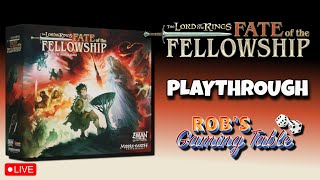
As the game progresses, the map accumulates troops, tokens, and threat markers across its regions and locations. Reviewers including JestaThaRogue noted that tracking which locations are adjacent, which colored paths allow movement against the arrow, and how shadow troop movement flows along battle lines adds cognitive overhead that slows turns, particularly for new players. Rob's Gaming Table's solo playthrough captured the learning curve clearly: setup requires seeding the board from multiple sources, the shadow deck construction involves shuffling specific card types together, and new players need several games before the rules feel internalized rather than referenced. The game rewards repeated play, but the initial barrier is real.
If You Enjoy The Lord of the Rings: Fate of the Fellowship
Players drawn to the cooperative mechanics of Fate of the Fellowship who want more Pandemic-system experiences will find the base Pandemic and Pandemic Legacy games worthwhile reference points. Shelfside compared the games directly, noting that Fate of the Fellowship adds meaningful complexity and asymmetry that distinguishes it from the original design while remaining recognizable to players who know the system. For players seeking more Middle Earth, War of the Ring offers a deeper, longer asymmetric conflict game that captures a different aspect of Tolkien's world, while The Lord of the Rings: The Card Game provides ongoing campaign-style Fellowship adventures for those who want narrative depth across multiple sessions.
Reviewers also pointed to Clank Legacy for players who enjoy cooperative adventure games with meaningful character progression and escalating stakes across a campaign arc. These comparison games share a quality reviewers identify in Fate of the Fellowship: the sense that the game works against players in ways that feel intentional rather than arbitrary. For any group that has enjoyed a Pandemic-system game and wondered what the design could do with a richer thematic canvas, Fate of the Fellowship provides a direct answer.
What Reviewers Are Saying
"What this game does brilliantly is create a sense of providence working against you. Every time Frodo moves and you have to roll that search, every time the Skies Darken card comes out and the Eye moves to his region, you feel the weight of inevitability. It doesn't feel like a game punishing you randomly. It feels like the darkness of Middle Earth is closing in, and that's exactly what it should feel like."
— BigPasti
"This is not just a reskin of Pandemic. The threat escalation, Frodo's unique hunt mechanic, the dual-sided shadow cards, the character asymmetry. These are meaningful design additions that push the system in a direction that feels specific to Lord of the Rings rather than borrowed from somewhere else. It earns its license in a way that licensed games rarely do."
— Shelfside
"We are giving this our seal of excellence. This is now our favorite game in the Pandemic system. The tension is real, the theme lands, and every session tells a story. If you have any love for cooperative games or for Lord of the Rings, this is the one to get."
— Board Stupid