/pic3048617.jpg)
/pic1222522.jpg)
/pic3099445.jpg)
/pic3519889.jpg)
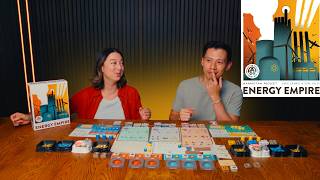
From the ashes of war, nations rise to power in the atomic age. Each player takes control of a nation struggling for power in the latter part of the 20th century. They build up their nation’s industry, commerce, and government by acquiring resources, building structures, and tapping sources of energy. The price of oil is going up, and nuclear energy is the wave of the future. The Manhattan Project: Energy Empire is set in the same "universe" as The Manhattan Project, but it's a standalone game, not an expansion.
The major threat in Energy Empire is not war, but uncertain global impacts, that result from side effects of industrialization and pollution. Many actions come with a cost. So, as nations become more industrious, they also increase the amount of pollution in the environment. Careful use of science can mitigate the harmful effects of industry, and can also help avert global crises.
Energy Empire uses worker placement, tableau-building, and resource management mechanics. On each turn, a player can choose to either work or generate. On a work turn, a player plays a single worker on the main board, then uses workers and energy to activate cards in their tableau. Players may spend energy to use an occupied space on the main board, so no spaces are ever completely blocked. On a generate turn, players get to renew their supply of energy by rolling "energy dice" that represent nuclear, coal, oil, solar, and other forms of energy.
Part of the The Manhattan Project family — see The Manhattan Project for the combined view.
/pic3048617.jpg)



- Deals with energy creation and environmental effects
- Takes place in the Manhattan Project universe but focuses on energy
- Solo mode is really awesome
- Not crazy heavy but offers a lot of choices
- Cool board design resembling an office desk
- New edition includes all content
- Difficult to find secondhand copies
- A specific expansion is extremely rare and expensive
- Profiting from nuclear energy, balancing environmental impact
- Late 20th century, post-atomic age
- Manhattan Project
- CO2
- Minutes to Midnight
Mechanics (from transcript analysis)
- Dice Rolling — Resources are gained at the end of a round by rolling dice.
- Resource Management — Managing energy and other resources to build and operate facilities.
- Tableau Building — Building out player boards with specific cards and actions.
- Worker Placement — Players place workers to perform actions like building or generating energy.
Video topics + discussion points
Quotes (from this video)
- this game is so good, so satisfying
- it's the kind of game where you're constantly on the brink of losing
- the art is so brutal and so colorful and so unique
References (from this video)

- still like it a lot
- I think I like this the least
- energy
- Manhattan Project
Mechanics (from transcript analysis)
Video topics + discussion points
Quotes (from this video)
- Hey everybody, I'm Tom Vassal. Welcome to Look Back, a series where I take a look at games that I reviewed a year ago, 5 years ago, 10 years ago, and 20 years ago.
- And I tell you what I think about these games now, if I think about them at all.
- When you talk about games that are cozy-esque, I think this is pretty close one of those as you build these nice streets.
- Thanks so much for watching. I'm Tom Vasel, and this is Look Back.
References (from this video)

- engine-building is actually wonderful
- the engine-building in Energy Empire is wonderful
- the three-way board with multiple work spots and color-coded buildings allows interesting combos
- had to learn rules and I got a rule pretty wrong early on
- the game can run long, especially with four players
Mechanics (from transcript analysis)
Video topics + discussion points
Quotes (from this video)
- the bones of this game the stuff that's going on is so cool and so I'm looking forward to playing this one some more
- it's evolving game State as you play game to game it's sort of like a legacy style thing going on but you're not permanently altering the game
- this is a quick game
References (from this video)
- Great variety of buildings and paths to victory.
- Adapting engine based on available cards/actions is key.
- Top quality components.
- Pollution timer advances game rapidly.
- Environmental message is well-integrated.
- Different nation starting positions offer replayability.
- Satisfying when the engine is running smoothly.
- One worker placement feels like multiple actions.
- Lots of interactions to track.
- Requires a lot of attention to detail.
- Can be overwhelming for some players.
- Potential for runaway leaders.
- Little other players can do to stop a runaway leader.
- Building a nation's energy infrastructure, environmental impact of industry
- World War II aftermath, beginning of the nuclear age
- Terraforming Mars
Mechanics (from transcript analysis)
- Engine Building — Building cards that combine effects and work together are key to winning.
- Worker Placement — Placing workers on the board to gain benefits is the main act in this game.
Video topics + discussion points
Quotes (from this video)
References (from this video)

- Fast, action-oriented with tangible engine-building feel
- Clear tension between advancement and pollution control
- energy network construction with pollution management
Mechanics (from transcript analysis)
- energy_network_building — Build up an energy network to generate energy discs used for actions and scoring.
- multi_stage_activation — Placement decisions affect which buildings and actions are activated for the round.
- pollution_track — Pollution level affects scoring and future actions.
- worker_placement — Early description of action work placement; you place workers to take actions on the board.
Video topics + discussion points
Quotes (from this video)
- it's very unique I think the manala type
- very easy to pack up
- no Trump trick taking game
- it's layered so they get more and more powerful
- for a game that plays over 40 50 minutes
References (from this video)
- Includes all gameplay of the original Edition as well as the Cold War expansion and the new UN Envoys expansion
- Nation struggling for power
- Latter part of the 20th century
Mechanics (from transcript analysis)
- Resource Management — Energy Empire uses resource management mechanics.
- Table Building — Energy Empire uses table building mechanics.
- Worker Placement — Energy Empire uses worker placement mechanics.
Video topics + discussion points
Quotes (from this video)
- Thieves Market is an eye cut you steal game
- energy Empire uses worker placement table building and Resource Management mechanics
- Mares is a large Euro game and is probably my favorite of the Stefan Feld City collection
- Formaggio is a standalone expansion for Forage
- Widget's Workshop features an Innovative blend of card crafting and set collection within a real world spatial game environment
References (from this video)

- Fantastic game.
- Good price.
- Nice components.
- Well put together.
- Good graphic design overall.
- Kickstarter campaign lacked a video.
- Currency was not converted on the main page.
- Small text size on components.
- Questionable graphic design choices.
- Game board described as looking like a spreadsheet.
- Campaign asked for feedback but ignored suggestions.
- Downtime is too much.
- Not a true worker placement due to lack of space denial.
- Energy Empire
- Andromeda's Edge
- Whiz War
Mechanics (from transcript analysis)
- Dice Placement — The mechanic was not found to be interesting.
- Engine Building — Described as 'fine' but not offering particularly interesting decisions.
- Worker Placement — Mentioned as a type of game, but this specific game is not considered a true worker placement due to lack of space denial.
Video topics + discussion points
Quotes (from this video)
- The greatest worker placement game of all time gets even better.
- Yeah, that board game is famously sucky.
- It actually has some interesting ideas, but yeah, the game was trash.
- I feel like you're leaving money on the table.
- The Manhattan Project name carried a lot of passion and creativity under James Matthew. After playing this game, I felt a sense of dread.
- The crowd's like cheering and it immediately goes fullon boo.
- It's like, 'Oh my gosh, this is turning into a young man, like a teenager.'
- I went downstairs, got the extension cord which I was using for something else down in the cellar and instead of closing the trap I left it open...
- He he he just shattered the image he's been working on for 20 years.
References (from this video)
- Fantastic game
- Great quotes from reviews
- Good price
- Energy Production
- Manhattan Project: Atomic Empire
Mechanics (from transcript analysis)
- Worker Placement — Mentioned as potentially the 'greatest worker placement game of all time.'
Video topics + discussion points
Quotes (from this video)
- The greatest worker placement game of all time gets even better.
- Yeah, that board game is famously sucky.
- It actually has some interesting ideas, but yeah, the game was trash.
- I feel like you're leaving money on the table.
- The Manhattan Project name carried a lot of passion and creativity under James Matthew. After playing this game, I felt a sense of dread.
- The crowd's like cheering and it immediately goes fullon boo.
- It's like, 'Oh my gosh, this is turning into a young man, like a teenager.'
- I went downstairs, got the extension cord which I was using for something else down in the cellar and instead of closing the trap I left it open...
- He he he just shattered the image he's been working on for 20 years.
References (from this video)
- Fantastic game
- Good price ($50)
- High BGG ranking (7.7)
- Positive quotes from reviewers ('greatest worker placement game of all time', 'very excellent game')
- Well-executed Kickstarter with good graphic design
- Offers add-ons and stretch goals
- Engraved dice are a sought-after feature
- Kickstarter page lacks a video.
- Small text on the game board.
- Inconsistent currency conversion on the Kickstarter page.
- Asking for feedback on stretch goals and then denying requests.
- Some backers feel their feedback is not considered.
Mechanics (from transcript analysis)
- Add-ons — Offers add-ons like engraved dice and the option to purchase the first game, providing backers with more choices.
- Stretch goals — Has stretch goals, including engraved dice, which are designed to enhance the game but are sometimes met with feedback that is not implemented.
- Worker Placement — Praised as potentially the greatest worker placement game of all time.
Video topics + discussion points
Quotes (from this video)
- The greatest worker placement game of all time gets even better.
- Yeah, that board game is famously sucky.
- It actually has some interesting ideas, but yeah, the game was trash.
- I feel like you're leaving money on the table.
- The Manhattan Project name carried a lot of passion and creativity under James Matthew. After playing this game, I felt a sense of dread.
- The crowd's like cheering and it immediately goes fullon boo.
- It's like, 'Oh my gosh, this is turning into a young man, like a teenager.'
- I went downstairs, got the extension cord which I was using for something else down in the cellar and instead of closing the trap I left it open...
- He he he just shattered the image he's been working on for 20 years.
References (from this video)
- Solid worker placement game
- Iconography might be cleaner in new version
- Dislikes the new art choice
- New cover is bland
- New board is not as colorful as the old one
- Component quality could be better
- Price (£75) is high for the game
- Energy Production
- Minion Games version of Energy Empire
Mechanics (from transcript analysis)
- Worker Placement — It's a really solid worker placement game.
Video topics + discussion points
Quotes (from this video)
- The artwork is very pretty.
- it's an aggressive area control game.
- This expansion is fixing a fundamental flaw of the original game.
- I am salivating at the mouth for this one.
- This game is the theme done justice in tabletop form.
- I do have to temper my expectations because I think Valheim's going to be a little bit trickier to bring to tabletop.
- There's not a lot of innovation in games anymore.
- But when I played it, it's like, 'Okay, that mechanism I like. Let's find out.'
- This is a very long podcast.
- But remember, it's only a game.
References (from this video)

- Favorite game
- Top 10 game
- Efficient and easy to understand
- Thematic
- New version includes all expansion content
- Shows its age
- Not revolutionary anymore
- Building an energy empire
- Lords of Waterdeep
Mechanics (from transcript analysis)
- Engine Building — Building an engine.
- Tableau Building — Tableau building games.
- Worker Placement — Worker placement.
Video topics + discussion points
Quotes (from this video)
- Try new things. That's my wisdom.
- Be conscious of that in gaming and in life.
- I I need I need those whiskey barrels. That's that's a need.
- There's a little bit of take that in the sense that other players get to move these guys.
- It's one of those weird dry games that's just very satisfying.
- Each clan has some kind of benefit that you're going to get. And you have to lean into whatever it is that your clan can do.
- It's just that's that's tongue and cheek. But no, I don't I don't really have complaints about this game.
References (from this video)

- Classic game, now with expansions
- Innovative mechanics that influenced other games
- Clever new additions like spies and doomsday clock
- Unique graphic design
- Graphic design might seem basic
- Energy production and empire building
- Andromeda's Edge
Mechanics (from transcript analysis)
- Engine Building — Developing capabilities in different sectors like industry.
- Resource Management — Managing energy and workers.
- Set Collection — Collecting spies and other components.
- Worker Placement — Using energy and workers to bid and take actions.
Video topics + discussion points
Quotes (from this video)
- That game makes me happy every single time.
- I enjoy what's going on because the little stories and the stories are just my kind of kind of weird and whimsical and silly.
- I have a lot of joy teaching that game and so it was the most joyful to say, listen, I love these newspapers and we put the um my favorite critic is the Chimera because it brings two critics.
- It's definitely a top five game for me. I will never not play it.
- I want to say that if Mark Dainty, Luke Lori, and Will Brown had not had not gone through this procedure to bring recall to a table, there is no way I would have picked this game up.
- Kudos to whoever like the rule book is 16 pages.
- This game blew me away.
- I mean just smashed it and it was like two days before the con and I was like well here we go. And I loved it.
- It's just a joy. It's always a joy to get to the table and playing with the new expansion content was a lot of fun.
- The amazing thing that happens with games is how much they grow over time and how much fun I had playing on TTS. That is not a fun medium, people!
- This is not I mean it is it is a baguer and it is uh probably up there with the weight of people have been debating if Andromeda's Edge is heavier or Whisperwood's heavier.
- It has turned out to be uh the best moment of the year. Uh I I just appreciate that that gaming time with some friends.
References (from this video)
- Exciting to play the new version
- Introduced the host to crunchy games
- A top five game for the host
- Joyful to play with expansion content
Mechanics (from transcript analysis)
- Engine Building — one of the first crunchy type games that I got to know.
Video topics + discussion points
Quotes (from this video)
- That game makes me happy every single time.
- I enjoy what's going on because the little stories and the stories are just my kind of kind of weird and whimsical and silly.
- I have a lot of joy teaching that game and so it was the most joyful to say, listen, I love these newspapers and we put the um my favorite critic is the Chimera because it brings two critics.
- It's definitely a top five game for me. I will never not play it.
- I want to say that if Mark Dainty, Luke Lori, and Will Brown had not had not gone through this procedure to bring recall to a table, there is no way I would have picked this game up.
- Kudos to whoever like the rule book is 16 pages.
- This game blew me away.
- I mean just smashed it and it was like two days before the con and I was like well here we go. And I loved it.
- It's just a joy. It's always a joy to get to the table and playing with the new expansion content was a lot of fun.
- The amazing thing that happens with games is how much they grow over time and how much fun I had playing on TTS. That is not a fun medium, people!
- This is not I mean it is it is a baguer and it is uh probably up there with the weight of people have been debating if Andromeda's Edge is heavier or Whisperwood's heavier.
- It has turned out to be uh the best moment of the year. Uh I I just appreciate that that gaming time with some friends.
References (from this video)
- Straightforward worker placement.
- Thematic actions.
- High risk, high reward dice rolling for energy generation.
- Interesting engine building potential with structures.
- Pollution management is a significant negative consequence.
- Nuclear waste mechanic is particularly bad.
- Frustration with mechanics like the first player determination (spending least gas).
- The 'health care system' card giving money is noted as ironic/frustrating.
- Leading a nation to become the strongest energy empire.
- Andromeda's Edge
- Bantam West
Mechanics (from transcript analysis)
- action selection — Players choose one action per turn by placing a worker.
- area control/influence — Moving up the United Nations track.
- Dice Rolling — Dice are rolled to generate energy, with potential for pollution based on the highest roll.
- End game trigger — The game ends when the last pollution stack is gone.
- Engine Building — Activating structures in a player's area for additional benefits.
- Objective Cards — Government agendas and global impacts provide secret and public objectives for scoring.
- Pollution track — Pollution tokens are gained and placed on player boards, covering victory points, and can also trigger end-game conditions.
- Resource Management — Players gain and spend resources such as steel, oil, science, money, and energy.
- Set Collection — Collecting dice of different types (solar, wind, hydro, geo, nuclear) to generate energy and score points.
- Variable player powers — Starting nations (e.g., France) provide unique starting resources or abilities.
- Worker Placement — Players place workers (briefcase tokens) on action spaces to perform actions like mining, chemistry, drilling, power plant, etc.
Video topics + discussion points
Quotes (from this video)
- The higher risk, higher reward.
- F this game.
- US health care system. It's so great.
- Pandemic. All right, very fitting.
- This is so bad.
- Gas prices are so high.
- It's not profitable to try and save the environment right now.
References (from this video)
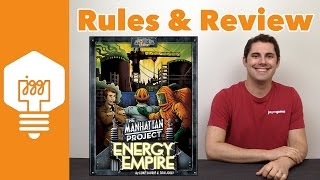
- Engaging engine-building with meaningful decisions and progression
- Two types of workers providing balance and flexibility
- Interesting integration of dice and energy with engine and exploration
- Asymmetrical Nations add starting variety
- Event cards provide thematic integration and variability
- Asymmetries not as strong or impactful as hoped; events underwhelm
- Low player interaction compared to typical worker placement games
- Engine can lock into a single color strategy and feel repetitive without brakes
- UN track design and endgame scoring feel boring or underwhelming
Mechanics (from transcript analysis)
- Achievements — Achievement tiles are drawn when generating; these provide endgame points and contribute to final scoring.
- energy_dice — Energy dice are generated through a power plant action; dice are rolled to determine energy and pollution outcomes, with ties and die faces affecting results.
- Engine Building — Players build and enhance a personal engine on their board by activating matching colored buildings; the engine grows as play progresses.
- engine_building — Players build and enhance a personal engine on their board by activating matching colored buildings; the engine grows as play progresses.
- Events — Green early events and red late-game events modify gameplay; players can peek at future events when triggered by actions.
- events cards — Green early events and red late-game events modify gameplay; players can peek at future events when triggered by actions.
- generate action — Generate actions allow players to gain new achievements and energy; unused energy is lost; workers return home.
- market buildings and tableau — Three market areas (industry, commerce, government) determine which buildings can be bought; buildings are placed into the tableau and activated by appropriate actions.
- pollution and cleanup — Pollution tokens accumulate and can be removed via recycling actions; some pollution tokens have nuclear sides and special rules.
- pollution_dynamics_and_tiebreaks — During generate, highest dice value determines pollution; ties favor the player with the higher die; pollution is then placed on the board.
- Tableau Building — Three market areas (industry, commerce, government) determine which buildings can be bought; buildings are placed into the tableau and activated by appropriate actions.
- United Nations track — Players can spend resources to advance on the United Nations track for endgame points; advancement yields more points earlier and smaller gains later.
- Worker Placement — Players place workers on action spots; actions are resolved immediately; stacks of energy/workers determine access and outcomes.
Video topics + discussion points
Quotes (from this video)
- I'm going to be covering the engine building aspect here and not really the engine running
- I love the fact that this game has these two different styles of workers
- not the kind of game where the die roll gives you branching decision tree
- Energy Empire plays one to five players
- I would recommend it at two to four and three is likely best
References (from this video)
- Blew the reviewers away
- Interesting game
- Everything fits together logically
- Great resources/components
- Good production
- One player chose oil and risked pollution, which didn't necessarily work out as planned.
- The 'dirty energy' choice carries a higher risk of pollution.
- Sustainable and non-sustainable energy production
- Global
- Manhattan Project
Mechanics (from transcript analysis)
- Engine Building — Players build up their capacity to generate resources and perform actions.
- Resource Management — Players manage various energy resources and build types.
- Technology tree — Research is required for certain energy types.
- Worker Placement — Players place workers to take actions.
Video topics + discussion points
Quotes (from this video)
- we wanted to talk about our top 10 favorite new to us games that we played for the first time at aircon
- the great thing about aircon is it's a convention where the main focus is all about playing board games
- we ended up winning one of the tables that had something like 28 games
- this is the reason that we put our tickets in that table
- we played oodles of stuff met noodles and new people
- i don't think i'd run out and buy it but i had a lot of fun playing it would definitely play it again
- i don't know what it was that didn't quite connect with me but like it was another one that i wasn't itching to run out and buy right after we played it
- building a sensible house felt weird to me but it was fun and it was uh it was well put together i thought
- it was just a lot more random and and fun
- it leads for some really exciting moments because you're taking all of the matches so sometimes if you hit the dice and some of them change you might have four fours that you're taking and two threes and so you take them all and it can lead to some huge shifts
- i've never been so sad about winning in my life
- i really liked it and i am super keen to try it with those other modules because i've heard that adds a lot to it
- we played it once and thought yep we we want some more of that
- we thought yep we have it on the way now
- and both of them came down to the very last card which was i think really a sign of a good game
- it was it was so much fun
- highly recommended if you're in the uk absolutely go if if you're somewhere nearby if you're on the continent if you're in europe it's probably worth worth a channel over here
References (from this video)
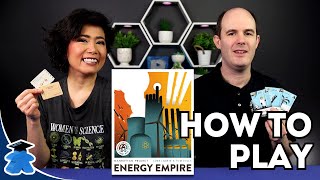
Mechanics (from transcript analysis)
Video topics + discussion points
Quotes (from this video)
- we are using a prototype copy of the game so the rules and components may not be final
- thanks so much for watching
References (from this video)
- economic growth, energy management, pollution, and geopolitics
- post-World War III energy and power networks
- instructional
Mechanics (from transcript analysis)
- Building structures and activation — Build structures by paying costs from a market; structures may be activated after building on subsequent turns.
- End Game Bonuses — End of game triggers after final Global Impact is resolved; players get one final turn and then score from multiple sources.
- End game triggers and scoring — End of game triggers after final Global Impact is resolved; players get one final turn and then score from multiple sources.
- Generate turns and energy management — During generate turns, retrieve your workers, discard energy, roll power plant dice to generate energy and possibly pollution.
- Global impacts and expansions — Global impacts cards provide immediate or ongoing effects; expansions introduce Doomsday Clock, Espionage, Mega structures, etc.
- Pollution tracking and cleanup — Pollution tokens (General and Nuclear) are managed on a grid; cleanup costs science and removes pollution.
- Power plant dice and energy generation — Power plant dice determine energy generated; up to five dice; can discard to replace; endgame points may be earned from held dice.
- Resource and market management — Gains resources like steel, oil, plastic, science, money; some actions enable trading oil or drilling, and prices vary with pollution.
- Resource Management — Gains resources like steel, oil, plastic, science, money; some actions enable trading oil or drilling, and prices vary with pollution.
- UN/Nation cards and end game scoring — Nation cards and government agendas interact with the United Nations track; end scores depend on UN position and other factors.
- Worker Placement — On a work turn, place one worker and any amount of energy onto an action space to resolve that action; you may later spend workers or energy to activate structures you've built.
Video topics + discussion points
Quotes (from this video)
- we are using a prototype copy of the game so the rules and components may not be final
- thanks so much for watching
References (from this video)
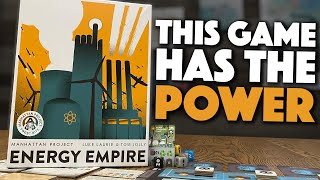
- Novel worker placement mechanics when it was released.
- Still holds up to this day.
- Great game design that didn't require major updates.
- Satisfying escalation of gameplay.
- Interesting mix of worker placement, dice rolling, and tableau building.
- Adds variability and replayability with new components.
- Considered one of the best worker placement games of all time, potentially top 5.
- The definitive version of the game with all expansions included.
- Some late-game events can be impactful, but some are not as good.
- The Doomsday Clock ending can be a bad way to end the game.
- Producing energy while maintaining a healthy environment.
Mechanics (from transcript analysis)
- action selection — Players select actions by placing workers, and can also activate cards in their tableau using surplus energy.
- Dice Production — Dice are used to produce energy, with players gradually acquiring more dice over the course of the game, leading to larger energy generation.
- Event system — Flipping over a global impact card occurs when a stack of pollution tokens is cleared, triggering an event that impacts the game.
- Resource Management — Players gain resources like energy and oil barrels, which are used for various actions and to activate cards.
- Set Collection — Collecting Cold War cards can provide points at the end of the game based on how far the Doomsday Clock has advanced.
- Tableau Building — Players build a tableau of cards (buildings) that provide various effects and can be activated.
- Variable player powers — Modular tiles can replace standard actions, offering different effects and adding replayability.
- Worker Placement — Players place workers on action spots to perform actions, and can choose to retrieve all workers at once to generate energy.
Video topics + discussion points
Quotes (from this video)
- this was the first game in my memory and maybe it might have been the first major game to have this kind of flow where on your turn you're either putting the workers or then pulling them all back and there's not really a necessary like turn to turn structure
- that was a very novel experience and it still holds up to this day
- it really is one of the best worker placement games of all time
- it is definitely probably in the top five of the top 10 for me
- the way the game ramps up so that by the end you just feel like the infrastructure that you building you really feel like you're building an energy empire
- it's just one of the more satisfying experiences I think I've had in all my time playing board games
References (from this video)

- clever card tableau and path choices
- two distinct energy strategies with risk/reward
- notable depth and replayability
- energy policies, environmental risk
- nuclear energy race; post-war era
- economic, strategic
Mechanics (from transcript analysis)
- card tableau and worker placement — players build a tableau of actions while placing workers to perform those actions.
- Resource Management — choose between green (safer) and dirty energy routes with trade-offs.
- resource management with dual energy paths — choose between green (safer) and dirty energy routes with trade-offs.
Video topics + discussion points
Quotes (from this video)
- what I really like about this game is how thematic it is.
- the designer was inspired to make this game when he lived in Scotland.
- you buy a whole bunch of different ingredients and alcohol, mix it all together, and then you take off the top and the bottom to see what spirit you make.
- I love modular games. And this is so so modular.
- it's unbelievably easy to teach.
- the wonder that you're building is actually a physical wonder.
References (from this video)

- strong thematic integration with mechanics
- depth and multiple strategic paths
- heavy and long for some players
- energy production choices with conflicting ethics
- Cold War-era energy empire-building
Mechanics (from transcript analysis)
- resource and combo chaining — buildings interact to create powerful engine with multiple paths
- worker placement / card synergy — place workers to gather resources and build energy infrastructure; heavy layering of combos
Video topics + discussion points
Quotes (from this video)
- it's a very cozy game
- this game can be so so mean
- it's like Pandora's box of but like a good Pandora's Box
- the theme and mechanics mush together like magic
References (from this video)
- High degree of modularity and expansions that enable replayability
- Deep resource management and strategic planning
- Expansions introduce new layers of tension and decision points
- Solo mode provides a compelling single-player experience
- Strategic pacing that scales with player choice and timing
- Steep learning curve for new players due to multiple systems
- Pollution mechanics may feel grim and punishing to some
- Module clutter can be overwhelming if all expansions are used at once
- Resource management, pollution control, and influence through the United Nations
- Global energy policy and environmental management on a world stage
- Strategic, modular, environment-focused with escalating tension
- Manhattan Project
Mechanics (from transcript analysis)
- Dice-based energy generation — During generate, players roll energy dice to produce energy and determine pollution outcomes.
- Modular expansions and card-driven scoring — Structure cards, agenda cards, and optional modules (e.g., Doomsday Clock, Mega Structures) drive scoring and strategy.
- Pollution track and cleanup — Pollution tokens accumulate on a global impact track and require cleanup to prevent endgame penalties.
- Resource Management — Trade and convert resources for money, additional acts, or dice to fuel future turns.
- Resource trading and market — Trade and convert resources for money, additional acts, or dice to fuel future turns.
- Track Advancement — Players advance on a UN influence track that contributes to scoring and endgame bonuses.
- United Nations track — Players advance on a UN influence track that contributes to scoring and endgame bonuses.
- Worker Placement — Players place workers on 13 action locations to gain resources, build structures, and activate capabilities.
Video topics + discussion points
Quotes (from this video)
- jam packed with good stuff
- this is a worker placement game
- it's really interesting to have that much modularity in this game
- timing is very key in this game
- there's a lot of game in a box
References (from this video)

- Engaging theme of energy economics
- Accessible to new players
Mechanics (from transcript analysis)
Video topics + discussion points
Quotes (from this video)
- I'm at Dice Tower West and I'm asking board gamers what board game is their current favorite.
- Current favorite game would be Manhattan Project Energy Empire. Uh specifically the new 2025 release.
- Arcan Nova. It's just easy to play online, quick, and I know what I'm doing.
- It's beautiful. It's colorful. It's animals. It's trees. It's islands. It's flowers. And it's just a good challenge game.
- Regisside Legacy. Don't understand why people say they can't win Reicside.
- Thunder Road Vendetta.
References (from this video)

- innovative mix of worker placement with dice-based energy types
- engaging at three players and up
- some may find it heavy or crunchy
- older edition has its quirks
- energy production and resource management
- twisted nation-building and energy economy
- industrial-era strategic theme
- Manhattan Project (predecessor family)
Mechanics (from transcript analysis)
- dice_resource_management — dice represent energy types and their use affects options and scoring
- pollution_track — air/energy production creates pollution that must be managed
- Worker Placement — use workers to take actions via worker-placement spots or competing with others
- worker_placement — use workers to take actions via worker-placement spots or competing with others
Video topics + discussion points
Quotes (from this video)
- This is an epic asymmetric game.
- The ultimate travel game for two players.
- It's the generator of mind-blowing experiences when played with the right group.
- Witness is a clever take on the 'telephone game' but with clues and deduction.
References (from this video)
- energetic production feel
- public goals and varied strategies
- heavy, long setup and playtime
- energy management, production, and expansion
- industrial energy race during wartime
- bombastic, big energy decisions with visible components
- Citadels
Mechanics (from transcript analysis)
- Dice Drafting — dice are rolled to generate energy and drive actions
- public/private boards and resource management — you manage energy types, trigger effects, and progress on public goals
Video topics + discussion points
Quotes (from this video)
- Meadow I just think is a fantastic game. Gorgeous, gorgeous artwork here.
- one of the most like sort of distinct two-player games ever made.
- It's very fast; every round is tense and the reveals are sharp.
- I enjoy Marvel Champions. I love the versatility of this game.
References (from this video)

- dynamic power management
- strong theming
- rules heft
- power generation vs. environment
- Cold War era power politics
- historical/resource-management
- The Manhattan Project
Mechanics (from transcript analysis)
- dice/resource management — power dice drive building decisions
- Worker Placement — workers perform actions for resources
Video topics + discussion points
Quotes (from this video)
- Ticket to Ride on the other hand should be the number one on Board Game Geek.
- it's got great Lord of the Rings theming; I wish there was more actual Lord of the Rings music on the app
- I hate the fact that you have to get a full family otherwise you lose.
- it's quick simple; you can get this game done in 30 minutes.
- this is the number one board game on Board Game Geek
- Energy Empire though which is Luke Laurie's baby in this one is definitely the best of the trilogy
References (from this video)
- Very smooth flow without rigid rounds; decisions feel fluid
- Strong engine-building with good card synergy and chain reactions
- Outstanding production quality and components (tactile oil barrels, quality dice, well-designed boards)
- Event decks are well-balanced, thematically resonant, and contribute meaningful scoring
- Pollution/cleanup mechanic adds tension and persistent strategic considerations
- Diversification incentives could be stronger; risk of tunnel vision toward one card type
- At higher player counts, the game can feel lengthy and overhead-heavy; pacing can sag late
- Endgame can feel a bit loose or forgiving, enabling near-max optimization in some groups
- Limited immediate VP-generation options beyond endgame scoring; more VP cards could improve balance
- Energy production, resource management, pollution control, and global impact on society
- Industrial age energy race with geopolitical stakes; an eco-unfriendly, wartime-esque industrial landscape involving oil, pollution, and UN diplomacy
- Eurogame engine-building with environmental tension and global consequences
- Whistle Mountain
Mechanics (from transcript analysis)
- Dice Rolling — Energy is produced by rolling dice of different colors with varying energy outcomes and potential pollution results.
- Energy dice and generation — Energy is produced by rolling dice of different colors with varying energy outcomes and potential pollution results.
- Engine Building — Cards acquired from the tableau enable follow-up actions and better card interactions, allowing you to convert resources and generate points.
- Engine building / card-driven synergy — Cards acquired from the tableau enable follow-up actions and better card interactions, allowing you to convert resources and generate points.
- Events — Event cards trigger round-wide or endgame effects tied to environmental conditions and affect all players.
- Global impact / event cards — Event cards trigger round-wide or endgame effects tied to environmental conditions and affect all players.
- Pollution tracking and cleanup — Pollution tokens accumulate and affect endgame scoring and in-game scoring; nuclear pollution adds extra complexity and cleanup cost.
- United Nations track — Progress along the UN track yields endgame points and provides a positioning dynamic for scoring.
- Worker Placement — Place workers on action spots to gain resources, trigger card interactions, and compete for restricted spots by building taller stacks.
Video topics + discussion points
Quotes (from this video)
- the production of this game is absolutely stellar
- the engine builder can be satisfying
- I think the energy Empire are fantastic you know
- this for me is spot on the money when it comes to the production
- the event decks these are all fantastic
- very near Miss that's for sure
References (from this video)

- Flows smoothly and dynamically
- No formal rounds, timing is flexible
- Variety in dice powers and buildings
- Different nation special powers
- Expansion coming at end of year
- Nation track is a weak link in design
- Energy production and environmental management
- Modern nation-states managing energy
- Mechanical with environmental theme
- Manhattan Project
- Manhattan Project: Turns to Midnight
Mechanics (from transcript analysis)
- Dice Rolling — Roll different colored power dice (nuclear, coal, hydro, eco-friendly)
- Nation track — Level up nation track through actions and events
- Pollution management — Build buildings and manage pollution while keeping nation clean
- Resource Generation — Generate power to access different worker placement spaces
- Resource Management — Generate power to access different worker placement spaces
- Worker Placement — Dynamic worker placement without formal rounds
Video topics + discussion points
Quotes (from this video)
- It's the lower end of middle weight but I still think it's a solid game
- Medium and heavy weight doesn't mean that it has to be the most complicated fiddly thing to get through
- I love it when a game is just smooth streamlined gorgeousness
- This is a fantastic laugh out loud euro game
- This is definitely my definitive space game
- How dare you not play this game sooner
- The variety in this game is off the friggin scale
- This game just ticks all the boxes for me
- It seems like this game was designed for me
- Regardless of what's light medium or heavy as long as you're playing at the right stage for you it's only a game
References (from this video)

- Great engine building
- Lots of options and variety
- High replayability
- Different approaches to the game
- Beat your score win condition not most engaging
- Could use automated opponent
- Build energy infrastructure
- Energy production
- Economic engine building
Mechanics (from transcript analysis)
- Action Restrictions — Solo mode has restricted actions and fewer buildings
- Beat Your Score — Solo challenge to beat your own score
- Engine Building — Build production engines
Video topics + discussion points
Quotes (from this video)
- I've played about 300 solo games so this represents the top of all the solo games I've played
- These are entirely my opinions based on my personal play experience
- I think this is one of the cleverest solo modes on the market
- When you win a game of Robinson Crusoe there are very few things in solo board gaming more satisfying
- The closest experience in board gaming to being the captain on a bridge in a sci-fi movie where everything is going to shit
- I'm probably a solo board gaming masochist
- I just love Thunderbirds as a solo game
- It feels like Legendary Encounters was built for the Alien theme and was built as an upgrade to the original Legendary system
- Probably the best AI opponent in all of board gaming
- Few games have that genuine sense of exploration
References (from this video)

- thematic and strategic depth; solid two-player to multi-player balance
- engaging engine-building with a sci-fi/eco twist
- strong replayability and fleet of expansions
- some players find it heavy for lighter game nights
- two-player game might feel less dynamic due to pacing
- eco-ethics and energy production with environmental concerns
- Futuristic energy race; nuclear-age resource management
- high-concept strategic engine-building
- Power Grid
Mechanics (from transcript analysis)
- Resource generation with dice — Different dice yield different energy types; tradeoffs exist between pollution and energy.
- Tile/engine-building with card interactions — Cards and tiles synergize to expand your energy-generating network.
- Worker Placement — Place workers to build energy-producing projects and manage dice-powered outputs.
- Worker placement and resource engine — Place workers to build energy-producing projects and manage dice-powered outputs.
Video topics + discussion points
Quotes (from this video)
- we are embarking on our top 50 journey
- the games for the most part are going to be shipped directly from the publishers
- we have excluded games that we've only played one time
- crossovers obviously because we share a collection a lot
- please keep in mind we are not here to sway you one way or the other but we do have to disclose
References (from this video)
- High-quality components and sturdy, tactile tokens (notably the chunky steel tokens).
- Rich engine-building surface with multiple viable paths to victory and strong replayability via different starting nations.
- Tension from the pollution timer, which provides a clear, shared sense of game progress and urgency.
- Thematic integration of environmental messaging with geopolitical ambition; pollution impacts are meaningful but not merely cosmetic.
- Distinct nation starting positions offer varied strategic foci and early-game decisions.
- The game features a high level of interaction and numerous moving parts; can be overwhelming for some players.
- While not deeply complex mechanically, the system has many interdependencies that demand careful attention and bookkeeping.
- Potential runaway leader dynamics may occur, requiring social or mechanical checks to balance pacing.
- Energy policy, infrastructural development, environmental stewardship, and geopolitical competition in a Cold War–adjacent setting.
- Post-World War II era in the early nuclear age; rival nations build infrastructure while managing pollution and global influence.
- Engine-driven Eurogame-esque system with thematic tension between growth, environment, and political maneuvering.
- Terraforming Mars
Mechanics (from transcript analysis)
- card activation by color — Activate buildings owned of the same color to trigger their effects; color-coding adds layer to engine timing and sequencing.
- Engine Building — Build and activate a card-driven engine where cards synergize to produce compounded effects and power generation.
- Hidden Victory Points — Advancing the UN track via nation cards yields victory points, contributing to strategic long-term planning.
- pollution and environmental constraints — Pollution markers affect scoring and endgame conditions; players must balance development with environmental impact.
- power plant dice mechanic — Power plants are represented by dice; rolling dice determines energy output and can influence pollution levels.
- Reclaim as Action — Turn economy and workers can be reclaimed or repurposed for new actions; strategic reset opportunities exist.
- recovery/retasking actions — Turn economy and workers can be reclaimed or repurposed for new actions; strategic reset opportunities exist.
- Resource Management — Manage diverse resources (money, plastic, steel, science, oil, power plants, workers, energy, pollution) to support actions and build infrastructure.
- UN track and victory points — Advancing the UN track via nation cards yields victory points, contributing to strategic long-term planning.
- Worker Placement — Place workers on board spaces to gain benefits, pay costs, or trigger card actions; occupying spaces may require additional energy if already occupied.
Video topics + discussion points
Quotes (from this video)
- the best thing about this game is when your engine is running and you have a lot of power
- there's a great variety of buildings and paths to victory and adapting your engine based on what cards and actions are available
- the environmental message is done well with pollution hampering your chances of winning but being a necessary part of developing your nation
- the pollution timer keeps the game advancing rapidly and gives all players a nice idea of how long the game has to go
- each different nations starting position gives you different focus each time you play
- if you love the engine building aspect of this game you'll probably enjoy terraforming Mars