/pic4042715.png)












The Shipwreck Arcana Deep Dive
What the Community Thinks About The Shipwreck Arcana
The Shipwreck Arcana stands out as one of the most unusual cooperative deduction experiences in modern board gaming. Channels like Chairman of the Board and Before You Play praise its originality and the way it breaks the mold of traditional logic puzzles. While some players bounce off its abstract nature, those who embrace its ethereal quality find themselves drawn into a tense, collaborative dance where teammates use cryptic clues to decipher hidden numbers. The game has earned genuine affection, introducing players to deduction unlike anything else on the table.
Core Mechanics That Define The Shipwreck Arcana
Hidden Numbers and Arcana Card Placement
Each turn, a player holds tiles with hidden numbers and places one of their number tokens onto an Arcana card whose cryptic rule is true for that number, giving teammates a clue. The team must then deduce the hidden numbers by reasoning about which cards a player could and could not have used. This simple structure masks profound depth. Players must not only choose the most informative card but also consider why a teammate rejected other clues, extracting meaning from the absence of evidence. The elegance lies in players reasoning about what their partners are thinking, creating a feedback loop where logic flows both ways. Published by Meromorph Games, it distills deduction to its purest form.
The Doom Track and Risk Management
The game races against a countdown. Every time players place a token, they risk advancing the fate track or flipping cards out of play if they push too hard, which prevents infinite analysis. Teams must decide when to take chances based on incomplete certainty versus waiting for concrete logical proof, introducing a push-your-luck element that fundamentally separates The Shipwreck Arcana from traditional deduction games. The timer transforms it from a static logic puzzle into a dynamic race where timing and confidence matter as much as the math.
The The Shipwreck Arcana Experience
Cooperative Tension Without an Alpha Player
The game offers cooperative play that eschews the typical formula. There is less of a leader problem because everyone contributes to the reasoning, and there are no random events that derail careful planning. Instead, tension emerges purely from the pressure of the fate track and the challenge of reading teammates' intentions. Players lean forward, trying to extract maximum information from each placement. It is fully cooperative, so the table wins or loses together, but the structure still rewards individual reasoning rather than letting one voice solve everything.
The Ethereal Dance of Deduction
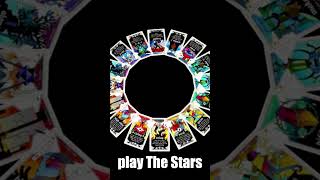
Reviewers describe the game as having an ethereal quality, an almost musical rhythm that governs turns. This arises from the interplay between logical necessity and intuitive inference. The Arcana cards feature abstract artwork that reinforces the mystical atmosphere without distracting from gameplay. The game ticks along nicely, rarely grinding into analysis paralysis because the timer always looms. Over a typical play, this feels less like assembling a jigsaw and more like a séance where the team converges on truth through shared intuition and careful observation.
What Makes The Shipwreck Arcana Stand Out
Unique Deduction Mechanics
Most deduction games trade in concrete facts. The Shipwreck Arcana operates in the realm of implication and inference, deliberately withholding perfect information and requiring players to act on partial certainty. This makes it fundamentally different from games where you logically eliminate possibilities until one answer remains. Instead, teams develop a shared understanding through clues encoded in card placement, creating a tight feedback loop rarely seen in board gaming.
Originality That Resists Comparison
Reviewers note that The Shipwreck Arcana resists easy comparison. It is not a clone or a variant; it exists in its own niche, borrowing elements from cooperative and deduction games while remaining wholly distinct. The combination of hidden numbers, cryptic cards, token placement, and push-your-luck timing creates a mechanical identity that stands alone. For players fatigued by endless variations of the same archetype, it offers a genuinely fresh experience.
Potential Drawbacks
Bouncing Off the Abstraction
Not every player embraces The Shipwreck Arcana. Those who prefer purely logical deduction, where every clue is a concrete fact building toward a certain conclusion, may find the reliance on inference frustrating. Players who dislike guessing or who struggle to read teammates can feel adrift. The game demands comfort with uncertainty and a willingness to trust partners' reasoning even when it is not explicitly stated, so players who want every step to be provable may find the open-ended approach nebulous.
Availability and Reprint Scarcity
The Shipwreck Arcana has faced availability challenges, having been out of stock in many markets at times, which frustrates players eager to bring it to their tables. Reviewers expressed visible regret about recommending a game that can be hard to find. This is a market constraint rather than a design flaw, but it remains a real barrier to ownership for many interested players.
If You Enjoy The Shipwreck Arcana
If The Shipwreck Arcana resonates with you, seek out other games that prioritize elegant mechanics and tight cooperation over heavy rules. The Mind shares the cooperative, wordless-communication DNA, leaning even harder into pure tension. Mysterium offers cooperative deduction with beautiful artwork and a similar theme of extracting meaning from abstract clues, using a ghost-giving-visions framework. Hanabi captures similar teamwork dynamics through limited information, and Codenames delivers the satisfaction of encoded communication at a lighter weight.
What Reviewers Are Saying
"This is actually a purely cooperative deduction game where you are trying to guess a numbered tile in your teammate's hand."
— Chairman of the Board
"The game does tick along really nicely. You can be creative with it. It has this real kind of ethereal dance going on."
— Chairman of the Board
"It's a deduction game with really neat card artwork, there's some really abstract artwork, but it's fully cooperative, and it's just different. It was a different kind of deduction game than I'm used to, and I really love deduction in board games."
— Before You Play