/pic7461472.png)
/pic7461472.png)





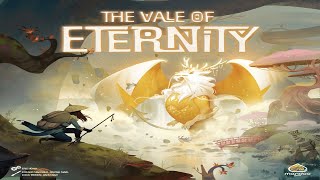











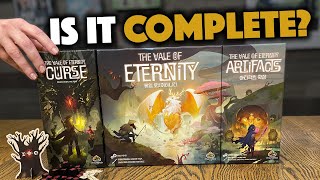




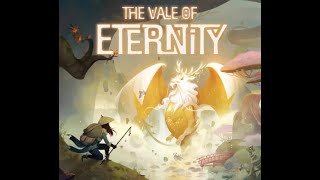




















The Vale of Eternity Deep Dive
What the Community Thinks About The Vale of Eternity
The Vale of Eternity has captivated board gamers since its 2023 release, earning praise for its elegant simplicity masking remarkable strategic depth. Reviewers consistently highlight how the design achieves something rare: a game that plays quickly and teaches easily, yet rewards exploration of intricate card synergies and demanding tactical choices. Multiple reviewers have named it among their top games of the year, with some positioning it among the finest examples of modern small-box card games.
Core Mechanics That Define The Vale of Eternity
Drafting and Resource Management
The game's signature draft system drives both player interaction and decision tension. Each round, players reveal cards equal to twice the player count, then place markers in a double-pass pattern: first clockwise, then counter-clockwise. This elegant snake draft creates meaningful jockeying for position without overwhelming strategic calculus. Reviewers emphasize that drafting feels urgent because players must simultaneously pursue personal synergies while blocking opponents from completing powerful combos. The magic stones currency layer amplifies this tension: players can hold at most four stones, and they cannot be exchanged freely. This restriction forces brutal choices about what to sell versus what to hold, transforming every action into a resource puzzle. One reviewer called this constraint "a really important factor" that fundamentally shapes turn-to-turn decisions.
Card Synergies and Engine Building
The beating heart of Vale of Eternity is its ecosystem of seventy creature cards, each offering effects that chain with others. Cards provide instant bonuses upon play, permanent ability boosts, and active effects triggered during the resolution phase. Reviewers describe discovering synergies as magical: a single combo can pivot a losing position into sudden momentum. Meeple University identified a three-card chain involving Red Hestia, Stone Golem, and Rock Golem that could deliver thirty points from a single resolution phase. Another reviewer noted that "there are many possibilities to play your game," suggesting that different cards support wildly different paths to victory. The cards reward both narrow focused strategies and broader opportunistic play, ensuring each game feels fresh because new combinations emerge from the limited card pool on offer each round.
The The Vale of Eternity Experience
Satisfying Progression and Accessibility
Vale of Eternity manages to feel both breezy for newcomers and deeply engaging for veterans. The drip-feed mechanic keeps this balance sharp: in round one, players can field only one card face-up; in round four, they unlock four simultaneously. This graduated introduction prevents early-game overwhelm while setting up the crescendo of late-game tableau complexity. Chairman of the Board praised this directly, noting it is "pretty rare" when a designer adds such depth to a simple structure without choking the player with information. The game's production clarity helps tremendously; card anatomy is described as "immaculate," with consistent iconography and straightforward rules text. Even the cartoony art style, which one reviewer found initially "jarring," becomes endearing through repeated play, conveying the game's lighthearted yet strategically serious tone.
Engaging Player Interaction and Turn Tension
Despite being primarily multiplayer solitaire in structure, Vale of Eternity generates meaningful interaction through the draft phase and occasional take-that effects. Reviewers highlight the "turn angst" created by watching opponents reserve cards you wanted, forcing constant recalibration of plans. The drafting system itself becomes a mind game: should you block a card that perfectly completes an opponent's engine, or prioritize your own combo pieces? A few cards allow direct disruption, such as forcing opponents to discard, though reviewers note these are expensive enough to feel earned rather than dominant. The real tension emerges from scarcity: the right card might appear only once, and only one player will claim it. The Board Game Garden described this as generating "good player interaction" despite minimal direct conflict, creating what one reviewer called a "polarizing mechanism" centered on tough resource choices rather than aggressive play.
What Makes The Vale of Eternity Stand Out
Elegant Design and Surprising Depth
What elevates Vale of Eternity above similar card-drafting games is its refusal to rely on complicated subsystems. The core flow is almost laughably simple: draft, take actions, resolve. Yet reviewers marveled at how much decision space emerges from this skeleton. The limiting factors are elegant: four stones max, one card per round, cost-to-reward trade-offs on every turn. Chairman of the Board called it "ultra simple" but emphasized that "the gameplay is however inbuilt into the cards themselves," meaning complexity grows naturally through card interactions rather than rules additions. Designer Eric Hong created a system where every card has a use in some scenario, preventing dead draws and dead turns. Reviewers repeatedly stopped to remark that they were "mindblown" by how tightly designed this game feels, with one calling it "a piece of kind of game design art."
Replayability Through Card Variance and Combo Discovery
Seventy creatures from global mythologies ensure that no two games present identical card markets. Because players can only see what draft reveals each round, the available synergies shift unpredictably. One reviewer emphasized this point: "you can't really take the same cards each game because a lot of them will be discarded for money," forcing adaptation even within a single play session. The combination count is vast enough that even after multiple plays, new chains surface. The race element (first to sixty points ends the game; if no one reaches that by round ten, highest score wins) prevents the endgame from dragging, yet keeps tension high because slow starters cannot catch up through lucky final rounds.
Potential Drawbacks
Limited Ceiling for Veteran Players and Openness to Expansion
One reviewer expressed hope for expansions, noting "the sky really is the limit" but cautioning that the core deck is so tightly tuned that adding cards risks bloat. While reviewers celebrated the game's self-contained quality, some suggested that players seeking ongoing strategic freshness might exhaust the base game's novelty within ten to twenty plays. The compact card pool that ensures every card has a role also limits the sheer variety of possible synergy chains, meaning dedicated players may eventually map most viable strategies.
Table Presence and Player Scaling
While the game scales cleanly from two to four players, reviewers noted that four-player games tax patience. The snaking draft order means the first player in a four-player game waits three turns after drafting before acting during the action phase. Chairman of the Board recommended the two-to-three player count as the "sweet spot" for keeping everyone engaged. The cartoony artwork, while charming, may not appeal to players seeking darker fantasy tones or hyper-realistic production. Some players coming from heavier Eurogames might initially mistake the simple turn structure for shallow gameplay, potentially underestimating depth on first encounter.
If You Enjoy The Vale of Eternity
Vale of Eternity shares DNA with several proven classics. Fans should explore Hadrian's Wall for its tense resource-scarcity puzzles and Lost Ruins of Arnak for its blend of worker placement and deck-building depth. Players who love chaining card abilities will find similar satisfaction in tableau-building games that emphasize engine construction. Those captivated by the mythological creatures should investigate the broader card-drafting genre, particularly games emphasizing set collection and synergy triggers. The game's speed and elegant rule set make it an ideal gateway for players intimidated by longer Euros, yet its strategic nuance satisfies experienced gamers seeking meaningful decisions compressed into forty minutes.
What Reviewers Are Saying
"The game is ultra simple, all the gameplay is however inbuilt into the cards themselves, and to be honest in a quick video like this I can't really demonstrate the synergies between these cards, but you'll have to take my word for it that it is quite remarkable how these cards interact with each other and the different paths of victory that you can try to take."
— Chairman of the Board
"I've played it a ton and just every single time I play this game I love the variability of the different kind of engines that you can create with the cards, and I love the really interesting unique rules in this game where you can only have a certain amount of cards in your tableau based off the round number."
— The Board Game Garden
"There are various powers in the cards and yes lots of combos you can do. You see this is just one way to combo your cards, there are many you can do, gives you many possibilities to play your game."
— Meeple University