/pic3726803.jpg)
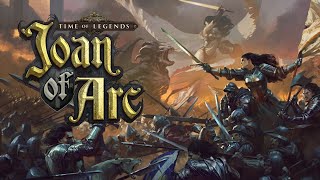
Time of Legends: Joan of Arc is set amid the tumult of the 100 Years War, when kings and princes struggle for the throne of France. This is the age of knights and squires, where chivalry is often spoken of, but rarely practiced. It is a time of both religion and superstition. Educated clerics fervently believe that angels guard the pious, and demons scourge the wicked, while the simpler folk watch the night for signs of werewolves and dragons. The game assumes that all of these are real.
Joan of Arc is a story-driven board game that uses finely-sculpted miniatures and 3D scenery to set the scene for a game of cunning and skill (and a little luck). The game is a combination of interwoven card play, resource management, and position on the board. You will need to master all three to beat the best opponents. Getting your men into the right position, and heading off your enemy, will be no use if you cannot muster the cards and other resources to make the most of it. Joan of Arc allows a huge amount of freedom in your actions. In every turn, you can choose to spend or save resources, and when you come to activate a unit you can choose between combat, interrogation, search, exploration, prayers, and other actions. So, this turn, should you level up a hero, or spend that resource to buy a re-roll? Take extra actions now, or save them for later? Double-move that cavalry, or question the old woman in the woods? When and how to act are decisions you must make based on your objectives, and the situation on the board. And, what is the best decision one turn may be very different in the next.
Players take the role of the various factions in the war, or of some of the supernatural creatures that have emerged from the shadows. The most famous heroes and heroines of the war are all here: the Black Prince, the Dauphin, Falstaff, and, of course, Joan of Arc herself. Each game is a unique scenario with its own map assembled from the gaming tiles, and a specified set of heroes and followers to achieve the scenario’s objectives. Each scenario has its own victory conditions, often different for each side. In one game you may be an inquisitor, seeking out a werewolf hidden among the peasantry; in another you may be a victorious raiding party, desperately fighting your way through an ambush so you can return to the safety of your castle.
Scenarios range from small affairs with a few models and simplified role-play elements, to full battles with dozens of knights, archers and men-at-arms. All scenarios typically play in under an hour. The game also includes a battle mode, to fight out conflicts between armies of your choosing.
—description from the publisher

- Innovative and unique cube system
- Thematic presentation
- Epic and cool miniatures
- RPG elements are unique for a skirmish game
- Streamlined combat in some aspects
- Area activation is preferred over individual unit activation
- Can be fun in smaller, shorter scenarios
- Clunky and unclear rules
- Messy and time-consuming setup
- Overwhelming complexity for beginners
- Tedious individual unit activation
- Quantity over quality scenarios, many are unbalanced
- Dice-driven combat can be frustrating with little payoff
- Confusing unit identification due to small bases
- Miniatures are tiny and difficult to place
- Exhausting to play due to length and complexity
- Cube system availability can be determined by cards, leading to downtime
- Reinforcements in scenarios can be demoralizing
- Joan of Arc
- Warhammer
- Twilight Imperium
- Mythic Battles
- Rising Sun
- Blood Rage
- Kill Team
- Battles of Westeros
- Song of Ice and Fire Skirmish Game
- Rune Wars
- Hate
- Mythic Battles Pantheon
- Mythic Battles Ragnarok
- X-Wing
Mechanics (from transcript analysis)
- Area Activation — The guest prefers this over individual unit activation, finding it less tedious.
- Card Play — Unique cards are involved, and unit activation can be influenced by cards.
- Command Characters — Activating command characters allows for the activation of adjacent units, creating a swarm effect.
- cube system — Players use cubes to activate units. The amount of cubes available can vary, with a limit on how many can be carried over.
- Dice combat — Combat involves rolling dice for attack and defense, with effects applied afterwards. Disruptions and kills are determined by leftover dice.
- hex grid — Movement and combat are based on hexes rather than a tape measure.
- RPG Elements — Includes quests and NPCs that players can interact with.
- scenario-based play — The game features various scenarios, including 'Armageddon', the biggest structured fight. Some scenarios are historical, others are fantastical.
- Skirmish — The game is described as a skirmish game with 'dudes on the map moving them to fight'.
Video topics + discussion points
Quotes (from this video)
- there are erratas like their rulebooks are always on release
- this game is a [expletive] mess like of a skirmish game
- the two and three peg holders is so [expletive] messy it's so stupid
- quantity over quality like we know for a fact not every scenario is great
- cube system easily the best part this is unique i haven't seen this in any game
- i just don't want to play a dice chucker for first you know four to six hours
- this game is exhausting for me
References (from this video)
Mechanics (from transcript analysis)
Video topics + discussion points
Quotes (from this video)
- The idea is that we created a brand new system called destinies which is a similar thing like scan and play technology you know from Chronicles of Crime but now it's a fully Sora driven RPG like competitive adventure game.
- The main point is to create amazing story driven experience and this world is highly interactive it's changing all the time so your actions in one place interfere with other places in the world.
- It's gonna hit the Kickstarter this autumn so this autumn probably like September.
References (from this video)

- Combines bag-building and pen-and-paper mechanics
- Orléans
Mechanics (from transcript analysis)
- Bag Building — The game is described as the Orleans version of bag-building.
- Pen-and-Paper — It incorporates a pen-and-paper element.
Video topics + discussion points
Quotes (from this video)
- uh yes sister Ami yes by boarding guys and it has rondel worker placement game Wheel rather than a Rondo thank you thank you um but it was you know for everything that you'll see here it's fundamentally a uh simple worker placement leading to a tile placement but it's very interesting tile placement
- plain craft this is this was successfully kick-started we this is the deluxe edition with beautiful components by cardboard I can't say things right now cardboard Alchemy yeah very uh very big in the hotness at the moment this one indeed indeed
- next one is Evergreen now this is by the designer of photosynthesis it has some same feeling but I think it's not as special as rotationally as photosynthesis yeah you really struggle to uh to visualize what was going on with photosynthesis and even I did and I can rotate stuff in my head oh right yeah it's very challenging that one yeah this one Evergreen
- next one is endless winter now this is this is the uh the Australian version which has got gas Studios so I am part of goth Studios with Mark and Carl so there's no way I'm gonna review this game I'm just telling you that I think this is going to be it's well anticipated well anticipated it'll be a in my anticipated list not because I want to get it but because I'm excited for our partner Fantasia games so it's liberation
- if you're in Australia um Essen weekend corresponds with Pax Australia week and it'll be a demo there as well and hopefully be for sale there as well
- this is we're helping Mozart in his last days and this is also it is going to be I think it's really good the components are great it's double layered it's from Denver games which is the rectil guys let me show you the back of the box it boxes kind of like typical Euro gaming and I was looking at the components I was punching it out the other day and look at this side it's so cool it's like it's music book but it's a double layer player board ta-da it we have not played this yet as of today but it looks like kind of like the Concordia style card play which the deck building pool building pool action Action Pool thank you so theme is great so excited for this one
- so again what are your release am I going to see you at Essen let me know let us know in the comments section below and I'll be happy to also check it out maybe it is your game maybe someone else's game I don't care in any cases write in the comments and I'll check it out anything else Sam
- if you enjoy this video and you want us to make this sort of video or you know maybe our most anticipated other games or our whole Essence Hall games it's probably like should be another one which is showing and then compare this video with the next one anyways if you do that please let us know like the video comments below and subscribe and hit the bell
References (from this video)

- The interaction in multiplayer is great, making players watch each other's boards and pads.
- The variability from the buildings keeps the game fresh.
- The 'deeds' section provides a cool mini-race at the beginning of the game.
- It looks complex but isn't overly complex to play.
- It's the host's favorite draw and write game, despite not typically enjoying the genre.
- The solo mode is considered serviceable but significantly less engaging than the multiplayer experience.
- Half of the sheets are dedicated to the solo mode, which the host found a bit of a waste.
- Trade and establishing outposts
- Early Home Universe
- Orleans
- Fleet: The Dice Game
Mechanics (from transcript analysis)
- Building Construction — Players can build buildings that provide enhanced actions, with a tiered unlock system.
- Chit drafting — Players draw colored tokens from a bag and select them to perform actions.
- Draw and Write — Players draw chits from a bag, draft them, and use their associated actions to mark things on their sheet.
- multiplier scoring — Points are scored by multiplying the number of outposts by a multiplier derived from citizens and other bonuses.
- Route Building — Players build routes along roads or rivers on their sheet.
- Set Collection — Players collect goods, coins, books, and citizens.
- solo mode — A solo mode is included with a deck of cards that dictates AI actions.
Video topics + discussion points
Quotes (from this video)
- this is my favorite and I'm not a rolling right person so I feel a little bit hesitant but I think man they might they must they're gonna love this because I don't really like it and I love it and if you love really love it you're probably gonna really love it even more
- The interaction of the game it's not there's not a lot of direct interaction of course but the whole deed thing that kind of early game part is a really cool kind of concept because there's just that little mini race at the beginning of the game it's really neat
- it delivers on the promise of what you would want it to do and that's something for me that I found missing in most of the others that I've played
- serviceable solo but it's just to me I'm like I never want to play solo again I want to only play it with players just because of all the things that I mentioned
References (from this video)

- Favorite flip and right roll and right style game
- A lot of good fresh stuff
- A lot of interaction with the maps
- Easily my favorite kind of flip and right rolling right style game
- Really had a lot of fun with it this year
- Great game
- Usually don't really like those kinds of games
- Got burned out on them pretty quickly a couple years ago
- Orleans
Mechanics (from transcript analysis)
- Card Drafting — Variable powers introduced with decks of cards.
- Drafting — Drafting different tokens.
- Engine Building — Combos and different setups.
- flip and write / roll and write — Joan of Arc is a flip and write or draft and right roll and right version of Orleans.
Video topics + discussion points
Quotes (from this video)
- I think it's my favorite coin game of all time now.
- It's so Technical and crunchy and just immersive.
- It comes with these really beautiful standies.
- This is going to be part of the giveaway so just leave a comment below.
- It feels like you're playing Skyrim or Fallout but in this Studio Ghibli style World post post apocalypse.
- The way the mechanics and stuff which I'll talk about in the review which will be linked really lend itself to breathing life constantly through the course of the game.
- And that to me is like such a new breath of fresh air.
- So if you plucked me out of this universe somehow and you said you have a choice between you know Skyrim and Fallout no thanks and uh um you know this is like post postapocalyptic Earth I 100% I'm going to play in the world of the earthborne.
References (from this video)

- Joan of Arc
Mechanics (from transcript analysis)
- Area Control — An aspect of the game that influenced Crusaders: Thy Will Be Done.
Video topics + discussion points
Quotes (from this video)
- I liked Heat Pedal to the Metal more than I have previously.
- Texas Showdown was surprisingly fun.
- Cockroach Poker was of course still awesome.
- And Hacker Lackin is great.
- the one that I have played in the past but played again that just reiterated to me like how slick I like just how much I enjoy the design was Crusaders. Thy will be done.
- It's a super solid game, too.
- I don't envy publishers right now trying to figure out what the heck to do.
- My favorite part about 51st state was you you you'd hire you'd hire a leader and your leader would give you bonuses or whatever and do your things. That's not in the new version.
- I like the original much more than the new one.
- The guy just felt the need to come back in every three or four minutes and talk about quite literally [ __ ] nothing.
- Small talk is just my kryptonite.
- I don't know how to make small talk. I only make big talk.
- My wife hates bugs. Which is why I'm trying to make the camper nicer.
- It's just like, Oh, you got your camper nice and like you could charge 50 bucks a night. It's lakefront.
- I will be the president of the Sparta Conservation Society bookmark one day.
- My dad might get to prison.
- I just hope I can make money off of it.
- Don't knock until you try it, man.
- It's a good chunk of voting power.
- My son is 13 and he wears size 13 wide shoes.
- He's just like, 'Oh, can I do it too, Dad?'
- I'm going to name it. I'm naming that chunk of road.
- It's just exciting when your parents be like, 'Oh, which way are you going to go?'
- It's just like, 'Oh, yeah, we got the robot. The robot broke down.'
- My daughter still enjoys going out there and summer's starting soon.
- Yeah, but you could just have the Airbnb and be like, 'All right, I'm going to be here what four weekends out of the summer?'
- It's just like, 'Oh, yeah, dad might get to prison.'
- I was like, 'Okay.' Just went back to playing Marvel Rivals.
References (from this video)

Mechanics (from transcript analysis)
Video topics + discussion points
Quotes (from this video)
- Heard someone call this the running of the nerds, which I think is very apppropo.
- A Place for All My Books is a very cozy, puzzly little game.
- It's almost like an adult search and find.
- So, if you're a Castles of Burgundy fan, there is a kid version, the Sand Castles of Burgundy
- Gaming Trend just stopped by and awarded uh Synapse Games the best of Gen Con 2025 award for Compile Main 2, the new yellow box releasing in October.
- Ivy Studios would win at Best Bag. Look at this thing. It is amazing.
- I am excited about so many of these games.
- So many good choices.
- I realized in a snippet that I did earlier, I said excited I think seven times. So, if you want to play a fun game, just re-watch this video and count how many times say how many times I say excited. You can even count that one. It's going to be a lot.
References (from this video)
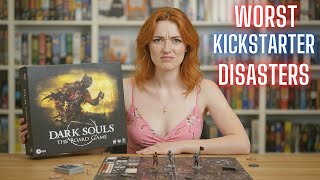
- grand thematic ambition and epic scope
- high potential for cinematic battles when running well
- setup is a nightmare and time sink
- tiles and scale were misaligned with the unit count
- production and upgrade issues complicate ever getting a playable experience
- grand-scale battles, strategic management, and unit activation
- epic 15mm-scale fantasy war with mythic overtones
- massive campaigns with modular setup and scenario-based progression
- War of the Ring
- Slay the Spire
- Gloomhaven
Mechanics (from transcript analysis)
- cube-based activation and command limit — Unit activations are governed by cube-based resources; command limits constrain actions.
- Hexagon Grid — Hex terrain and scale are meant to influence tactics and positioning.
- massive setup and unit organization — Hundreds of 15mm miniatures and dozens of units require extensive setup.
- terrain and scale effects — Hex terrain and scale are meant to influence tactics and positioning.
Video topics + discussion points
Quotes (from this video)
- IP doesn't fix bad design flaws.
- When players are actively rewriting your core mechanics before they'll play the game again, that's a massive red flag about the underlying design philosophy.
- The treasure deck, which is completely random.
- You're fighting the RNG of the deck more than you're fighting the actual monsters.
- Semi-cooperative is basically code word for we made players sabotage and betray each other constantly.
- This moment the game broke for me.
- For $1.5 million and that hype, mediocre is a massive letdown.
- They claimed 600% shipping increases due to COVID in Ukraine war. Refused to absorb those costs or offer refunds.