/pic5410377.jpg)

/pic5410377.jpg)







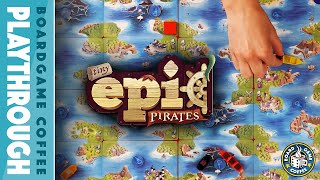



Tiny Epic Pirates Deep Dive
What the Community Thinks About Tiny Epic Pirates
Tiny Epic Pirates occupies an interesting spot in the Tiny Epic lineup. Reviewers praise its production quality and inventive action-selection system, but reactions split on whether the core experience delivers on the pirate theme. Channels like Allies or Enemies appreciate the tightly designed market and merchant mechanics, while Chairman of the Board found it a less inspired mash-up of familiar systems. It is a game, published by Gamelyn Games, that rewards knowing what to expect before you set sail.
Core Mechanics That Define Tiny Epic Pirates
The Rondel and Captain Wheel
At the heart of Tiny Epic Pirates sits an elegant action-selection mechanism: a rondel of captain actions that the captain advances each turn. The wheel is divided into slots for searching, plundering, trading, recruiting crew, attacking, and hiding out. The clever twist is that players arrange their order tokens in a different sequence each game, so the action wheel changes from session to session and forces constant tactical adaptation. You advance your captain at least one space each turn, which makes choosing how far to move a meaningful decision in its own right.
The Mancala Crew Mechanism
Crew management uses a mancala-style system that extends well beyond simple action selection. Your deckhands occupy positions on your helm that confer bonuses, such as boosting sailing, adding combat strength, or enhancing specific actions. Sowing and reassigning crew powers your abilities and recharges them over time, while injuries (from storms or battle) can strip a bonus mid-turn. This creates a push-your-luck tension between braving dangerous waters and playing it safe, and hiding in a cove becomes a chance to reset your crew strategically rather than wasted downtime.
The Tiny Epic Pirates Experience
A Merchant Game Wearing a Pirate Hat
Reviewers consistently note that Tiny Epic Pirates differs from what its theme suggests. You captain a ship, hunt treasure, raid merchants, and bury gold, but the mechanical heart is market timing and pick-up-and-deliver resource management. You buy goods low and sell high at shifting markets, then bury the proceeds to score. Combat exists, yet it is not the focus; attacking merchants yields gold and legend, while clashes mostly settle position. One reviewer observed that at two players the pirate-on-pirate conflict feels muted, with the experience reading more like a trading game than a swashbuckling brawl. More players add conflict, but the core loop remains trade and treasure.
Tight Production and Table Presence
Arriving several years into the Tiny Epic series, Tiny Epic Pirates shows a clear step forward in component quality and art direction. The modular sea of map cards looks striking on the table, and the little ship tokens have genuine charm. The small box is deceptively dense, holding rondel tokens, crew and merchant cards, a market with goods, port tokens, and player mats for several captains. Reviewers praised the production as a meaningful upgrade over earlier entries, though some noted the small tokens and cards demand careful handling to avoid losing pieces during play.
What Makes Tiny Epic Pirates Stand Out
The Ever-Changing Action Wheel
Unlike many action-selection games where the available actions stay static, Tiny Epic Pirates randomizes its rondel each game. This simple twist creates real replayability and forces genuine decisions every turn, since you cannot simply memorize an optimal path. Your strategy shifts based on which actions align this game, which crew you have committed, and where opponents sit. Reviewers highlighted this as the strongest design element, noting how it keeps games from feeling identical while keeping every captain on equal footing with the same actions in a different order.
Compact Box, Sprawling Choices
Tiny Epic Pirates packs a surprising amount of game into a tiny footprint. Multiple viable paths to victory, varied crew effects, randomized maps, and the rotating rondel all contribute to an experience that belies its size. Reviewers consistently remarked that it does not feel toy-like despite its dimensions. The trade-off is fiddliness, since the small components and tight layouts reward deliberate, careful play, but for those seeking a full economic puzzle wrapped in a pirate theme and compact enough to travel, the game delivers.
Potential Drawbacks
Mercantile Mechanics Over Pirate Fantasy
The most common criticism centers on a thematic disconnect. The game promises pirate adventure but delivers a fairly abstract market-trading simulation. If you come to the title hoping for ship-to-ship cannon duels and high-seas drama, Tiny Epic Pirates may disappoint. The attack system exists, but combat is secondary to managing resources and timing markets. One reviewer estimated that at two players the actual fighting feels sparse, and the game reads more like a merchant game than the swashbuckling fantasy the cover suggests. Scaling up the player count helps, but the core loop remains resource optimization.
Small Components and a Real Learning Curve
While reviewers praised the production, the compactness cuts both ways. Small tokens, densely packed mats, and several simultaneous systems (rondel advancement, crew assignment, sailing, combat, market shifts, and merchant movement) create a moderate learning curve. The rules are streamlined, but the interaction of these mechanics takes a few plays to internalize, and the tiny pieces demand careful handling to keep the board state readable. For players seeking true pick-up-and-play simplicity, the game asks for more setup and management than its box size might imply.
If You Enjoy Tiny Epic Pirates
Fans of Tiny Epic Pirates often gravitate toward Tiny Epic Galaxies, frequently cited as the high point of the series for its elegant action-selection and constant engagement through its follow mechanic. Those who want engine-building in the same compact footprint should explore Tiny Epic Dinosaurs, which anchors strategy around worker placement and ranching rather than market swings. And players disappointed by the mercantile focus who crave genuine conflict may prefer Tiny Epic Vikings, which leans into area control and direct player engagement, offering more of the head-to-head clash that the pirate theme might lead you to expect.
What Reviewers Are Saying
"What I really like about this game is how you pick your actions, because it's a rondel system. Each time you play, you put it out in a different order, so everyone has different orders of actions."
— Allies or Enemies
"The tricky part comes down to expectations. When you see Tiny Epic Pirates, you think, oh, I'm going to be fighting ships and making people walk the plank. Really, it's mostly about gaining those goods and dropping them off. It's more of a merchant game."
— Allies or Enemies
"It felt like a bunch of different games mashed together into a pirate-themed game, and while that's fine for a lot of people, once you've played so many games it just feels like a copy-and-paste style game, nothing new, nothing fresh."
— Chairman of the Board