









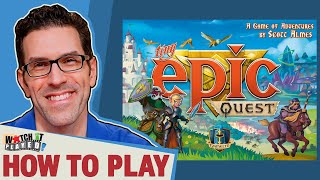



Tiny Epic Quest Deep Dive
What the Community Thinks About Tiny Epic Quest
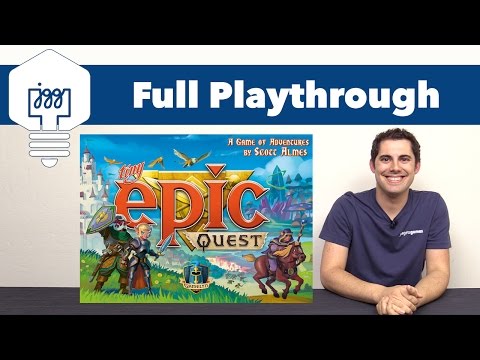
Reviewers generally agree that Tiny Epic Quest is the most adventure-driven entry in Gamelyn Games' Tiny Epic line, and that its fantasy setting is the reason many players warm to it. Designed by Scott Almes, the game sends three elf heroes into a world overrun by goblins, with each round split into a daytime travel phase and a nighttime adventure phase. Opinions diverge on whether that structure delivers. Meeple University said the fantasy theme "just gets me" but found the game too solitary, with many options on the board and little sense of interacting with the table. Allies or Enemies placed it near the bottom of their Tiny Epic ranking, praising its theme and mechanics while noting that the heroes can be picked off quickly and that the game feels lighter than they wanted.
The more critical voices are sharper. The Broken Meeple called it a "random luck fest" and gave it a three out of 10. Board Games UnLocked ranked it second on a list of disappointing games from 2017, describing it as forgettable. Even reviewers who respect the ideas tend to rank it below Tiny Epic Galaxies. Getting Games put it among the favorites of the series, but said Galaxies is the stronger game.
Core Mechanics That Define Tiny Epic Quest
Dungeon Crawl
The dungeon crawl loop in Tiny Epic Quest is built on movement between locations rather than a single labyrinth. Each player selects a travel card in turn, which determines whether heroes move by road, water, or another route, and players can borrow a travel option after someone else has used it. During the night phase, heroes act out where they ended up. Temples require scrolls and maps to pass through, portals are where goblins are fought, and obelisks are where spells are learned. Reviewers describe this as an explore, fight, and loot cycle that is easy to understand but can feel slow when the dice do not cooperate. Allies or Enemies summed up the feel as traveling to places and then deciding what to do there.
End Game Bonuses
Victory points come from three sources: completing quests, learning spells from the mushroom track, and slaying goblins. Quests are drawn from a deck and become available to whichever hero can satisfy them first, so the final tally often depends on which player happens to be positioned for a revealed quest. The Broken Meeple pointed out that the tracks run from zero to ten while the game lasts only five rounds, which made the top levels feel out of reach. Because the standings are settled over those few rounds, the closing tally is where reviewers said the outcome becomes clear.
The Tiny Epic Quest Experience
Adventure
Reviewers consistently reach for The Legend of Zelda when describing how the game feels. Heroes ride across a map toward portals and temples, and the day-to-night rhythm gives the sense of a journey that carries into a nighttime encounter. The feeling is strongest when a run through a temple pays off. The Broken Meeple, however, found the experience flat, saying the game felt like a series of tracks rather than a story, and that the sense of adventure faded quickly. The atmosphere is charming for players who are invested in the fantasy, and thin for those who are not.
Push-Your-Luck
Dice drive most of the tension. When a player rolls, the symbols are resolved in order, with the roller taking the first result and the next player taking the next. This means a bad roll can hurt someone else, and a good one can benefit the whole table. Allies or Enemies found this satisfying when heroes were in the right positions, describing moments of pulling off a difficult temple run as the high point. The Broken Meeple saw the same system as the core problem, arguing that the dice decide too much and that a player can keep rolling until the desired symbols appear, which removes any real sense of urgency.
What Makes Tiny Epic Quest Stand Out
Item Meeples and Equipment
The item meeples are the feature reviewers praise most consistently. Equipment such as swords, shields, bows, and staffs clip onto the hero figures, and combinations provide stat boosts. Ryan and Bethany Board Game Reviews noted that the equippable items let the heroes actually hold their weapons, which they found charming. Board Games UnLocked singled out putting the equipment on the meeples as the best part of the game, even while criticizing the rest of it. Reviewers see the item meeples as a clever use of the small-box format.
A Zelda-Flavored Fantasy Theme
The fantasy setting is a second point of praise. Board Games UnLocked, in a pre-release top ten, described the game as a tiny Legend of Zelda, and said the combination of little heroes and a Zelda-like world was what sold them on it. Allies or Enemies made the same comparison in their review, describing the game as a Zelda experience in miniature. For players drawn to fantasy adventure, the theme is one of the game's clearest selling points.
Potential Drawbacks
Fiddly Setup and Components
The item meeples that reviewers celebrate are also the most common complaint. Nights Around a Table described assembling the equipment as a delicate task, and The Broken Meeple said everything in the box feels as if it might break the moment it is touched. The Broken Meeple also reported that setup and rule clarification took far longer than the advertised 30 to 60 minutes, though part of that was learning the rules for the first time. Reviewers who value a quick table presence may find the component handling tiresome.
Luck, Repetition, and Solitude
Several reviewers said the game's randomness can outweigh player choice. The Broken Meeple argued that quests appear at random, so a player may complete one simply because it was revealed at the right moment. Allies or Enemies described the rounds as repetitive, with the same actions repeated until the game feels long. Meeple University found the experience solitary, with many options on the board and little interaction between players. Groups looking for direct confrontation or tight decisions may find those criticisms persuasive.
If You Enjoy Tiny Epic Quest
Players who enjoy Tiny Epic Quest's dice-driven progress and item-meeple equipment will find similar satisfaction in Tiny Epic Galaxies. Allies or Enemies placed Galaxies at the top of the Tiny Epic series, and Getting Games described it as the strongest game in the line for them. Players who enjoy the push-your-luck pull of shared dice will find a similar tension in Can't Stop, which The Broken Meeple recommended as the purer dice-luck experience that Quest only partly delivers. Players who want fantasy miniatures and dungeon-style questing will find a comparable appeal in Talisman, which Board Games UnLocked cited as a touchstone for the miniature-heavy fantasy adventures that drew them to the Tiny Epic line.
What Reviewers Are Saying
"This is pretty much Tiny Epic Zelda with a different name. This feels very Zelda. It feels like you are Link riding around on a pona going to different places."
— Allies or Enemies
"There's no real sense of urgency. There's no real sense of peril at no point other than when the magic track is at the very top."
— The Broken Meeple
"It seems like a cool idea, until you actually get the thing out, and then you're playing like a teensy game of Operation, trying to fit these little plastic pieces into the meeples. It's fiddly. Fiddly is the best word to describe it."
— Nights Around a Table