/pic6152802.png)

/pic6152802.png)





















Tranquility Deep Dive
What the Community Thinks About Tranquility
Tranquility presents a captivating paradox. Despite its name suggesting serenity, channels like Ryan and Bethany and The Board Game Garden describe it as anything but tranquil to play. The game's silent cooperative gameplay creates an unusual tension that keeps players engaged and eager to return for another attempt. It stands out among limited-communication games by offering depth that invites repeated plays, whether players succeed or fail.
Core Mechanics That Define Tranquility
Silent Number Placement
The foundation of Tranquility is elegantly simple on the surface. Players cooperatively fill a grid with numbered ocean cards in ascending order, but they cannot communicate about their hands at all. Published by Lucky Duck Games, the design forbids any talking, so each player must place one card per turn and hope teammates make complementary plays. This creates a delicate puzzle where reading the table becomes essential. Players learn to observe what cards others have recently played and discarded, using that information to make educated guesses about what remains in hand.
The Discard Penalty System
What transforms Tranquility from a simple exercise into a strategic challenge is the discard requirement. Whenever a player places a card next to an existing card, they must discard a number of cards equal to the numerical difference between them. Placing a 56 next to a 54 costs two cards. The catch is that discards are face-down and invisible to everyone else. This mechanic forces an agonizing calculus on every turn, where players must decide which cards might be crucial for winning versus which they can afford to lose, without knowing what their teammates will need later. Players can discard a couple of cards as a free action if they cannot legally play, but the grid gradually fills and restricts placement, making such moves increasingly risky.
The Tranquility Experience
Anxiety and Engagement
Reviewers identify anxiety as Tranquility's most distinctive emotional signature. That anxiety, however, is not frustration but rather an engaging tension where every decision feels consequential. One reviewer noted that anxiety fills the table with every play, creating a rush of fear that the card being discarded might be essential later. Yet this pressure does not deter players. Even after losses, players feel optimistic about returning to try again because they sense improvement is possible with a different approach. The game creates a compelling feedback loop where failure motivates rather than discourages.
Calm Aesthetics Meet Intense Gameplay
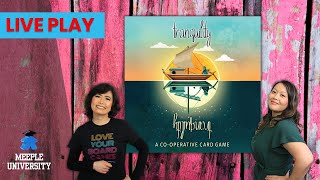
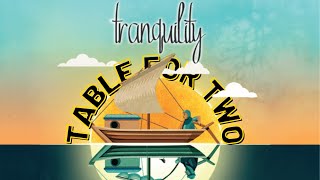
Tranquility's card art depicts serene day and night scenes with creatures and natural landscapes that players appreciate during play. The beautiful artwork provides a visual anchor that keeps the experience pleasant even when strategy falters. Reviewers describe the game as therapeutic despite its demanding puzzles, perhaps because the gorgeous cards and calm theme offer respite between turns. This contrast between visual tranquility and mechanical tension defines the player experience and makes losses feel less punishing.
What Makes Tranquility Stand Out
Replayability Without Fatigue
Unlike some limited-communication games, Tranquility does not exhaust its novelty after a single victory. One reviewer compared it favorably to The Mind, noting that after completing The Mind there was little incentive to return, whereas Tranquility avoids this problem because each game offers new puzzles and the silent coordination creates fresh challenges. The game invites players back to the table repeatedly, whether to break a losing streak or refine a winning approach.
Reading the Table and Probability
Success in Tranquility rewards table reading and probabilistic thinking. Players must observe patterns in what cards have been played and discarded, then run mental statistics about what remains in hand. One reviewer explicitly highlighted this aspect, describing the need to read the table and figure out what cards teammates are likely holding. This layer of deduction elevates the game beyond pure luck and gives experienced players a genuine edge.
Potential Drawbacks
Difficulty Balance
Tranquility is genuinely challenging. Reviewers report frequent losses even after multiple plays, and some add expansion tiles that increase the difficulty further. For players seeking a lighter cooperative experience, the demanding puzzle may prove frustrating. The satisfaction of victory is earned, not given, which appeals to some players but not others.
Silence Can Feel Isolating
While the silence is central to Tranquility's appeal, it can feel isolating during the main game. The only opportunity for discussion occurs at the start, when players collectively decide how to handle the opening discard. After that single moment of conversation, silence reigns. Some players may find this restriction more limiting than engaging, particularly if they prefer cooperative games with rich table talk.
If You Enjoy Tranquility
If Tranquility captured your interest, consider exploring The Mind, a kindred game in the silent-cooperation family that strips communication to its absolute minimum. Players seeking similar tension should also try The Crew, which combines limited communication with a campaign of trick-taking missions. For another cooperative card game built on shared tension and careful timing, The Game challenges teams to empty a deck onto ascending and descending piles under strict communication limits.
What Reviewers Are Saying
"Every decision that you make is important, and it gives you that rush a little bit and that fear that you will discard a card you need later on. But the other one was important too, so there's no right answer."
— Ryan and Bethany Board Game Reviews
"Your goal is to finish the entire grid without anybody running out of cards. If you ever have to place a card that makes you discard too many, then you lose. I just think it is such an interesting puzzle, and it's very therapeutic, very tranquil, hence the name."
— The Board Game Garden
"Tranquility is a card game where everybody needs to lay down cards in sequence. It's kind of like The Mind, but better."
— Foster the Meeple