/pic6671262.png)
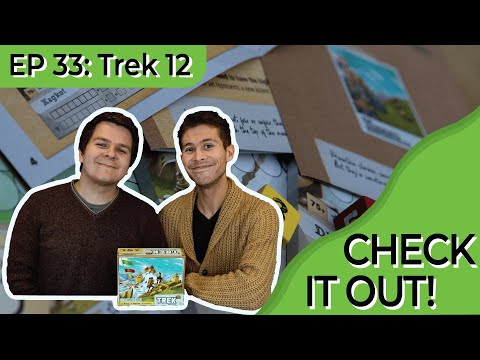
Trek 12 is a roll-and-write alpinism game, with progressive difficulty levels and more. To score points, you have to create chains of consecutive numbers from 0 to 12 and areas of a same number.
A game is composed of 19 rolls of two six-sided dice, with one die having values from 1 to 6, and the other from 0 to 5. After each roll, the player must combine both die values to obtain the number to place. You can:
Add the values of the two dice
Subtract the value of one die from the other
Multiply the value of the two dice
Keep the higher value of the two dice
Keep the lower value of the two dice
Be careful as you may choose each of these options at most four times during a game. After placing your first number on the game sheet, you must place each subsequent number in a space adjacent to one already filled. You try to make chains and develop areas. Players also have access to several bonus elements to earn during a game.
At the end of a game, numbers that belong to neither a chain nor an area give you minus points. The same applies if you have to place a number greater than 12...
Trek 12 contains three different sheet pads to add narrative with three progressive difficulty levels.
—description from the publisher


- Enjoyed the game
- Neat mechanic
- Plays in half an hour
- Plays one to 100
- Nice feature of campaign
- Hit or miss for me
- Climbing/exploration
- Mountain
- Welcome To
- Cartographers
Mechanics (from transcript analysis)
- Campaign — Features a campaign with unlockable content.
- Dice Placement — You place one of the two dice into your grid or onto your mountain based on higher, lower, sum, or difference.
- Roll and Write — Described as one of the 'pure bingo styles' like Welcome To or Cartographers.
- solo — Plays solo.
Video topics + discussion points
Quotes (from this video)
- our top 10 games of 2020
- it's the games we associate with this year
- all the games i really liked were mid-weight games
- i haven't seen any party games in 2020
- i'm not a stagnant object i vary from time to time
- i was super surprised when i played the crew and i love it love it love it
- it's such a simple idea taking trick taking you know traditional style essentially traditional trick taking and turning it into a cooperative puzzle
- it is the most innovative thing that I've seen in gaming this year
- oh my gosh that game oh i blew my mind
- there is nothing innovative in this game
- it is just a perfect interlocking of things that already exist to make something that is really satisfying
- what is your top ten from the comment sections below
- it is subjective because this is what we personally like
References (from this video)
Mechanics (from transcript analysis)
Video topics + discussion points
Quotes (from this video)
- I thoroughly enjoyed this game
- the combinations and everything in this game is just magical
- the scores are really high
References (from this video)
Mechanics (from transcript analysis)
Video topics + discussion points
Quotes (from this video)
- I thoroughly enjoyed this game
- the combinations and everything in this game is just magical
- the scores are really high
References (from this video)
- Beautiful dice and components
- Engaging visuals
- Can be less interactive for some groups
- Exploration with colorful dice
- Himalayan exploration
- Cartoony adventure
- Rajas of the Ganges
- On Tour
Mechanics (from transcript analysis)
- dice drafting / route planning — Color dice indicate actions; plan routes across the map
Video topics + discussion points
Quotes (from this video)
- the beauty of this hobby is there's so many varied opinions
- we're not going to touch on any of our favorite games
- top 10 really top 10 from us soon
- comment below if you disagree
References (from this video)
- Clever use of dice and operators.
- Deep decision making despite simple rules.
- Campaign-like element with achievement envelopes.
- Very neat and fun little game.
- May not have as many interactive elements as other games.
Mechanics (from transcript analysis)
- Achievement Envelopes — Envelopes that unlock new objectives, powers, or rules as players achieve certain goals.
- Chaining — Players make chains and need to pick moments to use operators strategically.
- Dice Operator Choice — Roll two dice, then use the number with one of five operators (higher, lower, sum, difference, product), with limits on operator use.
Video topics + discussion points
Quotes (from this video)
- this is the game that makes us play pinball more
- it's very clever way of using the dice
- simple rules but then deeper decision
- it is more interactive than most
- tries to chain as much together in as effective a way as possible
References (from this video)

Mechanics (from transcript analysis)
Video topics + discussion points
Quotes (from this video)
- Trek 12 is a roll and write game.
- What's a roll and write game? If you'd asked me 2 weeks ago, which you did, I wouldn't have known what it was.
- the way it works is that you roll some dice, and then you write a result on your board.
- For every fixed line, so, for example, there's one through to five, you score the highest number plus the number of other members of the fixed line.
- Or for the zones, you score the high the number that's that the zone represents. So, this is a four plus the number of other numbers in there.
- The person with the most points wins.
References (from this video)
Mechanics (from transcript analysis)
Video topics + discussion points
Quotes (from this video)
- the game called track 12
- the game is about dice and mountain and linking points together
- two dice that we need to roll at the start of the round
- you must link your numbers either with the same cluster of number or linking descending or ascending
- the maximum number you can put here is six
- on the fixed line on the ascending or descending number you us say it's worth as many points as the highest number it contains plus one point per circle
- you get a bonus for longest fixed line
References (from this video)
Mechanics (from transcript analysis)
Video topics + discussion points
Quotes (from this video)
- it's a genuine bingo rolling right
- you roll two dice you use one operator
- the economy of where you get your points is not obvious
- the theme is mountain
- final score of 76
References (from this video)
- Festive Christmas edition with decorations and bonuses
- Quick and accessible roll-and-write format
- Engaging explanation and playthrough dynamic
- Claim of unbalanced zones vs fixed lines
- Complex end-game scoring with ornaments and orphans
- Christmas / holiday
- Christmas edition with decorations and zone/line scoring
- explanatory playthrough with live commentary
- Best of Star Trek
- Seven Wonders Architects
- Libertalia
- Lost Ruins of Arnak
- Pandemic
- Russian Railroads
- Ticket to Ride
- Seaside
- Flotilla
- Welcome to
- Yahtzee
- Grease Lightning
- Qubits
Mechanics (from transcript analysis)
- connection rule — Written numbers must start at the bottom and be connected/adjacent to prior numbers.
- End-game scoring — Score for fixed lines and zones; bonuses for ornaments; penalties for orphans.
- Flip/Roll and Write — Players roll dice and then write a result on their board.
- Interpretation options — From two dice, players can interpret as lower, higher, add, subtract, or multiply.
- Orphan penalty — Orphans (numbers not in a fixed line or zone) score -5.
- Roll and Write — Players roll dice and then write a result on their board.
- Star bonus — Whoever reaches the star first gets 10 points.
- Zones and fixed lines — Numbers can form fixed lines or zones; numbers in a fixed line can appear only once.
Video topics + discussion points
Quotes (from this video)
- Trek 12 is a roll and write game.
- What's a roll and write game? If you'd asked me 2 weeks ago, which you did, I wouldn't have known what it was.
- the way it works is that you roll some dice, and then you write a result on your board.
- For every fixed line, so, for example, there's one through to five, you score the highest number plus the number of other members of the fixed line.
- Or for the zones, you score the high the number that's that the zone represents. So, this is a four plus the number of other numbers in there.
- The person with the most points wins.
References (from this video)
- Engaging scoring economy if planned well
- Compact box and production design
- Supports solo play and potential for online play
- Economy not immediately obvious
- Rules are relatively restrictive and require careful planning
- number-dice clustering
- mountain
- explanatory commentary during play
- Cartographers Heroes
Mechanics (from transcript analysis)
- Compound Scoring — a cluster/chain scores its highest number plus one for every other circle in the cluster; longest cluster and longest chain score; orphans deduct points
- Dice Rolling — roll two dice (one 1-6, one 0-5) and choose among the operators lower, higher, difference, sum, or product to derive a number within 0-12; operators can be used a limited number of times
- dice_and_operator_choice — roll two dice (one 1-6, one 0-5) and choose among the operators lower, higher, difference, sum, or product to derive a number within 0-12; operators can be used a limited number of times
- maps_and_campaign — the game is presented as a campaign with maps; some maps introduce new constraints and envelopes; there are nineteen circles per map
- number_placement_and_connectivity — place the chosen number into circles on the board, connecting it to a single cluster or a single chain
- scoring_mechanics — a cluster/chain scores its highest number plus one for every other circle in the cluster; longest cluster and longest chain score; orphans deduct points
Video topics + discussion points
Quotes (from this video)
- it's a genuine bingo rolling right
- you roll two dice you use one operator
- the economy of where you get your points is not obvious
- the theme is mountain
- final score of 76
References (from this video)
- Rules are quick to learn (two minutes)
- Fast-paced gameplay
- Good for multiple plays in one sitting
- Scoring can be tedious to total at the end
- connecting lines on a grid
- dice and mountain, linking points together
- King Domino
- Flick of Fate
- Flick of Faith
- Rolling Rights
- Clever
- Five Tribes
Mechanics (from transcript analysis)
- bonus for longest fixed line — a bonus is awarded for the longest fixed line
- End Game Bonuses — minus three points for orphan numbers or if not connected
- end-of-game penalties — minus three points for orphan numbers or if not connected
- place numbers on a shared track with constraints — numbers must be placed within eligible circles and must connect to same cluster or ascend/descend
- roll two dice at start of round — two dice are rolled and each player selects numbers from available options
- scoring by lines and zones — points are awarded based on lines containing numbers; highest number in a line plus one per circle in line; zones scoring; minus points for orphan numbers
Video topics + discussion points
Quotes (from this video)
- the game called track 12
- the game is about dice and mountain and linking points together
- two dice that we need to roll at the start of the round
- you must link your numbers either with the same cluster of number or linking descending or ascending
- the maximum number you can put here is six
- on the fixed line on the ascending or descending number you us say it's worth as many points as the highest number it contains plus one point per circle
- you get a bonus for longest fixed line
References (from this video)
Mechanics (from transcript analysis)
Video topics + discussion points
Quotes (from this video)
- This may be my favorite game with unlockable content it's pretty great.
- If you enjoy uh roll and write that makes you really crunch in your brain try to figure out a map a different strategy this one may be for you.
- If you're risk averse and really get bummed out when the dice are not in your favor this may not be the game for you.
- It almost mitigates that luck element because it gives you so many options.
References (from this video)
- Fun, fun, fun
- Layers of complexity that are enjoyable
- Unlockable content drives the game forward
- Doesn't feel overly complex with unlockable content
- Great solo mode
- Makes you really crunch your brain
- Good educational game for practicing math
- Unlockable content provides incentive to play repeatedly
- Requires adaptation
- Tickles the brain in a good way
- Simple and easy to teach
- Dice are loved for their feel and look
- Ranges in complexity
- A little stressful
- Can be frustrating if dice rolls are not in your favor
- Risk averse players might not enjoy it
- Can get difficult as you go on
- Exploring the Himalayas
- Himalayas
Mechanics (from transcript analysis)
- Roll and Write — Trek 12 is a roll and write adventure game. it enables you to explore the Himalayas by rolling dice and placing numbers in strategic places in order for you to score at the most points by the end of the game.
- Set Collection — you'll score fixed lines where each fixed line is worth as many points as the highest number it contains plus one additional point for every circle as part of that chain. you'll also score zones which is as many points as a number in one of the circles plus one for additional circle that's part of that zone.
- unlockable content — as well as the game comes with six envelopes of unlockable content based on when you accomplish various tasks.
- Variable player powers — There's also item cards that you can use to spice up the game and make it a little bit more interesting.
Video topics + discussion points
Quotes (from this video)
- This may be my favorite game with unlockable content it's pretty great.
- If you enjoy uh roll and write that makes you really crunch in your brain try to figure out a map a different strategy this one may be for you.
- If you're risk averse and really get bummed out when the dice are not in your favor this may not be the game for you.
- It almost mitigates that luck element because it gives you so many options.
References (from this video)
- Innovative blend of mathematical mechanics with narrative elements
- May be less accessible for players seeking a strict theme-first game
- progression and discovery through mechanism
- abstract-to-story-to-mechanism progression
- storytelling emerging from mathematical roots
- Dune
Mechanics (from transcript analysis)
- hidden content progression — Content unlocks as the game progresses
- math-driven mechanism with narrative reveal — Original mathematical approach later enriched with story content
Video topics + discussion points
Quotes (from this video)
- gaming is social relations
- solo variants are house rules
- my games are my games
- it's not a competition with myself
- i'm designing the games i want to play myself
References (from this video)
- Interesting integration of story with mechanics
- Shows a long design process and evolution into modular storytelling
- Could be perceived as complex due to modular content
- May require commitment to manage multiple modules
- hidden content and story integration
- Alpine/mountain setting in France; thematic focus on discovery and hidden content
- story-driven with modular content
Mechanics (from transcript analysis)
- Modular Board — Board/configuration changes with story-driven modules and content
- story integration — Narrative elements influence mechanical decisions and progression
Video topics + discussion points
Quotes (from this video)
- gaming is social relations
- solo variants are house rules
- my games are my games
- it's not a competition with myself
- i'm designing the games i want to play myself
References (from this video)
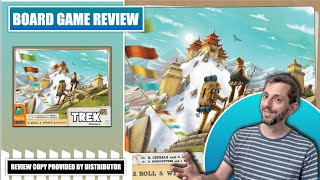
- Infinitely scalable design that can accommodate 1 to 100 players in theory (though the practical value is debated).
- Clear and approachable core rules with a simple turn structure that is easy to teach.
- Expedition mode introduces unlockable content and envelope-reward mechanics that boost engagement and replayability.
- Resettable components and non-destructive progression make the game feel accessible and recyclable for groups.
- Engaging emergent narrative through campaign progression and the envelope rewards.
- The theme feels detached from the mechanics; the box art and presentation do not convey a sense of adventure or peril.
- Limited player interaction in the base game; most decisions are solo, with interaction largely through card choice timing.
- Infinitely scalable feature is more marketing promise than practical value for most players; the game remains relatively light and may not sustain long-term attention for many groups.
- Expedition content can add depth but the base rules plus the optional cards can be left out, which may dampen initial experience for newcomers.
- Compared against stronger contemporaries, Trek 12 may be seen as a pedestrian twist on the number-based roll-and-write genre rather than a groundbreaking innovation.
- Mountaineering risk, path-building, and push-your-luck decision-making
- Mountain climbing expeditions in the Himalaya with three difficulty levels (easy, medium, hard) and a solo/expanded experience.
- Legacy-light progression with envelopes of unlockable content and a light campaign arc
- Welcome To
- Cartographers
- That Time You Killed Me
- My City
- Voyages
- Rolling Realms
Mechanics (from transcript analysis)
- Campaign structure with tiers — Three-difficulty expedition with a mini-campaign (easy -> medium -> hard) and stars to determine the winner; additional stars for beating high scores and achieving objectives.
- Chain creation and zoning — Players aim to form chains of consecutive numbers adjacent to existing numbers and/or create zones by grouping matching numbers.
- Encapsulated content via envelopes — Expedition mode introduces one-off ability cards and envelopes that provide new decisions and rewards after completing tasks.
- End-of-round/tension mechanics — Limited spaces per map and high-risk/high-reward choices drive tension and long-term planning.
- Flip/Roll and Write — Two dice are rolled each round and players write a computed value (highest, lowest, sum, or product) on their personal sheet; options are crossed off when used.
- roll-and-write — Two dice are rolled each round and players write a computed value (highest, lowest, sum, or product) on their personal sheet; options are crossed off when used.
Video topics + discussion points
Quotes (from this video)
- i received a review copy of trek 12
- trek 12 is an infinitely scalable roll and write that is to say it can be played with one player or 100
- it's a game rife with tension failed connections pushing your luck and risk taking a little bit of drama would have lifted the cover image immensely
- the onboarding process starts with outward presentation catching the eye of a potential purchaser
- the box cover tells me how i'm going to feel this cover tells me that the game is going to resemble a gentle stroll that's not how it feels at all
- envelopes include additional components to add variety to the game
- the very reason i'm jaded is because i've over indulged role rights and legacy games have provided a lot of entertainment over the last few years
- the game is simple and the ability cards add some nice decisions without any substantial increase in complexity
- this is a legacy light approach similar to trek 12
- there's a lot to enjoy here trek 12 the himalaya has several expansions and mini expansions
- i'll be keen to check out anything further in this line
- it's now understood among designers that designing a true legacy game is a huge undertaking