/pic6847352.jpg)
Imagine yourself staring down a giant Grizzly in Katmai National Park.
Take a canoe ride alongside alligators in the swampy waters of the Everglades.
Trek the trails that define our nation’s most valuable public resource – the National Parks!
Trekking the National Parks is a spirited family board game that lets players experience the U.S. National Parks in a fun and competitive way.
Up to six players compete in a cross country race to visit the National Parks and collect the most points. Gathering colored trek cards allows players to move across the map and claim valuable park cards. If a player is the first to visit a National Park, they collect that park's colored stone, which award bonus points at the end of the game. Players must jockey for position and make tough tactical decisions at every turn to emerge victorious!
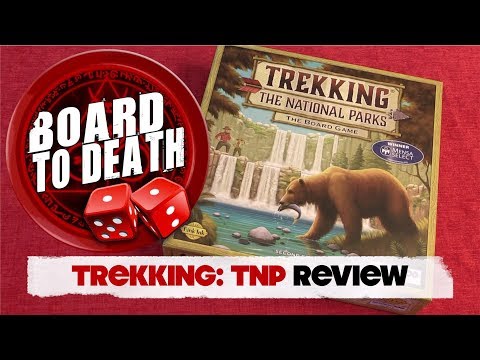


- Wide appeal for families and casual players
- Gives a sense of travel and exploration
- travel / exploration
- roaming between national parks
- accessible adventure
Mechanics (from transcript analysis)
- hand management / voting-like choices — players choose routes and manage resources to optimize scores
- Network/Route Building — move between locations to achieve goals
- route / path building — move between locations to achieve goals
Video topics + discussion points
Quotes (from this video)
- it's so simple it's so slick our four-year-old can play it
- this is crazy chaotic fun
- this is a hilarious dexterity game
- it's the most advanced but at the same time the rules themselves are easy
- you can level it to your child
- it's engaging for literally all ages
- it's a game that can be played for players age like 4 to 99
- love it it is a great one
References (from this video)
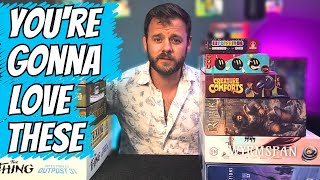
- Lightweight, family-friendly
- Good solo fan-made option
- Art is not outstanding; solo mode unofficial
- Family-friendly exploration, park collecting and touring
- National Parks across the United States
- Educational, travelogue-inspired
Mechanics (from transcript analysis)
- Card-driven movement — Cards determine movement to parks.
- Compound Scoring — Three parks rotate through rounds for scoring.
- Resource Management — Collect park cards and stones for scoring.
- resource management / set collection — Collect park cards and stones for scoring.
- Rotation-based scoring — Three parks rotate through rounds for scoring.
Video topics + discussion points
Quotes (from this video)
- Creature Comforts I've now played it solo and multiplayer I love it that much
- this is a good lighter weight family game
- I would keep it in my library
- the story is good the character development they're fairly flat
- this is a worker placement dice drafting game where you have two dice
References (from this video)
- Array
- National Parks
Mechanics (from transcript analysis)
Video topics + discussion points
Quotes (from this video)
- I have three 24 for 24 four challenges that means there are 72 total games on these three lists none of them overlap
- the first set of games I'm going to put on the wall are the ones that I'm calling the push to 24
- cartographers cartographers is going to go up here
- I will be doing playthroughs for Heroes and the map packs
- Cascadia so this one definitely will get out there
- Maple Valley we've played this a couple times I'm excited to get back to the table
- this is the third edition it also has a solo mode which I'm excited to try
References (from this video)

Mechanics (from transcript analysis)
Video topics + discussion points
Quotes (from this video)
References (from this video)
- family-friendly
- educational and thematic
- good interaction with familiar Ticket to Ride-like feel
- can be analysis-heavy on scoring
- some iconography may take explaining
- exploration and park visiting
- United States national parks and travel
- educational, travel-adventure
- Ticket to Ride
Mechanics (from transcript analysis)
- camping mechanics — major parks grant special abilities and end-game scoring rules
- card movement / route building — use cards to move around a board, collecting park tokens and points
- resource/park collection — visit national parks and collect park tiles and symbols
Video topics + discussion points
Quotes (from this video)
- Ticket to Ride ... this is the game that brought us into the modern board gaming world
- this game is simple enough to be taught very quickly to new Gamers
- it's a gateway game
References (from this video)
- Enjoyable thematic hook (national parks) tied to a compact, competitive experience
- Solo mode added in third edition expands replayability
- Editional differences can be confusing for new players
- Older editions might lack some streamlined mechanisms
- travel/adventure exploring national parks
- Visiting national parks in a competitive, park-collecting loop
- puzzle-like route planning with park-visitation goals
- Ticket to Ride
- Trekking the World
Mechanics (from transcript analysis)
- Card-driven movement — Use multi-use cards to determine movement points and park visits.
- color/icon-based visitation — Collect card colors to enable visiting specific parks.
- Multi-Use Cards — Use multi-use cards to determine movement points and park visits.
- set-collection/point scoring — Accumulate points by visiting parks; first to seven parks wins.
Video topics + discussion points
Quotes (from this video)
- I really like Trekking Through History.
- I really like this game, but I suck at it.
- This is a thinker game along with it.
- Her Story is underrated.
- Ticket to Ride feel to Trekking the World second edition.
References (from this video)

- Heard nothing but good about all of them
- I'm sure they're fantastic.
- National Parks
- Trekking Through Time
Mechanics (from transcript analysis)
Video topics + discussion points
Quotes (from this video)
- Secrets. This is a Bruno Faidutti Eric Lang game. It's kind of like a social deduction game where each It has some of these nice poker chips. You're on different things, taking things. It works well. It's not great, but I think it was a solid little game.
- Tapple's one of these games that I'm always I'm It's just It still sold very well. It's mass market, but it works incredibly well.
- I just really didn't like it at all. And I like Isle of Cats. I think it's fun. I didn't I this was a great follow up.
- Wow, I love the look of this game. So many neat things you're going through and as the the the character here and just rolling dice up, it's just very lucky. It's a big choose your own adventure game that's very lucky. I wish I liked it more.
- FunkoVerse Strategy Game. Eight out of 10 for me. I really like the FunkoVerse Strategy Game.
- This is basically just giant sandworms coming and you're jumping cars and shooting them. It has all the silliness of the series of movies and I think it's it's one of those movies that could have been an IP, but but isn't.
- Manhattan Project 2. No, I thought the newest one was okay. But this one I actively disliked.
- Curse Court's a great game. I've played Curse Court I think two or three times this year already, which is a lot considering I have to I play lots of new games.
- Well, it's kind of weird. I I mean, on one hand, my favorite is Curse Court, the one I just mentioned. But, also Kids Chronicles: Quest for the Moonstones is a pretty fantastic kids game. So, I have a lot of respect for that.
References (from this video)
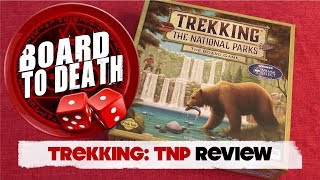
- Impressive components, including a pleather dice bag.
- Offers a lot of tactical and strategic choices despite being light.
- Theme is perfectly captured.
- Great artwork.
- Educational factor.
- Great for Gateway gamers looking to progress from lighter games.
- Uncertainty about replay value for more advanced players.
- Visiting and claiming elements of national parks.
- America's most treasured parks
- Ticket to Ride
Mechanics (from transcript analysis)
- Action Point Allowance — Each player will do exactly two actions from a list of four on their active turn: draw trek card, move, claim park cards, or occupy major parks.
- area majority / influence — Players can occupy major parks, which grant victory points and in-game effects.
- Drafting (cards) — Players draw trek cards from a row or the top of the deck.
- Hand Management — Players manage trek cards for movement and claiming parks. "Discard any number of trek cards from your hand and move exactly no more no less the amount listed by the total number..."
- Set Collection — Collecting sets of colored icons on trek cards is necessary for claiming park cards.
Video topics + discussion points
Quotes (from this video)
- I gotta say I was really impressed when opening the box and seeing the components and pleather dice bag it's really good stuff.
- Simple yet deceivingly chock full of choice.
- The theme is perfectly captured and the artwork is great and of course there's the added educational factor in this game not seen in many other.
- I think trekking the national parks is a great game for Gateway gamers I want to up their game from Ticket to Ride.
- it scores an impressive 82 from us
References (from this video)
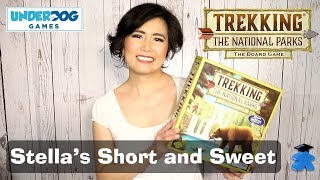
- Light complexity
- Engine can be boosted by track cards
- Five-player mode is nicely competitive
- Interactive at the table
- Park cards feature photos for thematic appeal
- Potential back-to-start penalty in multiplayer (punishes visiting opponents)
- National Parks exploration and collecting trail stones
- National Parks in the United States
- informational/summary
Mechanics (from transcript analysis)
- draw track card — players can draw a track card to move.
- End condition and scoring — the most points wins; occupying major parts typically yields fewer points but grants bonuses.
- exchange for tread cuts — cards show required tread cuts that can be exchanged.
- hand management / action point allowance — described as action point allowance used to plan actions each turn.
- major park occupancy — players can occupy major parks and exchange for required tread cuts shown on that card.
- Multi-Use Cards — a rule allows you to trick two cards as one wild card.
- path progression via track cards — you climb a path that you draw on track cards.
- Point to Point Movement — movement between locations is described as point-to-point.
- point-to-point movement — movement between locations is described as point-to-point.
- punishment for visiting opponents — stop at an opponent's place sends them back to the start, increasing competition in multiplayer games.
- Set Collection — mechanics such as set collection is listed as part of how the game is played.
- Track Advancement — you climb a path that you draw on track cards.
- wild card/combining cards — a rule allows you to trick two cards as one wild card.
Video topics + discussion points
Quotes (from this video)
- "the game plays two to five players with mechanics such as set collection hen management action point allowance and point-to-point movement"
- "the game is of light complexity in tracking the national parks"
- "the most points wins occupying major"
- "this makes the game more nicely competitive"
- "even more interactive inside the game"
- "the photos shown on each park card"
- "it could make your engine slightly better"
- "stop at opponents place you send them back to the start"
References (from this video)
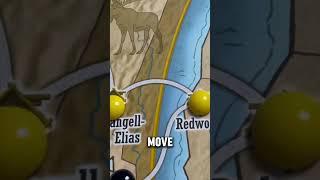
- Campy theme that fits a national park setting
- Simple action-selection mechanic suggested by the transcript
- Appears family-friendly and approachable
- Not enough information to assess depth or full gameplay experience
- Camping and exploration
- National Parks in the United States
Mechanics (from transcript analysis)
- Area Movement — Move to different national parks or locations on the board based on card play.
- Card Drafting — Choose actions from a hand of cards each turn to perform movement and camping actions.
- card drafting / action selection — Choose actions from a hand of cards each turn to perform movement and camping actions.
- End Game Bonuses — Points are earned at the end of the game based on park visits and camping achievements.
- End-game scoring — Points are earned at the end of the game based on park visits and camping achievements.
- Movement — Move to different national parks or locations on the board based on card play.
- Resource Management — Bear Paws tokens used as a resource to take actions.
- resource management tokens — Bear Paws tokens used as a resource to take actions.
Video topics + discussion points
Quotes (from this video)
- let's get campy in a national park
- I only get two actions so I'm going to discard one card
- congratulations I get to go camping
- enjoy the bison and gain points at the end of the game
References (from this video)
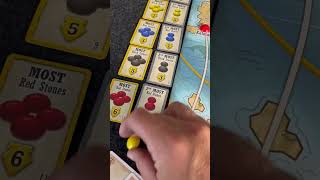
- Fan-made solo mode available on BoardGameGeek
- Park visiting and resource management
- National parks exploration
- Gameplay-focused excerpt
Mechanics (from transcript analysis)
- Card-driven movement — Move to locations by spending a card.
- end-game scoring / set collection — Points accrue based on visits and resources collected.
- Resource Management — Collect and discard resources (e.g., stones) to influence scoring and progress.
Video topics + discussion points
Quotes (from this video)
- tracking the national parks is a two to five player game with a fan-made solo mode available on board geek I think
- I'd like to visit Mammoth Cave first
- need to spend a card to move there
- give me points maybe I'll get the most
- I have them both so I'm going to discard them and whoopy doll there I am in Mammoth Cave
References (from this video)

- accessible and thematic
- great for family play
- might be repetitive for some players
- outdoor adventure and conservation
- national park exploration and route-building
- family-friendly exploration
Mechanics (from transcript analysis)
- set collection / route-building — Construct routes through parks to maximize points
Video topics + discussion points
Quotes (from this video)
- yelling is cathartic, it's good for you
- my asian parents won't be too disappointed
- it's the warm-up, but you're doing great
References (from this video)
- Accessible for families and casual players
- Deliberate design that leans toward simple, quick plays
- Trekking the World
Mechanics (from transcript analysis)
- unknown
Video topics + discussion points
Quotes (from this video)
- solo gamers are inherently selfish and I don't mean that in a bad way because I'm saying this about myself but I always want it to be my turn
- the critique is a way of sharing love and appreciation with another person you want them to succeed
- ideas are cheap, it's about execution
- a good designer can take a bad idea and make a good game; a bad designer cannot take a bad idea and make a good game
- the duality of myself between the confidence and the ego and the humility
- it's not here to tear down egos but to help others succeed
- I want it to always be my turn
- being visible is an incredibly important thing for people in this industry