/pic6871609.jpg)


















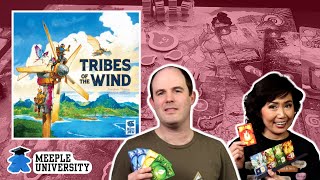














Tribes of the Wind Deep Dive
What the Community Thinks About Tribes of the Wind
Tribes of the Wind emerged as one of 2022's standout releases, earning a place among top picks and garnering consistent enthusiasm from board game reviewers. The game arrived at an interesting inflection point in the hobby, offering fresh mechanical depth without overwhelming complexity. Reviewers highlight how the game manages to feel simultaneously light and strategically rich, providing engaging gameplay that extends from initial plays through repeated sessions. The visual presentation, featuring artist Fray's vibrant artwork, immediately captured attention and contributed significantly to the game's appeal across multiple gaming communities.
Core Mechanics That Define Tribes of the Wind
Multi-Use Cards with Hidden Information
The signature mechanic of Tribes of the Wind centers on cards that serve multiple purposes, with neighbors only seeing card backs while holding their own hands hidden. Each card displays an action on one side and an element type on the back. Players must strategically time card plays based on what elements they and their neighbors possess, since card effects depend on matching element counts. This creates a dynamic information puzzle where players read the board constantly, watching what cards neighbors hold and calculating which actions become available. The mechanic creates subtle player interaction without direct board manipulation, allowing opponents to influence game state through their card choices rather than targeting attacks.
Tile Placement and Sequencing
Building the game board drives moment-to-moment decision-making. Players spend resources to place forest tiles on their personal grids, with each placement adding adjacent pollution that must eventually be cleared. Wind Riders occupy tiles and fill them to trigger village construction. The physical puzzle of arranging tiles adjacent to existing boards, clearing pollution first, and moving wind riders through ports and teleporters creates satisfying spatial reasoning. Accomplishing objectives requires building specific color sequences or patterns, turning the board into an evolving puzzle where each player manipulates their own space while remaining invested in what opponents construct.
The Tribes of the Wind Experience
Puzzly and Contemplative
The game delivers consistent opportunities for tactical thinking without inducing analysis paralysis. Reviewers describe a flow state where good decisions emerge naturally, with the turn structure keeping momentum despite the strategic depth. The card play forces moment-to-moment decisions rather than lengthy planning, since neighboring cards change throughout rounds. Quiet concentration pervades mid-game as players grow invested in their board states and scoring objectives, yet the design ensures turns resolve quickly. The contemplative experience attracts players who enjoy spatial reasoning and hand management but dislike games that devolve into turns consumed by other players' turns.
Interactive and Dynamic
Despite the absence of direct player conflict, the game generates meaningful interaction through card presence and timing. Players must watch neighbors and time plays around what cards remain in circulation. Temples offer a distinct action: discard three cards simultaneously to place a shrine and access its benefit. This breaks up normal card play and disrupts the card counts that neighbors rely upon, creating pivotal moments where plans shift suddenly. The card backs visible in hand holders mean players signal available elements throughout the game, creating an ongoing communication channel where skilled readers predict neighbor strategies.
What Makes Tribes of the Wind Stand Out
Elegant Asymmetry Through Player Powers
Each player board comes with unique guide cards that unlock asymmetric abilities after meeting specific conditions, such as building particular tile color sequences or clearing enough pollution. These powers break the symmetry meaningfully without requiring memorization or extensive teach time. One player might gain extra water production while another gains movement bonuses, creating distinct playstyles without overwhelming new players. The powers amplify a player's choices rather than introducing entirely new mechanics, keeping the game coherent while offering genuine character differentiation. Reviewers praised how the asymmetries encourage different approaches without unbalancing gameplay or creating teach complications.
Stunning Visual Design
The game presents a striking aesthetic across every component, from the vibrant tile artwork to the card designs and player boards. The theme of tribes rebuilding civilization in treetop villages amidst polluted earth creates a cohesive visual narrative. The color palette and illustration style immediately communicate the post-apocalyptic nature theme while maintaining approachability and charm. Reviewers highlight how the artwork supports clarity despite multiple symbols and colors, with the visual language helping players understand card actions at a glance. The presentation elevates what might otherwise feel like an abstract puzzle game into a world worth exploring.
Potential Drawbacks
Thematic Disconnection
While the setting captivates visually, the gameplay itself feels largely themeless. The card play, tile placement, and worker movement mechanics function abstractly, treating the forest rebuilding and pollution clearing as mechanical scaffolding rather than lived narrative. Reviewers appreciated the beautiful world but wanted to feel more immersed in it during play. The theme never quite justifies why cards affect tile placement or why element counts determine water production, creating a gap between the gorgeous aesthetic and the purely mechanical experience.
Scalability Across Player Counts
The game performs best at three players, where each player maintains direct interaction with exactly two neighbors. At higher player counts, the advantage of visible card backs diminishes as more neighbors exist beyond the directly adjacent ones, slowing information gathering and extending downtime. Two-player games introduce a neutral display hand to maintain balance, but reviewers noted the experience shifts significantly from the intended three-player sweet spot. The game mechanics function across all counts but feel most elegant at three, potentially limiting appeal for groups with different typical player counts.
If You Enjoy Tribes of the Wind
Players who appreciate Tribes of the Wind often gravitate toward puzzle-heavy tile placement games with spatial reasoning elements. Honu Honu and Hokkaido share similar card-laying satisfaction and board-building focus. Everdell matches the beautiful presentation and accessible depth, though with a lighter touch. Aqua provides comparable light-weight elegance with its own thematic charm. Those drawn to the multi-use card aspect might explore games emphasizing hidden information and neighbor interaction, where card backs become game information.
What Reviewers Are Saying
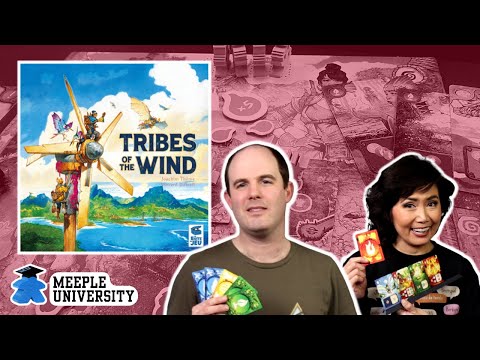
"It's like you combo your actions based on what type of card the opponents have, you don't necessarily know what exactly what cards they have, but like the wind card, the fire card, the okay, yes."
— Meeple University
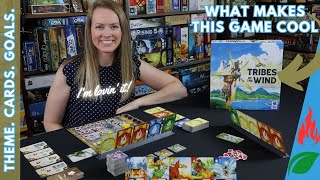
"The cards are the game. You discard cards to build your little temples. You have to look at the symbols to have a certain amount of cards to do certain things or have less or have more or you want to draw the certain things so you can have more or less than your opponents like the cards are the game."
— Ryan and Bethany Board Game Reviews
"This is a game all about timing. You're strategizing between which elements to take because also the different types of element cards pertain to the different types of actions that you can take."
— Before You Play