/pic8712056.png)















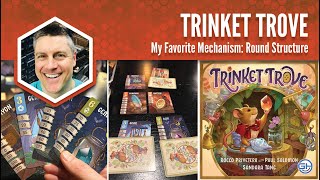




Trinket Trove Deep Dive
What the Community Thinks About Trinket Trove
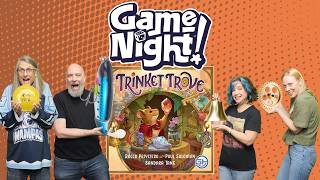
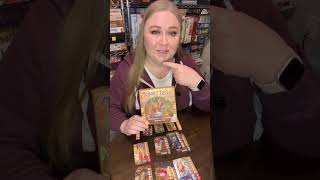
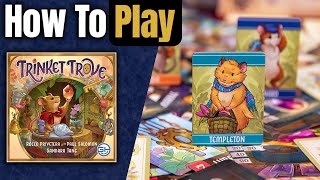
Every community video that actually sat down with Trinket Trove came away charmed. Might I Suggest A Game put the shiny-object collection game near the top of a fifteen-game holiday gift guide, calling it clever, cute, and easy to get people into. Board Game Buzz slotted it into a favorite-games-of-2025 list and said it quickly became a family favorite. Ilia and Tyler, who post as Cray, built an entire how-to-play episode around it, walking through setup, bidding, and scoring step by step; that episode was sponsored by publisher Game Head, which also released the game. The BoardGameGeek channel took a more unscripted approach, playing a full session live at a convention with the two-player Nimbus stand-in in the mix.
The praise lines up across sources: this is a small box that plays fast, teaches quickly, and rewards paying attention to what everyone else is offering. Where the videos diverge is in emphasis rather than opinion. The gift-guide framing from that channel leans on how compact and giftable the box is, Board Game Buzz leans on the tactile joy of the cards themselves, the teaching video from Ilia and Tyler is purely mechanical, and the BoardGameGeek stream is the one place viewers can see how the turn-order auction and the two-player automated opponent actually play out at the table, warts and all.
Core Mechanics That Define Trinket Trove
The Turn-Order Auction
Each round, Trinket Trove reveals a fresh row of trinket cards, and players bid for the right to pick first by offering cards out of their own hand rather than a separate currency. Ilia and Tyler explain that whoever offers the most cards gets priority, with ties broken by the total value of the cards offered and then by who bid most recently. That means the trinkets already in your hand are simultaneously your scoring engine and your bidding currency, and every offer is a trade-off between banking a card for its point value later and spending it now to move up the turn order. The gift-guide review singled this system out as the reason the game holds up: paying heavily to pick first in one round forces you to bid first, and therefore blind, in the next.
Drafting and Set Collection
Once bids are locked in, players claim lots in turn order, either the newly revealed cards or the piles other players just bid away, and add them to their hand. Trinkets score in matched sets, and the value curve rewards commitment: Board Game Buzz walked through a hand where a single crayon card was worth twenty points but a full set of four climbed to eighty, while the BoardGameGeek stream pointed to a set of seven feathers worth one hundred forty five points, against a single bell worth ten. That scaling is what gives the drafting phase its bite. Claiming a card that duplicates what a rival is chasing denies them a set just as much as it builds your own.
The Trinket Trove Experience
Fast, Cute, and Approachable
Reviewers keep returning to how quickly Trinket Trove gets new players playing. The same gift-guide review called it super cute and easy to get people into, and Board Game Buzz said the game is so easy and approachable for really all ages that anybody can jump in, describing it as a blast that became a family favorite. The critter theme, the mice and rats collecting buttons, gems, and feathers, keeps the tone light even while the bidding underneath gets tense.
Tension Under Uncertainty
That lightness sits on top of a genuinely tense decision loop. Board Game Buzz described the feel of deciding how much to lay down as a real angst: needing every card in hand while still having to offer something up, with a push-your-luck touch to whether a set is worth chasing one card further. The gift-guide review framed the same tension from the auction side, noting how liable a player is to get outbid once they commit to bidding first.
What Makes Trinket Trove Stand Out
Sandara Tang's Artwork
Every review calls out the art. The same gift-guide review said the amazing artwork was the reason they picked the game up in the first place, and Board Game Buzz named Sandara Tang directly as the artist, noting that Tang also illustrated Critter Kitchen. During the BoardGameGeek stream, a player pointed to the same artist as the one behind Flamecraft while admiring how cute each trinket card looked up close.
A Clever, Compact Strategic Auction
What surprised reviewers was how much strategy fits into such a small box. That same reviewer said they were surprised at how strategic the game turned out to be for something so quick and so small, praising the constant weighing of relative value as something they love in games generally. That combination, a fifteen-minute setup with real decision weight, is what several channels used to justify recommending it for a broad range of players and group sizes.
Potential Drawbacks
The Nimbus Stand-In Can Frustrate
Trinket Trove adds an automated player named Nimbus for two-player games, and Ilia and Tyler note that Nimbus always bids two cards from the deck and simply claims whichever two lots carry the highest bid strength. Playing against it live, the BoardGameGeek crew visibly soured on the bot, groaning that Nimbus always takes the best stuff and saying outright that they did not like playing against it. By the end of that session, players said they would rather see the two-player variant played with more human players instead of Nimbus.
A Few Rules to Keep Straight
The bidding phase has enough moving parts, card count, total value, and recency, that even an experienced group can lose track. During the BoardGameGeek stream, players stopped mid-round because they could not remember how ties in the bidding actually resolve, and separately noted that their turn-order tokens had gotten out of their original orientation. None of it derailed the session, but it points to a first play that benefits from a rules reference kept within reach.
If You Enjoy Trinket Trove
Reviewers connect Trinket Trove most directly to other games carrying the same artist's work rather than to similar auction mechanics. Might I Suggest A Game pointed to Flamecraft and Critter Kitchen as other games featuring the artist's work, and Board Game Buzz separately confirmed that the same artist illustrated Critter Kitchen, adding that its Cardboard Alchemy setting looks like it could share a world with Flamecraft even though it does not.
What Reviewers Are Saying
"It's a really, really clever system and it always has you weighing the relative value of things, which is something that I really love in games and that I think Trinket Trove does really well. There's also some really interesting mechanics in the game where if you pay a bunch to get the first pick in the auction in one round, then you'll have to be the first one to bid in the next round."
— Might I Suggest A Game
"I just love the cards that you're collecting. They're just they're so cute. They're so fun."
— Board Game Buzz
"Trinket Trove is this game, which is very cute. It's a new one from Game Head Games. Art by Sandara Tang, which is ridiculously cute. It's a fun game."
— BoardGameGeek