/pic875761.jpg)


From the publisher:
A beautiful and beautifully simple game of laying a tile before your own token to continue its path on each turn. The goal is to keep your token on the board longer than anyone else's, but as the board fills up this becomes harder because there are fewer empty spaces left... and another player's tile may also extend your own path in a direction you'd rather not go. Easy to introduce to new players, Tsuro lasts a mere 15 minutes and actually does work for any number from 2 to 8.
Theme:
Tsuro has an Asian spiritual theme - the lines representing the "many roads that lead to divine wisdom", and the game as a whole representing "the classic quest for enlightenment".
This theme is very light and the game essentially plays as an abstract.
Gameplay:
The game consists of tiles with twisting lines on them, a 6x6 grid on which to lay these tiles and a token for each player. Each player has a hand of tiles. On your turn you do two things: place a tile from your hand onto the board next to your token and move your token as far as it can go along the line it is currently on, until it is stopped by an empty space with no tile in (yet), the edge of the board or colliding with another player's token. If your token reaches the edge of the board or collides with another player's token, you are out of the game. The aim of the game is to be the last player left with a token on the board. Strategy therefore consists of trying to drive your opponents either into each other or off the board whilst extending your own route in directions that will make it difficult for your opponents to do the same.
Other notes:
Tsuro was originally patented by McMurchie in 1979 under the name Squiggle Game, but was apparently not published at that time. Somewhat similar to Metro and Spaghetti Junction.
This page includes videos and mentions from the whole Tsuro family. Drill into a specific game below.
/pic875761.jpg)


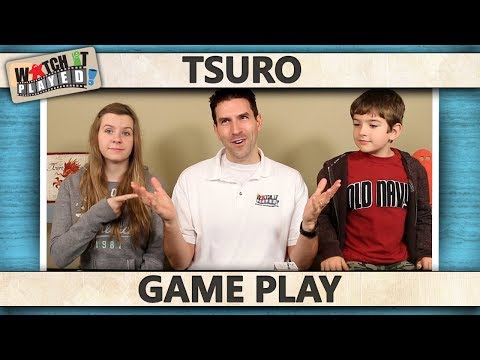

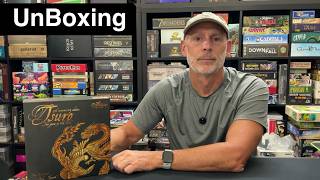
- Fast-paced
- Classic game
- Easy to learn
- Plays quickly
- Good filler game
- Appealing artwork
- Nice components
- Stickers leaving residue
- Dragon stones could use coloring
- Keep your dragon peg on the board
Mechanics (from transcript analysis)
- Last player standing — As long as you're the last one on the board, you're the winner of the game.
- Path building — You're creating your own path.
- Tile Placement — You're putting different tiles down. You set a tile down, you move your guy, you're just going to continue following down the path.
Video topics + discussion points
Quotes (from this video)
- What do you call cheese that's not yours? Nacho cheese.
- To me, this is a classic game. I love this game.
- This game doesn't get too much easier than that right there.
- And that is just gorgeous box art.
- I do love this game as a filler. It's actually one of my favorites to play.
- It's really easy to play and it's a fun little game.
- Why was the math problem looking sad? Because it had too many problems.
References (from this video)
- Simulates running a business
- Managing budget, staff, development strategies
- Goal is to release anime to earn money and score points
- Hiring staff with different abilities
- Following trends to release anime
- Starts with debt
- Staff can be 'dead inside' if HR isn't managed
- Managing an anime studio
- Japan
Mechanics (from transcript analysis)
- Card Drafting — Players will begin with some debt and four dead inside staff cards.
- Resource Management — You'll be managing the budget, staff, and development strategies. You'll also be trying to climb out of debt.
- Set Collection — Players will be piecing together script parts, the setting, the plot, and adding a twist.
- Worker Placement — When you take your turn, you'll be taking one of your action tokens off one of your staff and placing on the shared action board, resolving the action as you do so.
Video topics + discussion points
Quotes (from this video)
- After years of being on the brink, one of Japan's biggest anime mega studios finally went under.
- Tsurogi is a game about managing one of these anime studios.
- The name Tsurogi comes from a Japanese expression that refers to the idea of being able to barely keep a business going.
- It's a tycoon-style game where you're going to be simulating the experience of running a business.
- Your goal in the game is to try and release anime.
- Players will begin with some debt and four dead inside staff cards.
- When you take your turn, you'll be taking one of your action tokens off one of your staff and placing on the shared action board, resolving the action as you do so.
References (from this video)

Mechanics (from transcript analysis)
Video topics + discussion points
Quotes (from this video)
- we are just over 80% of our funding goal and I have to just say a huge huge thank you
- you know this past week on Tom bassel's board game breakfast episode he talked about the value of encouraging media creators and people doing things in the hobby that you enjoy and appreciate and I have certainly felt that this week
- if you haven't already consider donating the minimum $5 but by law I have to make this available everyone unless I want to go through all kinds of rig rolles of getting licenses and other things which I don't want to do it's just a game giveaway
- he is one of the nicest guys you're going to meet in this industry and he's been a real advocate for watchet plate he values what we're doing here
- I have to say this is kind of a crazy time to be running a fundraiser
- listen if our release schedule for videos is a bit sporadic for the next probably four weeks I apologize for that I assure you you guys have given me every reason to be throwing every last bit of energy into watch it played and I have been doing that but it's just not man esting itself in videos being released right now aside from these updates
References (from this video)
- Visually beautiful
- Patented tray for easy component handling
- Raised over $300,000 on Kickstarter
- Phoenixes collecting lanterns to turn them into stars to restore constellations
- A world where a god stole stars and people want them back
- Saros
Mechanics (from transcript analysis)
- Pathbuilding — Players follow paths on the tiles.
- Pick-Up and Deliver — Players move around collecting lanterns and moving them to become stars.
- Tile Placement — Tiles are two-sided with paths on corners and edges.
- Variable player powers — Dragons have one life, Phoenixes have two. Losing a life token means returning to the other side of the board.
Video topics + discussion points
Quotes (from this video)
- I'm here at Calliope Games booth and I'm here with Ken
- This first one I have for you is already sold out
- Gameplay 15 to 20 minutes
- Gen Con award for a top game trend of 2019
- Spymaster by Saif Johnson another great game designer
- Gorgeous components
- Everybody loves a parade
- there's a lot of strategy
- Saros Phoenix Rising
- very visually beautiful
- raised over 300 over three hundred thousand dollars
References (from this video)
- High-quality components (carves, lacquered box, metal dragon and phoenix pieces, stone textured resin tiles, embroidered bags, fabric game boards)
- A luxury item to cherish for a lifetime
- Amazing project
- Very expensive ($350)
- Luxury item to cherish for a lifetime.
Mechanics (from transcript analysis)
Video topics + discussion points
Quotes (from this video)
- this whole theme which i for one think is pretty unique just speaks to me
- i really am excited to see big box uve farming games leave the german countryside explore something fresh
- this new exciting marvel cinematic universe legendary expansion features characters from the first and second guardians of the galaxy movies featuring images pulled straight from both guardians of galaxy films recapturing the adventure
- terra nova is just that a more streamlined and accessible version of terra mystica
- Cosmos games also announced a brand new second expansion to Targi just like that out of the blue another expansion to one of my all-time favorite games
- this thing's going to go up against charizard a carves and lacquered box metal dragon and phoenix pieces stone textured resin tiles embroidered bags fabric game boards it's a sight to behold with a price tag that's also a sight to behold 350 dollars but for a luxury item to cherish for a lifetime i think this is a pretty amazing project
- i love the base game and this is a no-brainer to me
- the original king's dilemma was a blast so i'm really interested to see how this one unfolds
- that bit does sound different and exciting
- which i have to admit is a pretty cool theme for a game it sounds like the type of anime i like
References (from this video)

- fun push-your-luck mechanic
- great for larger families
- not long, quick to play
- calm and light-hearted
- tile-lane path building and pushing players off the board
Mechanics (from transcript analysis)
- Push Your Luck — try to push others off and be last remaining
- push-your-luck/last-man-standing — try to push others off and be last remaining
- Tile Placement — place tiles with paths and move obelisks along paths
- tile-laying with paths — place tiles with paths and move obelisks along paths
Video topics + discussion points
Quotes (from this video)
- "the artwork is just super cute"
- "great coins"
- "Longshot the dice game it is basically a roll and right game"
- "tsuro is a tile Lane game where you are picking a tile that has like a path on it and you place it down"
- "I would highly highly highly recommend quacks of qul langberg"
References (from this video)
- Super fast, lightning fast.
- Pretty fun for a micro game.
- Played it to death, got money out of it.
- Big kingmaker issues.
- Extremely lucky.
- Burnt out on it.
- Strategy is wafer thin.
- Survival
Mechanics (from transcript analysis)
- Area Control — Trying to keep your pebble on the board as long as you can by placing tiles.
- Tile Placement — Players place tiles to keep their piece on the board and follow a track.
Video topics + discussion points
Quotes (from this video)
- Took me a long time to learn.
- the more I think that kind of the cleanliness of rules, the streamlining of rules, for me, that is real good game design.
- I still give it like a six out of 10.
- When I play this one, I kind of feel very cold on it to be honest.
- I just prefer competitive games in general. I can't explain why.
- Still good game. Again, an absolute classic, but completely numb on it now. I'm not really interested in playing it anymore.
- And yeah, I absolutely love and advocate this one non-stop.
- It's actually a lot of fun.
- I think this game is so genius.
- For me, this is always the measuring stick when it comes to social deduction.
References (from this video)

- Supports high player counts while remaining quick
- Easy to teach and welcoming for new players
- Fancy and deluxe components for the anniversary edition
- Can result in player elimination for the round
- Moving stones along paths
Mechanics (from transcript analysis)
- Path movement — Moving your stones along the path until it ends.
- Player Elimination (round-based) — Players are out for the round if their path leaves the board, but can rejoin next round.
- Tile Placement — Putting down tiles onto the board.
Video topics + discussion points
Quotes (from this video)
- For anybody who's new to the channel, the way this video works is I include three types of board games here.
- I put a lot of work and a lot of research into these videos and I'm glad it is useful to all the board gamers out there.
- It's a great learning tool as well if you're trying to teach uh family members about history, um whether that being kids or whatever.
- If I knew a couple that was wanting to get more into the world of board games, I think Patchwork is one of the best recommendations.
- I think these are some of the best cooperative card games out there.
- It is, you know, a dexterity game at its heart.
- This is legitimately one of the heaviest weight strategy games out there.
- You often do destroy some stuff in the game. Like you might cut things, you might rip things, uh but that kind of adds some fun layers to the challenge of the game.
References (from this video)
Mechanics (from transcript analysis)
Video topics + discussion points
Quotes (from this video)
- Send help, please.
- My shelf of opportunity. There are a few games on here that I want to bring.
- This bag is already full and I haven't even gone out to the board game room.
References (from this video)
- Very quick playing.
- Simple, straightforward, and streamlined.
- Lots of rewarding micro decisions.
- Clean iconography makes gameplay clear.
- Can be played simultaneously, making it very quick.
- Cute art style.
- Can feel like it's over too soon, leaving players wanting more.
- Not a Euro game despite the name.
- Castle Combo
- Pixel Tactics
Mechanics (from transcript analysis)
- Card Drafting — Players recruit characters to their tableau.
- Combat — A quick combat phase where only the power of front-line characters counts.
- Combo scoring — Players combo characters for scoring based on matching colors or columns.
- Tableau Building — Players build a 3x3 grid of characters with combat or different powers.
Video topics + discussion points
Quotes (from this video)
- We're not going Analog Podcast anymore. It's the Going Analog Show.
- So, we're going to do a pal- pallet cleanser, right?
- This is not a campaign on the website like this is not a campaign cuz that's what you think because even on the back of the box I'm looking at right now it says non-campaign
- from that tableau, you're trying to combine some um different cards that your word qualifies for, but they have to be orthogonally adjacent, and you have to be able to trace a pathway through the cards that you're going to score.
- There's this extra puzzle element of not just like, oh, I'm not rewarded for just the longest word. I might have the longest word, but that doesn't necessarily mean it's going to score well.
- if I pick these scoring word scoring tiles over here, I can make a pretty good word. But, if other people also use the same scoring cards, then the value of that card goes gets lower and lower.
- So, if you've played Point Salad, this feels very much like Point Salad. There's going to be a But with fruit.
- Each basket will have its own scoring condition based on what fruits are in that basket.
- the rocks then you could keep them in your discard pile. They're worth a point each or fill up your bonus baskets with rocks, which eats up one of those three spots.
- It is mean, but because it's so easy just to get more fruit and more baskets, it's not that big a deal.
- he threw a rock down making it impossible for me to meet that goal because I need three specific fruit for a high value and now he a rock is eating up one of those spaces.
- It is mean, but at the same time it's like Too mean, but adds a layer of strategy to the game, you know?
- It's It was garbage day when we were recording today.
References (from this video)
Mechanics (from transcript analysis)
Video topics + discussion points
Quotes (from this video)
- It's a to me it's the perfect sort of intro game to a board games day.
- there's Easter eggs on the cards for all the games which was really cool.
- It's beautiful and it's just very enjoyable.
- I think it's just the theme, the way it looks. It just it gives something more than the mind.
- It's really tight resource management.
- as soon as the treasure is found, it becomes a cat and mouse chase.
- I would argue that the only thing that I think lets it down a little that I would probably change might be the roll and move.
References (from this video)
- abstract
Mechanics (from transcript analysis)
- abstract strategy — Joe likes anything kind of abstract, so like a surro
Video topics + discussion points
Quotes (from this video)
- We're theming at mysteries. We're theming at games.
- Stars and wishes is uh just like a really great uh safety tool that you would play at the you would use at the end of a session
- So, yeah, it's a really great um it's it's it's a it's a it's a quick uh safety tool. It's not invasive.
- I am technically a professor of English. My PhD is in comparative literature.
- My mission has just been that board games are for everybody, right?
- There's the violence that does happen doesn't happen on screen.
- So, um, at least for my first book for Player Elimination, the part of the stakes is that um, Ren's business isn't doing so hot and she's worried that her business is going to close, right?
- I did have multiple agents tell me off the bat that Ren was not a good protagonist because she has a disability.
- Like, that in a cozy in a cozy in particular, you know, like kind of in a romance, it's kind of like the romance of of mystery genre in the sense of like, you know, at the end it's going to be okay.
- What's with the solo gamer hate
- I only really named like Katon and maybe Clue.
- It was just fun. It was just fun to to it's it's a fictional world. Why can't I make up fictional board games?
- you might not know about board games but you get it's a small town. It's a a niche hobby. Um, and it's a welcoming hobby that people are, you know, are there.
References (from this video)

Mechanics (from transcript analysis)
Video topics + discussion points
Quotes (from this video)
- I'm the white marker Andrew you're the green one and yellow
- now who goes first you remember the oldest oldest the oldest
- I'm going to place my tile right there and move over into the corner and then draw a new tile
- I'm going to do another uturn
- sadly sadly you have been eliminated from the game
- everyone has been eliminated except for you
- look who won congratulations Andrea well done
- it's a pretty fast game
- Isso I never know how to pronounce it
References (from this video)
- Plays very fast
Mechanics (from transcript analysis)
- Tile Placement — Players place path tiles to extend paths and move their markers. The goal is to not go off the board.
Video topics + discussion points
Quotes (from this video)
- I'm the white marker Andrew you're the green one and yellow
- now who goes first you remember the oldest oldest the oldest
- I'm going to place my tile right there and move over into the corner and then draw a new tile
- I'm going to do another uturn
- sadly sadly you have been eliminated from the game
- everyone has been eliminated except for you
- look who won congratulations Andrea well done
- it's a pretty fast game
- Isso I never know how to pronounce it
References (from this video)

- Bright, appealing production aesthetics and skull motifs
- Randomized rondel layout adds variety and strategic tension
- Clear Day of the Dead thematic tie-in with altar construction
- Endgame timing creates a tense finale with close scoring
- Card availability can be tight, making early cycles feel feast-or-famine
- Two-player pacing may lead to rapid resolution if players optimize aggressively
- Day of the Dead celebrations
- city of particuaro
- constructing alters for deceased family members
- Coco the board game
Mechanics (from transcript analysis)
- Altar construction pyramid — Alters are formed from cards into a pyramid: four cards on top row, three on middle, two on bottom; points are earned from each level.
- Card drawing and deck/shop actions — Actions can draw new cards, place cards for scoring, or add cards from the deck to the shops.
- Card hand/board swap — Players swap cards from their hand with cards on the table at their location.
- Color-based card value and strategic choice — Yellow cards are generally stronger with more items; players must choose cards to maximize points while managing color constraints.
- Endgame trigger conditions — End game triggers when someone completes an altar or when the draw deck runs out.
- Penalty for drawing from deck — If you cannot land on a valid action space, you may draw two cards from the deck at the cost of end-game points (−5).
- Rondel — Meeples move 1-3 spaces along a randomized layout (rondel), skipping over other players.
- rondel movement — Meeples move 1-3 spaces along a randomized layout (rondel), skipping over other players.
Video topics + discussion points
Quotes (from this video)
- this game is set in the city of particuaro which is very well known for its Day of the Dead celebrations
- we're going to be constructing Alters to our deceased family members
- the layout is randomized all of the alter actions are clumped together
- the end will trigger when someone has completed the altar or when the draw deck runs out
- the yellow cards tend to be the stronger cards
- this game reminds me of Coco the movie
- look at how bright and nice it is and look at the skulls
References (from this video)

- Clear on-table demonstration of setup and play sequence
- Step-by-step explanation of tile placement and marker movement
- Illustrates how the dragon tile affects tile replenishment and pacing
- Shows both standard and advanced rules implications (elimination, tile exchanges)
- No in-depth strategic analysis or evaluation of advanced play strategies
- Limited discussion of corner cases or setup variations beyond the basics
- Assumes some familiarity with tile-laying concepts, which may be new to absolute beginners
- Path-building, territory progression, and elimination as the objective to be the last player with a marker on the board.
- A fantasy-themed path-building setting where players navigate a shared map by laying tiles and moving markers.
- Instructional demonstration with emphasis on mechanics and flow of play rather than a narrative story.
Mechanics (from transcript analysis)
- Dragon tile mechanic — A dragon tile acts as a draw-and-priority mechanism when tiles run low, influencing who draws next and how tiles are replenished.
- Elimination via path — If the connected path leads a marker off the board, that player is eliminated and their remaining tiles are shuffled back into the draw deck (with variations via advanced rules).
- End Game Bonuses — The objective is to be the last player with a marker on the board; multiple markers can remain and share victory under certain endgame conditions.
- Endgame/ Victory condition — The objective is to be the last player with a marker on the board; multiple markers can remain and share victory under certain endgame conditions.
- Hand Management — Players typically hold a small number of tiles (three) and draw after playing; dragon tile effects may alter replenishment.
- Path-following movement — After placement, your marker is moved along the connected path until you reach the end of the tile you placed, respecting the path's lines and not deviating mid-tile.
- Player Elimination — If the connected path leads a marker off the board, that player is eliminated and their remaining tiles are shuffled back into the draw deck (with variations via advanced rules).
- Rotation before placement — Tiles can be rotated in any of the four directions prior to placement, affecting how paths align with existing tiles.
- Tile Placement — On your turn you place a path tile adjacent to your marker, possibly rotating it to connect paths.
Video topics + discussion points
Quotes (from this video)
- the object of the game is to be the only player with a marker still on the board
- you may not willingly play a path tile that would lead your marker off the board
- there are enough tiles included with the game to cover the entire game board
- this acts as a reminder that I was the first player who tried to draw a tile and couldn't
- as soon as more tiles become available I'll be able to draw from them first
References (from this video)

- Beautiful cover and mood
- Solid theme integration with mechanical depth
- Appealing to fans of space-themed Euro-style games
- Mechanics may feel derivative to seasoned players
- Crowding of options could overwhelm newcomers
- Life creation and planetary expansion through planetary arts and life seeds.
- Planetary exploration with life-building and cosmological themes.
- Cosmic, terraforming vibe with a focus on building a functioning system.
- Crafting the Cosmos
Mechanics (from transcript analysis)
- Compound Scoring — Endgame conditions trigger when a set of objectives are achieved.
- objective_based_scoring — Endgame conditions trigger when a set of objectives are achieved.
- planet_and_star_construction — Players grow their universe by populating planets/stars as they act.
- Rondel — Central board with rotating action spaces guiding movement around the board.
- rondelle_movement — Central board with rotating action spaces guiding movement around the board.
- Tile Placement — Place life on asteroids/planets to meet objectives and build toward scoring.
- tile_and_life_population — Place life on asteroids/planets to meet objectives and build toward scoring.
Video topics + discussion points
Quotes (from this video)
- It's very cool to have kind of a BG Hall of Fame.
- The cover is striking. It's very beautiful.
- This is going to be one of those classic Euro games by Uwe and their DNA is there.
- Man, I love the cover of Thessaloniki.
- Dewan looks real pretty.
- What the heck is in this box? What the heck this game is?
References (from this video)

- Clever optimization puzzle
- Beautiful card art and thematic flavor
- Compact, replayable puzzle
- Can be tight for new players
- Outcome heavily influenced by top-card order
- grid-based optimization with color/icon patterns
- Abstract/Euro-style puzzle with a board and cards
- abstract/strategy-focused
Mechanics (from transcript analysis)
- card-based income/points — gain income and victory points through card placement and order
- grid placement — build a 3x3 grid to optimize scoring from card placements
- Tile Placement — build a 3x3 grid to optimize scoring from card placements
- top-card strength/round control — rounds are decided by strongest top cards, driving tactical decisions
Video topics + discussion points
Quotes (from this video)
- This is a game that I had never heard of before.
- I absolutely loved it.
- It is such a cool game, such a unique game.
- I think it's such a cool unique game.
- Emberleaf is such a fun game and I have really enjoyed playing it.
- Galaxy Trucker vibes in a different container—fun to watch engines grow and explode.
References (from this video)
- quirky theme, compact and portable
- dense for a 5-minute game with meaningful decisions
- may not appeal to players who dislike card-counting pressure
- not as strong with non-two-player groups
- Sumo wrestling as a compact trick-taking contest
- Sumo ring with wrestlers moving toward the edge
- abstract sports simulation
Mechanics (from transcript analysis)
- Card Counting — Keeping track of what cards remain to time pushes and wins.
- ring movement — Wrestler tokens shift toward the edge and off the mat as you win tricks.
- Trick-Taking — Players simultaneously reveal cards; highest lead wins the trick.
Video topics + discussion points
Quotes (from this video)
- a light card game that has just enough decision-making
- the artwork is really cute it's such a whimsical looking City
- five minute trick taking game
- it's a big math problem
- I love this game I am complete opposite of Monique
- you cannot pass until you've run out of cards
References (from this video)
- intriguing math-driven challenge
- cute, thematic components
- strong with multiple players for interaction
- tough for players without math intuition
- can be punishing and slow to recover from a misplay
- two-player experience can feel uneven
- Sake consumption balancing puzzle with exact sums
- Sake bottles and tokui bottles on the table
- competitive yet sociable drinking theme
Mechanics (from transcript analysis)
- Hand Management — Choose a card to place facedown or use for its effect to manipulate bottles.
- passing / hot potato — Certain cards force passes or create pressure to dump a challenging card on someone else.
- sum constraint — Each card shows a number; you must empty exactly that amount from bottles.
Video topics + discussion points
Quotes (from this video)
- a light card game that has just enough decision-making
- the artwork is really cute it's such a whimsical looking City
- five minute trick taking game
- it's a big math problem
- I love this game I am complete opposite of Monique
- you cannot pass until you've run out of cards
References (from this video)
- Accessible and quick to learn, making it suitable for a social game night
- Strong social interaction and banter; fun group dynamics
- Fast rounds with clear escalation and a tense endgame
- Luck of tile draw can dominate late game
- Elimination mechanics may frustrate players who are behind
- Crowded board situations can be hard to optimize in real time
- fate, risk, and path weaving as players place tiles to guide their totem
- A journey along a winding path toward fate on a stylized landscape; players move along directed tiles toward a goal.
- abstract/whimsical with light thematic framing
- Cash 'n Guns
Mechanics (from transcript analysis)
- Collision elimination — Totems can collide with other players' totems, knocking both out of the round.
- Dragon tile / discard draw order — When the stack is depleted and a dragon tile is drawn, the player who has the dragon tile picks first from the discarded hand.
- Elimination via board edges — If a player's totem leaves the board, that player is eliminated from the game.
- End condition and hand management — After placing, players refill their hand to three tiles; if the stack is exhausted, the dragon tile mechanism governs flow. The last totem standing wins; otherwise a draw if all are eliminated.
- Path-following constraint — You must continue along the natural line of the path; turns cannot be made mid-path.
- Tile Placement — On your turn you place a tile in front of your own totem and must follow the path to its current end.
Video topics + discussion points
Quotes (from this video)
- the last totem standing is the winner
- follow the path that's laid in front of you
- express train
- you hold everyone's life in your hands
- it's a draw if everyone dies
- one of these games is mine
- win the game boys
References (from this video)
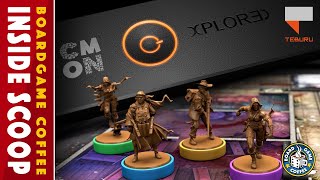
- Low-friction learning with guided tutorials and immediate feedback
- Preserves social, tactile and ritual aspects of board gaming
- Enables remote play and cross-border campaigns
- Adds cinematic storytelling through voice acting and dynamic events
- Prototype-driven approach focused on user experience
- Hardware and digital infrastructure add cost and setup complexity
- Purists may resist tech-enhanced gameplay
- Potential for screen-time fatigue or distraction if not balanced
- SDK adoption requires cross-domain expertise (board game and video game)
- hybrid physical-digital board gaming; technology-enhanced play
- Modern era, office/studio and gaming space; modular cardboard board supports a digital master screen that orchestrates gameplay
- emergent storytelling through digital events and guided player experience
- Zombicide Evolution
- Zombie Side Evolution
Mechanics (from transcript analysis)
- Automated validation of moves and line of sight — app checks range, sight, actions, and other constraints
- Board game console master — a central digital hub that triggers events and provides feedback
- Discreet technology presence — tech supports but remains in the background to preserve table atmosphere
- Learn-by-playing with no heavy rulebooks — players learn by playing rather than poring over a rulebook
- Line of Sight — app checks range, sight, actions, and other constraints
- Physical board with tiles and minis — players place and move on a cardboard board that becomes the play surface
- Player Board | Main Board — a central digital hub that triggers events and provides feedback
- Remote multiplayer support — sessions can be played across locations with synchronized state
- Tutorial — players learn by playing rather than poring over a rulebook
- Tutorial missions and adaptive learning — in-game guided missions teach rules progressively via app and board actions
- Voice acting and story scenes — professional narration drives scenes and decisions
Video topics + discussion points
Quotes (from this video)
- we don't want to sell a technology; the technology came after the idea
- a board game enhanced thanks to invisible technology
- no rulebook at all; plug and play; learn by playing
- the screen is there to support and enhance the experience
- the technology disappears