















Undaunted: Normandy Deep Dive
What the Community Thinks About Undaunted: Normandy
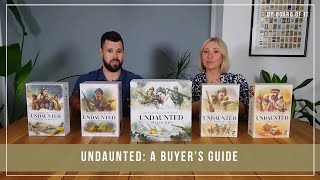
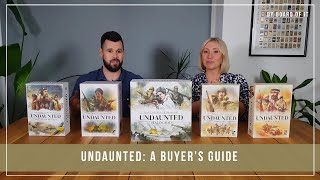
Reviewers who cover Undaunted: Normandy tend to reach for the same word: accessible. The Discriminating Gamer puts it at the top of a countdown of introductory war games, calling it a tactical war game that is also a deck building game and praising how newcomers can pick it up without getting bogged down in traditional wargame overhead. Board Of It makes a similar case in a dedicated buyer's guide to the whole Undaunted series, arguing the series is worth recommending even to people who think a World War Two theme sounds dry or stodgy. The two hosts of that channel also placed Undaunted: Normandy on their personal two-player rankings in a separate video, though at noticeably different spots on each host's list, which says as much about how much each of them personally likes it as it does about the game itself.
Shelfside reviewed the game with two scores from two hosts, a 9 out of 10 and a 7 out of 10, both landing on praise for how the card play and the platoon-level positioning come together and for how much World War Two atmosphere the box delivers in under an hour. Meeple University's live playthrough echoes that pacing, calling it a quick little two-player game once the initial teach is out of the way. Beyond Solitaire agrees the core system is fantastic but focuses its review on the solo mode built around the Reinforcements expansion, where the picture is more mixed.
The clearest disagreement is over the dice. Board Of It argues that combat swings even out across a full session because players roll so many dice over a game, and that the tactical control over range and cover keeps bad luck from feeling unfair. Shelfside pushes back on that from inside specific matchups, arguing certain units are tuned in ways that make particular fights feel lopsided regardless of how the dice land overall. Meeple University lands in between, noting during their playthrough that how quickly a scenario resolves depends on luck on the rolls.
Core Mechanics That Define Undaunted: Normandy
Bidding for Initiative
Board Of It's buyer's guide walks through the structure that repeats every round: both players draw four cards from their personal deck, then simultaneously choose one card to reveal as an initiative bid. Whichever player reveals the higher initiative value wins the bid and goes first, playing every card in their hand before the other side gets a turn, and both cards used for the bid are discarded rather than played for their normal effects. That bidding decision, made blind against an opponent doing the same thing, is the game's central push and pull: a strong card spent on the bid is a card that never does anything else that round.
Combat by the Numbers
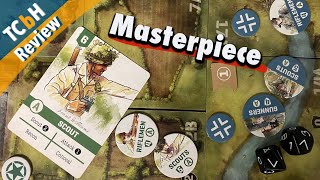
Attacks are resolved by rolling a number of dice tied to the attacking unit and comparing the result against a target number built from the defender's base defense, any cover the terrain provides, and the range between the units, according to Board Of It. Landing a hit forces the defending player to pull that unit's card out of wherever it currently sits, whether that is their hand, their discard pile, or their deck, and a unit with no cards left anywhere is removed from the board outright. Shelfside highlights how differently units resolve that math: the machine gunner rolls every die in the game for its suppressing fire, stunning a target without dealing damage, while the sniper fires fewer dice for a bigger threat, a contrast the channel says can feel thematically backward once you have learned the machine gunner's rules first.
The Undaunted: Normandy Experience
Commanding a Platoon, Not an Army
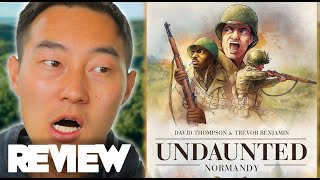
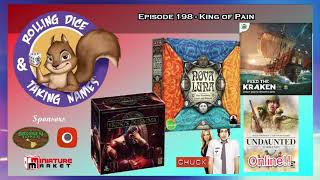
Designers David Thompson and Trevor Benjamin, speaking on a historical-games panel filmed by Rolling Dice & Taking Names, describe deliberately keeping Undaunted: Normandy scoped to what a single rifle platoon could plausibly do rather than abstracting up to a larger force. That choice produced specific, sometimes awkward compromises, such as representing a two-man sniper team with three cards because every other non-rifleman unit in the game uses three cards and the designers wanted the rule to be learnable rather than perfectly accurate. Shelfside describes what that scope feels like at the table, saying it can feel like commanding a platoon and managing riflemen carefully across the map, with named soldiers on the cards making individual losses land as small story moments rather than abstract math.
Snappy Turns, Tense Rounds
Several channels describe the pacing the same way even while covering different parts of the box. Beyond Solitaire calls out how snappy the deck-building loop is turn to turn, and Shelfside singles out the initiative bid specifically, describing the moment two players both ditch a strong card into the bid and the tie comes down to who held initiative as one of the best feelings the game offers. Board Of It notes that scenarios typically wrap in under an hour, which is short enough that their group regularly plays more than one in a single sitting.
What Makes Undaunted: Normandy Stand Out
Scenarios Built From Real History
On the Rolling Dice & Taking Names panel, the designers explain that Undaunted: Normandy's twelve scenarios trace the actual combat record of the 30th Infantry Division as it fought through Normandy, a unit chosen because it is the one a designer's own grandfather served in. Researching the game meant reviewing every engagement that division fought and finding the ones that made sense to represent at platoon scale, and the designer visited the real battlefields that ended up in the finished game. The designers are careful to call the scenarios inspired by those events rather than strict recreations, since a real platoon's actual footprint in any single fight is smaller than what the game needs to stage an interesting scenario.
A Well-Produced, Approachable Package
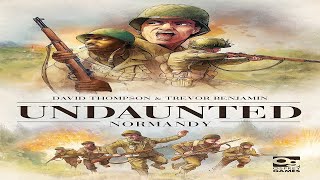
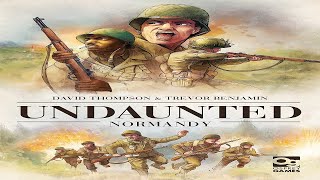
Shelfside spends a large part of its review on presentation, praising the box's thick, linen-like feel and calling the fit of the components in the insert clean enough that plastic bags are not needed. The card art gets singled out for its gritty look and for giving each soldier a distinct face, and the rulebook draws praise as concise, well-illustrated, and paired with a fully worked example round that the channel says left no moment of confusion while learning. Twelve scenarios in the box, and more available through the Reinforcements expansion, give the game a scenario booklet Shelfside calls excellent for how much variety it wrings from one core system.
Potential Drawbacks
Dice Can Swing a Scenario
Board Of It is upfront that a couple of bad rolls can cost a scenario outright, even while arguing the overall system balances out because of how much rolling and drawing happens across a game. Shelfside is harsher about specific cases, arguing the sniper's defense value feels tuned an integer too high given how rarely the unit shows up, and wondering whether some scenarios could use a time limit to keep a stalled fight from just grinding on. Meeple University's playthrough agrees results can depend on luck on the rolls, even if that never derailed their session.
Rules Gaps New Players Will Hit
Shelfside flags a real absence of an official FAQ, saying interactions around suppressed units and the Platoon Guide card are not explained in enough depth in the rulebook, leaving players to hunt down clarifications on BGG instead. The same review notes that card ability jargon like control, suppress, scout, and recon is not self-explanatory the first time through, and that mixing flavor text with rules text on the cards slows down looking anything up mid-game. Beyond Solitaire raises a separate cost for anyone chasing the solo mode specifically: it depends on flipping between multiple rulebooks and a flowchart, adding real setup overhead on top of an investment that already means owning more than one box in the series.
If You Enjoy Undaunted: Normandy
Board Of It's series buyer's guide points newcomers who finish Normandy toward Undaunted: North Africa next, describing it as the more asymmetric sequel, and toward Undaunted: Battle of Britain and the campaign-scale Undaunted: Stalingrad for players ready to go further into the system. On the Rolling Dice & Taking Names panel, the designers place Undaunted's board-driven deck building against more traditional deck builders like Dominion and Ascension, and cite A Few Acres of Snow as an earlier deck builder that also ties card play directly to a map, the kind of design that helped inspire the approach here. Beyond Solitaire suggests that anyone specifically chasing a strong solo experience look at Hoplomachus Victorum, a game built for solo play from the ground up, rather than assembling Undaunted's series across multiple boxes just to play alone.
What Reviewers Are Saying
"Undaunted Normandy was the first game in the series and is the least asymmetric. This charts the battle across Normandy after D-Day between the Americans and the Germans. The cards available to each side are essentially the same and often the objective is pretty similar."
— Board Of It
"Undaunted is a fantastic game system. I thought that Normandy was great and really the series has only gotten better from there on."
— Beyond Solitaire
"It is excellent. It's a lot of World War II feelings where the card playing positioning meet each other very well. There's not a lot of rules, things are generally explained cleanly, and then you're mostly just touching cards."
— Shelfside