







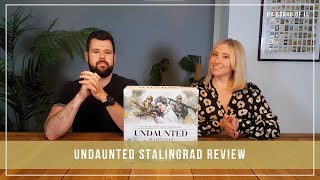




Undaunted: Stalingrad Deep Dive
What the Community Thinks About Undaunted: Stalingrad
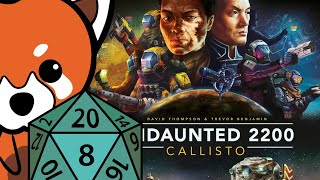
When a board game manages to spark the kind of enthusiasm that keeps players coming back for just one more scenario, something special is happening at the table. Undaunted: Stalingrad has generated exactly that response across the tabletop community, earning passionate endorsements from reviewers who recognize it as a masterpiece of campaign design and thematic resonance. Rolling Dice and Taking Names called it "one of the best gaming experiences if not the best of the year," while No Pun Included described it as "the best game you will never play," a backhanded compliment reflecting both its quality and its demanding two-player commitment.
Core Mechanics That Define Undaunted: Stalingrad
Deck Building With Permanent Consequences
At the heart of Undaunted: Stalingrad lies a deck-building system that immediately distinguishes it from other games in the genre. Players begin with small, identical decks representing their squads of soldiers, then gradually strengthen their hands by acquiring better cards throughout the campaign. What makes this system profound is how it intertwines with the game's gritty theme. When casualties persist across the campaign, players do not merely lose abstract resources; they remove cards from their deck permanently. This design choice transforms every decision into something that carries weight, forcing players to weigh immediate tactical needs against long-term deck construction. Each lost soldier represents a permanent reduction in available actions, creating tension that standard deck-building mechanics struggle to replicate.
Narrative Choice Meets Branching Campaign Structure
Undaunted: Stalingrad implements scenario-based gameplay where victory or defeat in one mission shapes which scenarios become available next. The campaign features up to 15 branching scenarios that respond to player choices and battle outcomes, meaning no two campaigns unfold identically. Between the mechanical systems sits a narrative framework featuring 150 evocative mission briefings written by Robbie MacNiven that present historical situations with multiple responses, allowing players to influence the direction of their campaign through both strategic play and thematic decisions. This structure ensures that the campaign never feels predetermined or linear, respecting player agency while maintaining historical authenticity.
The Undaunted: Stalingrad Experience
Gritty Thematic Immersion
The game's production design deliberately rejects theatricality in favor of historical authenticity. Players engage with the Stalingrad setting through Roland MacDonald's more than 300 unique illustrations, accurate unit representations, and scenarios grounded in the actual historical battle. The tone remains consistently serious and weighty throughout, matching the gravity of warfare rather than treating combat as an abstraction. Board Stupid captured this quality by noting it is "a war game for all intents, combined with a deck builder and it is really fantastic." Moments of meaningful victory feel genuinely earned, and defeats carry appropriate emotional resonance. The design never undermines the weight of what players are simulating, allowing the historical setting to reinforce every mechanical choice.
Addictive Campaign Momentum
Undaunted: Stalingrad demands significant mental engagement without becoming prohibitively complex. Board Of It described the experience as so compelling that their group "played all of those 15 games in something like three to five sessions" and "literally the first thing next morning put it back on the table and played some more." The interplay between deck composition, map control, and scenario objectives creates natural complexity that emerges from design elegance rather than rule bloat. Each turn presents meaningful decisions with multiple viable approaches, ensuring that players feel their strategic choices matter while avoiding the analysis paralysis that can plague heavier games.
What Makes Undaunted: Stalingrad Stand Out
Replayable Campaign With Persistent Stakes
Unlike many campaign games that can only be meaningfully played once, Undaunted: Stalingrad is fully resettable and replayable. Different strategic approaches and deck-building paths create genuinely different campaign experiences. The knowledge that this campaign can be played again paradoxically increases engagement during the first play, as players feel empowered to experiment rather than optimize obsessively. Reviewers highlight this replayability as a major strength, making the purchase feel like access to an ongoing game rather than a single experience.
Elegant Integration of Theme and Mechanics
David Thompson and Trevor Benjamin's design never asks players to compromise theme for mechanical clarity. Every card, every scenario objective, and every narrative choice reinforces the historical setting without becoming didactic. Players learn about the actual battle of Stalingrad through play rather than through exposition, experiencing how terrain changes, how supply lines matter, and how casualties accumulate. Foster the Meeple praised how "when you lose troops you're essentially getting rid of cards from your deck and you really feel it because you won't be able to use those troops again." This integration of theme and mechanics elevates the experience beyond a simple tactical simulation.
Potential Drawbacks
Setup and Time Commitment
Undaunted: Stalingrad demands significant table presence. Even individual scenarios require careful setup, and the full campaign requires commitment to seeing multiple scenarios through. While each scenario typically runs 30 to 60 minutes, the cumulative time investment for a complete campaign is substantial. Some groups may find leaving the campaign set up between sessions impractical, and others may struggle with the rulebook organization when looking up specific scenario details mid-campaign. The game rewards player familiarity, meaning that initial plays often feel less smooth than later ones.
Two-Player Focus With Limited Scaling
The game is fundamentally designed for two players, with one controlling Germans and one controlling Soviets. While solo variants exist, they alter the game's balancing equation. Groups looking for multiplayer experiences may find workarounds clunky or unsatisfying, as the core design philosophy centers on intimate two-player strategy. This limits accessibility for players whose primary gaming groups are larger than two people.
If You Enjoy Undaunted: Stalingrad
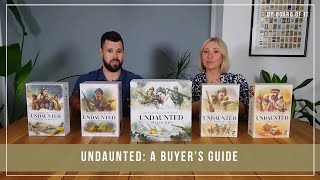
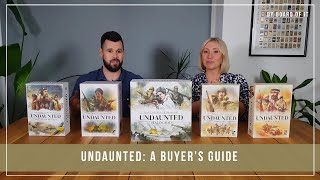
Players who find Undaunted: Stalingrad compelling should explore the broader Undaunted family, starting with Undaunted: Normandy or Undaunted: North Africa if they have not already. These standalone entries use similar systems with different historical contexts. Beyond the series, Descent offers scenario-driven campaigns with different thematic framing. Twilight Struggle delivers intense two-player Cold War tension through card-driven mechanics. War gamers unfamiliar with deck building may discover that Undaunted: Stalingrad serves as an elegant gateway to the system, while experienced deck builders will appreciate how elegantly the mechanics serve the historical theme.
What Reviewers Are Saying
"It was so addictive we played all of those 15 games in something like three to five sessions. We packed it away and literally the first thing next morning we put it back on the table and played some more. It was one of the best gaming experiences if not the best of the year."
— Board Of It
"It's a war game for all intents. Combined with a deck builder and it is really fantastic. When you lose troops you're essentially getting rid of cards from your deck and you really feel it because you won't be able to use those troops again."
— Board Stupid
"I definitely wanted to tell them more than them, it is an undaunted campaign where your characters can actually die and they're removed from the game. The reserves are new and not as good, but you also can get really good people and you can get upgrades. It's just undaunted campaign and I love undaunted, and I can't wait to play more of this game."
— Foster the Meeple