/pic3579391.jpg)
Long ago, your ancestors built great cities across the world. Now your tribe must explore forests, deserts, islands, mountains, and caverns to find these lost cities. Claim the ruins, build places of power, and restore the glory of a bygone age.
Unearth is a bend-your-luck game of dice placement and set collection. Designed by Jason Harner and Matthew Ransom, it plays in under an hour with 2-4 players. Each player leads a tribe of Delvers, represented by five dice (3 six-sided, 1 four-sided, and 1 eight-sided). Players take turns rolling and placing dice in an attempt to claim Ruins.
The game's elegant core mechanic is accessible to players of all skill levels. High rolls help players claim Ruins, while low rolls help players collect Stones. This opens two paths to victory: claiming sets of Ruins or using Stones to build Wonders. Delver cards help you affect your dice rolls or dice in play, and Wonders can grant abilities that impact the late game.



- Incredibly balanced
- Two intertwined games in one
- Satisfying secondary puzzle with cube building
- Players receive compensation cards
- Archaeology
Mechanics (from transcript analysis)
- Area Control — Players compete for influence on ruins based on the total value of dice placed on them.
- Dice Rolling — Players roll dice (D4, D6, D10) and use the values to place on a common area displaying different ruins.
- Set Collection — Players acquire special dice ability cards as compensation for not winning a ruin card.
Video topics + discussion points
Quotes (from this video)
- The game is called Unearth and it is 36 on my list
- this is what I like about unearth it is incredibly balanced
- the game that started at all Zulàn the M calendar which is number 35 on my list
- this game is super tight super interconnected yet uh it's one that I always have a fun place on my heart for
- The game is called Dune Imperium
- It is such a focused game that when you distill it down it's it's such a fantastic strategy game of connecting things together
- the game is called explorers of navor
- this is a really cool medium to lightweight family game
- the game I'm talking about is Bora Bora
- there's something so satisfying about pulling a Hut off your board and placing it on an island and getting a resource
- this is a dice placement action selection mechanism
- this is a game that I have a very strong LoveHate relationship or maybe it's hate love relationship
- it is called Zoo Tycoon the board game
- Sometimes clunkiness is something that makes games Charming for me
- this is a euro that is incredibly thematic
References (from this video)
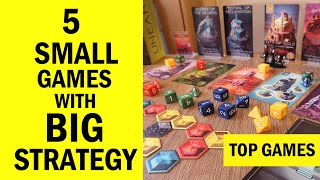
- Immense level of strategy
- Crucial decisions regarding dice commitment and delver cards
- Players collect sets of ruined cards for scoring
- Minecraft-like quality with stone rings
- Wonders provide scoring opportunities and altered final scores
- Unearthing different ruins, monuments, and wonders, reclaiming lost civilizations
Mechanics (from transcript analysis)
- Card Drafting — Choosing ruins cards from a central area.
- dice manipulation — Delver cards allow players to manipulate dice rolls.
- Dice Placement — Players deploy dice (tribe members) to ruins cards.
- Engine Building — Building wonders can provide different abilities or scoring opportunities.
- Resource Management — Acquiring stones from a draw bag to build wonders.
- Set Collection — Collecting colored sets of ruins and individual ruins of each color.
Video topics + discussion points
Quotes (from this video)
- Do you ever get that feeling where you really want to play a deep strategy board game but you simply don't have enough time to learn the rules and do so?
- Come and join me because in this video I take you through my five favorite small box board games that are big on the strategy but they're quick and easy to learn and play.
- Make sure your next game is an amazing one.
References (from this video)
- Dice as resource
Mechanics (from transcript analysis)
- Area Control — Commit to certain ruins to try and claim them off other players.
- Dice Rolling — Roll your dice and commit to them to certain ruins.
Video topics + discussion points
Quotes (from this video)
- There's something really satisfying about uh playing a game that feels like a Euro where you're competing for different objectives and then trying to uh develop a strategy that helps you to achieve those goals
- I would definitely pick a board game with a really good strategy just because I love crunching the numbers kind of working my Tableau a little bit and Building engines using dice to try and create combos
- Grand Austria Hotel is probably one of my favorite dice SL Euro games that I own in my collection
- I think when I first was uh new to board game competitive games were definitely my flavor I just really wanted to win
- but I think over time I've actually come to develop a really nice appreciation for Cooperative games
- ultimately I'm going to have to lean towards Ticket to Ride there's a visual appeal to this and the fact that you brings that sense that the more times you play it you feel more rewarded for it
- I am one to say that I don't like being I'm not a lucky roller and i' probably never ever kind of gamble or anything like that but I do like the feeling of rolling Dice and using Dice
- if you were stuck on a deserted island which of these games you can only pick one would you take and play a lost ruins of arac thematic I'll give it or D Imperium also thematic cuz it's a deserted island and there's sand and the beach I guess that's kind of the connection there
- I don't know I feel like a campaign experience is fun and I love the Miniatures and the potential for different character and story arcs and opening boxes something like Gloom Haven for example or the seventh continent but I don't know I'm just really drawn to how things fit together and puzzles and how they work
- gaming is all about for me relationships and connections and just want to connect in with people and just sharing that enjoyment and excitement over and over again
References (from this video)

- Striking graphic design and art.
- Streamlined and smooth gameplay.
- Well-presented crowdfunding campaign.
- Includes expansions and offers a deluxe edition.
- The game did not 'blow my socks off' for one reviewer, but they would appreciate it more now.
- The original game's production was noted as being good, but this edition is seen as an upgrade.
- Archaeology
- Boss Monster
Mechanics (from transcript analysis)
- bidding — Players are 'bidding for control of those cards'.
- Dice Rolling — Players roll dice.
- Push Your Luck — Players 'get benefits for rolling high and for rolling low'.
- Set Collection — Collecting 'relics' and 'hexes'.
Video topics + discussion points
Quotes (from this video)
- So, all of the wood components in this game are being locally sourced from Hokkaido where the publisher, not Mighty Boards to be clear, the original publisher and the designers of the game are based.
- This is the first real-time two-way pet translator.
- My thoughts are dark. I would I have never wanted to hack into something more in my life.
- I'm going to say 3,612 are Twitch streamers, right? Oh, I agree 100%. This is This ain't going IN THIS AIN'T GOING in your your foyer, right?
- I look, I I can't imagine this has any actual science Did you ever see The Far Side where the guy invents He goes, 'I can finally find out what dogs are saying.'
References (from this video)
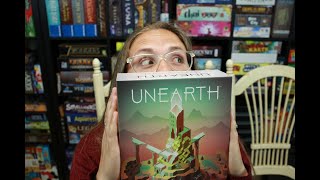
- Engaging dice-placement decisions with polyhedral dice
- Clear balance of luck and strategic planning
- Varied scoring opportunities including color sets and wonders
- Smooth, flowing turns
- End-game trigger adds tension and a unique finale
- Delver cards add variety and strategic choices
- Card theft by higher dice can be frustrating
- Certain negative-point cards (e.g., City of Gold) can punish riskier plays
- End-game trigger randomness may affect pacing
- Discovery, reconstruction, and resource optimization through dice
- Ancient ruins and lost world exploration; rebuilding ancient wonders
- Competitive, puzzle-like with Delver events and end-game triggers
Mechanics (from transcript analysis)
- Deck Manipulation — Drawing Delver cards that modify dice, grant rerolls, or alter rules to bend or extend the normal flow.
- Delver deck effects — Drawing Delver cards that modify dice, grant rerolls, or alter rules to bend or extend the normal flow.
- Dice Placement — Roll mixed polyhedral dice (d4, d6, d8) and place on ruin cards to claim them when the total meets or exceeds a card's requirement.
- End-game trigger deck — Ruins include end-game triggers; five trigger cards are shuffled and revealed to determine when the game ends.
- Set Collection — Acquire ruin cards to build complete sets and trigger scoring opportunities.
- Wonders and color tokens — Stone tokens are used to complete wonders with color-based or color-combination requirements, providing color bonuses and points.
Video topics + discussion points
Quotes (from this video)
- the end game is really unique and fun
- there's decisions all littered through this game
- you can get one of each color... bonus
- it's a point setup game really but like on a really small point scale
- you just want all the things but you can't have all the things
- end-game trigger adds tension and a unique finale
References (from this video)
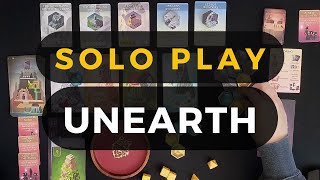
- Easy to learn and quick to play
- Rich dice/board interaction with many tactical choices
- Solo variant accessible and fun
- Clear scoring path via colors and wonders
- Engaging with fan-made variant adds flavor
- Initial confusion with some rules (Lonely Delver vs Lost Tribe rules)
- Complexities of card effects and ruins can be confusing during live play
- Array
- Ancient ruins exploration
- Solo narrative / playthrough
Mechanics (from transcript analysis)
- card management — Delver cards and discovery cards used to modify dice and scoring
- Compound Scoring — Score for patterns and color sets; wonders provide points
- Dice Rolling — Roll dice to determine actions and resolve ruins
- pattern-based scoring — Score for patterns and color sets; wonders provide points
- Set Collection — Collect colored stones to meet requirements for wonders and scoring
- Tile Placement — Place colored stones to form patterns around ruins and wonders
- tile/stone placement — Place colored stones to form patterns around ruins and wonders
Video topics + discussion points
Quotes (from this video)
- I really like this game it's very very easy to pick up
- there's a lot going on with the dice rolling
- I plan to do a play through with the official solo variant that comes in the Lost Tribe
References (from this video)

- Vibrant art and clear visual language; readable, well-crafted components
- Strong environmental theming with educational flavor
- Engaging negotiation and UN-style politics that create interactive play
- Asymmetry adds variety and strategic flavor
- Good basic rulebook and a family-friendly standard mode
- Resolution deck and policies can feel clunky and complex for newcomers
- Game length can be long in advanced mode; two-player mode is a weaker experience
- Some components and diagrams could be improved; minor production issues
- Clunkiness of card access and deck management may slow play
- Replayability could depend on decks/expansion variety
- environmental stewardship vs fossil fuel politics; diplomacy and policy-influenced outcomes
- Global politics and climate policy, Earth as a single nation-state context
- simulation with UN-style governance and negotiation
- Energy Tycoon
- Twilight Imperium (TI4)
- Colonizing Mars
- Root
- Tigers in Euphrates
Mechanics (from transcript analysis)
- Asymmetry and leader abilities — Six leaders provide varied scoring incentives and strengths.
- Card deck management — Climate policies, technology cards, and UN resolutions drive actions and scoring.
- End Game Bonuses — End occurs via prosperity or global emissions threshold; scoring via cards and resolutions.
- end-game timing and scoring — End occurs via prosperity or global emissions threshold; scoring via cards and resolutions.
- Negotiation — Players can trade money and manipulate others to affect card availability and outcomes.
- Negotiation and deals — Players can trade money and manipulate others to affect card availability and outcomes.
- Resource Management — Prosperity as income and emissions as a shared global resource that can trigger Earth destruction.
- resource/income management — Prosperity as income and emissions as a shared global resource that can trigger Earth destruction.
- Tableau Building — Players permanently improve their nation by acquiring projects to increase Prosperity.
- tableau-building — Players permanently improve their nation by acquiring projects to increase Prosperity.
- UN resolutions and sanctions — End-of-round votes affect all players with potential sanctions that cap income.
Video topics + discussion points
Quotes (from this video)
- the Earth blows up
- you can trade money freely during a turn so you can make tons of deals
- it's basically a United Nations simulator where money is constantly changing hands and promises and blackmail is being spewed left and right
- the negotiation is really sensitive in a game like this
- one Earth really feels like mini TI4 where you're picking and voting on agendas that can affect the rest of the game
- the resolution deck ends up being clunky in practice
- one Earth has some incredible player interaction definitely the most I've had from a tableau Builder
References (from this video)

- Array
- Array
- Array
- Array
- Array
- Array
- positive
Mechanics (from transcript analysis)
Video topics + discussion points
Quotes (from this video)
- "stickiness of the tongues and or tentacles is Perfect 10 out of 10"
- "the stickiness of the tongues and or tentacles is Perfect 10 out of 10 and you can wash them and they become re-sticky all over again"
- "this game has such a beautiful presentation and the area control dynamics don't feel as mean-spirited as in your typical area control game"
- "I love board gaming I play games very frequently however I do not often play the same game multiple times"
- "every time people come over no matter how many times I've dragged them to the table to play Masters of the Renaissance I'm like okay so... let's play masters of Loretto fold"
References (from this video)
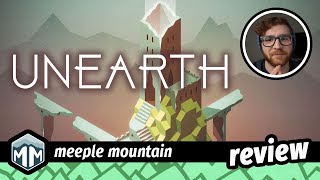
- Striking isometric artwork
- Balanced mix of luck and control with dice
- Highly replayable with many named wonders and end-of-age cards
- Easy to teach for a light to medium-weight game
- Delver cards provide mitigation and strategic depth
- Some players may prefer a lower-luck game; dice randomness can influence early outcomes
- Complexity of 15 named wonders may be daunting for newcomers
- Rebuilding roots, resource management, and wonder construction
- Post-collapse civilization; a tribe rebuilding and reclaiming lost ruins
- Light narrative focus driven by strategy and theme rather than story
- Boss Monster
Mechanics (from transcript analysis)
- Delver cards — Delver cards mitigate dice randomness and modify dice outcomes or placements.
- Dice Drafting — Choose from a pool of polyhedral dice (D4, D6, D8, etc.) to assign to ruin cards.
- Dice Placement — Place dice on ruin cards to attempt reclamation based on numeric thresholds.
- Dice placement on ruin cards — Place dice on ruin cards to attempt reclamation based on numeric thresholds.
- Endgame / exploration cycle — End the game when all ruin cards are reclaimed, then tally points.
- Set Collection — Collect stones from reclaimed ruins to build Wonders.
- Set collection / resource accumulation — Collect stones from reclaimed ruins to build Wonders.
- Wonders construction — Build Lesser and Greater Wonders providing abilities and scoring.
Video topics + discussion points
Quotes (from this video)
- Unearth really stood out to me for a few different reasons
- isometric artwork
- the game gives you just enough control to feel like you're still making important decisions
- if you're looking for a light to mediumweight game that's easy to teach and quick to learn this is definitely one I recommend checking out