/pic8317346.png)

/pic8317346.png)





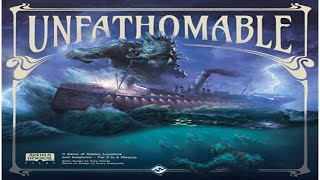

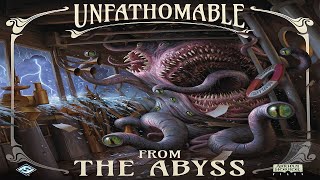





























Unfathomable Deep Dive
What the Community Thinks About Unfathomable
Reviewers describe Unfathomable as a worthy spiritual successor to Battlestar Galactica, offering a modern, streamlined experience of the classic hidden-role deduction formula. The game generates genuine paranoia and tension through its elegant skill check system, where players secretly contribute cards face-down to determine whether crises succeed or fail. The mechanics create constant micro-decisions that keep the traitors (hybrids) engaged while forcing loyalists to make calculated bets about who to trust. Reviewers consistently praise how well the game captures the claustrophobic horror of a doomed voyage, with the escalating danger of sinking resources and creeping dread building throughout.
The consensus emerges that Unfathomable excels when played with groups that embrace social deduction and direct accusation. Experienced players appreciate how the card mechanics reward sophisticated play, where understanding what cards others have drawn allows for predictive analysis. Multiple reviewers note the game finds its sweet spot at higher player counts (five or six), where the social dynamics become richer and more unpredictable. However, most acknowledge the game demands a specific type of player: those comfortable with lying, confrontation, and multi-hour commitment to maintain tension.
Core Mechanics That Define Unfathomable
Skill Checks and Hidden Information
The beating heart of Unfathomable is its skill check mechanic. When a crisis occurs, all players simultaneously contribute cards face-down to a shared pile. The cards feature symbols (strength, will, influence, observation, and lore) that either help or hinder the check. After shuffling the pile, players reveal and total the values, comparing against the difficulty rating printed on the mythos card. The brilliance lies in the psychological layer: traitors must decide whether to actively sabotage or play conservatively to avoid suspicion. Loyalists, meanwhile, must decode whether someone's hesitation before contributing a card signals hidden allegiance or legitimate hand management. Reviewers emphasize that this creates what one analyst calls "in-depth social deduction done so well because there's partial information, you know who putting cards and who didn't."
Resource Attrition and Track Advancement
The game employs two critical tracks that generate mounting pressure. The travel track represents the ship's progress toward Boston, with successful waypoints adding distance. Once the ship reaches 12 total distance and advances the travel track once more, humans win. Conversely, the ritual track represents a banishment spell that slowly charges toward completion, and when it reaches the end, it devastates the board by removing deep ones and sending characters to the sickbay. The true threat, however, comes from four resource dials: fuel, food, sanity, and souls. When any resource reaches zero, the game immediately ends and the hybrids win. This structure forces traitors to decide whether to prevent forward progress or directly drain resources, while humans must constantly choose between advancing the ship and managing attrition.
The Unfathomable Experience
Tense Social Deduction with Personal Agendas
The game's dominant emotional signature is sustained paranoia punctuated by explosive accusation. Reviewers describe memorable moments where card hesitation triggers immediate table investigation, or where a failed skill check sparks heated debate about who contributed negative cards. The hidden loyalty system deepens this texture: players begin the game assuming everyone is human, but when the ship reaches a certain waypoint, new loyalty cards are dealt. This mechanic forces players to maintain cover longer while knowing that even their trusted allies might be secretly working against them. One reviewer recalls a four-player session where a single character with an unusual loyalty had to play a calculated dance, sometimes helping and sometimes sabotaging, creating an unpredictable allegiance pattern that kept the entire table confused.
Cosmic Horror Atmosphere with Lovecraftian Dread
The 1913 Atlantic Ocean setting and deep one mythology saturate the experience with supernatural menace. Mother Hydra and Father Dagon menace the vessel from the depths. The flavor text on mythos cards delivers atmospheric crises: passengers falling overboard, incomprehensible dreams plaguing the crew, and the relentless encroachment of inhuman entities. Reviewers appreciate how the thematic elements reinforce the mechanical pressure. Rescuing passengers before they are attacked, repairing structural damage before the ship deteriorates further, and casting the ritual spell to banish monsters all feel narratively justified, not arbitrary. The game threads theme through mechanics so that every decision carries both mechanical weight and dramatic consequence. Reviewers note that the Lovecraftian setting, while present, functions more as atmospheric window dressing than deep mechanical integration; the skill checks remain largely abstracted behind card symbols rather than embodied in the fiction.
What Makes Unfathomable Stand Out
Streamlined Rules That Enable Sophisticated Play
Unlike some social deduction games that require extensive rules clarification, Unfathomable achieves elegance through focused design. The core rules are teachable in approximately 15 minutes to experienced gamers. New players grasp the basic concept (contribute cards, resolve outcomes) within five minutes. Yet underneath that simplicity lies surprising strategic depth. Reviewers repeatedly commend how the game avoids mechanical bloat while still offering countless viable strategies. The ship space actions, character-specific abilities, and the once-per-game feat system create sufficient tactical variance that experienced players can still demonstrate mastery through superior hand management and reading the table. One reviewer specifically praises the intuitive player aids that explain every board space action without requiring rulebook consultation mid-turn.
Asymmetric Power Structures and Role Emergence
Each character receives unique abilities and starting positions. Some are naturally drawn toward specific board actions (the engineer excels in the boiler room for advancing the ship), while others possess abilities that become devastating when revealed as traitors. The captain and keeper of the tome roles create secondary asymmetries: the captain makes critical waypoint choices, while the keeper accesses the spell deck and can cast powerful spells once per round. Reviewers note this creates organic role definition without feeling forced. Players naturally gravitate toward using their character's strengths, which both helps their team and provides cover for their true loyalty. When a traitor is eventually revealed, their specific power set often becomes their greatest asset for directly attacking humans or sabotaging the remaining humans' action efficiency.
Potential Drawbacks
Escalating Length and Variable Engagement
Unfathomable's advertised playtime of 120-240 minutes frequently skews toward the upper end. Reviewers report average sessions running closer to 2 hours 45 minutes to 3 hours, with full tables hitting four hours. The constant tension that makes the game compelling also creates decision fatigue. Each player's turn triggers mythos cards, deep one activations, potential damage, and new crises, meaning no single turn resolution is truly fast. More critically, several reviewers identify a strategic ceiling: once experienced players master optimal plays, they can predict likely outcomes with high confidence. The mystery and tension then deflate somewhat, even if strategic depth remains. One reviewer notes that after several plays, the game can feel like repeating familiar patterns rather than discovering new narratives. The game requires sustained energy from all participants; new players playing poorly can be misinterpreted as traitors, spawning frustration rather than friendly accusation.
Player Count Sensitivity and Limited Two-Player Viability
Unfathomable is optimally designed for five or six players but becomes constricted at three or four. With fewer than four players, the loyalty mix is too lean and the social swirl that generates deduction opportunities shrinks significantly. Multiple reviewers confirm the game feels fundamentally empty at two players, despite some players attempting to make it work in that configuration. The revealed traitor stage, which should create exciting direct conflict, becomes less compelling with small groups because humans have fewer teammates to strategize with and the traitor faces fewer simultaneous threats. Additionally, the cultist loyalty card (which some reviewers consider a variant for balanced four-to-six player dynamics) only enriches the experience at higher counts, making the game's player count flexibility a genuine limitation compared to competitors.
If You Enjoy Unfathomable
Players who love Unfathomable should explore Battlestar Galactica, the original design that inspired this newer version, though most reviewers now recommend Unfathomable as the superior and more accessible implementation. Dead of Winter offers similar social deduction mechanics with deeper narrative integration through the crossroads card system, though it trades pure traitor deduction for emotional storytelling. The Resistance provides faster, lighter hidden-role play for groups wanting the deduction without the long commitment. Blood on the Clocktower delivers sophisticated hidden role mechanics with even greater player interaction density. Those drawn to the competitive deck building and negotiation elements should try Twilight Imperium, which explores asymmetry and hidden agendas in a vastly different context. For the horror theme specifically, Arkham Horror: The Card Game scratches the cosmic dread itch while shifting the deduction layer to narrative puzzle-solving rather than social drama.
What Reviewers Are Saying
"Unfathomable does a really good job of giving the traitor so many ways to sabotage the humans to eventually sink the ship. There's the constant skill checks that everyone is doing at the end of their turns and if you're bad maybe you just want to sneak in some negative cards once in a while."
— Shelfside
"The unique decisions just become natural and for this reason Welcome 2 doesn't have any asymmetry between players. But in unfathomable, every player will have their own strategy based on their unique allocation of resources, their position in, and what's available to them which cascades into an entirely different play style and decision tree."
— BigPasti
"If your group likes big table debates about what to do next, Dead of Winter is your game. If your group likes tight, suspicious silence and intense reads, unfathomable wins. The skill check system gives you more sophisticated trader dynamics because you get a modern take on that big box trader experience that feels rewarding when everyone leans into it."
— Board Game Critique