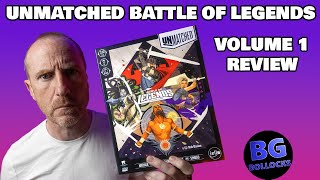
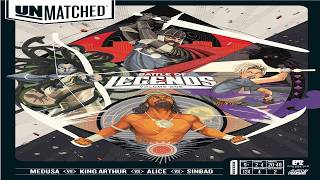
Unmatched Adventures: Tales to Amaze, which is themed around the pulp adventures, tall tales, and local legends of the mid-20th century, gives you a whole new way to play Unmatched.
In the game, players work together to defeat one of two villains: Mothman or the Martian Invader. Each villain has a unique battlefield with unique objectives. If the villain completes their objective (or defeats the heroes), the players lose. The villains are aided by a number of possible minions: Jersey Devil, Ant Queen, Loveland Frog, The Blob, Tarantula, and Skunk Ape. The enemies use special action cards and a simple targeting scheme to control their movement and attacks.
The set comes with four new heroes: Nikola Tesla discharges his electrified coils to power up his effects; Annie Christmas gets stronger when she's fighting from behind; The Golden Bat, the world's first superhero, has a variety of powerful effects; and Dr. Jill Trent, Science Sleuth, calls on a collection of gizmos.
Keeping to the Unmatched brand, you may use heroes from other Unmatched sets in Unmatched Adventures, and you can use the included heroes and battlefields to play competitive Unmatched.
—description from the publisher
- Extremely streamlined and easy to teach, enabling quick sessions and multiple matches in one sitting
- Each fighter feels distinct, with visual style and mechanical flavor that reinforce the IP
- High-quality art, sculpts, and components; the gaming experience is tactile and satisfying
- Strong for 1v1 play and adaptable to a short-series format; good for casual and veteran players alike
- Expansions provide broad IP variety and keep the system fresh
- Total collection can be expensive if you pursue all IP packs and expansions
- Board aesthetics vary and some boards are basic visually compared to other components
- Balance can shift between packs; some fighters feel stronger than others, which may affect matchups
- Iconic characters from mythology, literature, film, and folklore square off in fast, tactile duels
- Fantasy and fairy-tale/literary IP clashes on modular battle maps with dynamic sculpts
- character-driven, IP-forward skirmish with quick rounds and varied matchup vibes
- Jurassic Park
- Beowulf
- Buffy the Vampire Slayer
- Sherlock Holmes
- King of the Forest
- Beowulf (Beowulf is referenced as a featured IP in multiple packs)

Mechanics (from transcript analysis)
- Action economy — On your turn you perform two of any combination of three actions: maneuver, draw a card, and move up to your speed.
- Attack resolution — Attack is resolved by comparing your attack card to your opponent's defense card, with card powers modifying outcomes.
- Card-driven actions — Discarding a card can boost certain actions; you also utilize a hand of seven cards to fuel your turns.
- Character powers and roles — Different fighters (heroes, sidekicks, etc.) have unique powers that affect melee or ranged options and timing.
- Combat: Damage Based — Damage is tracked on a dial; when a character reaches zero, they are defeated.
- Damage tracking — Damage is tracked on a dial; when a character reaches zero, they are defeated.
- Miniature and map components — Stylized minis and map tiles enhance tactile play, with dials and connectors that help track state and setup.
- Position and range — Most attacks are melee; some characters can perform ranged attacks if in the same zone, adding positional tension.
- Scheme and bolt mechanics — Play a lightning bolt card to trigger special effects or actions described on that card.
Video topics + discussion points
Quotes (from this video)
- unmatched is a mostly two-player game
- it's a straight-up fighting game that uses a deck of cards and some cool minis on a map
- this is really a pure two-player game that is its bread and butter
- the game plays quickly and it is easy to find yourself running through four or five games in a night
- if you are looking to get just one box with two characters this is the best of the bunch as a one-on-one battle
- unmatched is tough to match and that is it
References (from this video)
- excellent unboxing and production quality
- great insert, storage, and figure quality with color accents
- fast learning curve; good for casual play
- flexible play with solo and multiplayer; compatible with other Unmatched sets
- strong thematic vibe with cryptids and urban legends
- solo play may be less enjoyable than multiplayer
- the Adventure subtitle may mislead some players into expecting a traditional narrative adventure
- the price compared to using existing unmatched components may be a consideration
- superhero/villain encounters with mythic creatures in short, head-to-head battles
- cryptids, urban legends, and alien invaders in a color-coded skirmish arena
- standalone arena skirmish with modular boss fights and recurring villains
- Dice Throne Adventures
- King of Tokyo
Mechanics (from transcript analysis)
- amazing events deck — Adds random complications that can disrupt plans and cause card discard penalties.
- Card-driven combat — Attack vs defense totals resolved by card values; higher total wins and damage equals the difference.
- color-coded movement/line of sight — Circles on the board indicate spaces; matching colors determine targets and line of sight.
- initiative deck — Each player has an initiative deck to determine turn order and sequences; ties resolved by card draws.
- minion decks — Monsters and villains each have their own decks dictating movement, attacks, and special powers.
- sidekicks and gadgets — Some heroes bring sidekicks; cards may specify sidekick interactions and gadget usage.
- threat/bridge mechanics — Bridges have threat counters; destroying bridges reduces hero power and affects movement.
Video topics + discussion points
Quotes (from this video)
- the unboxing experience is really nice; insert is great and storage is easy
- it is a wonderful designed product and as a product I can highly recommend it
- unmatched Adventures doesn't feel like an adventured game to me at all
- it's a standalone game that can expand other unmatched content
References (from this video)
- Fast-paced, highly replayable
- Strong art and character variety
- Not cooperative (usual), so this is a variant mention
- Can be seen as a head-to-head duel game
- Duel combat with varied fighters
- Fighter vs warrior from various myths and legends
- Abstract/arena combat with themed fighters
Mechanics (from transcript analysis)
- asymmetric fighters — Each fighter has unique cards and abilities.
- hand management — Cards determine actions each round.
- variable board interaction — Board transforms with scenarios.
Video topics + discussion points
Quotes (from this video)
- this is our top 10 co-op games
- it's such a chill game
- we are so engaged in this very simple game
References (from this video)
- asymmetry and variety
- quick and engaging head-to-head play
- fantasy/monsters and legends
- head-to-head combat with asymmetrical fighters
Mechanics (from transcript analysis)
- asymmetric card-based duels — Choose unique fighters with distinct powers; fast, head-to-head skirmishes.
Video topics + discussion points
Quotes (from this video)
- i recommend this with ignorance is bliss
- star wars is my number one favorite anything i'm just obsessed with star wars
- this is a table hog of a two-player game
- no one owns it
- you can play this with new gamers because you can explain it very quickly
References (from this video)
- Strong variety due to different heroes
- Engaging head-to-head battles
- Asymmetric head-to-head combat using famous heroes and monsters
- Fictional/monster character clashes
- Epic Duels
- Cobble and Fog
Mechanics (from transcript analysis)
- asymmetric card-driven combat — Each hero/villain has a unique deck and abilities.
- Multi-hero variants — Two players can control multiple heroes across matches.
- One-versus-one feel with modular expansion characters — Play as various famous figures (e.g., Invisible Man, Sherlock Holmes, Dracula).
Video topics + discussion points
Quotes (from this video)
- it's gorgeous
- everything about this game is gorgeous
- it's jazz chess with insects
- it's a combat game that I really like
- don't be turned off by it being too pretty
References (from this video)
- Strong asymmetry and character-driven design that creates unique play experiences per fighter
- Compact core rules with a lot of emergent depth and replayability
- Stellar production value: art, minis, and overall presentation
- Extensive ecosystem of expansions, licensed IPs, and fan-driven content
- Accessible entry point for new players while offering depth for veterans
- High cost for collecting multiple boxes and IP bundles
- New players can feel overwhelmed by the sheer number of boxes and potential combos
- Licensing changes and out-of-print issues can complicate access to certain boxes
- Pop culture and mythic IP mashups realized as asymmetric skirmish arena combat
- Crossover battles on a shared fight map featuring fictional and historical characters
- Punchy, blockbuster-style showdowns with strong character flavor and visual drama
- Cosmic Encounter
- Thunder Road Vendetta
- Fireball Island Curse of Vulcar
- Dark Tower
- Star Wars Epic Jewels
Mechanics (from transcript analysis)
- Attacks and defenses without line-of-sight — Attack resolves via card values and defense cards; there is no traditional line-of-sight or ruler-based range—range is determined by zones.
- Deck exhaustion with consequences — Your deck does not reshuffle when empty; instead you are out of cards for the rest of the game and drawing a card causes exhaustion damage.
- Line of sight — Attack resolves via card values and defense cards; there is no traditional line-of-sight or ruler-based range—range is determined by zones.
- Movement via maneuver and boosts — Maneuver draws a card to your hand, then moves up to your move value; you can discard a card to add its boost to movement, at the cost of losing that card from your hand.
- Scheme cards for positional and effect-based play — Scheme is the third action; scheme cards provide various actions that can shift momentum, creating strategic variety between fights.
- Two-action turns (attack, maneuver, scheme) — Each turn you must perform two actions; actions include attacking or defending with cards, maneuvering to reposition, or playing a scheme card for an effect.
Video topics + discussion points
Quotes (from this video)
- Unmatched is a machine that sucks in money and spits out bare knuckle bloody nose whimsy.
- A map that you're fighting on, and in a standard game, two heroes.
- All powers are strong. All powers are gamebreaking.
- This is a system with ridiculous elevator pitches woven seamlessly into its very fabric.
- Cobble and Fog, the best box. Super atmospheric, four really fun games, none of which are too complex.
References (from this video)
- Asymmetric character decks provide constant variety and replayability
- Accessible UI with clear character abilities of each side
- Tension and mind games in melee combat and deck interaction
- Strong selection of characters and card variety increases depth
- Balance is uneven across characters; hard AI is frustrating
- MSRP is high per character; requires multiple expansions to reach balance
- Digital version reduces the tension of mind games compared to physical play
- Limited big combos due to two-action structure and deck-out risk
- Array
- Fantasy arena combat featuring mythic and legendary characters
- Analytical playthrough commentary
Mechanics (from transcript analysis)
- Area / zone-based movement and board positioning — Board maps with zones and traps; positioning affects combat
- Area movement — Board maps with zones and traps; positioning affects combat
- Asymmetric decks / unique character abilities — Each character has its own deck with distinct abilities, creating asymmetric matchups
- asymmetric player powers — Each character has its own deck with distinct abilities, creating asymmetric matchups
- Character sidekicks and card-based synergy — Characters include sidekicks and synergies; some characters interact with discard or draw mechanics
- Counterplay and number matching in combat — Victory/defense depends on matching or countering numerical values
- Deck management / deck exhaustion and sudden death — The game includes a deck-out mechanic where running out of cards can end or punish late game
- hand management — Players manage their hand and some abilities can discard cards from an opponent's hand
- Hand management and disrupting opponent's hand — Players manage their hand and some abilities can discard cards from an opponent's hand
- Hidden information / face-down cards — Players use face-down cards to declare attacks; resolution occurs when revealed
- Map variety and strategic interaction with traps — Maps can include trap doors and other features that influence strategy
- Two actions per turn and draw attached to moving — Players take two actions per turn, with drawing typically tied to movement; hand and draw pacing
Video topics + discussion points
Quotes (from this video)
- Unmatched is a game that revolves around the mechanic of playing secret face down cards for each attack.
- the strength of the game lies in the mind game of attacking each other sitting across the table to sus out what the other is doing
- If your opponent can perfectly match all your numbers or negate all your pivotal attacking or defending abilities they're going to come out ahead
- it's still a 7 out of 10 board game
- the imbalance is a ridiculous reality
- MSRP though it's $10 per character
- the digital app on Steam is good except for when it was crashing against hard AI
- the more characters you add in the more I am curious to see how matchups work
- Winning as a Defender is mechanically easier than winning as an attacker
- There’s deck management that becomes noticeable and can influence late-game outcomes
References (from this video)
- Beloved by the commentators; strong fan engagement
Mechanics (from transcript analysis)
Video topics + discussion points
Quotes (from this video)
- It's literally a popularity contest.
- Code Names Duet is also just a lot of fun.
- Santorini has the legs to make it to the final four.
- Zenith narrowly edged it out 51% to 49% of the vote on this one.
- Watergate is my favorite two-player game.
- I'm 6 and 0 on Cena so far.
References (from this video)
- Thematic cohesion is strong within Stars and Stripes, more so than some other Unmatched releases.
- Distinct, flavorful character designs (e.g., Rosie the Riveter’s mech, John Henry’s mobility).
- Great tempo and variety between fighters; each fighter offers a very different play experience.
- The mix of historical and pop-culture references creates a lot of thematic immersion.
- Some players noted missing explicit rules for secret passages in the included rulebooks, requiring online references or cross-set knowledge.
- A few upkeep-heavy mechanics (like managing multiple upgrades) can be a bit fiddly for new players.
- Bluffing, tempo-based combat, hidden information, and cross-genre duel storytelling that blends history, pop culture, and folklore.
- A thematic mashup of American history and legend, with battlefield duels set around iconic locations like the Alamo and the White House, featuring famous figures and their legendary counterparts.
- Character-driven duels where each fighter has unique abilities and dynamic aura around bluffing, with secret information and outcomes shaped by card play.
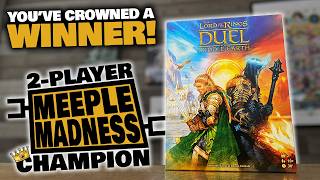
- Battle of Legends Volume 3
- Loki
- Pandora
- Cobble and Fog
Mechanics (from transcript analysis)
- character-specific abilities — Each fighter has unique powers that trigger after combat or under certain conditions, driving varied play styles.
- Combat: Deck/Hand — A head-to-head fight where players play attack and defense cards, with special abilities influencing outcomes.
- dueling card combat — A head-to-head fight where players play attack and defense cards, with special abilities influencing outcomes.
- movement tokens (John Henry) — Track tokens that enable flexible movement across the board; they do not count as standard spaces and enable dramatic repositioning.
- on/off upgrade tiles (Rosie the Riveter) — Tiles that switch on and off to grant bonuses or alter abilities, contributing to a mech-suit flavor and timing decisions.
- ruse tokens — Tokens used to bluff or trigger effects; can force opponents to discard or reveal information, adding mind games to combat.
- Secret passages — Board features that allow movement via hidden routes between locations, creating tactical depth and long-term planning.
- tempo and momentum — The game emphasizes building tempo—gaining advantages through sequence and resource management to outpace an opponent.
- Tile/Map Shifting — Tiles that switch on and off to grant bonuses or alter abilities, contributing to a mech-suit flavor and timing decisions.
Video topics + discussion points
Quotes (from this video)
- This is a theme-driven, cohesive set and it’s a slam dunk for fans of Unmatched.
- Stars and Stripes. This game just keeps on giving and I'm here for it. I think it's fantastic.
- This is a seal of excellence from both of us.
- The thematic cohesion is stronger here than in some earlier releases.
- John Henry is crazy, in a good way—wild mobility and track tokens everywhere.
- Rosie the Riveter is whacka doodle, in the best possible sense.
References (from this video)
- easy to learn and quick to teach
- highly accessible for new players
- great for head-to-head play
- potential balance questions with certain characters
- fantasy IP licensing can influence expansions
- heroic combat with unique abilities
- fantasy duel arena with asymmetric fighters
- asymmetric dueling with character-specific kits
Mechanics (from transcript analysis)
- asymmetric fighters — each character has unique moves and abilities
- combat resolution via cards — cards drive attacks, defenses, and special schemes
- hand management — players draw a hand of cards and take two actions per turn
- Hand management / card-driven actions — players draw a hand of cards and take two actions per turn
Video topics + discussion points
Quotes (from this video)
- these are 10 board games that are quick to teach
- the artwork's Beautiful so if you're looking for a light puzzle I highly recommend Cascadia
- it's very quick to teach and very quick to learn
- a lot of this top 10 list is about accessibility and group play
References (from this video)
- great variety of fighters and playstyles
- easy to learn; quick to teach; deep strategic options
- collecting expansions can escalate costs
- balancing is patchy with many character combinations
- one-on-one combat with highly asymmetric fighters
- duel arena with iconic characters
- pop-culture crossover battle arena
- Chess
Mechanics (from transcript analysis)
- Asymmetric abilities — each character has different moves and tendencies, enabling diverse strategies
- Card-based actions — a deck of 4 types (scheming, attack, defense, versatile) drives your options
- collectible expansions — new sets introduce additional fighters and variants, expanding options
- Combat: Deck/Hand — two-player combat where each fighter has unique abilities and health
- duel/arena combat — two-player combat where each fighter has unique abilities and health
- Two actions per turn — each player gets two actions per turn to move, draw, or play a card
Video topics + discussion points
Quotes (from this video)
- cooperative dice placement game where both players act as pilots trying to land a commercial plane
- Watergate is a tug of war with momentum tokens and evidence board connections
- Unmatched is an asymmetric duel with different abilities and a strong 'last one standing' goal
- That Time You Killed Me looks like chess but plays thinky with time travel modules
References (from this video)
- Accessible entry point to tactical duels
- Fast, engaging round structure
- High variability through different character decks
- Thematic depth may feel light for some players
- Component quality can be inconsistent
- Card draw randomness can affect strategic planning
- duel-centric, theme of character identity and tactical play
- Fantasy arenas where duels between uniquely powered characters take place, using card-driven combat
- episodic, flavor text via character decks and occasional lore
Mechanics (from transcript analysis)
- Arena/positioning — Relative positioning and board layout influence outcomes.
- Card-driven combat — Players use character-specific cards to activate actions, attacks, and defenses.
- Character-specific decks — Each fighter has a unique deck that shapes strategy and combos.
- Combat: Deck/Hand — Players use character-specific cards to activate actions, attacks, and defenses.
- Turn-based skirmish — Rounds alternate, with players selecting plays from their decks to gain tempo.
Video topics + discussion points
Quotes (from this video)
- look at it it's fabulous it's fantastic
- you can't play the game with just flipping one of the minion decks
- I got all I need right here
- let me get this stuff out and I'll play a game with you we got to get ready for next week
- solo unmatched Adventures going there getting ready for the review
- it's frog content
- the board where your characters you just have the lovelin Frog deck out it's frog content
- Harry your questions answer themselves
- we got to get ready for next week
References (from this video)
- Stunning art and graphic design that captures pulpy sci-fi vibes and helps the theme pop.
- Strong character roster with memorable personalities (e.g., Tesla, Annie, Jill Trent, Golden Bat) that are a joy to pilot in both cooperative and competitive modes.
- Excellent co-op balance and accessibility, with a scalable system that feels smooth from solo play to four players.
- Smooth and thematic turn-order system via initiative draws that simulate unpredictability and strategic pressure.
- Event cards and collaborative mechanics create high-replayability and emergent story moments across the back catalog of existing unmatched sets.
- Clear integration with other Unmatched sets, expanding the thematic and mechanical playground without losing coherence.
- Pop culture crossovers and mythic/sci-fi hero-vs-monster showdowns with an emphasis on flavorful character flavoring and thematic clashes.
- A pulp-informed sci-fi/fantasy mash-up played on a modular battlefield where iconic heroes and monsters collide, with a sci-fi-meets-swashbuckling aesthetic and a campy, tongue-in-cheek tone.
- Campy, episodic mashups that celebrate over-the-top battles and witty, character-driven showdowns with a lighthearted, cinematic vibe.
- Unmatched (base game and other sets)
Mechanics (from transcript analysis)
- boss battler — Boss hit points scale with player count (solo to four players) by adjusting HP and evolving challenge, enabling a smooth experience across varying group sizes.
- boss_hp_scaling — Boss hit points scale with player count (solo to four players) by adjusting HP and evolving challenge, enabling a smooth experience across varying group sizes.
- cooperative actions — Players cooperate to manage buffs, positioning, and special abilities that influence the board state, bridges, and boss dynamics, reinforcing teamwork.
- cooperative_play_and_turn_shifts — Players cooperate to manage buffs, positioning, and special abilities that influence the board state, bridges, and boss dynamics, reinforcing teamwork.
- event_cards — Event cards ramp up tension and inject surprises, providing dramatic twists and new tactical considerations each round.
- Events — Event cards ramp up tension and inject surprises, providing dramatic twists and new tactical considerations each round.
- initiative_draw — Turn order is determined by drawing initiative cards from a deck, introducing unpredictability and allowing dramatic swings where players or enemies act in sequence-driven bursts.
- minions_and_villains — A cadre of thematically fitting minions and bosses with unique play styles that support varied strategies and create dynamic encounters across sessions.
- thematic_character_synergy — Interactions between characters and settings enable wildly varied thematic combos (e.g., Spider-Man vs tarantula, Robin Hood aligned with Tesla or Sherlock Holmes), deepening replayability.
Video topics + discussion points
Quotes (from this video)
- unmatched Adventures gets our Victory print stamp
- the best co-op game out there
- the turn order initiative draw system is one of my favorite
- thematic combinations possible throughout unmatched are absolutely wild
- There's something incredibly satisfying about having Spider-Man take on the giant tarantula
- it's not just done it's Exquisite surpassing just being able to function and being downright fun
References (from this video)
- expands Unmatched into cooperative space
- strong art direction
- Kickstarter logistics can be involved
- not always quick to learn for new players
- puzzle-driven hero-vs-villains in cooperative format
- cooperative take on Unmatched with a maze theme
- story-led adventure with thematic art
- Unmatched core sets
Mechanics (from transcript analysis)
- boss battler — mix and match heroes from different sets with a common foe
- Cooperative combat — team up to defeat villains using hero decks
- hero customization — mix and match heroes from different sets with a common foe
Video topics + discussion points
Quotes (from this video)
- you're not going to make them do the 45 minute history lesson
- the kickstarter's three two three two three two three
- this is a vast playground for cooperative and competitive play alike
References (from this video)
- cooperative play with asymmetric heroes
- engaging initiative system
- beautiful art and components
- mercifully quick setup for a co-op game
- random card draws can feel luck-based
- potentially punishing for new players unfamiliar with deck synergies
- team-based hero cooperation against an asymmetric villain
- Point Pleasant, West Virginia (Moth Man scenario)
- episodic cooperative adventure with minions and bridges
- Unmatched (competitive core game)
- Martian Invader (alternate villain in the Martian Invader variant)
Mechanics (from transcript analysis)
- hand management — discarding cards to activate boosts and to heal/modify actions
- initiative deck — one initiative card per piece on board; order reshuffles rounds
- maneuver action — draw a card, move up to 2 spaces, discard to activate bridge effects
- minions and bridges — minions aid the villain; bridges have doom tokens and can grant effects when leveraged
- special hero powers — each hero has unique abilities that modify attack/defense or movement
Video topics + discussion points
Quotes (from this video)
- artwork is spectacular
- the cooperative experience
- initiative system makes it fresh
- hand management is important
- we did it we defeated Moth Man
References (from this video)
- Wide variety of heroes, villains, and minions across sets
- Co-op and solo play with many permutations
- Accessible rules and satisfying combat
- Beautiful miniatures and thematic art
- Dynamic bridge and terrain elements add strategic depth
- Foil cards are cosmetic and replace existing cards with no new content
- Setup can be fiddly due to small punched tokens and assembly
- Box contents may not include all content from expansions; reliance on additional events
- Heroic duels against mythic monsters using a shared deck-building framework
- Supernatural hero-vs-monster arena with a modular board of zones and bridges
- episodic combat scenarios with themed minions and variable events
- Cobble and Fog
- Robin Hood and Bigfoot
- Marvel Heroes
Mechanics (from transcript analysis)
- Acid tokens and zone control — Acid tokens occupy spaces and interact with movement and zones to constrain players.
- Bridges and doom — Bridge tiles activate special effects; doom tokens advance threat toward losing the game.
- Co-op and solo play — Supports solo (one or more heroes) or 2-4 players cooperatively with shared objective.
- combat resolution — Attack vs. defense values with immediate, during-combat, and after-combat effects.
- Event cards and customization — Advanced event cards alter the difficulty and add variety to gameplay.
- Initiative system — An initiative deck determines turn order and triggers special effects.
- Minions and villains — Foes are drawn from minion decks with per-foe initiative cards.
- Turn structure — Each hero takes two actions per turn chosen from maneuver, scheme, or attack.
Video topics + discussion points
Quotes (from this video)
- I love the fact that they've added this variety
- loved it and this is really neat just to get these things out give them a quick matchup a super way to play unmatched with all your different Heroes villains and minions
- this is really neat