
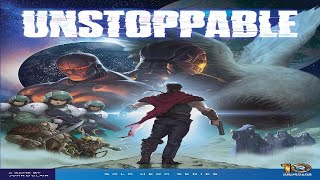





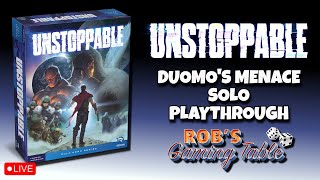














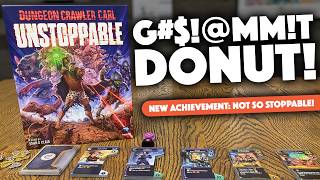








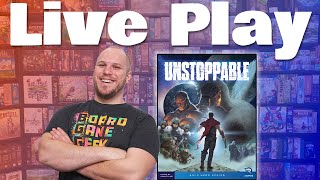

On the city-planet of Ceres II, every alleyway invites a quick and quiet death. In the lush forests of Virenos, a single misstep could land you in the belly of a beast. The harsh wasteland of Mithras holds both grave danger and a great treasure for those who search its stacks of discarded rubbish. Amidst this chaos, you find yourself thriving, learning, and growing — a child of rank, touched by fate — but a new danger shadows the future of all three worlds. Gather your allies and sharpen your skills, for the darkest days are yet to come.
Unstoppable is a solo or co-operative roguelike, momentum deck-building game. Use card crafting and deck building wisely in the face of unlimited threats, maintaining action and card-draw momentum to become unstoppable!
—description from the publisher
- Engaging card-building and deck-upgrade loop
- Rich thematic flavor with boss encounter (Harbinger) and multiple threats
- Strategic decision-making and planning
- High difficulty and potential lack of progression/ending feeling
- Clunky shuffling/sleeving experience and deck management
- House rules suggested to improve playability
- Deck-building, tactical combat, upgrade progression within a boss battle
- Futuristic/sci-fi action setting with operatives facing threats and a boss called Harbinger
- Cooperative boss encounter with evolving threats and strategic planning
Mechanics (from transcript analysis)
- deck-building / card drafting — Draft upgrades and tactics each turn; cards come from level decks and can be added to hand or upgraded
- Resource management — Earn credits to buy upgrades; focus increases based on distraction in play; manage resources to survive threats
- Resource management (credits, upgrades, focus, etc.) — Earn credits to buy upgrades; focus increases based on distraction in play; manage resources to survive threats
- Tactical combat with action tokens and armor — Spend action tokens to perform actions; armor reduces damage; threats refill each round
- Targeting taunt and terror effects — Some enemies taunt or terrorize, forcing targeting decisions and potentially losing actions
- Turn structure with upkeep, threat phase, and boss phase — Rounds feature upkeep, escalating threats, and advancing danger toward the Harbinger
Video topics + discussion points
Quotes (from this video)
- I enjoy the mechanics of this game
- the card building aspect
- it's so hard to shuffle I wish there was more structure to the sleeves but I know it's probably not possible with just the way the cards are designed
- I think this is a tough one
- I really enjoy the mechanics of this game but it's very difficult
- it's just I feel like it's a little impossible
References (from this video)
- Deep engine-building via upgrades and conspire
- Satisfying boss-damage sequencing and threat management
- High replayability with multiple upgrade paths and growing boss threats
- High complexity and a potentially steep learning curve
- Fiddly management of taunts, threats, and deck states can slow play
- Turns can be lengthy depending on card availability and upgrades
- Cooperative/solo boss-battle deck-building with upgrades and threats
- Sci-fi post-apocalyptic scenario aboard a vessel or fortress where a Harbinger threat is faced
- Campaign-like, with escalating threats, boss encounters, and card-driven progression
Mechanics (from transcript analysis)
- boss battler — Engagement with Harbinger boss mechanics, where defeating threats progresses boss damage and unlocks effects.
- boss_mechanics — Engagement with Harbinger boss mechanics, where defeating threats progresses boss damage and unlocks effects.
- card crafting — Upgrades are added to core cards to enhance their effects and unlock new abilities.
- card_crafting — Upgrades are added to core cards to enhance their effects and unlock new abilities.
- conspire — Conspire allows activating certain card effects when another card of the same faction is in play or hand.
- cooperative actions — Conspire allows activating certain card effects when another card of the same faction is in play or hand.
- Deck building — Players construct and upgrade a personal deck through drafting, acquiring cards, and attaching upgrades.
- deck-building — Players construct and upgrade a personal deck through drafting, acquiring cards, and attaching upgrades.
- drafting — At the start of rounds, players draft new cards from available options to shape their hand.
- leveling_and_training — Advancing level tracks grants access to stronger cards and abilities as the game progresses.
- resources_and_action_points — Players manage money, action points, and armor/shields to play and upgrade cards.
- Taunt — Taunt forces players to target specific threats first before other enemies.
- threats_and_battlefield — Threat cards populate the battlefield; some possess taunt that must be addressed before others.
- Track advancement — Advancing level tracks grants access to stronger cards and abilities as the game progresses.
Video topics + discussion points
Quotes (from this video)
- these level six cards are crazy powerful
- focus means just the number of that faction that are in play or in your hand so right now that would be one two so we'd be basically dealing four damage to every single thing on the battlefield
- taunt so that we have to attack them first before we can attack anything else
- it's offset by the fact that it takes four action points
References (from this video)
- engaging deck-building and card crafting loop
- clear visibility of threats and rewards
- cooperative/solo compatibility
- no native card draw (hand replenishment is round-based)
- co-op variation is a minor tweak rather than a full system change
- deck-building with card crafting and threats to overcome
- Dungeon Crawler Carl
Mechanics (from transcript analysis)
- card crafting — cards can be upgraded on their backsides, affecting both offense and threat-responses.
- card crafting/upgrades — cards can be upgraded on their backsides, affecting both offense and threat-responses.
- Deck building — players acquire and upgrade cards to form their attack and defense options.
- deck-building — players acquire and upgrade cards to form their attack and defense options.
- hand management — threats on cards are visible; players know what they are facing and what they gain.
- open information hand management — threats on cards are visible; players know what they are facing and what they gain.
Video topics + discussion points
Quotes (from this video)
- We’re obsessed with board games.
- I freaking love Unstoppable.
- This game is great because there’s also it's a very open game where when a threat is out there, you can know what's on the other side of that.
- You can see from the other side like what is on the other side.
- Terra Mystica is getting a giant crazy big box version.
References (from this video)
- Innovative card construction mechanic
- Supports solo, two-player, and co-op play
- Appealing sci-fi theme and deck-building loop
- Publisher/designer details are not specified in the transcript
- roguelike deck-building with card modification
- sci-fi, space/future
- procedural progression with card customization
- Endless Winter
Mechanics (from transcript analysis)
- card construction — cards can be modified throughout the game, enabling evolving play.
- card crafting — cards can be modified throughout the game, enabling evolving play.
- Deck building — players build and optimize a deck during play.
- deck-building — players build and optimize a deck during play.
- roguelike progression — restart with more power as you progress and tackle harder challenges.
Video topics + discussion points
Quotes (from this video)
- production is fullon. It's absolutely stunning.
- I can't wait. Like the more games come out, the better it is.
- it's not it's not a dungeon crawler at all.
References (from this video)
- Unique twist on deck-building with enemy flip mechanic
- Engaging cooperative play
- Interesting upgrade/ding mechanic through in-table actions
- Fiddly setup with sleeves and overlapping icons
- Not guaranteed to appeal to all players; may be niche
- cooperative deck-building to defeat a boss
- A fantasy coastal harbor area with a central boss
Mechanics (from transcript analysis)
- boss battler — A central boss serves as the main objective requiring strategy and cooperation.
- boss encounter — A central boss serves as the main objective requiring strategy and cooperation.
- card orientation and flip — Defeated enemies flip and enter your hand; the deck evolves as play progresses.
- Combat: Deck/Hand — Defeated enemies flip and enter your hand; the deck evolves as play progresses.
- Cooperative Game — Players work together with limited action points to defeat a boss.
- cooperative play — Players work together with limited action points to defeat a boss.
- Deck building — Players build and upgrade a personal deck; defeated enemies flip to become part of hand.
- deck-building — Players build and upgrade a personal deck; defeated enemies flip to become part of hand.
- two-sided cards and evolving deck — Discarded cards are reshuffled into a new deck; back sides influence future encounters.
Video topics + discussion points
Quotes (from this video)
- Breakfast of champions.
- It's quaint and like I said, it's chill.
- £13 for the day is not too bad compared to other events.
- I did enjoy.
References (from this video)
- Sharp, compact core loop centered on card crafting and upgrading
- Solo play is fast, tense, and surprisingly deep for a solo system
- Clear front-facing information about threats and cards when the threat is revealed
- Rulebook clarity issues: keyword sections separated from the core rules cause memory and rule retention friction
- Rulebook could use more explicit setup examples, turn-by-turn examples, and a better back-cover player aid
- Card backs and some components could use more explicit labeling or a better glossary to reduce lookup friction
- Card crafting, upgrade-driven power growth during a boss battle
- Futuristic, dystopian city with bug factions; solo hero gameplay against a boss
- Boss-focused, card-driven progression with evolving threats
- Warps Edge
- Joy Ride
- Thunder Road Vendetta
- Dungeon Carts
- Edge of Darkness
- DinoGenics
Mechanics (from transcript analysis)
- action points / card cost — cards cost 0–3 action points to play; rounds refresh action points and allow for combos and chaining of effects.
- boss battle with Harbinger — a multi-round fight where the boss has health, defense, and special defeat conditions; damage is gated by specific threat effects.
- card crafting / upgrading — cards can receive top and bottom upgrades; upgrades modify both cost and effects and may add to boss threats.
- deck-building — draft core cards each round, manage a hand, and upgrade via upgrades and encounters; defeat threats to draw more cards.
- faction synergy (focus / conspire) — cards belong to factions; certain effects scale with the number of factions in play or hand; conspire requires another card of a given faction.
- threat and threat-draw mechanics — threat cards populate the battlefield or are placed on the boss deck; defeating threats can power up cards and affect damage to the boss.
Video topics + discussion points
Quotes (from this video)
- Setup first, baby.
- Card anatomy when it matters.
- I hate sleeves on games.
- The back of the rulebook is such a This is the greatest real estate in all rule books.
- This game is very fun. It's fast and engaging.
References (from this video)
- Unique upgrade mechanic
- Challenging boss fights
- No simple choices
- Quick setup
- Good for solo play
- Works well at two players
- Limited upgrade card variety
- Potentially overwhelming combos
- Theme might not appeal to everyone
- Cooperative hero fighting evil
- Space
- Character-driven
Mechanics (from transcript analysis)
- card drafting — Players draw and select cards to add to their deck
- Deck building — Players build and upgrade cards, with upgraded cards also upgrading enemy cards
Video topics + discussion points
Quotes (from this video)
- This game has ruined leveling up for me.
- Constantly put in situations where you feel doomed
- From this situation where you were absolutely doomed, you got out and you feel so rewarded
References (from this video)
- Engaging engine-building
- Accessible on-ramp for new players
- Potential balance concerns
- May reward optimization over thematic feel
- Card-driven engine-building
- Futuristic battleground
- Progress-driven engine development
Mechanics (from transcript analysis)
- engine-building — Players optimize their deck and play-area to improve future turns.
Video topics + discussion points
Quotes (from this video)
- What does Colin know or Time to educate Colin? Whichever way you want to think about it.
- I'm going to learn so much today.
- I'm 0 for three right now.
- The over under is five.
- I ain't got time to bleed.
- I'm at 10.5 points, going into December.
- This is Fight Club.
- Galaxy Quest the best Star Trek movie.
- What does Colin know or Time to educate Colin?
- I'm not on zero.
References (from this video)
Mechanics (from transcript analysis)
Video topics + discussion points
Quotes (from this video)
- Unstoppable is my number one of 2025.
- Is it as good as Exceed? Heck no. But it's good enough that we'll play it sometimes.
- The core card play is so good. The combos and cooperation are great.
- My son and I have really enjoyed the 1v1 mode in Yomi 2.
References (from this video)
- Card crafting system beloved by host
- Legendary designer John Deckert
- Cooperative gameplay
- Roguelike deck building
- cyberpunk
- futuristic city planet
- urban danger
- Mystic Veil
- Edge of Darkness
Mechanics (from transcript analysis)
Video topics + discussion points
Quotes (from this video)
- I'm not here to talk about that I'm here to talk about games
- catch-up games has been on fire
- I love his Cooperative design sensibilities
- how does this game not already exist
- I want more games that tell in 2025 a positive story about how we can work in unison with nature
- 2025 might be the year of co-ops
- pure Feld simple Elegance that leads to deep challenging decisions
- Coming of age is by far my number one most anticipated game
References (from this video)
- Unique card play
- Innovative upgrade mechanism
- Great solo game
- Lengthy teardown process
- Deck-building combat
- Alien combat
- Cooperative progression
Mechanics (from transcript analysis)
- deck-building — Cards upgrade simultaneously for player and enemies
Video topics + discussion points
Quotes (from this video)
- I played one of the most impressive and unique deck builders I have ever played
- Everyone's stealing everyone's sheep
References (from this video)
- Groundbreaking deck-building interaction
- High player agency on any turn
- Complexity and setup considerations
- Deck-building prowess and mastery of card-based combat
- Purely card-driven, fantasy combat where power scales with upgrades
- Player-driven empowerment with direct feedback from upgrades
Mechanics (from transcript analysis)
- deck-building — Draft and purchase cards that immediately enter the player's hand.
- enemy scaling — As players upgrade, enemies scale accordingly, creating a risk-reward loop.
- Upgrade system — In-round upgrades alter strategy and increase enemy threat.
Video topics + discussion points
Quotes (from this video)
- And no other game does four players better than Black Rose War.
- In Aridia, you read the character's encounter card and choose one of the available dialogue options.
- There's even genuine character exploration here, which you almost never see in other board games.
- The card you purchase or draft for the round comes straight to your hand.
- This is the game that will push deck building to the next level.
- The setup is a nightmare. The bookkeeping is tedious and the play time is insane.
- Every decision here feels meaningful.
- Nemo's War is exactly what I enjoy from a good solo board game.
- The open seas feel ripped straight from a Jules Verne novel.
References (from this video)
- strong solo and two-player support
- no hidden information; clear upgrade paths
- extensive expansion support and cross-compatibility
- heavy, with a long playtime for some sessions
- appeals mainly to fans of card-crafting and boss-killing themes
- deck-building with enemy upgrades and boss fights
- dark fantasy/supernatural battle against baddies
- solo-focused, highly tactical
- Too Many Bones
- Dark Souls: The Board Game
Mechanics (from transcript analysis)
- boss battler — each session ends with a boss to defeat; expansions add more bosses
- boss encounters with persistent progression — each session ends with a boss to defeat; expansions add more bosses
- cooldown-based engine — dice/units cycle back onto a cooldown track rather than being discarded.
- deck-building with enemies on the other side — cards have hero and enemy sides; defeating enemies flips cards into your hand.
Video topics + discussion points
Quotes (from this video)
- This is the perfect kind of game to play like late in the evening with maybe some people who aren't into like super heavy games.
- I played it 80 times as a result.
- Moon Colony Blood Bath. Try and think of a crazier name. You can't.
References (from this video)
- high variability
- strong space/sci-fi theme
- costlier
- steep learning curve
- card crafting, boss battles
- space/faction-driven battles
- varied, modular boss encounters
Mechanics (from transcript analysis)
- card crafting — craft cards to upgrade abilities and tailor strategies
- deck-building — build a deck and craft cards to overcome bosses
Video topics + discussion points
Quotes (from this video)
- I have picked out a list of games that if I were starting my solo board game collection from scratch, these are the games that I would get based on the restraints of only having $500.
- Numsters. You guys have heard me talk about it a billion times. It is my favorite solo Buttonshy game.
- The Final Girl starter set is $39.95.
- If you're at all a fan of Lord of the Rings, this is like a must try.
- Marvel Champions, you've got a baddy to overcome.
References (from this video)
- strong solo play with interesting drafting dynamics
- enthusiastic for its card crafting progression
- primarily a solo or minimal co-op; two-player co-op exists but is not the core experience
- cosmic threats and heroic scaling
- Cooperative roguelike with momentum deck-building
- solo-friendly with potential two-player coop
- Mystic Veil
Mechanics (from transcript analysis)
- Deck crafting / card upgrading — slot upgrades into cards to power up a juggernaut character
- Enemy scaling via drafting — upgrades simultaneously raise enemy difficulty as you upgrade
Video topics + discussion points
Quotes (from this video)
- This is the kind of game you play when you want to feel smart.
- Everything feels like a good decision.
- The card play in this game is absolutely stellar.
- A lot of little things come together to feel cohesive and satisfying.
- You reap what you sew, you know, you need to be strategic and methodical about it.
References (from this video)
- Excellent solo experience
- Unique double-sided card mechanic
- Perfect escalation of challenge
- Card upgrades feel impactful
- Strategic card management and combo opportunities
- Great expansion potential
- Solo adventure against escalating threats
- Abstract conflict with boss opponent
- Escalating challenge with double-sided card representation
Mechanics (from transcript analysis)
- Card Upgrades — Upgrading cards with resources to make them stronger
- Deck building — Building deck throughout game by defeating threats and earning cards
- Double-sided cards — Each card has powerful side and threatening side, flipped when used/defeated
- Escalating Threats — Threats become stronger as player upgrades cards and danger track increases
- Limited Card Draw — Only draw one card per round plus rewards from defeating threats
Video topics + discussion points
Quotes (from this video)
- 2025 is halfway done. And this year, honestly, so far for board games has been super strong.
- This year has been really really strong.
- Race Chicago was a big surprise for us. We really liked it a lot.
- this just it doesn't feel like any other game I've played
- The Anarchy is an absolute banger.
- It's like the 2.0 level up from Hadrien's Wall.
- I love Molly House.
- it's really about coming together
- Luier is really really good. If you like big heavy euros that are pretty, it's a banger.
- this game is dope
- this is what I wanted Too Many Bones to be. It feels like too many bones leveled up.
- It's such a banger
- I just love the double-sided cards.
- Unstoppable is truly unstoppable.
- for my money, one of the best like two-player games I've played in a long time
- it's so good. It's so awesome.
References (from this video)
- deep engine-building and upgrade paths
- satisfying solo play with escalating power
- varied strategy with multiple viable paths
- steep learning curve and rule complexity
- late-game power spikes can be achieved with the right upgrades
- deck-management can feel heavy for new players
- Engine-building through deck manipulation to outpace a criminal syndicate boss
- Futuristic urban setting with organized crime and faction-based markets
- Boss-battle driven campaign with branching location cards and escalating threats
- Harbinger
- Dumo's Menace
Mechanics (from transcript analysis)
- boss and location cards — The main boss has active location cards; defeating them progresses the game.
- conspire — A faction synergy mechanic where having multiple same-faction cards triggers extra effects.
- deck-building — Players assemble an engine by acquiring and upgrading cards, channeling resources into solutions.
- training/upgrades — Upgrades can be trained or improved, often increasing future card power or action generation.
- trash/defeat threats — Defeating threats and discarding cards helps shape your deck and unlock future options.
Video topics + discussion points
Quotes (from this video)
- This deck is freaking nuts.
- I think it's my best little deck leader.
- This is my favorite deck builder I think I've ever played.
- It's a really great solo game.
- Rob is unstoppable.
- The deck is nuts.
- This game is out of stock in Oz. Oh no.
- This is wicked.
- I love this game and I want to play it more.
- Six Feet Under interactions can be tricky; you have to resolve in the right order.
References (from this video)
- Strong solo experience and expandability
- Fits Renegade solo line well
- Complex and heavy to learn
- Solo-focused campaign with modular boss fights
- Sci-fi dungeon-crawler with story focus
- Card-driven, enemy-focused progression
- Renegade Solo Series
- Dungeon Crawler Carl (inspiration)
Mechanics (from transcript analysis)
- deck crafting with upgrades — Upgrade cards; defeated enemies flip to usable cards
- self-balancing design — Upgrades on enemies balance power progression
Video topics + discussion points
Quotes (from this video)
- We rely on the generosity of all of us. And so if you like BG, please consider donating.
- Two great tastes taste great together.
- It's like war, but there's a million little knobs and levers.