/pic5230695.png)



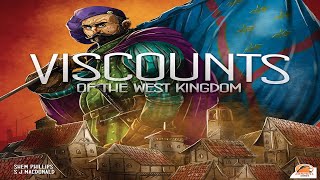
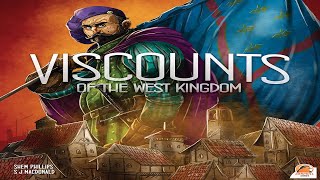























Viscounts of the West Kingdom Deep Dive
What the Community Thinks About Viscounts of the West Kingdom
Viscounts of the West Kingdom occupies a fascinating position within board gaming circles. Reviewers consistently praise it as a deeply rewarding experience that challenges players to specialize and adapt their strategies around shifting board opportunities. The game sits comfortably as the middle entry in the West Kingdom trilogy, neither as approachable as Architects nor as tightly wound as Paladins, but offering something mechanically distinct that justifies its own shelf space. Community consensus reflects that while the game demands mental engagement during learning phases, players who persist through the initial complexity discover a game with remarkable breadth and strategic depth.
Core Mechanics That Define Viscounts of the West Kingdom
Rondel Movement and Action Economy
The rondel system serves as the backbone of Viscounts, with each player's viscount riding around a castle on a circular track. Players play cards from a constantly shifting tableau, and the cost displayed on the played card determines how many spaces the viscount moves clockwise. Landing on different ring positions unlocks different action types: outer positions enable trading and building, while inner positions provide access to worker placement in the castle and manuscript acquisition. This elegantly ties together player decision-making with movement, ensuring that the cards players acquire directly influence where they can act and what strategies become viable.
Deck Building Through Character Acquisition
Each player starts with a modest deck of eight identical cards and builds outward by acquiring new character cards throughout the game. The tableau system requires players to shift cards rightward each turn, playing new cards to the left while previous cards enter a discard pile. The card tableau displays three active cards at all times, providing a conveyor belt effect where icons on visible cards determine the player's action strength and movement range. What makes this deck building approach distinctive is how character cards provide three layers of benefit: lightning bolt effects trigger immediately upon play, ongoing abilities remain active while the card sits in the tableau, and discard effects trigger when cards flow off the board. This multi-use design encourages thoughtful ordering and sequencing.
The Viscounts of the West Kingdom Experience
Intellectual Depth With Accessible Foundations
Once players push through the teaching phase, Viscounts opens into an experience rich with meaningful decisions. Each turn presents layered choices about which card to play, where to move, and which action to prioritize. The game excels at forcing specialization: attempting to pursue all four main action paths equally leads to mediocre outcomes, while focused strategies on building, worker placement, manuscript collection, or trading generate consistent point production. This specialization creates a tightly woven decision space where no single path dominates, and the most successful players adapt their focus as the tableau presents new opportunities and constraints.
Dynamic Pacing Through Virtue and Corruption Mechanics
The virtue and corruption tracker creates an elegant self-timer mechanism that accelerates game pace as it progresses. Players earn virtue cards through righteous actions and corruption cards through criminal activity, moving separate trackers that eventually collide. Once these trackers touch and lock together, the game enters a faster phase where players must accelerate their point collection strategies. This creates thematic resonance as the kingdom's instability mirrors the escalating player urgency, and it provides multiple decision points about whether to slow the game's pace by managing corruption or speed it up by pursuing aggressive virtue gains.
What Makes Viscounts of the West Kingdom Stand Out
Mechanical Synthesis and Interaction
Viscounts successfully weaves together deck building, rondel movement, worker placement, area majority, set collection, and resource management without any system feeling bolted on. The interlocking nature means teaching requires explanation of all systems at once, creating an initial complexity barrier, but it also means every action type connects to others. Building placement creates cascading benefits as adjacent buildings unlock shared resources. Worker placement in the castle triggers majority scoring and advancement bonuses. Manuscript collection provides both immediate benefits and end-game scoring multipliers. This synthesis rewards players who see connections across systems and plan several turns ahead.
Variable Specialization and Replayability
The game's structure heavily influences players toward specialization without forcing specific paths. Sometimes a builder gains dominating icon bonuses from large guild halls and optimal building positioning. Sometimes a collector pursues manuscript sets and end-game bonuses. Sometimes a castle strategist focuses on worker placement area majority and bumping mechanics. Other games feature multiple viable paths, but Viscounts makes each path feel entirely distinct in its moment-to-moment decision structure and in the types of cards that become essential acquisitions. This variability ensures that the strategic puzzle feels fresh across multiple plays even with the same player count.
Potential Drawbacks
Thematic Disconnection and Teaching Friction
The most consistent critique involves thematic weakness. While the art and visual presentation remain strong, the connection between theme and mechanism feels loose. Players hire followers, transcribe manuscripts, build structures, and commit various crimes against the kingdom with limited narrative logic tying these actions together. The thematic flavor of being a viscount during the king's reign decline exists but rarely illuminates why specific mechanics operate as they do. This disconnection creates particular friction during teaching phases, where explaining the mechanism alone requires careful sequencing of concepts before players can develop spatial intuition about how actions chain together.
Complexity Wall and Overwhelming First Play
New players frequently report that their first play occurs while their minds work overtime processing interconnected systems. The game asks players to simultaneously understand card tableau mechanics, rondel positioning, action symbol systems, virtue and corruption tracking, worker placement area majority, manuscript collection, building placement adjacency, and end-game trigger conditions. While none of these systems are inherently complex, their simultaneous introduction creates a significant learning curve. Players encountering the game during mental fatigue or distraction often experience genuine confusion rather than progressive understanding, potentially requiring multiple plays before the game clicks and strategic thinking becomes possible.
If You Enjoy Viscounts of the West Kingdom
Players who find deep satisfaction in Viscounts should explore the West Kingdom trilogy at large, beginning with Architects of the West Kingdom for a more accessible entry point with similar mechanical DNA, and Paladins of the West Kingdom for an equally heavy experience with tighter asymmetry. Beyond the trilogy, Great Western Trail offers comparable resource management and specialization depth, while Hadrian's Wall delivers the tightly wound worker placement experience that some reviewers compare to Paladins. The North Sea Trilogy games share the same design philosophy from Shem Phillips with escalating complexity, and fans seeking more deck building integration should investigate Lacrimosa, Clank, or Lost Ruins of Arnak.
What Reviewers Are Saying
"The west kingdom trilogy is maybe the best complete trilogy in board games and this is a terrific last chapter. You do not have to have played the rest of the west kingdom games first but if you have played the others you will find that this one fits right in the middle in a lot of ways."
— Allies or Enemies
"Viscounts is a fascinating game that feels fresh and original. I have never played something that combines all these different mechanics quite so seamlessly. The best thing about this game is despite the many paths you can take, your main decision each turn is which one of these three cards do I play?"
— 3 Minute Board Games
"I really love how the card tableau worked and I like that each of the cards have these special abilities but they also have an ability on when they are placed on the board so there are some that have an ability immediately when you place them and there are some that only have an ability when they come off of the board."
— Ryan and Bethany Board Game Reviews