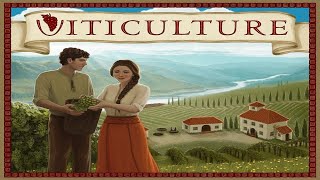
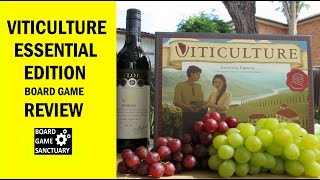
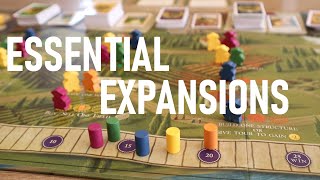
In Viticulture, the players find themselves in the roles of people in rustic, pre-modern Tuscany who have inherited meager vineyards. They have a few plots of land, an old crushpad, a tiny cellar, and three workers. They each have a dream of being the first to call their winery a true success.
The players are in the position of determining how they want to allocate their workers throughout the year. Every season is different on a vineyard, so the workers have different tasks they can take care of in the summer and winter. There's competition over those tasks, and often the first worker to get to the job has an advantage over subsequent workers.
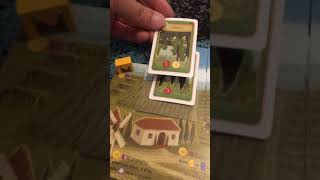
Fortunately for the players, people love to visit wineries, and it just so happens that many of those visitors are willing to help out around the vineyard when they visit as long as you assign a worker to take care of them. Their visits (in the form of cards) are brief but can be very helpful.

Using those workers and visitors, players can expand their vineyards by building structures, planting vines (vine cards), and filling wine orders (wine order cards). Players work towards the goal of running the most successful winery in Tuscany.
Mechanics (from transcript analysis)
Video topics + discussion points
Quotes (from this video)
- um I love this game
- I like having low numbers in the crates
- this is our first time so bear with us
- the marks challenge doesn't have any of the promo Realms but Carol and I do have them all
References (from this video)
- Array
- Array
- Winemaking, seasonal resource management, and small business growth.
- Array
- A vineyard and winery spanning multiple years and four seasons, focusing on planting, aging, and selling wine.
- Array
- Array
- Array
- positive
Mechanics (from transcript analysis)
Video topics + discussion points
Quotes (from this video)
- I genuinely have to play it every single fall every single year.
- This game is one of my favorite games of all time.
- From the moment I first played this game, I knew that this was going to be a classic, a staple in my collection.
- We crushed that.
- Honestly, I'm shocked that the cards that came out were as easy.
References (from this video)
- tight, satisfying ramp-up and endgame
- great variability with visitor cards and expansions
- grande worker and four-season board add meaningful depth
- ramp-up can be slow for some players
- learning curve can be steep for beginners
- some players prefer faster pacing
- winemaking, year-round planning and resource management
- vineyard seasonal production
- engine-building with seasonal rhythm
Mechanics (from transcript analysis)
- Resource and card management — manage money, workers, and visitors to optimize production
- Resource management — manage money, workers, and visitors to optimize production
- seasonal board — four-season loop drives timing and actions
- worker placement — place workers to perform actions across the year
Video topics + discussion points
Quotes (from this video)
- this is one of the cutest games in our collection
- the art is absolutely adorable
- it's so well balanced. Don't let the IP throw you off, maybe still just give it a shot because it is a great game in its own right
- it's almost that combination between worker placement and dice placement
- Architects of the West Kingdom has become a worker placement staple for us
References (from this video)
- Elegant production economy with tactile pieces
- Two-player integration via Viticulture World and base version
- Aesthetic components (glass beads for grapes) compliment gameplay
- Tight resource curve can feel punishing
- Some expansions may overcomplicate for casual players
- Vineyard management and winemaking economy
- Valley wine country
- Tableau-ish resource management with thematic flair
- Vineyard
- Viticulture World
Mechanics (from transcript analysis)
- Resource management — Grapes, coins, and workers must be balanced across seasons.
- set collection / engine upgrade — Upgrading structures and tools enhances production and scoring.
- worker placement — Seasonal actions limit where workers can be placed to build the vineyard.
Video topics + discussion points
Quotes (from this video)
- "it's the best smelling board game there is"
- "Wingspan Asia is a perfect board game gift because two players can play it competitively learn how to play it"
- "Rise of Fenis has enhanced my love of Scythe"
References (from this video)
Mechanics (from transcript analysis)
Video topics + discussion points
Quotes (from this video)
- The podcast life chooses you.
- The content gods that making all the content.
- Pub Meeple is a website that you can link your board game collection.
- Return to Dark Tower is uh I want to play this game more often than we do.
References (from this video)
- Beautiful production and components
- Accessible theme and flow that welcome new players
- Clear, easy-to-grasp winemaking process
- Strong two-player experience, with expansion options enhancing depth
- Tactile grapes (glass bead tokens) add charm and visibility of stock
- Some buildings look similar, which can blur on the board
- Card randomness can affect aging outcomes and timing of key events
- Ending can come a bit sooner than some players desire, leaving a desire for more
- Winemaking, vineyard management, tours and customer interactions
- Vineyards in Italy, a rustic historical countryside focused on wine production across the seasons
- Procedural, process-driven, with tangible components to evoke terroir
Mechanics (from transcript analysis)
- board_and_structure_building — Players construct buildings and structures within their vineyard to unlock new actions and efficiencies.
- card_mechanics — Mama and Papa decks provide cards that modify actions and provide bonuses, shaping strategic choices.
- Resource management — Grapes, wine, tours, and customer orders must be managed to maximize points and fulfill demands.
- resource_and_order_management — Grapes, wine, tours, and customer orders must be managed to maximize points and fulfill demands.
- seasonal_progression — The base game unfolds over two seasons, with actions aligned to the winemaking workflow across years.
- worker placement — Players place workers on action spaces to plant, harvest, age, sell wine, and host tours.
- worker_placement — Players place workers on action spaces to plant, harvest, age, sell wine, and host tours.
Video topics + discussion points
Quotes (from this video)
- Viticulture is a worker placement game.
- It's a medium weight game that works well for folks new to the hobby.
- The grapes are simple glass beads at first.
- the transparency lets you see the value underneath.
- there's an underlying ease to the game.
- no other game that goes as well with a nice board of soft cheeses
References (from this video)
Mechanics (from transcript analysis)
Video topics + discussion points
Quotes (from this video)
- this game is so creative because you get to play kind of each of your favorite games in it.
- the box is organized in such a way that each of the cards are separated by color.
- it's very fun to try and beat the courses and see how many um, attempts it takes you to do it.
References (from this video)
- Engaging wine-themed setting
- Rich seasonal/workflow mechanics
- Variety of strategies to meet wine orders
- Steep learning curve for new players
- Fiddly components and bookkeeping can slow play
- Wine production and farm management
- A vineyard across the four seasons
- Semi-realistic
Mechanics (from transcript analysis)
- order_fulfillment — Fulfill wine orders to gain points and income.
- production_and_fulfillment — Turn grapes into wine tokens and fulfill customer orders.
- Resource management — Manage grapes, wine, money, and other resources to fulfill orders.
- resource_management — Manage grapes, wine, money, and other resources to fulfill orders.
- seasonal_cycle — Gameplay unfolds over four seasons, driving actions and timing.
- tile placement — Place vineyard tiles and construct buildings that influence income and actions.
- tile_placement_and_building — Place vineyard tiles and construct buildings that influence income and actions.
- visitor_mechanics — Visitors appear in summer and winter, granting bonus abilities and actions.
- worker placement — Assign workers to actions such as planting, harvesting, building, and selling wine.
- worker_placement — Assign workers to actions such as planting, harvesting, building, and selling wine.
Video topics + discussion points
Quotes (from this video)
- you'll be crafting and making different types of wine
- you'll be following and establishing the entire process from growing the vines in your Vineyard to then crushing the grapes and then curating it over time to earn precious ler and fulfill different wine orders
- This is a game that I like to play with a glass of wine surprise surprise
- each round of a game occurs over four seasons
- summer and winter different people will come along and give you different bonus abilities
- you'll be preparing things like planting your grape Vines selling them conducting Wine Tours or turning your grapes into wine tokens
- there's a whole little key of mixing and matching different types of grape varieties to craft the wines
- Wine Tours offer a tangible link between vineyard activity and market demand
References (from this video)
- Solid, timeless worker-placement mechanics
- Thematic, rustic feel that fits the wine setting
- Can be a bit swingy in early rounds
- Some players may find setup lengthy
- winemaking and seasonal labor
- Italian wine production and vineyard management
- rustic, traditional, craft-oriented
Mechanics (from transcript analysis)
- Resource management — Make wine and plans with limited resources and timing constraints.
- worker placement — Assign workers to actions to build a vineyard, plant vines, harvest, and fulfill orders.
Video topics + discussion points
Quotes (from this video)
- this is a really solid euro game by one of our favorite designers Alexander Pfister and one of our favorite publishers Capstone Games
- the reason we're not drinking this right now is because this is actually a friend's bottle
- it's elevated if you have a glass of wine to go with it
- it's an excellent euro game and alexander definitely has a very distinct style
- it's a very very funny game and also the RPG elements
- this is a really great game to play and you should check it out
- it's a lovely little cocktail try it out
- it's a very popular game
References (from this video)
- elegant card-driven system
- strong thematic tie to farming and wine production
- some randomness in card draw can affect planning
- agriculture and winemaking
- Grape cultivation and wine production with contract fulfillment
- elegant, card-driven
- Agricola
Mechanics (from transcript analysis)
- Card-driven cultivation — Cards drive actions and vineyard building.
- tableau building — Construct a grower tableau and manage timing of vintages.
- Tableau building / timing — Construct a grower tableau and manage timing of vintages.
Video topics + discussion points
Quotes (from this video)
- there seems to be an element of farming or agriculture to most of his games
- cozy to the farming theme… with bluegrass music in the background
- nostalgic part of me… Harvest Moon
- Rosenberg isn't the only person who has designed a farming game
References (from this video)
- Very simple automa that closely mirrors the main game’s cadence.
- Strong focus on timing and blocking to simulate a multiplayer feel.
- Limited length (seven rounds) might not suit all sessions.
- Orchestration of workers and actions to maximize vineyard output.
- Wine vineyard building and seasonal worker dynamics.
- Automa mirrors the core tension of worker placement timing.
Mechanics (from transcript analysis)
- Seasonal framing — Seven-season structure with a fixed seven-round solo game.
- worker placement — Automa places workers to block spots and influence turn order and decisions.
- Worker placement (grande worker concept) — Automa places workers to block spots and influence turn order and decisions.
Video topics + discussion points
Quotes (from this video)
- One of my favorite games of all time.
- The joy of obsession is puzzling out your servants and your guests and trying to put on the best social activities and get the money to get the improvements for your estate to restore your family's reputation.
- The AI system is brilliantly done, and it's so quick and simple to manage.
- This is about as simple as a solo opponent can get.
References (from this video)
- Vineyard management and winemaking
- Tuscany, Italy
- Euro-style engine-building with seasonal progression; thematic ambiance centered on winemaking
Mechanics (from transcript analysis)
- Resource management — Players manage wooden resources, stone, wine, and money to develop vines and fulfill orders.
- worker placement — Players assign workers to action spaces to perform actions across seasons, such as planting, harvesting, and wine production.
Video topics + discussion points
Quotes (from this video)
- word of the year is realigning.
- I am very, very happy with the word that I came up with.
- This is my 2026 goals spread.
References (from this video)
- solo variant is excellent
- easy AI integration for solo play
- expansion Tuscany is not yet explored in solo context
- agriculture and craft production
- vineyard management and wine production
- economic/seasonal simulation
Mechanics (from transcript analysis)
- engine building — build an efficient workflow across seasons.
- engine-building — build an efficient workflow across seasons.
- Resource management — manage grapes, coins, and wine to fulfill orders.
- worker placement — send workers to actions like planting, cultivating, and winemaking.
Video topics + discussion points
Quotes (from this video)
- I honestly can say that I enjoy playing solo more than I do multiplayer
- I freaking love Cascadia solo
- Hadrian's Wall is my number one solo game
- it's such a fantastic solo puzzle
- I am obsessed with the way that the solo variant works
- this is one of the crunchier Roll-and-Writes that I have
- I love the sister thing, it's fun
- I love to combo things in Castles of Burgundy
- it's so easy to implement a solo variant
- this is such a wonderful game it just brings me so much joy and comfort
References (from this video)
- Clear core loop whose weight makes teaching easy
- Strong theme integration
- Relatively slower with expansions for new players
- Winery development and seasonal labor
- Wine vineyard management in a Tuscany-inspired setting
- Euro-style engine with thematic flavor
- Tuscany
- Bordeaux
Mechanics (from transcript analysis)
- Resource management — Balance money, grapes, and wine stock across seasons.
- worker placement — Assign workers to actions to grow grapes, produce wine, and manage orders.
Video topics + discussion points
Quotes (from this video)
- This is not my house. This is a vacation property here.
- We're here on a little mini retreat to all work together in the same place for a few days.
- I am in Phoenix, Arizona with all seven of my co-workers.
References (from this video)
- Strong thematic integration with production and season structure
- Classic, well-regarded implementation of worker placement
- Some players feel density of rules; requires setup and multi-layer planning
- Viticulture and winemaking
- Vineyard/wine production in seasonal cycles
- Theme-driven engine with seasonal structure
Mechanics (from transcript analysis)
- seasonal/season-based actions — Workers allocated across seasons to perform winery-related actions; expansion adds more seasons and modules.
- tableau building — As you acquire resources and buildings, you build a tableau that enhances future actions.
Video topics + discussion points
Quotes (from this video)
- the worker placement in Nova Roma is so cool.
- Federation... it is such a fantastic game.
- Darwin's Journey is absolutely fantastic.
- Barcelona is my favorite currently from Danny Garcia.
References (from this video)
- Adds new strategic depth with the Bordeaux expansion board
- Expert workers provide new ways to gain money, points, grapes, and wine
- Revised trade action adds meaningful choice and variety
- More paths to scoring via wine orders and residually tracks
- Increased complexity may be daunting for new players
- Some prerequisites (trellis/irrigation) required to plant advanced vines
- Expensive to expand fields early on; board interaction can slow pace
- Wine production, vineyard management, aging, tours, and seasonal worker actions
- Tuscan vineyard with Bordeaux region emphasis introduced via Bordeaux expansion
- Procedural strategy with seasonal timing and resource optimization
- Viticulture (base game)
- Tusky (expansion) – mentioned as a potential comparison
Mechanics (from transcript analysis)
- end game bonuses — Bordeaux expansion adds expert spaces and revised trade rules
- Expert workers — Place experts on spaces for bonus actions; limited per space
- Layer building — Build trellises, irrigation, cottages, tasting rooms, etc.
- Residuals currency (LERA) — Income/points tracked on a residual track each round
- Seasonal phases — Spring, Summer, Fall, Winter cycles with different actions
- structure building — Build trellises, irrigation, cottages, tasting rooms, etc.
- Trade/expansion board bonuses — Bordeaux expansion adds expert spaces and revised trade rules
- Vine planting and harvesting — Plant vines leveraging irrigation and trellises for harvest values
- Visitors (summer/winter) — Seasonal visitors grant bonuses and abilities
- Wine orders and selling — Fulfill orders for victory points and money, with overpaying allowed
- Wine production and aging — Convert grapes to wines; age wine and upgrade cellars to access more actions
- worker placement — Assign workers to actions across seasons with wake-up turn order
Video topics + discussion points
Quotes (from this video)
- With the Bordeaux expansion board, players now have a revised trade action where you can choose what you pay and what you gain as a reward.
- Each space only has one expert that can be placed there, so choose wisely which experts you would like to have to maximize your options.
- These expert spaces give players new ways to gain money, points, grapes, wine, and more.
References (from this video)
- Balanced weight with thematic farming feel
- Card-driven actions add tactical depth
- Longer playtime at higher player counts
- Some players may prefer Agricola or other Rosenberg titles
- Vineyard management and seasonal work
- Wine/viticulture themed farming
- Thematic yet efficient farm-management euro
- Agricola
- A Feast for Odin
- Caverna
Mechanics (from transcript analysis)
- Card Play — Use vineyard/worker cards to enhance actions and efficiency
- worker placement — Assign workers to vineyards, cells, and wineries
Video topics + discussion points
Quotes (from this video)
- my top 10, my go-to games that I've played that I call a weeknight Euro game
- Zapotech is a very Euro game. It is not as thematic as I would want it to be
- I would play it again if I had the chance, and I would do so on a week night.
- the weekn night euro is something that offers a lot of these opportunities in a board game
- Harmonies I feel does what Cascadia does, but it's quicker
- Earth plays a lot like Wingspan but faster
References (from this video)
- great theme and accessibility
- strong two-player and solo modes
- excellent replayability with expansions
- teaching can be a bit dense
- some fiddly setup for new players
- Winemaking, growth, and selling wine
- Tuscan vineyard and wine production
- Worker-placement-driven with seasonal structure
Mechanics (from transcript analysis)
- Card-driven actions — Use cards to perform special actions and improve efficiency.
- Engine-building via action economy — Grow your vineyard and upgrade facilities for better yields.
- worker placement — Assign workers to action spots to plant, harvest, and fulfill orders.
Video topics + discussion points
Quotes (from this video)
- it's a perfect fit for this list that's Cosmic Encounter
- I had to have a card game
- this is a collectible SL living card game so you're going to be building your own deck
- this is the absolute definition of a minute to teach a lifetime to master
- it's Star Wars in a box
References (from this video)
- dense, satisfying engine-building
- variety with expansion possibilities
- strong solo potential via online campaigns
- solo rules can be non-trivial and require setup effort
- wine production and vineyard management
- Tuscan vineyard economy
- economic-simulation with seasonal actions
- Tapestry
- Sagrada
Mechanics (from transcript analysis)
- engine building — build an efficient sequence of actions across seasons
- engine-building — build an efficient sequence of actions across seasons
- Resource management — manage grapes and resources to optimize production
- worker placement — place workers to perform actions like planting, harvesting, fermenting
Video topics + discussion points
Quotes (from this video)
- this solo variant is very much like that where Becky or Becca whatever the heck her name is you are just doing a few things back and forth with her
- the three different tracks you're going up and you're trying to bring all of these different rides into your park
- it's a really good like set collection game you're collecting different flowers and different bugs in order to gain some points
- i scored 50. so i don't know if i just scored it wrong but i was very proud of myself
- it's so easy at the table it's such a good puzzle
- i'm very excited to get cartographers and cartographers heroes to the table more
- this is one of my favorite solo games and i did play it in august
References (from this video)
- strong theme and mood, iconic for workers in a vineyard
- wide appeal for gp players seeking deeper strategy
- Wine production and seasonal worker scheduling
- Tuscany vineyard management
- Seasonal, agricultural planning with winery focus
Mechanics (from transcript analysis)
- seasonal constraints — specific actions limited by season, with Tuscany expansion as an upcoming enhancement
- worker placement — place workers to perform seasonal actions (spring or winter) to grow grapes, harvest, and fulfill orders
Video topics + discussion points
Quotes (from this video)
- I absolutely love just the journey you go on
- this is such a fantastic work replacement game
- you are tourists going on a little adventure
- remember you're somebody's reason to smile
- I promise I won't bug you too much we just upload every Wednesday and Saturday
References (from this video)
- solo variant is described as easy to learn
- expansions (Tuscany, World) add depth and replayability
- solo variant mentioned as easy, which could imply limited challenge for some players
- seasonal wine production and vineyard management
- Tuscany vineyard winemaking
- economic engine-building with seasonal rhythm
Mechanics (from transcript analysis)
- engine building — develop a sequence of actions and bonuses to improve efficiency
- engine-building — develop a sequence of actions and bonuses to improve efficiency
- worker placement — place workers to activate actions and manage resources
Video topics + discussion points
Quotes (from this video)
- it's a fantastic game either multiplayer or solo
- there are like different challenges and achievements in the back of the rule book
- the solo variant of viticulture is so so easy
- I freaking love this game
- the solo variant feels like a completely different game
- it's just the cutest thing in the entire world
References (from this video)
- theme strongly supports mechanics
- solo mode solid
- varied actions across seasons
- complex setup for new players
- wine production, aging, contracts
- Tuscan wine country
- romantic, agricultural
Mechanics (from transcript analysis)
- engine building — build trellises, cellars, and contracts for income
- engine-building — build trellises, cellars, and contracts for income
- set collection — grapes to wine using aging in cellars
- set collection / wine aging — grapes to wine using aging in cellars
- worker placement — seasonal actions with workers and Tuscany board expansions
Video topics + discussion points
Quotes (from this video)
- one of my absolute favorite cooperative games of all time
- this is another time travel themed game
- it's a ton of fun
- the solo mode is so quick and simple
- it's just a great worker placement Deck Builder
- the theme really works
References (from this video)
- strong table presence
- great with family
- good solo potential
- can be slower for casual gamers
- wine cultivation and winery management
- Italian vineyard production
Mechanics (from transcript analysis)
- worker placement — Assign workers to seasonal actions to grow grapes and produce wine.
Video topics + discussion points
Quotes (from this video)
- First Call of the night is Tiny towns
- I didn't love Meadow
- I honestly really enjoy it
- Spirit Island is staying
- we're keeping viticulture
- Penny's here too
- it's a party of puppies
References (from this video)
- The game design appears to depart from a simple alternate-board feel and instead offers meaningful options at every decision point, which can heighten engagement.
- The presence of bonuses and benefits that are distributed across all players creates a sense of shared momentum rather than a zero-sum dynamic where only one player benefits.
- There is a perceived generosity in the design, with multiple pathways to influence the game state, which can increase replay value and accommodate different strategic styles.
- The discussion emphasizes a clear distinction from previous versions by highlighting nuanced changes to turn order and season progression, suggesting a thoughtful evolution in design intent.
- Participants express enjoyment and find the system fun to navigate, indicating a positive experiential impression.
- The excerpt does not enumerate explicit drawbacks, which means any potential downsides may not be captured in this short slice of the discussion.
- The lack of concrete metrics (e.g., complexity rating, learning curve, or run-time impact) means readers must infer the trade-offs from qualitative cues alone.
- Ambiguity around how bonuses interact with late-game timing could lead to balance concerns if not addressed in the full rules.
- The comparison to other games might invite expectations that could lead to disappointment if the new design diverges significantly from familiar mechanics.
- Strategic resource management and turn-order dynamics, with emphasis on interaction density and player agency within a shared board state.
- In the discussion, the participants contrast an original edition of a game referred to as Vida culture with a newer variant, focusing on how rule changes and board design affect player experience. The setting is framed as a rule-and-flow comparison rather than immersive fiction, and the conversation centers on how mechanics shape decision-making across different positions on the board.
- Analytical and comparative; the dialogue foregrounds game-design concepts, balance considerations, and player experience rather than storytelling.
- Viticulture
- Vida culture variants
Mechanics (from transcript analysis)
- end game bonuses — A dynamic where bonuses are allocated in a way that can benefit all players, not just the leader or the active player, contributing to a sense of shared benefit and sustained engagement.
- Global bonus distribution — A dynamic where bonuses are allocated in a way that can benefit all players, not just the leader or the active player, contributing to a sense of shared benefit and sustained engagement.
- Player Board | Main Board — Each board position provides something tangible, creating a perception that every space has a purpose. This differs from a mono-functional board where some spaces are less relevant, and the discussion highlights the satisfaction of finding value in multiple locations.
- Season progression on a board — A structured progression system that advances players through seasons, potentially with a nested spreadsheet-like layout that tracks resources, actions, or effects across multiple rounds. The speakers note that the newer design inserts meaningful choices at every visible step.
- Spot-based action economy — Each board position provides something tangible, creating a perception that every space has a purpose. This differs from a mono-functional board where some spaces are less relevant, and the discussion highlights the satisfaction of finding value in multiple locations.
- turn order selection — An explicit mechanism where players choose or influence their place in the turn order, which in some versions yields a bonus or perturbation to later actions. The conversation suggests this is a core differentiator from a simpler, static order.
Video topics + discussion points
Quotes (from this video)
- "This is really different."
- "To me, it's it's nice that it doesn't just feel like a slightly alternate board."
- "There's something in every single spot."
- "It's very giving. It feels good as a player."
- "You're not really getting a bonus. You're doing some kind of neutral board cleanup. Everyone a bonus."
References (from this video)
- deep engine with meaningful choices
- strong thematic integration and tension across seasons
- great with a second-chance run after first exposure
- initially felt heavy or work-intensive
- a bit daunting for first-time players
- winemaking and vineyard management
- A vineyard in a temperate wine country through seasonal cycles
- elegant, strategy-forward
Mechanics (from transcript analysis)
- engine-building — Developing the vineyard over rounds to optimize wine production.
- hand management — Managing cards and resources to fulfill vineyard tasks and production.
- worker placement — Players assign workers to seasonal actions to cultivate vines and manage their winery.
Video topics + discussion points
Quotes (from this video)
- every game deserves a second chance
- it's a good game, it's a middleweight game
- the components are cheap
- we're not fans of real time games though but you know what we're going to try it
- we always have fun and try to play with family
References (from this video)
- Can be streamlined for children
- Nostalgic lemonade stand connection
- Simple ownership and selling concept
- Business management and agriculture
- Wine production business
- economic simulation
- Lemonade Stand (computer game)
- My Little Scythe
Mechanics (from transcript analysis)
- Production and trading — Creating and selling wine products
- Resource management — Managing vineyard operations
Video topics + discussion points
Quotes (from this video)
- the most fun part is building the castle itself
- kids love hearing the same stories over and over
- a giant space exploration game with ships like this I doubt I would have left the house for at least a year
- the vicious politics of 18th century New York translated exceedingly well to the average American high school
- if any game out there needs a kid-friendly version its Kingdom death monster
- a wonderfully wholesome game already but a kids version of this game would be amazing
References (from this video)
- Beautiful packaging that reinforces the wine-theme (sleeve and box design)
- High-quality components (custom meeples, wine tokens, and themed cards)
- Accessible core rules with enough depth to reward thoughtful planning
- Thematic integration between mechanics and setting feels coherent and immersive
- Good replayability with seasonal cards and variable card effects across years
- Setup can appear intimidating at first glance due to components and season tracks
- Longer play sessions (up to about two hours for larger groups or new players)
- Art style may not appeal to all players depending on taste
- Wine production, vineyard management, and seasonal labor scheduling.
- A winery estate with seasonal cycles, vineyards, and production of wine and related goods.
- Tasting-note-inspired, thematically tight with recurring wine-production motifs.
- Pandemic
- Splendor
Mechanics (from transcript analysis)
- Card-driven effects (summer/winter visitors, cottage option) — Visitors and cottage choices alter available actions and end-of-year scoring opportunities.
- Order fulfillment / sale mechanism — Convert grapes into wine tokens and use them to complete orders for points.
- Resource management — Managing grapes, wine tokens, money, and workers to optimize production and fulfill orders.
- Seasonal/round structure — Gameplay unfolds over multiple years, each divided into Spring, Summer, Fall, and Winter with season-specific actions.
- set collection / hand management — Acquiring vines, visitors, and other cards to build a productive hand and flexible options.
- worker placement — Players place workers on seasonal actions across four seasons to perform tasks like planting, harvesting, and producing wine.
Video topics + discussion points
Quotes (from this video)
- Viticulture is a worker placement game for two to six players that usually plays anywhere between 45 minutes and about two hours depending on who you're playing with.
- a big mechanic of this game is how you harvest grapes crush them turn it into wine and turn those wines into orders.
- Viticulture has a lot of elements that feel really familiar.
- on your turn in Viticulture you know exactly what actions you can take.
- the game is a game of simple choices but as the game progresses you can see how those choices become harder to decide.
- any player that's able to stay nimble and adapt their strategy accordingly usually ends up winning the game.
- when you play the game it really feels like you're doing that thing in real life.
References (from this video)
- strong thematic alignment with winemaking that rewards long-term planning
- multiple viable paths (basic engine with Tuscany expansion) offer strategic depth
- setup and rule complexity can be off-putting to new players
- theme is sometimes perceived as secondary to the mechanics by some players
- winemaking business and vineyard management
- Tuscan wine country; seasonal work cycles across years
- econographic, process-driven with thematic wine production
- Vino (themed wine games), Agricola, Lucre (or other worker-placement economic games with tableau elements)
Mechanics (from transcript analysis)
- Card drafting / upgrading vines and workers — cards influence actions, worker efficiency, and production options
- Resource management / production chain — produce grapes and wine, convert to points via structures and facilities
- Seasonal/time-track integration — season progression and order of play influence timing and scoring paths
- worker placement — placing workers to take representative vineyard actions and assign resources across seasons
Video topics + discussion points
Quotes (from this video)
- This is a top 10 list that we're roasting here, and yes, it's tongue-in-cheek but we actually like a lot of these games.
- Viticulture without Tuscany is basically nothing for me.
- This is a multiplayer solitaire in many sessions, but with blocking and interaction that can still feel brutal.
- The theme rocks it for me; mechanics are the engine, but a strong theme makes me want to replay.
- Pursuit of Happiness is one of those games where the life narrative matters as much as the mechanics.
References (from this video)
- Classic, well-loved engine
- Strong theme integration
- Setup and rules may be dense for newcomers
- seasonal worker placement
- Wine production in Tuscany
- agricultural enterprise
Mechanics (from transcript analysis)
- worker placement — Assign workers to vineyard actions to produce goods
Video topics + discussion points
Quotes (from this video)
- it's not too late to pick up a badge
- I'm really looking forward to grubbing and gaming at the same time
- this stuff that really gets me going
- I can't wait for Tantrum Con 2022
- let's get into it
- this has been a minor suggested game production and I'm Alex, your board game sommelier, signing off
References (from this video)
- Favorite worker placement game
- Favorite game of designer's
- Most played Stone Maier game
- Chill and relaxed
- Thematic
- Wine production and selling
- Vineyard farming
- Themed worker placement
Mechanics (from transcript analysis)
- Season mechanics — Summer and winter placement decisions
- Wine Production — Grow grapes and make wine
- worker placement — Place workers to build vineyards
Video topics + discussion points
Quotes (from this video)
- Agricola is one of those games that you just got to have in your collection if you like euro style games
- Porta is one of my favorite underrated games
- Broom service I absolutely love food service one of the coolest mechanics in board games 100 percent recommend this game it is a hoot
- Barron Park is my favorite polyomino Tetris in a board game game
- Orleans is a top 5 game for me period just one of my favorite games to play ever
- Power grid this was the game that got me into board gaming y'all
- Seven wonders this is a modern-day classic
- Betrayal at house on the hill every game is different
- King of Tokyo one of those games that you have to have in your collection
- If you like board games one or percent recommend this game
References (from this video)
Mechanics (from transcript analysis)
Video topics + discussion points
Quotes (from this video)
- stats don't lie
- we love this game
- it's the perfect game to introduce people to worker placement
- the stats don't lie
References (from this video)
- Worker-aging system can create cumulative effects akin to engine growth
- Dominant worker-placement focus may override engine feel
- Village
- Lorenzo Magnifico
Mechanics (from transcript analysis)
Video topics + discussion points
Quotes (from this video)
- furnace hits the my definition of an engine builder.
- it's a feeling not a mechanism.
- Terraforming Mars as being like a quintessential engine building game to me.
- Concordia... your hand in and of itself is an engine that you are building towards.
- Steampunk Rally matches your definition and it also matches mine in that it is you're making this frankenstein's monster of a racing machine.
- Golem is where you stack the cards and then you keep reactivating them.
- Darwin's Journey comes to mind.
- Dominion is deck builders but can build engines; it sits in a spectrum.
- Villages, vineyards, and aging workers can feel engine-like but not always.
- income is not an engine.
References (from this video)
- highly thematic and satisfying engine
- beautiful production components
- teaching can be lengthy for new players
- interaction is limited between players
- seasonal planning and grape production
- Tuscany vineyard management
- tableau-building with engine-building flavor
- Stegmaier’s tare of similar engine builders
Mechanics (from transcript analysis)
- engine-building — chain actions across seasons to maximize production
- worker placement — assign workers to actions to grow a vineyard, crush grapes, and harvest
Video topics + discussion points
Quotes (from this video)
- this is the a to z board game challenge
- we love to challenge ourselves and each other
- there's no timer this isn't speed round because there's going to be some where it's going to be harder
- you should definitely do this at home it was super fun
- that is not easy that is so much harder than you would think
References (from this video)
- thematic and elegant
- solid strategic depth for its weight
- grape cultivation and winemaking
- winery production in Tuscany
- worker-placement with seasonal timing
Mechanics (from transcript analysis)
- engine building — develop a winery through workers and structure
- engine-building — develop a winery through workers and structure
- worker placement — place workers to perform seasonal actions
Video topics + discussion points
Quotes (from this video)
- this is the sort of game that should be in just about every starting collection and that's sushi go
- a well-designed simple game is a thing of beauty and I think we should appreciate
- designing a good gateway game anyone can pick up and play is an art form in some ways
References (from this video)
- Really like the mechanisms
- Good worker placement game
- Nice twists
- Great production quality
- Wine theme works well
- Dislikes sudden end race mechanic
- Uncertain timing of game end
- Wine production and vineyard management
- Wine-making regions
- Thematic
Mechanics (from transcript analysis)
- Race mechanic — First to reach 20 victory points wins
- worker placement — Placing workers to perform actions
Video topics + discussion points
Quotes (from this video)
- It wasn't just the hundred sort of best designed games this was the hundred games that I feel that I'm particularly sort of connected to
- The games that have a place in my heart really games that I've got a lot of nostalgia for
- It felt a bit like doing a roll and write game but without all of the sort of convenience
- I wish I still had castles of burgundy and notre dame
- The main thing that got in the way for me was all the iconography
- I do use board games as an escape from screens and technology
- I really like the production of cockroach poker
- I found it was a game where I could see the ending coming and then someone would just go and there we go we've got another 20 minutes now
- It feels like something other than a board game
- The decisions you make in the game are very very slight
- Right up my alley
- I do really like push your luck
- That's my favorite game
- Abyss is my second favorite game
- I love pekka pig
- I just think it's ugly
References (from this video)
- Thematic and strategic depth
- Good fit for families and more experienced players
- wine production and seasonal planning
- Tuscan vineyard
Mechanics (from transcript analysis)
- worker placement — Players assign workers to harvest, process, and fulfill vineyard actions.
Video topics + discussion points
Quotes (from this video)
- remove cards that add a take that element to an otherwise not take that kind of game.
- It is. And I use the word empowering.
- don't be afraid to remove that card
- pairing people up because when you think about it
- the 3D printing community is very open and sharing
References (from this video)
- Rich engine-building through worker placement with resource management
Mechanics (from transcript analysis)
Video topics + discussion points
Quotes (from this video)
- "Fantastic game. Not going anywhere."
- "Oracle of Deli? I do like Oracle of Deli. It is one that I probably should get rid of."
- "Viticulture still safe. Rouge never going anywhere. Love this game."
- "Convert the cave farmers. I probably should get rid of it. It's so good though. It's really, really good."
- "Feast for Odin"
- "Glass Road versus Black Forest where I said I'm going to keep both."
- "I think I'm going to keep Black Forest for the gameplay that that gives. This is a new choice. I'm making these choices up on the fly."
- "Dominion is amazing. I absolutely adore Dominion. I think it's one of the best deck builders out there."
- "Lord of the Rings, Fellowship. This is totally safe. I love the experience that this gives me."
- "Sentinels of the Multiverse. That's another one where I like it a lot. I don't play it as much as I'd like to. It's a really satisfying game."
References (from this video)
- Atmospheric theme
- Solid engine-building
- Can be heavy for new players
- Seasonal setup can be long
- Wine production and vineyard management
- Tuscany wine country, seasonal viticulture
- Eurogame flavor with thematic depth
Mechanics (from transcript analysis)
- engine building — Seasonal actions build efficiency over time
- engine-building — Seasonal actions build efficiency over time
- worker placement — Place workers to perform actions like planting, harvesting, and aging wine
Video topics + discussion points
Quotes (from this video)
- I'm Tom Bassel.
- We're in new territory here.
- The highest score I've ever seen in this game.
- Don't worry about it, Tom. It's fine. He said asphalt.
- THAT'S RIGHT.
- The safety net which prevents suction related safety issues.
References (from this video)
- Wine production
Mechanics (from transcript analysis)
Video topics + discussion points
Quotes (from this video)
- Stonemaier games is 10 out of 10, would definitely recommend
- I'd much rather talk about a publisher who I really like to work with
References (from this video)
- Interesting Grande worker implementation
- Good thematic concept
- Not unique in worker placement mechanics
- Too much focus on card draws
- Becomes a race to find good cards instead of making wine
- Doesn't feel like you're actually making wine
- Only need to fulfill one contract per seven rounds
- Theme doesn't match mechanics
- Should use money as victory condition instead of points
- Tuscany expansion helps but game still flawed
- Better as deck-building game than wine-making game
- Running a wine business
- Vineyard management
- Economic engine-building worker placement
- Scythe
Mechanics (from transcript analysis)
- Card draw — Heavy reliance on drawing vine and visitor cards
- contract fulfillment — Fulfill wine orders/contracts for points
- Grande worker — Special larger worker piece for unique implementation
- worker placement — Place workers on action spaces to take actions
Video topics + discussion points
Quotes (from this video)
- Overrated has a very negative connotation but if i say something's overrated it means to me this game is ranked something on bgg and i think it's higher than what it should be
- Raiders of the north seas is just like has a really unique work replacement mechanism but all the actions are pretty boring
- The crew is not necessarily like a heinous game i don't think it's a 0 out of 10. i just i'm shocked that it's in the top 50
- Azul is the perfect entry-level game it's very easy to teach it's beautiful it's very quick to play
- Viticulture should be about making the wine right you should be making wine you should be fulfilling wine contracts to to win the game
- Gloomhaven is a dungeon crawler that was kind of a first adopter but it's almost been surpassed
- Losing gloomhaven sucks it sucks so hard because if you lose you gotta replay that mission if you lose you just spent four hours
- I think brass does things so well it's complex but it's not so complex that everybody can learn it
- This is maybe more of a me problem but i get kind of quarterback-y in gloomhaven because i don't want to lose
References (from this video)
- Strong theme with wine-making concept
- Streamlined and smooth gameplay
- Dynamic seasonal gameplay
- Multiple paths to victory through structures
- Theme is intuitive to players
- Tuscany expansion is one of the best expansions ever
- Grapes lasting multiple years is abstracted away
- Requires expansion for full medium-weight experience
- Wine making and vineyard management
- Wine country vineyard
- Process-driven with strategic choices
Mechanics (from transcript analysis)
- Seasonal actions — Four seasons with four action spaces per season, choose to take bonus or skip to next season
- Structure system — Build various structures that provide paths to victory including restaurants and cafes
- Tasting room — Invite tourists through tasting room actions
- Vineyard building — Build and manage your vineyard
- Wine Production — Grow grapes, make wine, and sell wine in sequence
Video topics + discussion points
Quotes (from this video)
- It's the lower end of middle weight but I still think it's a solid game
- Medium and heavy weight doesn't mean that it has to be the most complicated fiddly thing to get through
- I love it when a game is just smooth streamlined gorgeousness
- This is a fantastic laugh out loud euro game
- This is definitely my definitive space game
- How dare you not play this game sooner
- The variety in this game is off the friggin scale
- This game just ticks all the boxes for me
- It seems like this game was designed for me
- Regardless of what's light medium or heavy as long as you're playing at the right stage for you it's only a game
References (from this video)
- Accessible gateway to worker placement
- Elegant seasonal structure
- Strong theme integration
- Rules can be dense for beginners
- Card system can feel opaque at times
- winemaking and vineyard management
- Wine country, vineyard setting
- seasonal/resource-management with thematic integration
- Agricola
- Dinosaur Island
Mechanics (from transcript analysis)
- Card-driven actions — Wine cards and bonuses provide additional actions and bonuses each round.
- season track — Yearly progression with seasons that unlock different actions and phases.
- Time track — Yearly progression with seasons that unlock different actions and phases.
- worker placement — Assign workers to action spaces to plant vines, harvest grapes, make wine, and build facilities.
Video topics + discussion points
Quotes (from this video)
- one of my favorite worker placement games is Viticulture
- it's so good
- Viticulture as a first-time worker experience
- Viticulture is colorful I love the theme
- it's fun
- looks like the 80s explorer exploded on a cardboard table
References (from this video)
- Engaging worker placement
- Well-known and popular
- Wine Making
- Vineyard Management
- Business
Mechanics (from transcript analysis)
Video topics + discussion points
Quotes (from this video)
- If Jamie wins a game the first time we play it is an asterisk win if I win a game the first time we play it it is not an asterisk win
- I absolutely love this game
- We understand why everyone loves this game, in our playthroughs it just did not work for us
- Instant love for me
- Jason dominated our January
- He's an undercover competitive person and he's just really good at games
- We are even stevens
- If one of us have no chance of winning and I'm hell-bent on making sure Jamie doesn't win
- You should see us play ping pong
- I feel like you were surprised that I liked this game
References (from this video)
- deep strategy, strong engine-building
- beautiful essential edition
- two-player efficiency is not ideal without variants
- expansion Tuscany changes may shift balance
- winemaking and seasonal production
- Tuscan vineyard management
- strategy-focused with seasonal pacing
- Quacks of Quedlinburg
- Quest for Viticulture
Mechanics (from transcript analysis)
- engine-building via cards — cards influence actions and yields to optimize production.
- set-collection / resource management — manage wine resources and cellar to maximize points.
- worker placement — players place workers to perform vineyard actions.
Video topics + discussion points
Quotes (from this video)
- i love this game i love this game it's number 20
- we just bought our own copy of this i'm so excited to play this at two with jamie
- sleeping gods has invoked so much of the things i love about not only board games but video games
- it's endlessly fun to pull things out of the bag
- i'm very excited to try out each one
References (from this video)
- Still really loved by Luke
- Excellent design
- Wine
- Vineyards
- Business
- Scythe
- Wingspan
Mechanics (from transcript analysis)
Video topics + discussion points
Quotes (from this video)
- it's only a game - remember this is just a game
- you're listening to the broken meeple show a podcast that speaks passionately about board games for the benefit of those who play them
- I'm quite busy at the moment but in a good way
- Norway in alter in the Arctic Circle is basically just yeah it's nearly Perpetual Darkness everything is caked in snow
- I much need needed break much needed break from gaming in general frankly
- I want them to go back to that level of greatness but lately they just haven't been doing it
- this could have easily just been called its own thing
References (from this video)
- engaging engine-building and thematic flavor
- varied choices in aging and fulfillment
- race-style ending can feel abrupt and punishing
- card randomness can feel impactful in late game
- economic engine-building around growing grapes and aging wine
- Tuscany wine production
- industrial-themed farming/production with card-driven actions
Mechanics (from transcript analysis)
- Card-driven actions — cards influence actions and potential points, with some randomness
- race-to-20 style pacing with aging mechanics — players grow grapes into wine across multiple rounds; timing of aging and fulfillment matters
Video topics + discussion points
Quotes (from this video)
- I think Great Western Trail is the game for me, but this one could be the one I want to own.
- this is a game that a lot of people hail as a modern classic.
- the decision space in Whistle Mountain is an ocean.
- the deduction mechanics are cool, but it can drag.
- Spirit Island is the board game for people who don’t typically like cooperative games.
- the ending of Viticulture can feel abrupt in a race-to-20 structure.
References (from this video)
- classic Stonemaier euro with strong theme
- replayability through seasons and decisions
- controversy about base game vs. Tuscany expansion among fans
- winemaking / wine production
- Tuscan
Mechanics (from transcript analysis)
- resource / action economy — balance actions to maximize yields and points
- worker placement — seasonal actions to grow vineyards and produce wine
Video topics + discussion points
Quotes (from this video)
- you are a pepper farmer
- this is eclipse this is a four second dawn for the galaxy 4e game that i have actually played
- i'm teaching alex this
- i'm so excited that i now know how to play this game
- it's a tile laying game where you're laying out a map
References (from this video)
- Zen, elegant tableau-building with meaningful choices
- Strong integration of theme and mechanics; expansions improve balance and depth
- Setup and teach can be heavy; not great solo
- Balance often requires expansions to feel complete
- Winemaking, seasonal labor, and vineyard management
- Wine vineyard in Tuscany
- Calm, Zen-like tableau-building with thematic flavor
- Wingspan
- Wingspan Asia / Oceanana expansions
Mechanics (from transcript analysis)
- Card/board combination with expansions — Advanced setups via expansions (e.g., Tuscany, Uruguay-style cards) influence efficiency and outcome
- Tile/board upgrades (Tuscany, orange buildings, etc.) — Expanded boards and buildings add depth and alternate paths
- worker placement — Season-based worker placement to plant, harvest, and produce wine
Video topics + discussion points
Quotes (from this video)
- Different Strokes, different folks
- Marketing front with board games, they know what they're doing on that front
- Wingspan easily my number one favorite Stone Mare game
- this game was the biggest BG bait and switch I've ever seen
- the five mechs in the base game are wildly imbalanced
- I want Africa Birds; I want to see if they can do Arctic Circle and Antarctica Birds
References (from this video)
- Strong wine-themed flavor and thematic cohesion
- Seasonal structure adds planning tension
- Support for multiple players interacting in shared spaces
- Relatively dense rules for new players
- Not the easiest teach due to the seasonal engine
- wine production, seasonal planning
- vineyard management in a wine region
- engine-building with seasonal phases
- Alchemists
- Wingspan
- Robinson Crusoe: Adventures on the Cursed Island
Mechanics (from transcript analysis)
- engine-building — develop vineyard operations, produce wine, and upgrade structures
- Seasonal phases — game divided into summer and winter phases affecting available actions
- worker placement — place workers in seasonal spaces, with yellow (summer) and blue (winter) constraints
Video topics + discussion points
Quotes (from this video)
- they're easily the most dominant form of proper board games in the hobby
- we've covered some fantastic heavier euros and past lists like Alchemists Wingspan and Robertson Crusoe so just for the sake of an all-new list we're putting those as honorable mentions
- this is a collection starter and here are the 10 best euro games for experienced gamers
References (from this video)
- strong thematic integration with mechanics
- linear and highly teachable flow
- clear world-building through farming and winemaking actions
- can feel repetitive over long play sessions
- may have limited player count variability due to its linearity
- winemaking and vineyard management
- vineyard/wine production across multiple seasons
- linear, world-accurate workflow
Mechanics (from transcript analysis)
- seasonal progression — players move through spring/summer/fall/winter in a fixed order to perform actions
- set collection / card drafting — collect vine cards representing different grape varieties to plant and process
- worker placement — assign workers to harvest grapes, plant vines, age wine, fulfill orders, and other farm tasks
Video topics + discussion points
Quotes (from this video)
- time is an illusion
- it's a very linear game where you are going through the seasons
- everything you're doing makes sense in that world
- I think it's really, really cool
- I love distilled. It's got a lot of good sneaky theme in there
- this linearness really lends itself to the thematic tie-ins