/pic6500949.jpg)























Viticulture Essential Edition Deep Dive
What the Community Thinks About Viticulture Essential Edition
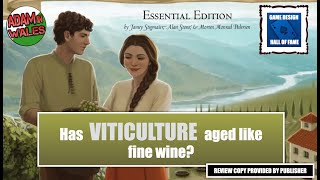
Viticulture Essential Edition ranks among the most celebrated worker-placement games of the modern era. Reviewers consistently praise its elegant design, thematic harmony, and enduring appeal since the original game's debut, with this Essential Edition arriving in 2015. Adam in Wales calls it an enjoyable struggle, The Dice Tower places it high on a personal favorites list, and Might I Suggest A Game sums it up in a single word. Jamey Stegmaier's design has proven remarkably durable, resonating with players who appreciate games grounded in constructive, aspirational themes rather than conflict-driven narratives.
Core Mechanics That Define Viticulture Essential Edition
Seasonal Worker Placement with Meaningful Constraints
The core tension emerges from the four-season structure, which forces strategic allocation across the entire year. In spring, players select turn order while accruing immediate rewards. Summer and winter provide distinct action spaces, but holding workers back for winter harvesting matters because you cannot use the same workers twice in a single year. This creates agonizing decisions about spending your workforce early to secure valuable actions versus preserving capacity for the transformative harvest and wine-fulfillment phase. The seasonal rhythm mirrors the agricultural realities of wine production, making mechanical choice and theme inseparable, and rewarding tactical adaptation to the cards and spaces available each turn.
Unique Visitor Powers and the Grande Worker
Viticulture distinguishes itself through visitor cards with disparate special abilities and a rule-breaking mechanism: the grande worker. Each player has one grande worker who can visit any action space even if occupied, bypassing the standard blocking rule. This elegantly balances player agency against downtime, softening accidental blocking and ensuring players later in turn order keep meaningful options. Visitor cards add real luck of the draw, but their variable powers tie directly to your personal vineyard engine, creating opportunities to play reactively and gain advantage from serendipity rather than demanding perfect foresight.
The Viticulture Essential Edition Experience
Inviting and Relaxing Atmosphere
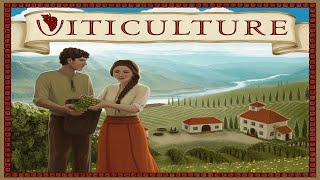
Viticulture delivers an experience distinctly removed from conflict-driven games. Most actions occur on your personal player board, untouched by opponents, creating something closer to competitive solitaire than direct confrontation. The rustic Tuscan setting and artwork of contented workers harvesting grapes evoke a calm, aspirational mood. You are not conquering territory or managing grim backdrops; you are cultivating a vineyard and aspiring to a life of good food and fine wine. This theme proved enormously appealing to the core Euro audience seeking quiet, thoughtful puzzles to share with family and friends, and the smooth rule set, polished components, and careful balance reinforce that inviting tone at every turn.
Smooth Gameplay That Rewards New and Veteran Players
Viticulture's greatest strength lies in how it feels to play turn after turn. Scores remain consistently tight across player counts and experience levels, so everyone believes they have a shot until the final round. The abstraction is transparent: when you draw cards or place workers, you understand exactly what you are doing and why. Wine production progresses with satisfying logic through planting, harvesting, crushing, aging, and fulfillment. Even less experienced players develop viable strategies quickly, and the game stays engaging without becoming oppressive, since inefficiency is not punished but clever choices clearly matter. Charming components like the grape-shaped first-player marker and the oversized grande worker reinforce the game's personality.
What Makes Viticulture Essential Edition Stand Out
A Distinctive Mechanical Identity
While Viticulture looks formulaic on its surface, small twists accumulate into a distinctive flavor. The grande worker breaks placement rules in a way that feels purposeful, turn-order rewards trade tempo for resources, and visitor cards introduce genuine randomness unusual for the worker-placement genre, creating a more tactical feel than cerebral competitors. The shifting seasonal spaces and wine-production constraints add real puzzles without overwhelming teaching overhead. Designer Jamey Stegmaier and co-designer Alan Stone achieved something harder than adding one novel mechanism: they layered multiple small innovations that feel natural together rather than bolted on.
Proven Design Philosophy and Community Building
Viticulture's appeal extends beyond mechanics to its place in modern board game history and the Stonemaier Games brand. Stegmaier nurtured a devoted community from Stonemaier's earliest products, pioneering crowdfunding practices that shaped the industry. For many fans, owning Viticulture connects them to a decade of design excellence and a publisher's genuine care for iterating on its products. Viticulture also proved that wholesome, aspirational themes could compete commercially against high-fantasy backdrops, helping pave the way for later nature-themed hits like Wingspan.
Potential Drawbacks
Complex Onboarding and Wine Abstraction
The onboarding presents a real hurdle. While the rulebook is well written, the game is genuinely complex, asking players to learn the interaction between grape types, storage mechanics, and wine production, where blush and sparkling wines form by combining others. First-time players typically need a full game to grasp every interaction, even when taught by veterans. This complexity sits atop what initially looks like familiar worker placement, which can surprise newcomers expecting simpler fare, and component management adds to the early learning curve.
Visible Score Track and Narrow Base Paths
A significant pain point arises from the visible, race-style victory track. The first player to the threshold triggers the final round, after which the highest scorer wins. This means no hidden scoring reveal and no late comeback math, so a deficit becomes visible to the whole table, which can sap motivation once a lead looks insurmountable. Some players find this at odds with the game's otherwise contemplative tone. Additionally, without the Tuscany expansion, the base game's victory paths can feel somewhat narrow, leading many experienced groups to treat Tuscany as almost essential for the fullest experience.
If You Enjoy Viticulture Essential Edition
Viticulture belongs to Stonemaier's constellation of designs. If you relish its seasonal mechanics and thematic coherence, explore Scythe, which pairs asymmetric factions with the same blend of thematic flavor and Euro mechanics. Charterstone, Stonemaier's legacy worker-placement game, shares the publisher's attention to detail. For puzzle-like production chains and player-board development, Glass Road scratches a similar itch. If the relaxing vibe appeals more than the depth, Parks delivers beautiful art and accessible strategy, while Wingspan, Stegmaier's later triumph, refines many of Viticulture's lessons into an even more widely beloved nature theme.
What Reviewers Are Saying
"The setting is placid, but the game plays a little bit more intense. It's an enjoyable struggle, but even on your less productive turns you're probably getting plenty done, and you're not going to be punished for not getting things done that you've set out to do."
— Adam in Wales
"The game sits in the middle, an elegantly simple game with strategic depth. When you combine all these mechanisms and choices, you get a really solid game that's even further enhanced by the Tuscany expansion."
— The Dice Tower
"Viticulture Essential Edition is a game about wine making, and right away I think that theme really brings people in. If I had to describe Viticulture in one word, it would be smooth. The art is smooth, the rule set is smooth, the gameplay is smooth, kind of like a fine wine."
— Might I Suggest A Game