












War Story: Occupied France Deep Dive
What the Community Thinks About War Story: Occupied France
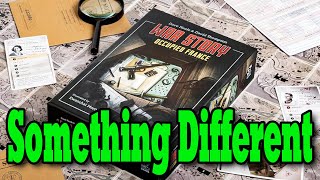
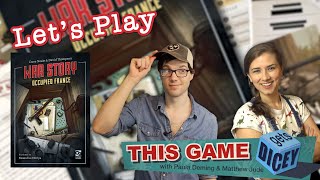
War Story: Occupied France has captured the attention of board game reviewers with its gripping narrative and meaningful decision-making. Watch It Played's Rodney Smith called it a surprise hit despite it not being his typical genre, while Paula Deming described it as having the best writing she has ever seen in a board game. Reviewers highlight how the historical setting and emotional weight set it apart from standard cooperative experiences, delivering memorable moments that linger long after the mission concludes.
Core Mechanics That Define War Story: Occupied France
Choose-Your-Own-Adventure Narrative with Tactical Consequence
At its heart, War Story is a narrative-driven experience where every choice branches the story in different directions. Players read passages from mission books and face meaningful decisions: do you enter a location by day or night, pursue a fleeing soldier or search for clues? These are not cosmetic choices; they reshape the narrative and determine what encounters your team faces. The game forces players to commit to their decisions and live with the consequences. The narrative flows through an elegant system where choice cards lead to numbered entries in the mission book, creating a structure that feels like an interactive novel while maintaining genuine gameplay.
Skill Checks, Resource Management, and Agent Specialization
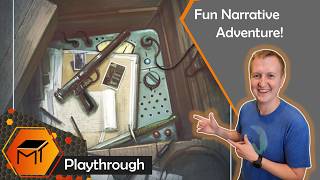
Behind the narrative lies a skill system where agents possess core abilities rated from one to three. When attempting actions, players total their agents' relevant skills and compare against thresholds. Limited skill tokens and firearms tokens serve as precious resources that can boost checks, but once spent, they are gone, forcing players to make agonizing decisions about when to use them. Special equipment like toolkits and sniper rifles provide additional boosts to specific checks. As Colin from Meet Me at the Table learned through his playthrough, selecting the right agents for each mission becomes critical: bringing your stealthy operative to sneak into a house while leaving your heavy hitters to cover an extraction point exemplifies how tactical positioning drives success.
The War Story: Occupied France Experience
Tense and Foreboding Atmosphere
Reviewers consistently praised the game's ability to create genuine tension. Time advances inexorably forward: the Germans are coming on a specific date, and players must prepare before that clock runs out. Encounters force split-second decisions under pressure. When a German patrol arrives unexpectedly, agents must decide whether to ambush them in the forest or flee, knowing each choice spawns different tactical scenarios. The writing itself reinforces this dread. Paula Deming described becoming emotional while playing, noting the historical context gives weight to every agent's potential fate. When an agent becomes mortally wounded, they cannot recover; they simply play out the mission before dying at its conclusion. This permanent consequence keeps players focused and careful with their team's wellbeing.
Narrative-Driven Decision Making Over Mechanical Complexity
What surprised Rodney Smith most was how the game excels despite requiring minimal dice rolling or mechanical overhead. Instead of rolling for combat resolution, players make narrative and strategic choices that determine outcomes. The game tells you to make a check, you total your agents' skills, and the passage's outcome is determined by your success level. Yet this simplicity never feels like it reduces stakes. Paula emphasized that the writing in the game is the best she has seen in any board game, and that quality carries players through the rule-light mechanics. The focus remains on the story you are creating together, the agents you are risking, and the impossible choices the French Resistance faced in occupied territory.
What Makes War Story: Occupied France Stand Out
Historical Depth with Personal Drama
Set during World War II with the French Resistance as the backdrop, the game grounds itself in real history while making space for intimate personal stories. Colin's first encounter, discovering a dead German deserter in a cottage, immediately established that this was not a lighthearted adventure game. The mission briefing reveals specifics: you are working with the resistance, you have named allies, and you are racing against a two-day deadline before a German attack. Reviewers appreciated how the game respects the historical setting without drowning players in exposition, and noted clever embedded details and puzzles that reward engaged players.
Emotional Investment Through Character Death and Injury
Unlike many cooperative games where player elimination feels punitive, War Story: Occupied France makes injury and death meaningful. When an agent becomes wounded, their card flips to show reduced stats, and a once-reliable operative becomes a liability. When they are mortally wounded, they can continue playing but will die at the mission's end. Colin watched an agent get wounded early and had to adapt his strategy, reducing her role in dangerous checks. This created a narrative arc within the mechanical framework: his team grew progressively weaker as the mission continued, mirroring the desperation of resistance fighters. Reviewers felt genuine anxiety about their agents' survival, transforming a tabletop experience into an emotionally resonant story about sacrifice and commitment.
Potential Drawbacks
Narrative-Dependent Enjoyment
The game's greatest strength is also its primary limitation: players must actively engage with the narrative to enjoy it. Rodney Smith was candid about this, explaining he normally does not care for narrative board games and would rather play the mechanics than read flavor text. War Story requires reading and caring about the story it is telling. Players who approach it as a pure mechanics puzzle may miss the emotional weight that reviewers found most compelling. The game demands that groups commit to the immersion, treating it as a collaborative storytelling experience rather than an optimization puzzle.
Replayability Depends on Avoiding Spoilers
While the game boasts three replayable missions with branching paths, much of the replay value comes from discovering new narrative passages and different outcomes. Once you know how a particular confrontation resolves or which clue a passage hides, seeing it again diminishes the surprise. Players seeking fresh surprises need to either forget details between plays or actively avoid re-reading outcomes they have already experienced. This contrasts with games where mechanical mastery creates replayability independent of narrative familiarity.
If You Enjoy War Story: Occupied France
Players drawn to War Story's blend of narrative and agency might explore Betrayal at House on the Hill, which shares the collaborative storytelling structure and sudden twists. For deeper historical experiences with lighter mechanical overhead from a series co-creator, Undaunted: Normandy and Undaunted: North Africa offer tense World War II tactics. If the resistance setting appeals, Black Orchestra delivers another tension-filled World War II cooperative game about conspirators racing a clock. And for pure narrative branching, Sleeping Gods captures the choose-your-own-path storytelling that War Story fans appreciate.
What Reviewers Are Saying
"War Story: Occupied France is not what I normally enjoy in board games, but every decision you make in this game is life and death. The story in this game is emotional, it's gut-wrenching, it's tense and scary."
— Watch It Played
"This is the best writing I have ever seen in a board game. I have been emotional playing this game. The historical context is dark, and it's definitely story-driven with a real choose-your-own-adventure flair."
— Pair Of Dice Paradise
"It's a narrative-focused choose-your-own-adventure game where you're strategizing about which agent to bring for each mission based on their skills, and you're making choices the whole time with ramifications for your actions."
— Paula Deming