/pic4770872.jpg)
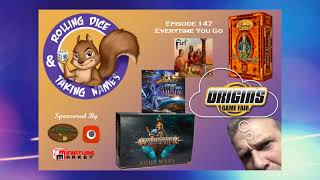
This is Warcry – a new skirmish game from the makers of Kill Team and Warhammer Underworlds that allows you to experience the visceral carnage of battle in the Mortal Realms in a whole new way.
This is more than just a skirmish version of Warhammer Age of Sigmar – it’s hyper-kinetic, it’s tactical and it’s very, very bloody, featuring bold new game mechanics.
Warcry is perfect for narrative players looking to forge character-driven campaigns where warbands grow and develop through their own journey. Meanwhile, gamers looking for a close-matched, fast and exciting experience will find a game that fits both their coffee table and coffee break.
In the game, you’ll follow the myriad tribes of Chaos – reavers and despoilers from every corner of the realms – as they make their dark pilgrimage to the Varanspire. Warcry explores a never-before-seen side of life (and death!) in the Age of Sigmar. Every model for this game is brand new, reflecting on the dizzying diversity of Chaos on a scale never attempted before and rooted in rich lore that realises the servants of the Dark Gods as deep and varied cultures.
—description from the publisher
- Gorgeous models and rulebook
- Streamlined rules compared to 40k
- Tactical depth through unit abilities
- Good lore presentation
- Accessible entry with the 'Soul Wars' box
- Push-to-fit models for easy assembly
- Thematic integration of realms and magic
- Can be intimidating due to the number of special abilities on war scrolls
- 40k is slightly harder to get into
- Warfare between factions in different realms
- Fantasy universe
- Warhammer 40,000
- Shade Spire
- War Machine
Mechanics (from transcript analysis)
- Action phases — The game is played over distinct phases: Hero Phase (spells), Movement Phase, Shooting Phase, Charge Phase, Combat Phase, and Battle Shock Phase.
- Area Control — Battle plans involve capturing objectives by having units within their area.
- Army building — Players build armies around specific strategies, utilizing unit abilities and synergies.
- Dice Rolling — Used for combat resolution (to hit, to wound, saves) and battle shock tests.
- Magic System — Spells are cast during the Hero Phase and are a significant part of gameplay.
- Unit Statistics — War scrolls contain all the stats for each unit, including movement, attacks, saves, and bravery.
Video topics + discussion points
Quotes (from this video)
- This is The Edible Games Cookbook and this is a cookbook that you actually make the food in it.
- I have a lot of hype for Detective: City of Angels.
References (from this video)
- Number two selling non-collectible miniature game
- Games Workshop is killing it
Mechanics (from transcript analysis)
Video topics + discussion points
Quotes (from this video)
- my name is Marty these are my musings
- I love looking at empirical cells data whether it be for movies or comic books or albums it doesn't matter I like seeing what the top sellers are
- those four games have been around for quite a while which goes to show that either one people in this hobby are still buying those games or hopefully hopefully people are coming into the hobby and those are those gateway games that everybody recommends for people to check out
- evergreen as' I just made that term up
- it doesn't matter how often they refresh that game it's always a fantastic seller thing is though I bet it drops out of the top ten in the next quarter
- so to have this game that is a hundred bucks still continue to sell well quarter after quarter year after year is just a testament to how popular that game is
- exploding kicking kicking exploding chickens now that would be funny
- now when I first saw Dominion on this list I thought wait a minute that should be a board game but I guess when you really think about it it's nothing but cards 100% card game
- I love Arkham Horror LCG I have been into LCG games since they first came out
- with Arkham Horror LCG every time I play that game I am totally sucked into the story
- sweet sweet game if you have not tried it I highly recommend checking it out
- Seven Wonders is considered a card game come on it's got player boards it's got a lot of different tokens I think personally that should belong in the board game category and not the cards and dice Hey but maybe I'm wrong
- Games Workshop is killing it right now
- Dungeons & Dragons since the release of the fifth edition has just skyrocketed in popularity it has taken over everything
- it's yugioh TCG key Forge and Dragon Ball super
- it's really cool to see ki Forge up in there
- While it's not a CCG in the sense of you buy blind booster packs you don't know what's gonna be in there instead you're buying a blind deck and not sure what's gonna be in there I guess it still has a collectible aspect to it
- since that game just came out also fourth quarter of last year it was hot it was hard to find
- you were you surprised by any on this list or did you think there would be someone this list that weren't on there
- smash that like button and flip that subscribe button
References (from this video)
- Broadened unit choice compared to Warhammer Fantasy.
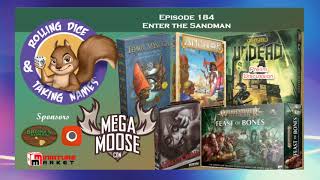
- New starter box ('Feast of Bones') is a good entry point with two distinct factions.
- Ogre models are being consolidated into a single faction ('Ogre Mawtribes').
- Ossiarch Bonereapers are a popular and visually striking new faction.
- The tiered system (Warhammer Underworlds, Warcry, Age of Sigmar) allows for easier entry and model crossover.
- Initial release of Age of Sigmar was criticized for fragmenting factions and creating confusing keywords.
- Some factions had very limited unit choices, like the Beastclaw Raiders.
- Older models are being re-categorized under new faction keywords.
- Warfare between factions
- Fantasy realms
- Warhammer Fantasy
- 40k
- Warhammer Underworlds
- Warcry
Mechanics (from transcript analysis)
- Army building — Players construct armies (rosters) by selecting units that fall under a chosen Grand Allegiance (Order, Chaos, Death, Destruction). This allows for mixing units from different races/factions within that allegiance.
- Battle Tomes — Books detailing the rules, lore, special rules, and unit stats for a specific faction, analogous to 'Codices' in 40k.
- faction bonuses — Specific bonuses that apply when an army is composed entirely of units from a particular faction, often more significant than Grand Alliance bonuses.
- Faction Keywords/Tags — Units have specific keywords (e.g., 'Beastclaw Raiders', 'Ogre', 'Night haunt', 'Ossiarch Bone Reapers') that determine which special rules and faction bonuses they can benefit from.
- Grand Alliances — Broad categories (Order, Chaos, Death, Destruction) that allow for mixing units from various factions within that group.
- Model Count — Game scenarios and army builds can accommodate varying model counts, from low to high.
- Points system — Units have point values, and games are typically played at specific point thresholds (e.g., 1000, 1500, 2000 points) to determine army size.
- scenarios — Various mission types beyond simple head-to-head combat, including unique scenarios found in specific box sets like 'Feast of Bones'.
Video topics + discussion points
Quotes (from this video)
- Since H of sigmar came out you've had a problem because there's a faction that you wanted to play that you struggled getting an army together.
- The Army's beast carburetors by the way if you're familiar with ages Sigma and this is an army with an extremely low model count on the table and extremely limited unit choice.
- So they have these four grand allegiances now order chaos death and destruction.
- The other faction is brand-new like these models let this beast of bones box is your first chance to get a hold of these models and what are they they are called the Aussie arc bone Reapers.
- Doug has gotten Kapow - white wizard gaming that means it's gonna be able to get a lot more distribution
- So in that same theme same mechanic but instead of cards that you're using dice so I think it's a great arrangement relationship between those two entities
- The model starting at the bottom will go all the way through the top and can be used all the way the big game it's really smart this model that Games Workshop has put together.
References (from this video)
- Fantasy universe
Mechanics (from transcript analysis)
Video topics + discussion points
Quotes (from this video)
- Games Workshop was viewed as a faceless company that was having slow or declining sales and stores closing all over the world but since then he's made a lot of changes trying to make Games Workshop more customer friendly.
- The seventh edition and how complicated the rules were and people were falling away from that product and in fact jumping to other games such as well at war machine which actually for a little while was doing better in sales than what Warhammer 40k was but since eighth edition the rules have been streamlined people have come back in droves to this game and now at this point it's actually more popular than what war machine was.
- Diamond Comic Distributors are going to allow wholesalers to sell comics in retail stores this will be done by giving retailers the opportunity to purchase a 44 pocket comic spinner rack.
- Chainsaws were invented for the aid in childbirth.
References (from this video)
- The realms offer a vast and imaginative setting.
- The city of Hammerhal exemplifies creative world-building by bridging different realms.
- The lore allows for both deep immersion in written lore and freedom for player creativity.
- The connection to the Old World provides a grounded foundation.
- The grand alliances introduce moral complexity and nuanced conflicts.
- Races are highly original and offer unique perspectives.
- The focus on souls as a central conflict adds depth.
- The lore supports a wide range of narrative scales.
- The lore of Age of Sigmar, focusing on its realms, books, the Old World connection, grand alliances, and soul mechanics.
- Eight realms plus a realm of chaos, with each realm having an affinity to a certain type of magic or elements.
- Old World
- 40k
- Star Wars
- Star Trek
- Aquaman movie
- Gungan underworld (Phantom Menace)
- X-Men
- Avengers
- Warhammer
- Dungeons and Dragons
- Faerun
- Forgotten Realms
Mechanics (from transcript analysis)
Video topics + discussion points
Quotes (from this video)
- the realms are sort of dedicated to these very elemental uh structures and it harkens back to the original old world with the winds of magic
- the novels have by and large done a really good job of giving a personality a character a real life to uh a lot of these different types of archetypes that you know the game itself presents
- the fact that when they destroyed the old world and then made this new world this age of sigmar they didn't just make an entirely new game and forget completely the old world they really are the universe is really still attached to that old world universe
- good and evil is a little bit gray there in some in a lot of cases
- souls became something that a lot of the gods were very interested in possessing and owning which was a very interesting concept
References (from this video)
Mechanics (from transcript analysis)
Video topics + discussion points
Quotes (from this video)
- games are like a creation of a puzzle uh to solve
- games are setting up a language exercise in a lot of ways
- we're setting up a chill time together we're agreeing on a system to be happy to chill to be content
- there is something to be kind of said there to kind of step back and look at what is the difference between happiness and contentment
- the whole time i was playing it i'm like oh i'd rather just go fire up tabletop simulator and call billy and say hey let's uh you want to play another game of return to dark tower
- the mechanism of production and progress and you know making of stuff which is part of board games which is very very strange
- to me there is a certain amount of like ceremony and ritual and exercise involved when you sit down and play a game
- carving out those times of leisure so when you're happy and fed and safe and all that stuff you have those moments because otherwise what the hell is the point
References (from this video)

- Deep hobby with rich lore
- strong community scene
- High cost of miniatures
- requires space and setup
- gritty large-scale battles with miniature figures
- Fantasy wargaming in the Warhammer universe
- campaign-like skirmish to large battles
Mechanics (from transcript analysis)
- Miniature wargaming — Players command units of miniatures in tactical battles
Video topics + discussion points
Quotes (from this video)
- Hero Quest is the greatest game of all time
- this place is a definitive board game hub
- I love Uncommons... there's so many memories made
References (from this video)
- new sets released monthly, making it hard to keep up
- new rules are not always an improvement
- faction articles have been controversial
Mechanics (from transcript analysis)
Video topics + discussion points
Quotes (from this video)
- Friends don't let friends Buy HP printers
- Wizards of the Coast would really rather that you just buy Magic by the case directly from them it seems
- They've been making a lot of really bad decisions in my opinion and if they go to business I will laugh and point
- I just don't understand why they don't want to do that
- I mean the machines that do the saddle stitching are a real pain to maintain they have a tendency to break down a lot
- The print books like the vast majority of people are buying the printed versions as opposed to just PDF only
- I don't know what the fourth dimension is
- I don't really pay attention to that stuff too much
- Most new Morheim players I talk to seem happy to download the PDFs for free from broheim these days and when I mention paper Printing and hard copies they think I'm crazy
- One odd thing about cyber punk red starter doesn't come with with gonks which I feel is like an essential mechanic
- Monac is a great game and the minis for the main monsters are beautiful and fun as heck to pain
- I attended a one-day charity Horus heresy event yesterday called Pride of the Legion a good day for a great cause but now I'm horse and this can be and need at least a day to recover
- If you want some great plastic modern soldiers look at the April issue of War Games Illustrated with the free sprew of warlord games special ops Troopers
- what's your favorite Warhammer mini does that mean which one that I own the most of because it's probably then going to be I don't know what they call them anymore they used to call them nurgle chaos Lord but nowadays he's that guy
- I think I have like six or seven of them it's great for kid bashing
- Does snarl not have a physical book to buy it doesn't
- the machines that do the saddle stitching are a real pain to maintain they have a tendency to break down a lot so some years ago they got rid of Saddle Stitch
- The newest Kill Team box set, 'Germination', is discussed.
- It's been a minute since I've liked both sets of models in a kill Team box.
- Kill team germination is coming this week can't wait
References (from this video)
- more interesting activation system than Warhammer 40K
- players must plan for the possibility of consecutive turns
Mechanics (from transcript analysis)
- dynamic turn order — Roll to determine turn order each round, allowing for the possibility of taking two turns in a row.
Video topics + discussion points
Quotes (from this video)
- the rules are are how you play the game it's not the lore it's not the art it's not even like the models or the terrain it's the rules that Drive the experience of the game play
- I want to tell you about some things some mechanics and stuff like that that I don't personally like to see in wargaming Miniatures design
- I believe that companies want to use custom dice for their games because then it's just another thing that you have to buy from them
- War doesn't happen in an orderly fashion
- you as the player have a certain amount of agency over your own force and that's important to making them feel like your own force
- analysis paralysis when when trying to build a new list if you just give them the list up front right so that they don't have to worry about well how many of these should I take and did I take enough of those and do I have enough points and all that kind of stuff it just allows them to then focus on learning the game
References (from this video)
Mechanics (from transcript analysis)
Video topics + discussion points
Quotes (from this video)
- please explain painting Optical camouflage on spaceships I know rule of cool I don't know it just looked neat I guess that's the same thing
- all the stls that you buy or whether you buy the stuff through uh only games like if you get them printed like if you don't have a printer yourself they can do print on demand as well with those with those same six figures basically it's a 50/50 split
- it's literally you take off the little silicone kind of cover that goes over the whole nozzle thing so you don't burn yourself on it I guess you take that off you pop off the plastic thing there's a little clip little metal clip you uncp it and then you pull the nozzle out and the nozzle is magnetized so it doesn't like fall out as soon as you uncp it
- I saw a thing on Facebook about a machine that you just dump all your old pla into and it'll melt it all down and then create a new pla spool which I'm like well that sounds like an awesome idea
- I think they're that scared of 3D printing I think they don't want to do it
- I don't think that's really that's not the point is to to beat Games Workshop
- you create a game like Vince and I do or like fat dragon games does or like lots of different companies you create a game because you want to do it you're not out there to be like the best you're out there to put out a game that you enjoy and then hopefully people will pick up and enjoy as well
References (from this video)
- Fantasy games
- Fantasy
Mechanics (from transcript analysis)
Video topics + discussion points
Quotes (from this video)
- And these 1490 Doom two-foot circular boards were also busy most of the convention.
- They are producing models now, uh, but they're also and they're going to have a printed book eventually soon.
- It's like a Patreon thing and then it lets you get into a uh a Discord and you also get letters every month and there's like a sticker and a book and you put your sticker in for things you're doing, all that kind of stuff.
- But the real thing about Adepticon is just meeting other kind of like-minded people who are into wargaming like you are, or maybe slightly different than you are, and maybe they teach you something.
References (from this video)
- it's lifeless
Mechanics (from transcript analysis)
Video topics + discussion points
Quotes (from this video)
References (from this video)
- Offers satisfaction through commitment and time invested.
- Involves painting, lore, army configuration, and decks.
- Requires significant time investment.
Mechanics (from transcript analysis)
Video topics + discussion points
Quotes (from this video)
- why do i really like you know complicated games
- there's a level of of reward there for when you can kind of parse the design parse the system
- it's almost like a relationship that you have with the game and it just can be more and more and more rewarding as you start to plumb the depths
- so the complicated games the games that that require more commitment and more of your time there's a certain level uh to that that that i think is a lot rewarding
References (from this video)
Mechanics (from transcript analysis)
Video topics + discussion points
Quotes (from this video)
- to succeed you have to fail like it is a must that you fail
- don't be afraid of failing because you just you have to fail
- the dream was the process the process was the work he was doing the work
- you're going to find out once that you be you kind of investigate in that process once you kind of like just commit to the process of just letting it happen and put it in time your dream's not going to come true something else is going to come true
- the moments and the memories that the games can elicit and sort of act as a vehicle for everybody around the table whether you're playing by yourself or if you're playing with six other people where it carries everybody that's really the important part of the whole thing
References (from this video)
Mechanics (from transcript analysis)
Video topics + discussion points
Quotes (from this video)
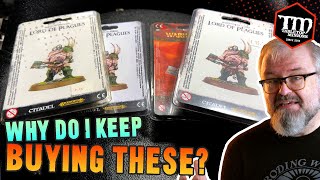
- I have so many duplicates of the same Games Workshop models
- I learned something interesting about myself this past weekend
- I'd be lying if I said I was disappointed in this outcome and I'd also be lying if I said that this was the first time that this has happened to me
- better safe than sorry
- For me it's a nice feeling to be able to grab a model from my shelf when I want to Kit bash it and paint it rather than trying to find one at a store or God forbid on eBay
- there's no right way to participate in this hobby no matter what the people on Twitter and Reddit will tell you
References (from this video)
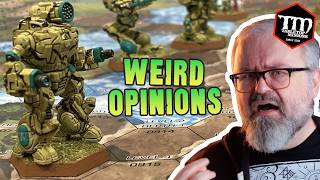
- Lore can be a compelling selling point and marketing tool.
- The existence of tournament play (match play) is acknowledged.
- Constant rules changes drive players away.
- Narrative players get lumped in with tournament players due to similar rule sets.
- The constant search for balance doesn't make for a fun game rule set for narrative players.
- Warhammer 40K
Mechanics (from transcript analysis)
- Rules changes — Constant rules changes are cited as a reason people are driven away from wargaming, particularly for 40K and Age of Sigmar.
- Strategrams — Mentioned as a complexity that could be reduced in a narrative version of the rules.
- tactics cards — Mentioned as a complexity that could be reduced in a narrative version of the rules.
Video topics + discussion points
Quotes (from this video)
- if you love a hobby like I love TableTop wargaming and the Miniatures hobby then you have a tendency to think about it a lot
- reasonable people can have differing opinions about wargaming it's just a game
- for me 3D terrain is kind of important I think
- tabletop wargaming is all about immersion and how things look in my mind
- nearly no lore is actually needed for a Miniatures war game
- the compelling lore is one of the main reasons that Warhammer games continue to do as well as they do
- frankly it doesn't really work for smaller Indie Games
- there should be two versions of Warhammer 40K and two versions of agis Sigmar for each game there should be a version for tournament play and then there should also be a version that's fun
- the constant search for balance doesn't really make for a fun game rule set feeling comfortable with stable rules and enjoying themselves is what they want
- round bases are better looking than Square bases but integrated bases those weirdly shaped bits of ground between the Mini's feet usually on some companies metal Miniatures but sometimes they're also on resin ones and even plastic as well um those are the worst
References (from this video)
- Constant rules updates and editions
- Warhammer 40,000
Mechanics (from transcript analysis)
- Rules Updates — Frequent updates to rules, points costs, and editions are mentioned as a source of frustration.
Video topics + discussion points
Quotes (from this video)
- "Some hobbies are easier than others."
- "Now, right off the bat, this is not a doom and gloom video about tabletop wargaming."
- "However, this ain't the easiest hobby to get into."
- "Games Workshop isn't the hobby. It's a big part of the hobby, but it is not the hobby."
- "So many companies sell models cheaper than Games Workshop."
- "Comparison in the hobby... how it really is the thief of joy."
- "Tabletop wargames are all about making the game your own."
- "Strangely, some of the same things that bring people into this hobby are the exact same things that drive them away, except for the excessive cost."
References (from this video)
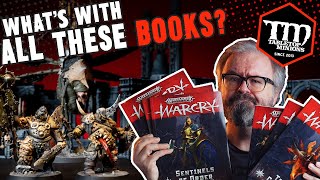
- Substantial narrative content and campaign variety across multiple books
- Expanded warbands and models, including leaders and special units
- Standalone books per faction allow focused purchases
- Background tables and name generation add flavor and immersion
- Clear differentiation between narrative content and point-cost updates
- Dropping five books at once can overwhelm players and retailers
- No universal point-cost changes across Tome of Champions 2021; separate books handle costs
- Battlescribe hasn't been updated yet (as of the video), complicating list-building
- Allies section largely overridden/invalidated old Monsters & Mercenaries mechanics
- Increased cost and complexity; potential redundancy with earlier books
- narrative-driven campaign play with factional conflict and modular warbands
- Warhammer Age of Sigmar skirmish campaigns featuring multiple grand alliances and evolving warbands
- campaign-focused, lore-informed, with background tables and named leaders
- Kill Team
- Monsters and Mercenaries
- General's Handbook
- Tome of Champions 2019
- Tome of Champions 2020
Mechanics (from transcript analysis)
- Allies and faction integration changes — Allies rules and ally symbols shifted; some previously allied leaders and units are reorganized into distinct books with different leadership roles.
- Asymmetric Mechanics — Allies rules and ally symbols shifted; some previously allied leaders and units are reorganized into distinct books with different leadership roles.
- Branching product structure — Books are released per grand alliance and as narrative supplements rather than a single cohesive tome, with standalone access to each book.
- Narrative and campaign content emphasis — Each faction book adds narrative quests, campaign updates, and varied mission types beyond simple stat changes.
- Point costs and roster adjustments — Different books provide point costs and roster changes; Tome of Champions 2020 does not update points, other books do.
- Skirmish campaign play — Narrative campaigns with missions and scenarios that evolve over time, emphasizing story and progression.
- Warband and card-like stats — Units are presented with card-like stat blocks and leader models; stats update across books in various ways.
Video topics + discussion points
Quotes (from this video)
- these books have the kind of new point costs and things like that
- five books that came out all at once not staggered over several weeks anything like that just boom dropped them all at once
- it's not got any new updates as far as points or units or anything like that that's what the other books are for
- it's a different system now
- great books they've got a lot of great information
- you don't need every single one
- probably end up having to be maybe a hard cover which would then of course make it much more expensive again
- they dropped all five at once
- you can buy these books separately like if you're just interested in order well then you can just buy the order book instead of having to buy a you know a much bigger book
- the thing that i'm finding interesting about these new books is that these new books have more units than the cards do
- you could buy this chaos book and see all the stats and all the information
- the four grand alliance books
References (from this video)
- dynamic, kinetic combat with strong theme and terrain interaction
- excellent for narrative/conquest storytelling in a skirmish format
- new model lines offer distinct visuals and playstyles
- high entry cost to assemble a playable force
- starter box may require additional terrain or expansions for full immersion
- gritty, fast-paced skirmish combat with narrative progression
- Mortal Realms; chaotic warbands clash in enclosed arenas and terrain-rich environments
- campaign-driven development of bands; evolving narrative arcs across battles
- Kill Team
- Underworlds: Shadespire
Mechanics (from transcript analysis)
- activation and initiative — players decide action order with initiative and strategic choices
- band progression and campaigns — warbands grow and improve through a series of narrative battles
- Campaign — warbands grow and improve through a series of narrative battles
- terrain-driven movement and positioning — terrain pieces and multi-level play influence maneuvering and line of sight
Video topics + discussion points
Quotes (from this video)
- it's not just a skirmish version of Age of Sigmar, it's hyperkinetic, it's tactical and it's very bloody
- two starter boxes—one for Warcry and one for Kill Team—are intriguing approaches to bringing players into two different scales of play
- the terrain is a huge draw for me; the modular setup lets you create a three-dimensional battlefield with multiple elevation changes
- I'd like to see Warcry expand beyond chaos; expanding into other factions later would be interesting to watch
- the entry cost is high, but the payoff is a flexible ecosystem that can feed into larger games later
References (from this video)
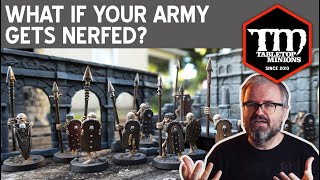
- allows reuse of older models in new settings or systems
- encourages flexible play and exploring alternative army lists
- potential for broader model usage beyond a single game size
- balance changes can feel like nerfs to established builds
- new books can outpace older codices, pushing players to adapt or abandon armies
- balance between power progression via new codices and the resilience of older armies in a changing meta.
- Fantasy battlefield with undead motifs (Tomb Kings) and broad fantasy elements across multiple factions.
- analytical discussion with pragmatic advice on adapting to balance changes
- Warhammer 40,000
- Malifaux
- Dungeons & Dragons
Mechanics (from transcript analysis)
- army-building balance — system-wide balance considerations, codex changes, FAQ fixes, and the impact on player choices
- codex creep — power scaling over time via new books, sometimes benefiting older armies or creating new archetypes
Video topics + discussion points
Quotes (from this video)
- every model we've ever made for fantasy is gonna have a war scroll
- are they competitive probably not but you can still play with them
- keep playing with it
- this is not imaginary
- if you're not a competitive player then generally you probably don't care that much
References (from this video)
- Large unit variety and terrain interaction offer tabletop spectacle
- Strong painting and display potential for hobbyists
- Accessible entry point with scalable army sizes
- A large commitment can still be required to field competitive armies
- Complexity from multiple spell and command phases can be daunting for newcomers
- heroic fantasy clashes with larger-than-life warbands
- fantasy battles across the Mortal Realms
- lore-driven, dynamic skirmish-to-medium-scale battles with rich factions
Mechanics (from transcript analysis)
- Heroic abilities and magic — magic and character-driven powers influence outcomes and board state
- Movement and objective-based play — units maneuver on a tabletop to contest and capture objectives
Video topics + discussion points
Quotes (from this video)
- this is 40K land
- the guns of an entire Army attached to it
- You can fire the Doomsday missile anywhere you want
- pink trees are beautiful
- this is a smaller local convention that's also raising money for charity
- the birthplace of Dungeons and Dragons for sure
- you people are smart
References (from this video)
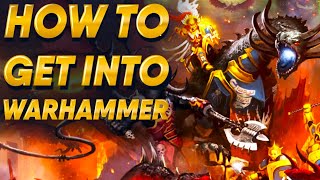
- Starter sets and easy entry points for new hobbyists (e.g., Extremis/Start Collecting boxes).
- Clear options for Open, Narrative, and Matched Play to suit different play styles.
- Expanded lore and world-building in the third edition core book.
- Updated rules balance simplicity with depth, keeping the game approachable yet engaging.
- The breadth of options and factions can be overwhelming for newcomers.
- The hobby requires investment in models, painting, and terrain to fully enjoy.
- Constant updates and new editions may create a moving target for players returning after a break.
- Conquest through combined arms, lore-rich universe with ongoing shattered-kingdom narratives and re-forged heroes.
- The Mortal Realms, a high fantasy universe where Order, Chaos, Death, and Destruction factions vie for supremacy across shifting realms.
- Hybrid of structured campaign paths (Path to Glory) and flexible open/matched play, with heavy emphasis on lore and faction identity.
- Underworlds
- Warcry
Mechanics (from transcript analysis)
- Army construction and points systems — Three play styles—Open, Narrative, and Matched Play—each with its own approach to army points, unit limits, and battlefield setup.
- Campaign — Campaign progression lets forces grow over time, acquire territory, and carry battle-scarred rewards between games.
- Campaign and narrative play (Path to Glory) — Campaign progression lets forces grow over time, acquire territory, and carry battle-scarred rewards between games.
- dice-based combat resolution — Six-sided dice are rolled to determine hits, wounds, and outcomes, incorporating luck and probability into engagements.
- Measurement Movement — Units move across a tabletop using a tape measure, emphasizing positioning and line-of-sight.
- Monstrous Rampages — Monstrous events and powerful units can wreak havoc on the battlefield, including terrain destruction and dramatic skirmishes.
- Movement and measurement — Units move across a tabletop using a tape measure, emphasizing positioning and line-of-sight.
Video topics + discussion points
Quotes (from this video)
- third edition continues the process of refining and evolving the game of aos while also giving lore junkies even more story to delve into
- it's time to grab yourself a copy of the army specific battle tome which is packed with history, narrative rules and inspiration for creating your army
- the brilliant thing is that all of the models can be used in age of sigmar 2 because that is bang for your buck
- these sets are designed to ease you into every single aspect of the hobby
References (from this video)
- Rich lore and colorful factions
- Strong visual and narrative appeal
- Can be complex for new players
- Requires investment in multiple models
- Epic fantasy battles, heroic storytelling, realm-spanning conflicts
- The Mortal Realms, a high fantasy setting with various factions
- Narrative-driven army building with campaign potential
- Shadespire
- Warhammer 40,000
- Gloomhaven
Mechanics (from transcript analysis)
- Campaign/story play — Potential for narrative arcs across multiple battles.
- Faction-specific rules & synergy — Rules and upgrades that emphasize faction lore and playstyle.
- Unit-based army construction — Assemble warbands from factions with distinct abilities and keywords.
Video topics + discussion points
Quotes (from this video)
- International tabletop day is a time for people to get together and play games; it’s basically a big promotional thing.
- Consistency is key if you're starting a YouTube channel—post on a schedule and keep it up.
- Gloomhaven has put my 40k on the back burner, but it’s because it’s that good a game.
- Start collecting boxes are great values for starting a new army; you get a lot of model for a fair price.
- I would like to try Star Wars Legion just to get the experience and talk about it more directly.
- 3D printing terrain is a game-changer for terrain variety and customization.
- If you want to paint big models, spray primer can save a lot of time and give an even base.