/pic7687140.jpg)









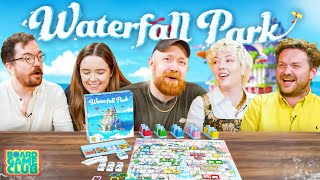


Waterfall Park Deep Dive
What the Community Thinks About Waterfall Park
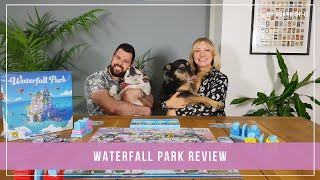
Waterfall Park has captured the attention of the board game community as a fresh take on negotiation-driven gameplay. Reviewers consistently praise it as a streamlined, accessible experience that brings high interaction and table talk to casual gaming tables. The game occupies a unique space in the negotiation genre, offering pure deal-making without complex economic systems or lengthy rule explanations. Players are drawn to its charming amusement park theme and the satisfaction of building contiguous attraction groups on a fantastical floating park. While the theme itself may feel whimsical and disconnected from realistic economic logic, it serves the core experience well by creating an inviting, lighthearted setting for negotiation.
Core Mechanics That Define Waterfall Park
Negotiation and Trading
At its heart, Waterfall Park is a negotiation game where everything is on the table for discussion. Players can trade location cards, attraction tiles, money, and board positions in any combination they choose. The rules place no restrictions on what can be negotiated, creating open-ended deal-making where players might exchange a single property for multiple tiles, or bundle money with locations to sweeten offers. This freedom transforms each round into a freeform negotiation phase where players spend time discussing potential trades with no formal turn structure. One reviewer noted this creates a game that is practically chaos, with all players simultaneously engaged in pitching and counter-pitching proposals, making it an exceptionally active and engaging experience where no one waits for their turn.
Set Collection and Income Generation
Players earn money by forming groups of matching attraction tiles on the board. Incomplete sets earn modest income based on the number of tiles, while completed attractions (using the maximum number of tiles shown on each card) generate significantly higher payouts. The strategic tension comes from players trying to assemble complete sets while competing over the same board spaces. Since everyone can see all tiles and locations being negotiated, players must balance their negotiating power, managing both the assets they currently control and the ones they hope to acquire. The income system creates natural momentum, as larger completed sets unlock more money for subsequent rounds, allowing players to escalate their negotiating leverage as the game progresses.
The Waterfall Park Experience
A Noisy Game Built on Table Talk
Waterfall Park thrives on high-energy interaction and continuous conversation. Players spend most of each round in active negotiations rather than sitting back while others take turns. The game generates laughter, deliberation, and sometimes friendly frustration as deals are proposed, rejected, and renegotiated. Reviewers consistently mention that the game suits groups who enjoy banter and aren't afraid of a little chaos at the table. The experience is fundamentally social, making it a natural fit for family game nights and casual gaming groups where players value the shared experience over quiet, analytical decision-making.
Fast-Paced Building and Strategic Depth
Despite its apparent simplicity, Waterfall Park moves quickly and maintains momentum. Rounds flow rapidly as players reveal their tiles, execute negotiations, build attractions, and collect income. The game plays in roughly 30 to 45 minutes, keeping the pacing brisk. Yet beneath this surface speed, players face meaningful decisions about when to push for completed sets versus settling for partial income, how to position themselves for future rounds, and when to invest money in negotiations versus hoarding it. The strategic element emerges from understanding opponent positions, predicting what others might pursue, and timing offers to maximize your own position before others lock in theirs.
What Makes Waterfall Park Stand Out
A Streamlined Reimplementation with Better Theming
Waterfall Park builds directly on the mechanics of Chinatown, the classic negotiation game from 1985. Reviewers note that Waterfall Park takes the proven core of Chinatown and refines it by shortening play time, removing rough edges, and most importantly, replacing Chinatown's problematic theming with a sanitized, whimsical setting. Where Chinatown leans into stereotypes, Waterfall Park centers the game around an amusement park built vertically on towers in the middle of an ocean. This allows players to enjoy pure negotiation gameplay without the cultural baggage of the original. For players familiar with Chinatown, Waterfall Park offers a cleaner, more accessible entry point to the same negotiating experience. For newcomers, it delivers straightforward, engaging deal-making in a theme that immediately sets a lighthearted tone.
Clever Physical Design with Functional Gameplay
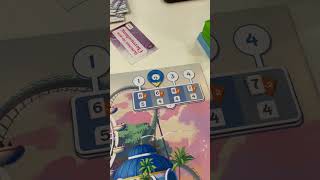
The standout design element is the tile frame system. Each player has a set of colored tile frames that slot directly into the board, anchoring their attractions in place. These frames are practical and engaging, keeping tiles stable and visible while making player ownership immediately obvious across the table. Reviewers praise this design choice as clever and preventing tiles from shifting or becoming confused during the negotiation chaos. The physical components enhance clarity during high-interaction rounds and contribute to the overall satisfying feel of building visible attractions on the board.
Potential Drawbacks
Thematic Disconnect and Setting Questions
While reviewers appreciate Waterfall Park's theme over Chinatown's, some point out that the waterfall park concept raises logical questions. Building an amusement park on towers in the middle of an ocean lacks grounded logic. Players may wonder who the park operators are, why they are competing for the same locations, and how the water-based setting creates any meaningful thematic resonance with the mechanics. The theme functions well enough to set a cheerful mood, but it does not deeply integrate with or reinforce the gameplay experience. For those seeking thematic immersion or a setting that narratively explains the negotiation-driven competition, the whimsy may feel hollow.
Reduced Complexity Compared to the Original
In streamlining Chinatown, Waterfall Park made deliberate cuts to simplify the experience. Some players may find this removes nuance or depth they appreciated in the original game. Reviewers who have played both note that Waterfall Park feels slightly shortened and simplified from Chinatown, which may appeal to casual players but could disappoint those who valued the additional strategic layers. The trade-off is accessibility and faster play versus the tactical depth of its predecessor.
If You Enjoy Waterfall Park
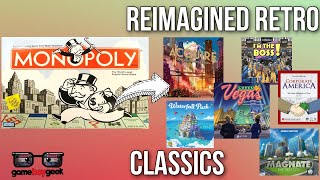
Consider exploring Chinatown, the classic game that inspired Waterfall Park, if you want more strategic depth in a negotiation experience. Those seeking pure negotiation at an even grander scale should explore Sidereal Confluence, which takes negotiation and economics to a complex, high-interaction extreme. For a game that shares Waterfall Park's accessible negotiation style but with a different setting, Monopoly remains a foundational negotiation game, though purists may argue that Waterfall Park captures the negotiation essence more cleanly. Lords of Vegas offers a comparable blend of property control, economic strategy, and negotiation with a thematic Las Vegas setting. Players drawn to the high-interaction element without negotiation complexity should explore games like Raccoon Tycoon, which combines engine building, stock manipulation, and auctions with lighter negotiation elements.
What Reviewers Are Saying
"Waterfall Park is a reworking of the popular game Chinatown, taking that core game and shortening and streamlining it, removing some of the rough edges in the process. It keeps the core of Chinatown mostly intact, which is about trading and making deals about locations and shops, and it's a noisy game that suits groups that like high interaction and table talk."
— 3 Minute Board Games
"If you like the negotiation aspect, this is about as pure and streamlined as a negotiation game as you can find. It's pure open negotiation where everyone can see everything, and you're always trading numbers, cards, and tiles."
— TheGameBoyGeek
"Waterfall Park makes absolutely no sense as a theme. I mean who are you in this game and why are you competing? But the best thing about this game is the tiles that stick into the board. It's a really clever design, and they aren't going anywhere."
— 3 Minute Board Games