/pic3983952.jpg)




















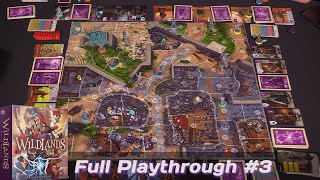

Wildlands Deep Dive
What the Community Thinks About Wildlands
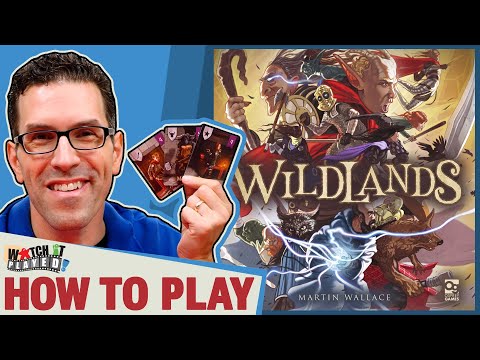
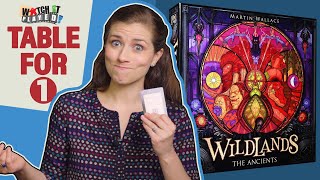
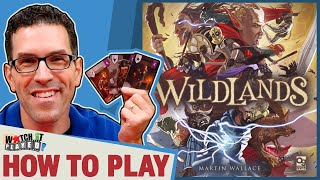
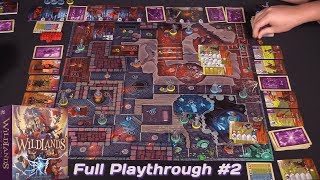
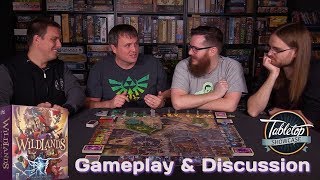
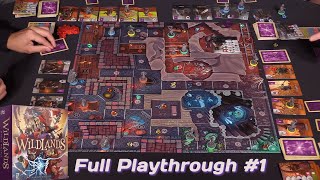
Wildlands has earned genuine enthusiasm from reviewers and players who appreciate its blend of elegant simplicity and tactical depth. Designed by Martin Wallace and published by Osprey Games, this card-driven miniatures game delivers more strategic substance than its streamlined ruleset suggests. Actualol praised it as a surprisingly simple miniatures game that offers far more tactical depth than expected, while Board Game Replay highlighted how rewarding the card play becomes once the table settles into its rhythm. Players consistently note how immediately teachable it is, how the asymmetric faction decks keep repeated plays fresh, and how the interrupt system creates dynamic, unpredictable turns where timing and card economy become paramount.
Core Mechanics That Define Wildlands
Card-Driven Tactical Depth
At its heart, Wildlands runs on a deceptively elegant card system. Each of the four factions controls five unique characters through a specialized deck, and every card can be played in multiple ways: as a movement action, an attack, a defense, or to activate different characters. This multi-use design creates constant tension, since you must decide whether to spend a heavy attack card now to seize a crystal shard or save it to protect a wounded character from an opponent's strike. Players describe the resource management as surprisingly demanding, since you must learn your faction's card layout deeply, understanding which characters can be activated and how their symbols interact with the cards in hand. Martin Wallace's design makes this card economy drive nearly every decision.
Asymmetric Factions and Hidden Placement
Each faction plays fundamentally differently, with unique character abilities and card distributions reflecting its fighting style. One faction might excel at ranged attacks while another relies on melee prowess or defensive tactics. Before the game begins, players secretly place their five characters on the board, a high-stakes decision that shapes the entire early game. Each turn a player must reveal a new character, keeping opponents guessing about which warriors lie in wait. This hidden information layer, combined with asymmetric powers, means no two games feel identical, and reviewers emphasize that learning the matchup between factions becomes part of mastering Wildlands.
The Wildlands Experience
Interrupt-Driven Combat and Tension
The interrupt system stands out as the mechanical soul of Wildlands. Rather than purely turn-based play, any player can interrupt another's actions during their turn, spending a card to take one unopposed action. This opens the game to stolen kills, surprise defenses, and mid-turn pivots that shatter even the best-laid plans. A player can soften up an opponent with card draws and movement, only to have a third player swoop in and claim the crystal shard or finish off a weakened character. This creates constant engagement, since players cannot zone out between turns when an interrupt can dramatically shift the board. Reviewers note that while the interrupt sequence sounds complex on paper, it flows naturally once players grasp the core rule.
Variable Player Counts and Board Sides
Wildlands scales across two, three, and four players, with each count reshaping the feel. Four players deliver the tightest competition, where the board fills quickly and every shard becomes fiercely contested. At three players the game slows slightly but maintains intensity, and at two players crystals become the overwhelming focus while downtime vanishes as turns cycle rapidly. The game offers two board configurations: the Dungeon side with narrow hallways creating chokepoints, and the Ruins side with more open terrain encouraging tactical positioning. These layouts fundamentally change how players approach placement, movement, and engagement distances, keeping the experience fresh across sessions.
What Makes Wildlands Stand Out
Accessibility Hiding Strategic Richness
Martin Wallace crafted Wildlands to welcome newcomers while rewarding mastery. The base ruleset demands only a few minutes to explain: take a card action, optionally take a special action, potentially interrupt, then draw cards. Yet beneath this accessible framework lies surprising depth. The interplay of card combinations, faction matchups, and interrupt timing creates scenarios where even experienced players must reassess their positions. Newcomers sometimes find the first game overwhelming as they learn where their characters spawn and how their cards function, but by the second game players start executing clever plays, holding cards in reserve to defend against predicted attacks or timing interrupts to claim kills off someone else's work.
Replayability Through Asymmetry and Expansion Content
The core game's four factions alone provide substantial replayability, since learning to play each faction against different matchups takes time. The Unquiet Dead expansion elevates this further by introducing a fifth faction with an entirely different card structure, namely only two symbols per character rather than character-specific icons, which makes the undead feel alien and unpredictable. An optional zombie variant adds another layer, since a dead character can be replaced with a zombie token that any player controls using the dead character's cards. This serves as a catch-up mechanism for fallen players while offering clever tactical options, and reviewers report that the expansion content integrates seamlessly without overwhelming the core experience.
Potential Drawbacks
Analysis Paralysis and Hand Organization
Wildlands can inadvertently create decision bottlenecks, especially as players gain competency. Each card's multiple uses mean that choosing how to spend a single card against the backdrop of all possible character activations, interrupt windows, and opponent responses demands thorough analysis. Experienced players report weighing whether using a double-attack card for movement instead of its intended assault is worth the opportunity cost. Organizing cards in hand compounds this, since grouping by character symbol helps one strategy but obscures other options. New players usually shake off this friction after the first game, but seasoned players can slow turns by overthinking, particularly when the board remains fluid and many interrupt windows stay open.
Group Engagement and Skill Variance
At higher player counts, downtime between your turns increases, and the board can shift drastically during those waits. Players who enjoy rapid decision-making may grow restless in four-player games where they face a turn, several opponent turns, multiple interrupts, and then their turn again. Wildlands plays significantly faster at two or three players, which some prefer. Additionally, a player with many games of experience can outclass an opponent on their second game, since the asymmetric information and faction mastery advantage is steep. Reviewers suggest that table awareness and deliberate pacing help, since slowing down and clearly communicating the board state before passing the turn makes Wildlands more welcoming to varied skill levels.
If You Enjoy Wildlands
Players drawn to Wildlands typically appreciate games that reward tactical thinking within a tight ruleset. Try Carcassonne for tile-laying with area control, Isle of Skye for asymmetric scoring and tight decisions, Root for deep asymmetric factions and meaningful player differences, or Glen More II: Chronicles for worker placement with variable powers and elegant efficiency. Each shares Wildlands' philosophy of creating meaningful choices within minutes, though none quite capture the interrupt-driven combat and miniature-based physicality that define Wildlands' identity.
What Reviewers Are Saying
"Wildlands is a surprisingly simple miniatures game designed by Martin Wallace. You control a faction of five characters and your goal is to win five points before anyone else, either by collecting crystal shards or by killing other players' characters. It gives the game a lot more tactical depth than you'd expect from a light miniatures game."
— Actualol
"The production of the game is stunning, beautiful artwork and miniatures painted with a wash that really helps show their detail. But what's just as impressive is how simple and immediate the rules are. If you've always been put off miniatures games because of their overly complex and fiddly rules, this could be the breath of fresh air you're looking for."
— Actualol
"This game really works well at the table if everybody has a little turn patience. This is a tactical game at its heart, so you really want to roll with the punches from the proverbial hand that you have, not the hand that you want."
— Board Game Replay