















































Windmill Valley Deep Dive
What the Community Thinks About Windmill Valley
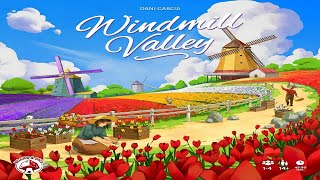
Windmill Valley, published by Board&Dice in 2024 and designed by Danny Garcia, has earned a warm reception as one of the more satisfying medium-weight Euro games of its release year. Reviewers praise it for delivering genuine engine-building pleasure wrapped in an unusually vibrant, inviting theme. The Dutch tulip-farming setting, rotating windmill wheels, and colorful tulip patches struck many as a refreshing departure from the commodity-trading aesthetics that dominate the Euro category.
The overall reception positions it as an excellent entry point into integrated-systems Euro games, though experienced players expecting Garcia's heaviest work should calibrate expectations. Allies or Enemies described it as "slightly lighter than you might expect," while The Broken Meeple called it "one of the smoothest titles I've seen from Board and Dice in recent years." The Board Gaming Doctor placed it as more accessible than Barcelona, Garcia's prior heavy hitter, while still offering real strategic depth. Multiple reviewers noted that Board&Dice's usual muted palette gave way here to something genuinely bright and pretty, making the game a visual standout on the table.
Core Mechanics That Define Windmill Valley
The Rotating Windmill Wheel
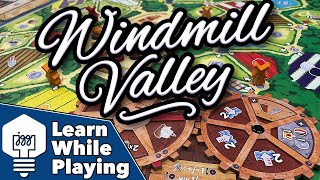
Every turn revolves around the personal windmill board and its two interlocked gear wheels. The floodgate track, adjusted at the start of each turn, determines water speed and therefore how far your wheel advances. The actions visible at the top of the wheel are the only two you may choose between. You cannot simply pick what you want. You must work backward from the actions you need to the floodgate setting that will rotate the wheel into position, then potentially spend tool tokens to fine-tune the spin.
The Board Gaming Doctor compared the Rondel decision-making to Praga Caput Regni and the wheel-customization pleasure to Dice Forge: "it was fun to try to match up a certain pairing of different Rondel pieces to make them align so that you can take a super action once your Rondel circles back." Upgrade tiles, sorted into common, uncommon, and unique tiers, gradually replace default wheel slots with more powerful actions. Unique tiles with a plus symbol let both actions in a section fire simultaneously, and Meeple University identified these as the game's most powerful late-game accelerants.
The Tulip Patch and Scoring Puzzle
Tulip planting provides the tableau-building dimension, operating as a spatial puzzle with meaningful end-game consequences. Completing monochromatic rows earns substantial bonuses; completing multicolored columns (no repeats) earns more. Duplicate colors in a column inflict point penalties, so careless planting can undo careful engine work. The Board Gaming Doctor noted how covering certain patch spaces triggers immediate bonuses that chain into cascading resource bursts, a signature pattern in Garcia's designs.
The connection between windmill placement and tulip scoring is what gives the game structural coherence. Removing windmills from your personal farm board unlocks per-tulip scoring multipliers tied to the colors of windmills placed on the main board. The two central actions of the game reinforce each other rather than pulling in separate directions.
The Windmill Valley Experience
A Cozy Engine That Builds to Something
The game opens with narrow options, but as wheel upgrades accumulate and farm enhancement cards slot into the helper positions above your board, turns visibly accelerate. Allies or Enemies pointed to "sweet sweet combos" as the core source of replayability and the feeling that each game's engine can be assembled differently. The physical design amplifies this satisfaction: the windmill boards rotate smoothly, upgrade tiles slot into gears satisfyingly, and the player boards' dedicated slots for helper and contract cards keep a growing tableau legible. Allies or Enemies called the slotting system "a terrific touch" and hoped it would become an industry standard.
Fast Turns and an Inviting Atmosphere
Individual turns resolve quickly. The Broken Meeple estimated the game should stay well under two hours even at four players, and Allies or Enemies confirmed that "Windmill Valley moves fast, isn't too punishing, and you can get your Euro fix without needing a nap afterwards." The Dutch countryside theme, floodgates, windmills, tulip rows, creates a relaxed and cozy atmosphere relatively uncommon in the medium-weight Euro category. Our Family Plays Games had the game in regular rotation, with one player closing a 50-point gap over successive plays as strategy clicked, which speaks to the game's real depth beneath its approachable surface.
What Makes Windmill Valley Stand Out
Asymmetric Wheels and the Floodgate as Shared Resource
Each player's left wheel has a unique action sequence, creating divergent early strategies without imposing heavy asymmetric setups. Meeple University identified this as a key variable across plays: "the combination of actions will differ next time as the size of the wheels are different so plan for that too." The floodgate is adjusted by the active player but affects water speed for everyone, creating light shared-resource tension. Pushing the floodgate high gives you more wheel movement and victory points but raises the water level, eventually forcing a reset. The Board Gaming Doctor appreciated how this creates "an opportunity for some interaction to potentially advance your own agenda forward at potentially the expense of someone else."
Multiple Viable Paths and the Calendar Race
Windmill Valley avoids a dominant strategy. Allies or Enemies found distinct viable corridors: heavy wheel upgrading, market dominance, windmill network building, and foreign trade focus. With roughly 15 to 20 turns available, meaningful prioritization is required every game. The calendar track adds a race element missing from Euro designs with static round counts. The calendar advances whenever a player's red spoke passes the red arrow, and it moves faster when players push more wheel steps per turn. The Board Gaming Doctor compared this non-static ending to Tapestry and Everdell: someone can sprint through the calendar and end the game before opponents finish their setups, creating genuine tempo tension.
Potential Drawbacks
Lighter Than Some Garcia Fans Expect
The most consistent criticism is that Windmill Valley sits lighter than some of Garcia's other work. The Board Gaming Doctor noted BoardGameGeek commenters repeatedly described it as "too breezy" and lacking the "tough and meaty decisions" they wanted, particularly those who came in expecting the heft of Barcelona. He shared partial agreement, acknowledging he would prefer games with more upfront interaction at comparable weight, citing Glass Road as a comparison. Allies or Enemies framed it as an audience-matching issue: "for those looking for something a bit more like Board and Dice's recent Tillum or Danny Garcia's other B&D game Barcelona, just know that the complexity is dialed back a smidge here."
Player Interaction and Count Considerations
Interaction is primarily indirect: the shared floodgate, contested market workers, and competition for wheel upgrade tiles. Allies or Enemies observed that at two players "we mostly built windmills on our own sides of the board and could manipulate the flower market as we wanted," and that "three or four players will be the best fit" to get the most out of the interaction. The solo mode functions through a card-driven opponent, but the game's best qualities clearly stretch at higher counts. Players who primarily play at two should be aware that some systems feel underloaded at that configuration.
If You Enjoy Windmill Valley
If the rotating action wheel and upgrade customization appealed, Dice Forge offers a lighter version of the dice-customization pleasure in a shorter package. Players wanting heavier Rondel decisions may find Praga Caput Regni rewarding, though it carries more rules overhead. Barcelona, Garcia's prior Board&Dice collaboration, delivers significantly more complexity for those who found Windmill Valley satisfying but wanted more weight. If the tulip patch puzzle and cozy seasonal arc appealed, Everdell offers a comparable tableau-building warmth. Tapestry shares the non-static end-game trigger and the tension of racing a calendar. Glass Road occupies a similar weight class with more immediate player interaction and sharper resource conversion decisions.
What Reviewers Are Saying
"Windmill Valley is a bit of a change of pace for Board and Dice, partly that's because of its bright theme but also because it's slightly lighter than you might expect. The theme is likely to be a big selling point for a lot of folks and it's nice to get something that is off the well-beaten tracks of goods trading and cute animals. A little walk through a Dutch tulip field is refreshing."
— Allies or Enemies
"This one is one of the smoothest titles I've seen from Board and Dice in recent years. 45 to 90 minutes also seems relatively accurate. The rules are fairly easy to comprehend, they're not too fiddly. They didn't feel like some of their older stuff where it's like half a dozen rules or steps to do this one thing."
— The Broken Meeple
"I really enjoyed my play of Windmill Valley and I would play it again, but it didn't leave me thinking about the decisions and the nooks and crannies that I could potentially explore in this game. I do appreciate that there are a lot of different ways to accumulate points and I think this game would really shine at a higher player count."
— The Board Gaming Doctor