





Winner's Circle Deep Dive
What the Community Thinks About Winner's Circle
Reviewers treat Winner's Circle as a streamlined version of Reiner Knizia's horse racing design Royal Turf. The praise is consistent: the rules are quick to learn, the table stays tense, and each round offers small decisions that reward careful reading of other players. The criticism centers on three areas. Playtime can drag by the end, the game struggles at higher player counts, and the components and artwork in some copies disappoint. Opinions on player count split sharply, so the verdict depends a great deal on the group that will play it.
Core Mechanics That Define Winner's Circle
Chip Bidding and the Zero Chip Bluff
Each player places betting chips on the horses, and the blind variant has everyone lay their chips face down so nobody knows what the rest of the table has wagered. Reviewers single out the zero value chip as the game's bluffing tool. A player can place a zero chip on a horse to make rivals believe the horse is worthless when it is not, and that misdirection can send other players elsewhere. BoardGameBollocks describes this as an element of bluffing that sits alongside the randomness of the die, which gives the placement phase real psychological weight.
Shared Horses and Moving Rivals' Runners
On a turn, the active player rolls the die, reads the symbol, and moves a horse that carries that symbol. The horses are shared, so a player can move any horse with the matching symbol, including horses that opponents have bet on. Reviewers describe this as a dual decision: advancing your own bet might help a rival, while nudging a rival's horse might keep a dangerous runner from winning. A horse can move only once per round, and reviewers note that moved horses are shifted partly off the board so the group can see which ones have already acted. Tom Vasel of The Dice Tower sums up the feel as trying to control which horse reaches the end first.
The Winner's Circle Experience
Three Races and a Doubled Finale
The game runs three races, and payouts are calculated after each one based on how many bets were placed on the winning horse. Bets are doubled in the final race, which gives trailing players a real chance to catch up. BoardGameBollocks also explains that the horses begin staggered, so a horse at the back must cover more ground to finish. That head start makes the back runners less popular with bettors, and the reviewer says those horses end up worth more. The race structure is what keeps reviewers talking about tension as the final race approaches.
A Table That Gets Invested
Reviewers describe Winner's Circle as a social betting game that thrives on shared attention. No Pun Included says the game brings the table to life and gets everyone invested, and the same video notes that a poor bet can sting for the rest of the session. The intuitive rules mean the game needs little explanation before play begins, so the focus stays on watching horses move and reacting to each race as it unfolds.
What Makes Winner's Circle Stand Out
Blind Betting and Hidden Strategy
Reviewers favor the blind betting variant because it turns the table into a reading exercise. With chips hidden, players must judge behavior rather than simply reading the board. BoardGameBollocks points to an optional turf area from the original printing as another way to shake up the strategy when the standard game starts to feel repetitive. These options let a group change the texture of play without altering the core system, which reviewers see as a strength of the design.
Simple Rules With a Real Racing Feel
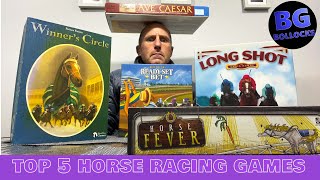
No Pun Included argues that the game is intuitive and that players do not need a degree from horse university to enjoy it. That accessibility matters because the decisions remain meaningful despite the light rules. Tom Vasel calls the game an excellent title where players maneuver horses to shape the finish, and BoardGameBollocks places it among the top horse racing games, describing it as a perfect blend of skill and luck.
Potential Drawbacks
Length and Player Count
BoardGameBollocks says the game runs one race too long, and that families can grow restless near the end of the final race. Player count is the most debated point. BoardGameBollocks argues that five or six players crowd the betting, since horses collect several chips each and the bluffing loses its punch. No Pun Included takes a different view and says the game only really shines at five or six. Readers should weigh these opinions against the group size they usually host.
Components and Artwork
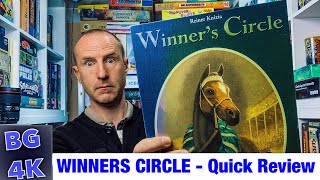
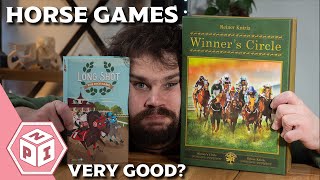
Reviewers are blunt about the visual side. BoardGameBollocks says the artwork is weak, that the central tent looks more like a pyramid, and that component quality in their copy was rubbish, although the game has since been reprinted. No Pun Included notes that copies are not as easy to find as buyers would like, and BoardGameBollocks says the game has been out of print for years. An impressions video covers a pre-painted Korean edition that sells for about 40 euros, which suggests newer editions can look quite different from older copies.
Engagement Depends on the Table
Watch It Played describes a session in which players went through the motions without caring about the outcome, and the game felt flat as a result. The lesson is that Winner's Circle depends on everyone wanting to see each race finish. Groups that treat the betting casually may find the game drags, while groups that commit to their bets tend to enjoy the back and forth.
If You Enjoy Winner's Circle
Players who like horse racing games with hidden information and a sense of control should look at Long Shot. BoardGameBollocks compares the two directly and says they do different things, so fans of one may want the other for a different style of racing. Royal Turf is the earlier name for the same design, so anyone who finds an older copy of that title is looking at the same game under its original branding.
What Reviewers Are Saying
"This is an excellent game where you're trying to the bet on these horses and you're maneuvering them and trying to almost control which horse gets to the end first."
— The Dice Tower
"it's just intuitive and you don't need a degree from horse university to play"
— No Pun Included
"they played the game but they weren't investing in the game the whole game felt absolutely flat"
— Watch It Played