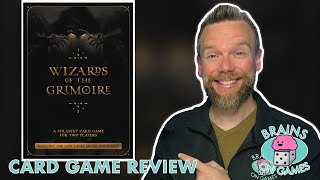







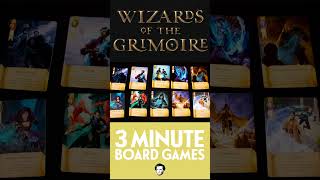




Years of tutelage under the late Archmage Andor have culminated in this moment; his two protégés must now become rivals and battle to determine who will become the next Keeper of the Grimoire. As protection from your rival, you have only your magical gifts, your mastery of the Grimoire, and a select few spell pages ripped from its binding. Pick carefully; the spells you choose will allow you to counter your opponent, twist the fabric of time, and deal devastating damage, but only if you’re able to find synergies between spells and manage your mana reserves carefully.
In this two player strategy card game, you must fulfill your destiny and become the Keeper of the Grimoire. Defeat your opponent by drafting new spells from the magical Grimoire, casting them, managing your cooldowns, and dealing massive damage.
Each turn, draft one new spell to be added to your spell repertoire. But be warned! Your opponent has access to the same spells as you do, so choose the spells you want before your opponent does! Continue updating your spell repertoire throughout the game to optimize your deck and counter your opponent.
Cast spells. Deal devastating damage or confuse and trip up your opponent. More expensive spells will have a larger impact on the game, but be careful, they’ll cost you more mana and will have a longer cool down. You can cast as many spells as you like on your turn so long as you have enough mana and the spells aren’t in cooldown. Find spell combinations that work together and time them correctly, to increase your damage or counter your opponent.
Be the first wizard apprentice to eliminate your opponent's life points to become Keeper of the Grimoire.
- Strong two-player dueling feel with deep, deployable spell combos.
- High component quality and art; the card design is superb.
- Expands well with future packs and is accessible to players who like Magic-like games.
- Endgame balance can feel a bit narrow; some combos may dominate with enough play.
- Expansion potential may complicate the core experience if not careful.
- grimoire-building, spell-casting duels
- Two-player wizard duel with a shared pool of spells
- head-to-head duel with evolving spell choices and combos
- Magic: The Gathering
- Hero Realms
- KeyForge
Mechanics (from transcript analysis)
- card drafting — Players acquire spells from a common pool and add them to their grimoire, shaping a personal deck that cycles through cooldowns.
- Card pool drafting / grimoire-building — Players acquire spells from a common pool and add them to their grimoire, shaping a personal deck that cycles through cooldowns.
- Limited deck with no discard — Spells live in front of you; there is no traditional discard pile—cards are managed via cooldowns and availability.
- Mana management and cooldowns — Spells cost Mana; after use, they go on cooldown and require mana timing to reactivate.
- Ongoing vs instant effects — Some spells are instant, others provide ongoing effects; there is strategic timing to maximize synergy.
- Spell costs and activation cadence — Spells vary in cost (1-5 Mana) and number of mana cards taken to activate; higher-cost spells are more powerful but slower to recharge.
Video topics + discussion points
Quotes (from this video)
- this is a mumble game
- top shelf billing was a coined a while ago and this is going to be called Mumble games
- I would skip it
- I really really like Earth
- Earth I'm going to keep playing it for a while
- it's an own it for me
- this is a play it for me
- the quality of cards is among the best I've ever seen in any game
- the artwork is great
References (from this video)
- beautiful components and art
- easy to learn and teach
- deep spell interaction and mana-driven combos
- high replayability from 70 unique spells
- clear health tracking and accessible packaging
- dense card text and readability issues
- text-heavy spells can hinder onboarding for new players
- tableau-drafting may feel overwhelming for casual players
- no healing and limited counterplay in core design
- balance concerns around early-game spell draw and power disparity
- spellcasting, mana management
- dueling wizards casting spells
- mechanics-driven
- Radlands
- Splendor
- Imperium
Mechanics (from transcript analysis)
- Combat: Damage Based — You reduce your opponent's health from 60 to 0; basic attacks deal damage equal to their cost if you choose to attack when out of spells.
- Cooldowns — After using spells, you discard cards from each spell as a cooldown, reducing their availability until they refresh.
- End condition and basic attack — You reduce your opponent's health from 60 to 0; basic attacks deal damage equal to their cost if you choose to attack when out of spells.
- hand management — Players draft spells from a pool, manage which spells to play, and balance cooldowns to maximize damage output.
- hand management and planning — Players draft spells from a pool, manage which spells to play, and balance cooldowns to maximize damage output.
- Mana cards — Each turn you draw three Mana cards from a Mana deck and spend them to activate spells.
- Ongoing and delayed effects — There are ongoing (passive) effects and delayed spells that interact with Mana and card draw.
- Spell activation and mana cost — Spells are activated by spending the appropriate number of Mana cards from your hand.
- Tableau drafting and deck density — Draft from a pool of 70 unique spells; each game uses a subset to create variety and strategic options.
Video topics + discussion points
Quotes (from this video)
- Wizards of the Grimoire is just easy to learn with a great rule book that is very to the point and with excellent clarifications at the back
- Wizards is a game that's really easy to get into and to teach
- it's gorgeous
- there's no duplicates of any of the 70 spell cards
- a 7 out of 10
- visual delight
References (from this video)
- Well-regarded by the community; discussed with enthusiasm
Mechanics (from transcript analysis)
Video topics + discussion points
Quotes (from this video)
- It's literally a popularity contest.
- Code Names Duet is also just a lot of fun.
- Santorini has the legs to make it to the final four.
- Zenith narrowly edged it out 51% to 49% of the vote on this one.
- Watergate is my favorite two-player game.
- I'm 6 and 0 on Cena so far.
References (from this video)
- Beautiful artwork
- Tight, easy-to-teach engine-building with strong interactions
- High portability makes it easy to bring anywhere
- Cards can stick together and be hard to shuffle
- Expansion shifting Sands may add complexity for newcomers
- Wizard duels and spell-crafting engine-building
- Two-player battling card game with spell-focused duels
- Array
- Summoner Wars
Mechanics (from transcript analysis)
- cooperative actions — Six spells can be active at once, leading to synergistic interactions.
- Deck building — Two decks (Mana and Spells) power the player's strategy.
- deck-building — Two decks (Mana and Spells) power the player's strategy.
- engine building — Construct an engine of spells from a small card pool.
- engine-building — Construct an engine of spells from a small card pool.
- Spell combos — Six spells can be active at once, leading to synergistic interactions.
Video topics + discussion points
Quotes (from this video)
- These are games I wanted to show my friends I could play and win with after we tested them together.
- Sky Team is such a gorgeous game with that limited communication that really adds tension.
- Senjutsu is a beautiful duel with a clever simultaneous combat mechanic.
- Summoner Wars is a brilliant game with deep factions and a great digital implementation.
- Wizards of the Grimoire is easy to teach and highly portable, which I love.
References (from this video)
- Deep spell drafting and engine-building in a tight two-player duel
- High variability with base game plus expansion spells
- Standalone expansion can be used without the base game
- Companion app for health tracking is excellent
- Premium feel with linen-finish cards
- Expansion prototype art is largely placeholder on many cards
- Complexity can be intimidating for new players due to multiple spell types and mana costs
- Wizard duels, spell drafting and control of a magical engine
- A magical duel between two prodigies within the Eternal Book of Spells and a secretive order tasked with guarding it.
- Fantasy, duel-centric, mythic competition between rival keepers of the grimoire
Mechanics (from transcript analysis)
- Cooldown — Spells require cooldown to clear mana from them, lengthening the time before recasting higher-cost spells.
- Destroy a spell keyword — New keyword allowing a player to destroy a spell (own, opponent's, or from the pool) to disrupt strategies.
- Drafting from a middle pool — Players pick spells from a central row of 10 options, building their personal engine across the match.
- Health and victory condition — Each player starts at 60 health; the goal is to reduce the opponent to zero first.
- Mana resource management — Mana cards drawn each turn are spent to cast spells; mana costs determine which spells are playable.
- Once-Per-Game Abilities — Activation types govern when and how spells resolve; expansion adds relics with one-time use.
- Relic spells (one-time use) — Relics are one-use spells that modify engine flow and are discarded after expenditure.
- Resource management — Mana cards drawn each turn are spent to cast spells; mana costs determine which spells are playable.
- Spell activations — Activation types govern when and how spells resolve; expansion adds relics with one-time use.
- Spell casting and effects — Spells come in three types (damage, regeneration, utility) with three activation styles (instant, delayed, ongoing).
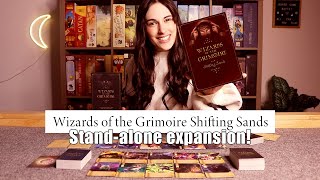
- Standalone expansion (Shifting Sands) — Expansion adds new spell cards, a new mana deck with different art, and a new keyword system.
Video topics + discussion points
Quotes (from this video)
- it is a two-player game so it's a head-to-head two-player game
- This is a Standalone expansion.
- you are drafting spells from the middle pool
- the base game comes with 70 spells
- there is a fantastic Wizards of the Grimoire companion app
- standalone expansion so you can just play with the expansion spells
References (from this video)
- Excellent two-player head-to-head experience
- Variety of spells and strategic depth
- Seated to a two-player format; requires a dedicated opponent
- arcane spell dueling and spellcraft
- wizard duels and spell casting
- competitive, spell-focused dueling
Mechanics (from transcript analysis)
- Combat: Deck/Hand — head-to-head competition with direct interaction
- Cooldown system — the more powerful a spell, the longer its cooldown after use
- hand management — spells require mana and card costs shape the pace of play
- Mana management — spells require mana and card costs shape the pace of play
- Two-player duel — head-to-head competition with direct interaction
Video topics + discussion points
Quotes (from this video)
- Heaven and Ale is a fantastic game and I would love to see a reprinting of this one.
- Books of Time is fantastic.
- Animal Kingdoms is fantastic.
- Wizards of the Grimoire is fantastic.
- The Magnificent is fantastic.
- Chakra is such a wonderful game.
References (from this video)
- Fast, tight, and highly interactive two-player duel with deep card synergies
- Clean, intuitive turn structure that minimizes rules overhead while maximizing strategic choice
- High production value: thick cards, a nice box, and clear artwork/wording
- Near-limitless potential for combos and counterplay from a relatively compact spell pool
- Tense, engine-building puzzle that remains engaging across a range of play styles
- Front-loaded complexity: many spell cards carry dense text requiring careful reading
- Tableau of ten cards can feel daunting to new or casual players; could benefit from a recommended house rule to shorten
- No health regeneration or comeback mechanics, so it can feel like a race to deplete health with limited recovery options
- Teaching curve and card-text density may slow early plays; newcomers may need a rules reference and time to absorb interactions
- Spellcraft, mana management, and tactical tableau optimization
- Fantasy duel between two wizards in a magical arena
- Competitive puzzle with counterplay and engine interactions
- Res Arcana
- Rose Arcana
- Yu-Gi-Oh
- Magic: The Gathering
Mechanics (from transcript analysis)
- Basic attack as cash-out — After casting spells, players may cash in mana cards at face value to deal additional damage to their opponent.
- Cooldown system — Active spells cool down after use; they can only be reused once they are uncovered or when specific effects allow reactivation, creating timing and sequencing decisions.
- Counterplay and disruption — Many cards interact with or disrupt the opponent's engine, forcing improvisation and adaptation on the fly.
- Direct and ongoing spell effects — Spells can deal direct damage, trigger when mana cools down, or provide ongoing effects that influence the game over multiple turns.
- Drafting from spell deck — Players draft a subset of spell cards from a display to build a personal engine; the top deck structure and replenishment govern what can be taken on future turns.
- Engine balance and endgame pressure — With finite health and a finite spell pool, players optimize the order of casting to maximize damage while preserving options for the late game.
- Engine Building: Efficiency — With finite health and a finite spell pool, players optimize the order of casting to maximize damage while preserving options for the late game.
- Mana resource management — Mana cards power the spells. Values range from 1 to 4 and mana must be allocated across spells to maximize damage while respecting cooldowns.
- Resource management — Mana cards power the spells. Values range from 1 to 4 and mana must be allocated across spells to maximize damage while respecting cooldowns.
- Resource replenishment strategy — Some spells allow drawing or replenishing mana, extending the chain of actions and enabling longer sequences at the risk of increased cooldown complexity.
- Score/Winner condition — The game ends when a player's health reaches zero; health acts as the primary pacing mechanism and victory condition.
- Synergy and engine interaction — Card text emphasizes synergies; players seek combinations that increase mana, move resources between spells, and trigger cascading effects.
- tableau building — Each player manages a tableau with a maximum of six active spell cards; slots replenish from the display, and cards on cooldown cannot be replaced until they are ready.
- Tableau of up to six Active Spells — Each player manages a tableau with a maximum of six active spell cards; slots replenish from the display, and cards on cooldown cannot be replaced until they are ready.
Video topics + discussion points
Quotes (from this video)
- this is without a doubt the best game of a genre that I've ever played
- the sheer potential for combos and synergies within this small deck of cards to me is mind-blowing
- the production here is of a very high quality
- it plays in a relatively succinct amount of time and incredibly tense as well
- the best player will win here; it's all about optimizing the six-card engine and counterplay
References (from this video)
- tight two-player puzzle with deep combos
- strong thematic flavor
- spell drafting and personal tableau optimization
- fantasy magical duels
- twentieth-century fantasy duel vibe with strategic depth
- Radlands
- Lord of the Rings trick-taking games
Mechanics (from transcript analysis)
- set-collection/combos — collect and chain spell effects for combos
- two-player drafting — draft spells to build a personal spellbook tableau
Video topics + discussion points
Quotes (from this video)
- It's 80 through 71. We're counting down the list.
- This is a delightful game that is accessible, easy to teach, and incredibly replayable.
- Onward is the new version of Sky Tier. It's a MOA-style game with a volcano eruption climax.
- Canvas is a delightful game. It’s accessible, a great gateway, and the art is stunning.
References (from this video)
- Stunning production; unique spell cards
- Great travel-friendly duel game
- Limited defensive options; can be vulnerable to aggression
- Potential rule clarity gaps
- Spellcasting duel with mana management
- Two archmages duel in a magical grimoire battlefield
- Compact, fast-paced duel with spell cards and cooldowns
Mechanics (from transcript analysis)
- Card-driven combat — Cast spells using mana; resolve attacks
- Cooldown-based abilities — Spells have cooldowns; basic attacks available
- Mana management — Mana comes in levels and drives spell costs
- Once-Per-Game Abilities — Spells have cooldowns; basic attacks available
Video topics + discussion points
Quotes (from this video)
- this is probably my favorite real-time game this has been my favorite real-time game i've ever played
- it's chaos and it is so much
- the production is incredible, the box is literally a grimoire
- this game looks amazing; i just want to admire the art
- it's so smooth it's so cut throat with sandra being involved
- i love this game i love everything about it
- obsessed literally love it so much
- star wars villainous is the new installment of villainous
References (from this video)
- Mechanical feel; less confrontation than typical head-to-head games
- Solid engine-building-like depth for a duel
- Not as thematic as some fantasy skews
- May feel mechanical to some players
- Duelling, depleting opponent's health
- Head-to-head fantasy duel with a card tableau
- Mechanically focused rather than narrative-driven
Mechanics (from transcript analysis)
- Health depletion duel — Compete by reducing opponent's health total through card effects
- tableau building — Construct a personal tableau to optimize attacks and defenses
- tableau-building — Construct a personal tableau to optimize attacks and defenses
Video topics + discussion points
Quotes (from this video)
- this is one of many games i'm talking about here that i did purchase at the uk games expo
- i think i can give it a 7 out of 10
- it's a very neat game
- it's multiplayer solitaire with a race aspect
- one of the all-time classics
- this is a very well-rounded game
References (from this video)
- tight two-player experience
- strong art/implementation
- limited to two players
- Fantasy, dueling head-to-head
- Wizards duel with magic and spellcraft
- Abstract with thematic flavor
- Tapestry
- Two-player dueling games
Mechanics (from transcript analysis)
- two-player abstract duels — focused competitive interaction for two players
Video topics + discussion points
Quotes (from this video)
- It's been 6 years at this point that I have been doing YouTube videos.
- I still like Welcome to the Moon. I still find it to be the best iteration of Welcome to giving you fresh versions of the same system so it constantly doesn't feel like you're just repeating the same roll.
- Having too many games just for the sake of owning them is not my personal jam.
- Wish me luck.
- This is a video series on how I do if you want to check that out.
- I thought it was very interesting.
References (from this video)
- engaging engine in a two-player duel
- strong synergy between cards and actions
- conceptually approachable for a Euro-style player
- dueling focus may not appeal to everyone
- learning curve on optimal mana sequencing
- mana, spell synergy, building engine within a duel
- fantasy dueling with magical tableau
- thematic yet abstract
- Rez Arcana
Mechanics (from transcript analysis)
- duel-driven tableau building — players assemble a personal engine to cast spells and gain effects
- hand management — draws and mana generation limit deeper strategy; timing matters
- mana hand management — draws and mana generation limit deeper strategy; timing matters
Video topics + discussion points
Quotes (from this video)
- I absolutely adore this one
- I think it is an absolute blast
- this game is fantastic
- an evergreen to me
- it's stripped back and still a blast
References (from this video)
- well balanced, polished design
- strong two-player experience
- jeweling genre isn't for everyone
- jeweling/dueling with a fantasy spellcaster motif
- forthcoming expansion adds Sands of Time to a self-contained dueling game
- meticulous, balanced, strategic
Mechanics (from transcript analysis)
- deck-building / jewel-style drafting — self-contained jewel-based dueling with new expansion cards
- expansion integration — new cards and mats alter balance and depth
- Two-player optimization — noted as among the best two-player experiences
Video topics + discussion points
Quotes (from this video)
- I think this game is really cool
- this is a very simple kind of family weight puzzly game
- it's a very fantastic game
- the rules are absolutely horrendous
- I really love this game and I've played it a few times now and I think the balance is fine
- Luke from the Broken Meeple thinks this game is really imbalanced
- the row system where the positioning of your characters is important
- one of the best two-player games I've played in some time
References (from this video)
Mechanics (from transcript analysis)
Video topics + discussion points
Quotes (from this video)
- it's a beautiful kind of story
- you need to play with the right group
- it's not cute
- it's like comfort food games
- the rules are simple
- oh my god it's so good
- it's a ramp... chaos
- this is an easy one to just flick some discs around
References (from this video)
- Surprisingly dynamic and tense for a two-player / duel-style Euro
- Strong tension with timing of cooldowns and spell recharges
- High replayability through flexible spell loadout
- Can be dense for non-Euro players
- Some players may prefer more player interaction
- Magic duels and card-driven skirmishes
- Fantasy wizard duel realm
- mythic fantasy
Mechanics (from transcript analysis)
- card drafting — draft from a communal pool to build a personal engine
- Dice-powered effects / resource cycling — mana/dice cards power up spells with cooldown mechanics
- Engine-building / card synergy — play and combine cards to exploit opponent's weaknesses
Video topics + discussion points
Quotes (from this video)
- Caesar's Empire is a great game to try, and it plays well at multiple player counts
- this game is so simple and smooth that I absolutely love it
- Rise has a lot of potential to stay evergreen
- Tell Atom... the core twist on this game is that when you are drafting these Dice and community resources...