/pic8589248.jpg)












































Zenith Deep Dive
What the Community Thinks About Zenith
Zenith, the two-player tug-of-war card game designed by Gregory Grad and Mateo Brousel and published by Play Punk, arrived in 2025 and quickly earned a devoted following among reviewers who specialize in head-to-head games. BoardGameCo's Alex went from mild interest after a single session to logging over 40 plays before even filming his review, ultimately awarding it a five out of five and placing it alongside Watergate and 7 Wonders Duel as one of his all-time favorite two-player titles. The Stonemaier Games channel ranked Zenith fourth among their best games of 2025, citing the elegance of the resetting tug-of-war tracks. Board With Steve called it one of the best games played that year, noting that every session concluded in around 30 to 45 minutes while still delivering meaningful decisions throughout.
The consensus centers on Zenith rewarding patience. Nearly every reviewer noted that the game does not land immediately: the first play can feel opaque, the iconography seems overwhelming, and outcomes can appear luck-driven. But reviewers who returned for more sessions consistently reported a click moment where the interplay between the card columns, the tech tracks, and the diplomacy area snapped into focus. All You Can Board's Dylan described the game as genuinely addicting, leaving games thinking "just one more" even when a session frustrated him. The Board Gaming Doctor appreciated the card variety and how each game can evolve differently depending on which abilities surface.
Where reviewers diverge is on competitive depth. Dylan raised pointed concerns about optimal strategies emerging on Board Game Arena, where experienced players converge on methods that can feel prescriptive. BoardGameCo acknowledged a small percentage of cards that do not feed naturally into common strategies. But even the most critical voices framed these as observations about mastery rather than fundamental flaws, and most concluded that Zenith belongs on the radar of anyone who enjoys tense, interactive dueling games.
Core Mechanics That Define Zenith
Tug of War Across Five Planetary Tracks
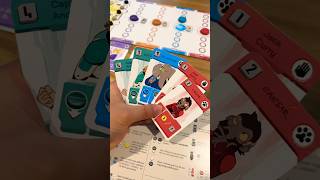
The central engine of Zenith is a five-track tug-of-war in which each track represents one of the solar system's planets: Jupiter, Mars, Terra, Venus, and Mercury. A single influence token sits on each track, starting at the center, and players push it toward their own side by playing cards of the matching color into their agent columns. When a token reaches a player's end of the track, they claim it, bank it on the diplomacy board, and a fresh token resets to the center for the next round. Winning requires collecting three tokens of the same planet color, four tokens of different colors, or any five tokens in total, giving players three distinct paths to victory that they can pursue or shift between mid-game.
What elevates this beyond a simple push-and-pull is the reset mechanic. Stonemaier Games highlighted how claiming a token and seeing it return to center immediately creates a new contest: the player who just scored has built up a column of discounted cards of that color, giving them an ongoing advantage in that lane, while the opponent is free to contest it from scratch. BoardGameCo described the layered tension that results: you can let an opponent accumulate tokens in one lane while you race up the technology track, but once they hold two or three tokens of one color, you are forced into defensive play for the rest of the game. Banter and Boards captured the stakes directly, noting that every decision in Zenith feels like it matters, and even using a turn just to gain currency feels costly when your opponent edges one step closer on a contested planet.
Tech Trees and the Cascade Reward System
The technology board, which is modular across six double-sided configurations, provides a separate ladder of progression running alongside the main tug-of-war. Each of the three tech strips corresponds to one card faction. Players advance by discarding a matching card and spending Zenithium, the game's secondary resource. The cost escalates at each step: one Zenithium for the first level, two for the second, up to five for the fifth, making the full climb to the top of a single track a significant investment totaling 15 Zenithium.
The payoff for that investment is the cascade mechanic. When you advance to a new level, you do not merely gain the ability on that tier: you resolve every benefit beneath it from the current level back down to the first. All You Can Board explained how this creates genuinely varied strategic paths: sometimes it is correct to diversify across all three tracks to unlock row bonuses that trigger when all three markers reach a given tier together; other times it is better to pour Zenithium into a single track quickly so the powerful upper-level abilities begin cascading on every subsequent activation. Meeple University's rules breakdown confirmed that the first player to reach the second tier of any track claims a one-time bonus token, adding a race dimension within the tech system itself. BoardGameCo praised these tracks as his favorite area of the game, calling Zenithium the resource he most wanted to accumulate.
The Zenith Experience
Tense and Interactive from the First Card
Reviewers across channels use the same word to describe Zenith: tight. Every card played either advances your position or responds to your opponent's. Because each card in an agent column reduces the credit cost of all future cards in that column by one, the act of building up a lane is simultaneously an offensive move and an economic investment. Banter and Boards noted that choosing to use a turn for pure resource generation creates an immediate feeling of loss, because while you are consolidating credits your opponent is one step closer on a contested track. BoardGameCo described the back-and-forth at its best, between two players who understand the cards and know how to force each other into defensive postures, as an incredible experience where each side is constantly reacting to the other's tempo.
That interactivity also has teeth. BoardGameCo pointed to card abilities that let you pull cards directly from your opponent's columns, denying them both the discount and the accumulated progress those cards represent. This particular strategy, hammering an opponent's column repeatedly, can feel punishing to the receiving player. Board With Steve highlighted how sudden card combinations can move a token three or four spaces in a single turn, catching an inattentive opponent off guard. The game rewards watching your opponent as closely as you manage your own hand.
Rewarding Mastery Through Repeated Play
Zenith is transparent about demanding multiple plays before it opens up. BoardGameCo was candid that his first game left him merely curious, and his third game is when enthusiasm set in. He drew explicit parallels to his experience with Watergate and 7 Wonders Duel, both of which also required time before they reached their current positions in his collection. Board With Steve echoed this, noting that the symbology on the cards looks daunting at first but becomes intuitive after a couple of sessions, at which point the range of possible combinations becomes a source of delight rather than confusion.
All You Can Board framed the mastery question most vividly: the iconography, once absorbed, rarely requires a rules reference mid-game. The variety of card abilities, all operating as multi-use tools playable as agents, technology fuel, or diplomacy actions, means that experienced players find new lines to explore in each game. The Board Gaming Doctor appreciated how the technology board's modularity ensures that the strategic landscape shifts even within a familiar system, as different board configurations emphasize different faction abilities. That variability, layered on top of the deck's natural randomness, is what keeps players returning. All You Can Board put it plainly: whatever his opinion swings to after any given session, he always wants to play again.
What Makes Zenith Stand Out
Three Victory Conditions That Create Constant Pivots
One of the design decisions reviewers return to most often is the three-way victory structure. Collecting three of the same planet color, four of different colors, or any five tokens are not three parallel paths to the same destination: they are diverging strategic commitments that interact with each other across the table. BoardGameCo described how holding two tokens of one color immediately changes the opponent's behavior, forcing them to contest that lane whether or not it suits their current plan. Stonemaier Games noted that this creates authentic tension around the reset mechanic: when a token resets to center after being claimed, both players immediately assess whether the lane is still worth contesting or whether resources are better spent elsewhere.
All You Can Board highlighted how skilled players can set up situations where they claim two planet tokens in a single turn, using stacked card abilities to reach the end of multiple tracks simultaneously. He described the first time he saw this executed as genuinely exciting, before acknowledging that it becomes a predictable element of high-level play. Even that observation underlines the design's depth: the game is rich enough that players discover optimal techniques organically through experience rather than by reading a strategy guide.
Multi-Use Cards That Give Every Turn Multiple Dimensions
Every card in Zenith's deck can be played in three distinct ways: as an agent in a colored column to push a planet token and trigger printed effects, discarded to advance on the matching technology track, or discarded to the diplomacy board for immediate resources and the leader token. The Board Gaming Doctor specifically praised this multi-use structure, comparing it to the card-driven variety he values in Castle Combo and Age of Civilization. The decision of how to use a given card is shaped by hand size, available credits and Zenithium, the current board state, and which victory condition feels most accessible.
The leader token adds another layer. Held by one player at a time, it increases redraw size from four cards to five (silver side) or six (gold side). Gaining and upgrading the token is itself one of the diplomacy options, and many card abilities interact with whether you currently hold it. All You Can Board observed that because the leader token flips back to silver whenever it changes hands, there is always a reason to fight for it even if your opponent just claimed it. Meeple University's rules breakdown confirmed that the token is a genuine engine multiplier: a larger hand size means more options each turn, which compounds the advantage of holding it across consecutive turns.
Potential Drawbacks
Early Plays Can Feel Random and Unreachable
BoardGameCo was direct about the game's most significant barrier: it does not announce its depth on first contact. The card costs, the Zenithium economy, the timing of column investments, and the payoff windows on the technology tracks all require context that only comes from repeated play. In early sessions, a loss can feel like the result of card luck rather than decision-making, because the mechanisms that mitigate variance, including knowing which cards to hold for which situations and when to pivot between lanes, are only legible once you understand the deck's range of possibilities. BoardGameCo estimated that around five percent of cards felt underperforming in his preferred strategies, though he stopped short of calling them unbalanced, noting that even weaker cards can serve as technology fuel or diplomacy fodder.
The symbology compounds the initial opacity. Board With Steve acknowledged that the first few plays involve a lot of icon-checking. All You Can Board confirmed that the sheer volume of icons across all card types and technology tiers feels overwhelming at the start, though he found it resolved naturally with exposure. This means Zenith effectively has a teaching overhead: new players benefit from a patient opponent and ideally a few games without the pressure of optimization before the system reveals itself.
Optimal Strategies Can Narrow the Decision Space
All You Can Board raised the most substantive design concern: Zenith, when played competitively on Board Game Arena against experienced opponents, shows signs of convergent optimal play. He observed that building multiple lanes close to the scoring threshold and then claiming them simultaneously, rather than claiming one token at a time, becomes a near-universal strategy among ladder-climbing players pursuing the four or five token win conditions. While he found this play pattern genuinely exciting the first time he encountered it, seeing it repeated across sessions made it feel more like a baseline requirement than a creative option. He was careful to note that Zenith still rewards skill within those strategic frameworks and that card randomness keeps outcomes uncertain. But the concern he articulated, that a competitive game is most satisfying when it remains open to multiple viable approaches, is worth weighing for players who plan to invest heavily in ranked online play.
BoardGameCo also acknowledged a "take that" dimension: the card abilities that steal from or deplete an opponent's columns can create lopsided moments that feel out of proportion, particularly in games where one player builds an early advantage in this area. He framed it as a feature of the game's confrontational design rather than a flaw, but noted it will land differently depending on how much opposition players enjoy in their two-player games.
If You Enjoy Zenith
Watergate is the comparison BoardGameCo returned to most often, citing both games as tug-of-war designs that use separate lanes of focus to keep decision-making layered and reactive rather than purely positional. Fans of Zenith who want a similarly tense asymmetric duel with deep historical theming will find Watergate a natural companion. 7 Wonders Duel offers a comparable experience of managing multiple victory paths simultaneously while pressuring the opponent's options: the two games share a pacing that rewards reading ahead. Lord of the Rings: The Duel provides another high-tension two-player head-to-head with a similarly tight card economy, appealing to players who enjoy the asymmetric push-and-pull of Zenith. Castle Combo and Age of Civilization, both cited by The Board Gaming Doctor, share Zenith's preference for multi-use card systems and streamlined mechanics that support high replayability: players who enjoy finding new lines through a familiar deck will feel at home with either title. Duel for Cardia rounds out the list for those specifically drawn to the simultaneous card-play and combinatorial depth: the Stonemaier Games channel placed it among their favorite two-player dueling experiences of 2025 alongside Zenith, and the two games make a strong pairing for an evening of head-to-head competition.
What Reviewers Are Saying
"It's an incredibly tense back and forth game once you have two players who know what they're doing, who understand the way the cards play, who understand which cards are better under which situations, who understand how to counter what you're doing and how to force you to play defensively while you're trying to force them to play defensively. This is an incredible back and forth experience."
— BoardGameCo
"Zenith is probably one of the best new two-player games I've played in the last year. Zenith is probably one of the most frustrating new two-player games that I've played over the last year, but ultimately Zenith is just such an interesting experience and I think one that you owe it to yourself to play."
— All You Can Board
"I've just really enjoyed the experience of playing Zenith due to the way the tug of war mechanism is designed in this game. I would have enjoyed the game just for the tugof-war element, but there's still two other different areas of the board, this tech tree and just kind of core actions that don't even really feel like backups because they're actually rather good core actions that you can perform."
— Stonemaier Games