/pic7520885.png)
Have you ever dreamed of building and managing your own zoo? Well now you can with Zoo Tycoon: The Board Game! Build a zoo that focuses on marquee animals like Lions, Gorillas, or Elephants to attract and thrill guests. Or develop partnerships with National Parks on conservation and re-introduce endangered species back into the wild. Strategically place food booths and gift shops to satiate guests, while generating revenue to help keep your zoo growing and thriving. The more money you generate, the more options you have at your disposal to create the zoo of your dreams!
With 35 different species (most of them represented by 230 animal meeples), you have an abundance of options from which to select your favorite animals. But selecting animals is only the beginning! Just like in real life, each amazing animal will require unique care to meet their individual needs. Carefully balance group and enclosure sizes, social composition, and guest proximity, to try and achieve the right balance between animal and guest happiness. Happiness will play a particularly important role in animal reproduction, and new animal options for addition to your zoo. Play your cards right, and you may find your animals having offspring! This is important for conservation projects but also a great source of popularity. However, it must not be forgotten that a place must be available once they get older. With our “zoo in a box” – watch the zoo of your dreams come true, right in front of you!
In Zoo Tycoon the board game, players compete to build the most successful zoo. In this strategic and thematic board game, each player has the freedom to develop their own zoo with 35 species, food booths, zoo shops, etc. Each animal has its own care requirements focused on 3 key areas - popularity for visitors, educational value, and nature conservation. Thanks to a novel game mechanism, the animal market with supply and demand changes continuously. In addition, small events will shape the gameplay in every round.
As with zoos in real life, players must find the right balance between popularity and conservation over the course of the game. In the end, the lower value between those two measurements will count as your final score.
—description from the publisher


Zoo Tycoon: Learn to Play
- Fantastic video game IP game
- Represents video game well
- Huge board
- Good for in-depth analytical experience
- Manage money properly
- Buy kiosks
- Arduous
- Painful due to PC role
- Long playtime (4-6 hours)
- Rules took two hours to learn
- Managing a zoo, taking care of animals and visitors
- Roller Coaster Tycoon
- Arc Nova
Mechanics (from transcript analysis)
- mitigation — A lot of mitigation is involved in that gameplay and they do represent it very very well inside the board game.
- Resource Management — Deal with your money, manage your money properly, buy kiosk if I need something.
Video topics + discussion points
Quotes (from this video)
- DC deck building is a great base game. I think it's the best deck building game to get into.
- This game is as simple as that game to be fully honest.
- The replayability comes from the amount of sets you have.
- Worms span is one of the best Stonemire games out there.
- Worms span is definitely the most complicated version out there, but because of that, it allows you to choose a lot more.
- The guildboard gives you something to race towards.
- The other thing that makes this game absolutely fantastic is you choose how many turns you have in a round.
- It's only a medium weight game. I wouldn't put it higher than medium, medium light potentially.
- If you want the next level up in board gaming, you've been playing some board games, Cascadia, maybe Splendor, you want the next step up, go to Wingspan, and then you can go all the way to Worms Span.
References (from this video)
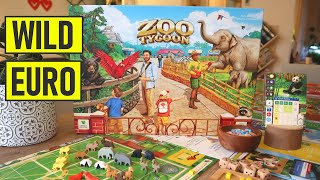
- Mechanics are closely married to the theme.
- Breeding mechanic is a highlight and unique.
- Animal cards are tailored to real-life animal behavior.
- Satisfying sense of progression through mini-goals on animal cards.
- Spatial planning and enclosure design are engaging.
- Strategic depth with multiple areas of focus.
- Components, when placed out, look cool.
- Complex rules and many rule exceptions make it hard to learn.
- Small, fiddly components can hinder the experience.
- The flow of the game can feel like separate mini-games that need to be connected.
- Deep learning curve.
- Lack of scenario cards reduces replayability compared to the PC game.
- Building and managing a zoo, housing animals, conservation efforts, and guest satisfaction.
- Arc Nova
- Roller Coaster Tycoon
- Agricola
- Caverna
- Terraforming Mars
Mechanics (from transcript analysis)
- Area management — Managing the space within the zoo board is crucial for positioning enclosures and satisfying animal needs.
- Card Drafting — Players acquire animal cards that outline their needs and attractants.
- Dice Rolling — Dice are rolled to determine the success of animal breeding.
- Resource Management — Managing running costs, popularity, and conservation value are key aspects of the game.
- Set Collection — Players collect animals to satisfy conservation points and advance on the conservation track.
- Tile Placement — Players acquire terrain tiles to build enclosures and focal points within their zoo.
- Track Advancement — Players advance on popularity, conservation, and education tracks.
- Worker Placement — Workers are used to activate staff effects and actions, such as increasing popularity or doubling trade effects.
Video topics + discussion points
Quotes (from this video)
- My tufted capuchin monkeys breed creating these Offspring represented by these tiny cubes isn't it just adorable?
- Everything in this game is interconnected when it comes to popularity.
- The mechanics are really closely married to the theme.
- The breeding mechanic is definitely the highlight of this game.
- The learning curve for this game is quite deep.
- The idea of This Global Zoo network of sharing and configuring things and moving species around and hopefully finding that happy place for them is part of what makes your brain tick over.
- For me Zoo Tycoon feels like the Caverna of zoo building.
References (from this video)
- Thematically rich and complex Euro
- Involved micro-management of animal needs
- Focus on conservation and welfare
- Sandboxy potential
- Very deep and complex
- Zoo management with focus on nature conservation and animal welfare
Mechanics (from transcript analysis)
- Animal management — satisfying their happiness by moving cubes up these QR code like animal cards that represent your animals needs. These desires include the their preferred enclosure size gender composition population number and ideal Retreat.
- Dice Rolling — if the ideal conditions are right your animals can breed by taking a chance and rolling these dice the animal Offspring can contribute to further reproduction and also give rise to a very busy enclosure.
- Resource Management — building shops and hiring staff can help manage your economy in the game.
- Set Collection — satisfying their happiness by moving cubes up these QR code like animal cards that represent your animals needs.
Video topics + discussion points
Quotes (from this video)
- animals with fins
- animals with wings
- and even animals enclosing cardboard boxes
- this video was born and today we're going to be looking at my favorite Zoo themed board games that make me go wild
- it's a game of species selection
- The game is like a mix of Tetris and a crossword puzzle.
- managing a zoo isn't just about keeping the animals happy it's ensuring that they don't escape and eat your visitors as an afternoon snack
- creating an open Wildlife Preserve where the animals roam free and live in their natural habitats is the dream
- Zoo Tycoon is probably one of the most thematically rich and highly complex Euros I've ever played in the zoo theme genre.
- Arc Nova is a beast of a Euro game where players build a scientifically driven Zoo.
- it almost is like real life there are lots of things that you can control some things are unpredictable but then it's how you navigate your way through the game
References (from this video)
- Tuck boxes provide organized storage for components.
- Easy to access components during gameplay.
Mechanics (from transcript analysis)
- Storage Solution — Includes tuck boxes to hold the numerous animal components, allowing for easy access during play.
Video topics + discussion points
Quotes (from this video)
- One of my biggest board game gripes is picking up a giant box like this beautiful one from Santa Monica and then opening it up inside and realizing that when you take away the rule book look how much empty space is inside you could fit an entire midweight Euro in there like seriously look at all this space that's left over
- My next board game gripes is all about legibility of a game it really irritates me when a game is so well produced but then they pick a font that is so difficult to read
- My next board game gripe is to do with the packaging and it's when board game Publishers for some reason decide to use metal tins as a way of containing their games
- I just think is there a better way to do this and some games have really achieved some great Solutions
- My next board game gribe is one that I don't know if there's a real solution to because each game is unique and when you're teaching or explaining a game through a rule book or a video there's certain approaches that work best for some games and not so much for others
- The fact that I'm flicking back and forward and if you look carefully don't ever do this but I've actually highlighted certain phrases where I've played like three or four games of spirit Island I'm like this game is so easy how is everyone not winning this game and then I'm like oh I made like five rules errors simply because the information wasn't in the section that it should have been in when I was trying to learn the game from reading a book from front to end
- My Boku game now has little stickers uh so A friend bought me a set of stickers which I've attached to um all of my player pieces so now they def definitely stand out but without those stickers it's basically green on green on green
- I do find that whenever I look at the play time on the side of a box I do take it with a grain of salt in fact take the play time and add 60 Minutes to it that's probably a more accurate representation of how much time per player you're probably going to spend on the game
- What are some of your board game gripes Please feel free to list as many board game CES as you like in the comment section below because sometimes when we just air some of these things out we can kind of be like oh my goodness I've never thought of that oh my goodness this is such an important thing that a lot of people are struggling with and it's when we kind of share our struggles and share our experiences and our stories that we truly grow from this experience and hopefully we all have less board game gripes
References (from this video)

- Great concept
- Poorly executed rules and mechanics
- Received a slightly negative review
- Management simulation
- Zoo management
Mechanics (from transcript analysis)
- Mechanic issues — Game mechanics needed a serious rewrite.
- Rulebook issues — Needed a serious rewrite of the rules.
Video topics + discussion points
Quotes (from this video)
- I want to know what they're doing for the seven to 10 players though. If they're literally just giving you more chips and cards so you Yeah, if if all it is is just they're giving you more chips and saying, 'Now you can play it with 10.' That's rubbish. That's BS, okay? Because the game just fundamentally wouldn't work.
- The thing that has me worried though is this 120 to 180 minutes. Is this a game that warrants two to three hours though?
- The game is basically just area control cubes. That to me doesn't scream out crazy fun.
- Deep Regrets is one of the worst games I've ever played, so screw that for a game of toy soldiers.
- I think we've hit that peak of board gaming and now it's mostly a kind of downhill slope for gaming because we've now seen everything that can be kind of done. We're now recycling ideas.
- Board games are getting to a point where we are seeing the same stuff all the time and it just means that it's hard to get excited for another convention.
- UK Games Expo is mostly just recycling stuff that we've already reviewed at a few months ago in which case I don't need to look at it again.
References (from this video)

- Really want Zoo Tycoon
- Looks really good
- Worried it's a bit over complicated
- Takes too much of the table
- Zoo management
- Ark Nova
Mechanics (from transcript analysis)
- Tableau Building — and cards. Tableau. So you can choose the cards.
- Trackers — There are trackers and your zoo
Video topics + discussion points
Quotes (from this video)
- We played Return to Dark Tower because we decided to pick another massive game.
- So, Sunday is always the day we take the kids. It's a little bit more chilled.
- I feel like more people took care of their hygiene.
- The artwork is beautiful, especially on those foily ones. Really nice.
- It was a truth or dare game.
- The main problem is the Shop and Drop boxes are small and board game boxes are not small.
- It's like Christmas. It's going to be like this. It's going to be amazing.
- It's clear that UKGE isn't the one for new releases because new releases of Gen Con and Essen.
References (from this video)
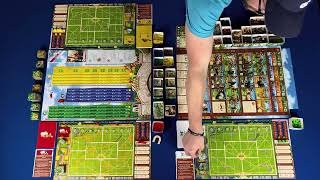
- Can gain popularity and conservation points from focal points.
- Commercial buildings reduce running costs.
- Reintroduction option provides conservation points.
- Co-species can grant extra popularity and benefits.
- Animal Welfare scoring provides bonus points for happy animals.
- Negative money can prevent winning the game.
- Offspring reduce popularity if not managed.
- Prohibition tiles can restrict building and must be purchased to remove.
- Managers of a park trying to get the most victory points at the end of seven years.
Mechanics (from transcript analysis)
- animal husbandry — Focuses on acquiring, housing, and breeding animals, including managing offspring and happiness.
- Area Majority — Scoring for education and conservation tracks based on having the highest values in segments.
- Card Drafting — Animal cards are acquired, with requirements for housing and providing happiness.
- Dice Rolling — Used for offspring production, with results influenced by thresholds and dice orientation.
- economic — Players manage money, running costs, and revenue generation through buildings like food booths and shops.
- Resource Management — Managing money, enclosure tiles, and workers effectively.
- Set Collection — Players collect animals to fill enclosures and gain victory points.
- Tile Placement — Players place enclosure and building tiles on their zoo boards to expand their park.
- Track Advancement — Players advance on conservation, education, and popularity tracks, which influence scoring and abilities.
- Worker Placement — Workers are used to perform specific actions like breeding, maintenance, or extra trades.
Video topics + discussion points
Quotes (from this video)
- the lowest of the two tracks is their Victory point total and the player with the most victory points has the best zoo and wins
References (from this video)
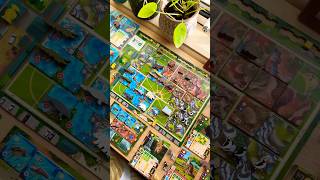
- Strong thematic immersion with a clear emphasis on welfare and educational value.
- Expansion adds new dimensions (reptilian house) and allows mixing animals from base game with new content for variety.
- Emphasis on habitat layout, tile connections, and spatial planning creates tactile, ongoing strategic decisions.
- Clear potential for custom zoo configurations thanks to flexible animal selections and mixed groups.
- Noted difficulty in teaching the game; rules can be heavy for new or casual players.
- Expansion complexity may raise the entry barrier and learning curve.
- Thematic depth can come at the cost of accessibility and streamlined play.
- Zoo management, animal welfare, conservation, public outreach
- A zoological park where players manage habitats, welfare of animals, and public education through exhibits.
- Thematic simulation of real-world zoo operations with emphasis on habitat design and animal wellbeing
Mechanics (from transcript analysis)
- gender and breeding management — Managing breeding pairs and gender balance to sustain or grow populations.
- market selection — Choosing animals from a market pool to populate or diversify the zoo.
- public education elements — Observation decks and educational features influence player decisions and player scoring.
- Resource Management — Careful allocation of water spaces, running room, and other resources to keep animals healthy and happy.
- space and resource management — Careful allocation of water spaces, running room, and other resources to keep animals healthy and happy.
- Tiered progression — Animals progress from basic to advanced (level 1 to level 3), affecting scoring and planning.
- Tile Placement — Players lay habitat tiles and connections to form viable enclosures, balancing flows and space.
Video topics + discussion points
Quotes (from this video)
- It's a beautiful game called Zoo Tycoon, but beware, it is really tricky to teach.
References (from this video)
- Strong thematic tie-in to animal happiness
- Depth of management for a zoo theme
- Large footprint on the table; long playtime
- Zoo management and layout optimization
- Running a zoo with animal happiness, enclosure management, and income
- Arc Nova
Mechanics (from transcript analysis)
- Compound Scoring — Points are tied to animal happiness, enclosure quality, and zoo design.
- Engine Building — Balance income, buildings, and layout while managing animal needs.
- engine building / resource management — Balance income, buildings, and layout while managing animal needs.
- theme-driven scoring — Points are tied to animal happiness, enclosure quality, and zoo design.
- Worker Placement — Take actions to construct, acquire, and improve the zoo.
Video topics + discussion points
Quotes (from this video)
- It is so thematic and really makes you feel like you are literally hiking
- Zoo Tycoon is a fantastic game
- Arc Nova is getting hype for a good reason
- Time's Up brings chaos and laughs
- Arc Nova is my number one this month
References (from this video)
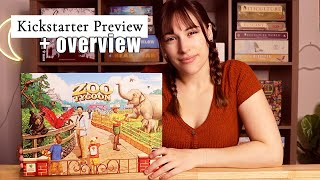
- Strong animal-focused theme with care and happiness driving scoring
- Clear linkage between animal management and scoring outcomes
- Thematic components and IP licensing integration add flavor
- Helpful comparison to Arc Nova for context
- Publisher emphasizes carbon-neutral production
- Long play time (120–180 minutes) and heavier rules for a Kickstarter preview
- Steeper learning curve for new players
- Offspring mechanics can introduce end-game penalties
- Animal care, conservation, and public appeal in a zoo setting
- Zoo management environment spanning four city parks with an eight-year horizon
- expository with enthusiastic, accessible commentary about gameplay
- Arc Nova
Mechanics (from transcript analysis)
- Animal-card driven scoring — Animal cards provide metrics (popularity, education, conservation, cost, enclosure needs) that drive scoring and decision making.
- Compound Scoring — Animal cards provide metrics (popularity, education, conservation, cost, enclosure needs) that drive scoring and decision making.
- Enclosure and building placement — Players build enclosures and buildings to meet animal needs and gain points via focal points and happiness.
- End-game scoring by minimum of two tracks — Final victory points equal the lower of base popularity and conservation score.
- event and weather cards — Round events introduce weather or conditions that affect all players.
- Events — Round events introduce weather or conditions that affect all players.
- IP licensing integration — Licensed Zoo Tycoon IP influences theme and flavor; licensing context discussed by the host.
- Loans — Loans can fund building; end-of-game loans reduce popularity.
- Loans and revenue management — Loans can fund building; end-of-game loans reduce popularity.
- Offspring dice mechanic — Offspring cubes are gained by rolling dice based on gender balance; offspring boost buzz but can incur end-game penalties.
- Resource and track management — Tracks for popularity, buzz, education, and conservation determine scoring and progression.
- Resource Management — Tracks for popularity, buzz, education, and conservation determine scoring and progression.
- Seasonal rounds with four seasons per round — Eight-year progression broken into seasons; market refresh, donor actions, and events shape choices.
- Staff actions — Staff members enable additional actions each season, affecting tempo and options.
Video topics + discussion points
Quotes (from this video)
- this is Zoo Tycoon the board game it is legitimately Zoo Tycoon
- this board game is carbon neutrals so they have tried to make it as carbon neutral as possible
- Arc Nova and Zoo Tycoon are completely different games
References (from this video)
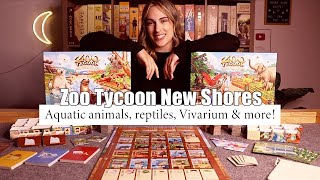
- Adds a substantial amount of thematic and mechanic depth without turning the game into a heavier complexity
- 24 new main species and three new biomes expand variety and strategy
- Modular board design allows mixing base-game and expansion content smoothly
- New categories (marsupials and reptiles) broaden themed options and special rules like eggs and reptile houses
- Water biome and semi-aquatic rules create interesting cost and habitat trade-offs
- Vivarium section provides a satisfying, structured end-game objective with clear bonuses
- Additional components and rules could increase setup and teach-time for new players
- Balancing between base game and expansion may require careful table management and house rules
- More complex interactions (tolerances, biomes, and eggs) may challenge newcomers
- animal welfare, conservation, education, and public engagement
- Zoo management in a modern, educational wildlife environment
- preview/overview with emphasis on expansion contents
Mechanics (from transcript analysis)
- animal acquisition and breeding — gaining animals from an exchange, managing males/females, and offspring/breeding dynamics
- biome system expansion — base biomes plus three new biomes (tundra, dry forest, water) that influence animal placement and costs
- conservation and education objectives — public objectives and education booths that affect scoring and strategy
- Mini-Games — a snake-draft style vivarium board where rows must be completed with matching themes for end-game bonuses
- Modular Board — a modular central board where expansion animals can replace base-game ones, enabling mix-and-match
- modular board and card replacement — a modular central board where expansion animals can replace base-game ones, enabling mix-and-match
- reptile eggs and reptile houses — eggs for reptiles with gender-neutral rules and dedicated reptile houses placed beside enclosures
- Tile Placement — placement of enclosure tiles and biomes to build a functioning zoo across multiple years and seasons
- tile/enclosure placement — placement of enclosure tiles and biomes to build a functioning zoo across multiple years and seasons
- vivarium minigame — a snake-draft style vivarium board where rows must be completed with matching themes for end-game bonuses
- water and semi-aquatic dynamics — water tiles incur upkeep costs; semi-aquatic animals interact with both water and land biomes with added tolerances
Video topics + discussion points
Quotes (from this video)
- it's adding a lot of stuff to the game and it's adding a lot of variety but it's not adding too much more complexity or additional mechanisms to the game
- this board is modular so you can mix expansion and base game
- I love koalas I think my favorite ones being introduced in the game are the koala bears
- the expansion adds a lot of different things but maintains the core feel of Zoo Tycoon
References (from this video)
- rich zoo theme
- ample components
- daunting rules
- long play time (~2 hours)
- difficult to schedule
- balancing animal welfare with commercialization
- zoo management
- immersive theme with heavy components
Mechanics (from transcript analysis)
- heavy component/board game — tile/meeple rich, multifaceted management system
- resource/market balance — weigh welfare against profits
Video topics + discussion points
Quotes (from this video)
- I think this game is really cool
- this is a very simple kind of family weight puzzly game
- it's a very fantastic game
- the rules are absolutely horrendous
- I really love this game and I've played it a few times now and I think the balance is fine
- Luke from the Broken Meeple thinks this game is really imbalanced
- the row system where the positioning of your characters is important
- one of the best two-player games I've played in some time
References (from this video)

- Nostalgic tie-in for fans of zoo/park sims
- Engaging visuals that draw new players in
- Not a heavy-strategy title; might be too light for some
- Production details unknown in this demo
- zoological park development and animal care
- Zookeeper management with animal-themed components
- light, family-friendly
- Planet Zoo: The Board Game (thematic tie-ins)
Mechanics (from transcript analysis)
- grid/resource management — Players allocate resources to care for animals, build exhibits, and attract visitors.
Video topics + discussion points
Quotes (from this video)
- this is ridiculous
- I came home with a copy of that as well
- face dropping Tom Bassel there
- I'm a sucker for a gimmick
- it's basically deduction like clue mixed with trick taking
- look at that butt now
- this game's going to blow your mind
- blueprints of Mad King Ludwig
- a really cute Christmas thing
- I'm pumped for the retail release of this