Game Info
Year
2003
Collection
Ratings
Creator Score
Expansions & Family
/pic125417.jpg)
/pic641067.jpg)

Mechanic profile
Not enough video data yet
Vibe profile
Not enough video data yet
Description
No description available.
Iron Kingdoms Family
(8 games)
Part of the Iron Kingdoms family — see Hordes for the combined view.


Featured Videos


Ask a Rules Question
All mentions
Browse transcript mentions, sentiments, pros/cons, mechanics, topics, quotes, and references.
Total mentions: 15
This page: 15
Sentiment:
pos 5 ·
mix 3 ·
neu 5 ·
neg 1
Showing 1–15 of 15
Video WWOtSq-KBHI
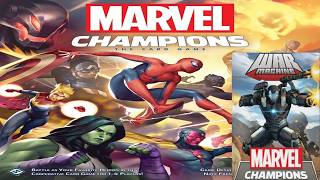
Board Games UnLocked Review at 0:20 sentiment: positive
video_pk 114925 · mention_pk 327634
Click to watch at 0:20 · YouTube ↗
Overall sentiment (raw)
positive
Pros
- Plays radically different from Iron Man
- High damage potential with cards like Full Auto
- Gauntlet Guns are invaluable for enabling combos
- Upgraded Chassis provides a Tough status card
- Unique and fun to play
- Excellent art direction
- Pre-built decks are well-designed
Cons
- Difficult to play
- Ammo tokens do nothing defensively and are lost when changing forms
- Highly reliant on specific cards (e.g., Gauntlet Guns) to function
- Can be ineffective if the right cards aren't drawn
- Leadership aspect of the pre-built deck can feel expensive
- Doesn't have a lot of card draw in his base kit
- Synergy with Leadership cards could be better in the pre-built deck
Thematic elements
- Hero
Comparison games
- Iron Man
- Groot
- Venom
- Rocket
- Hawkeye
- Ant-Man
- Wasp
Mechanics (from transcript analysis)
- Ally Effect Usage — Cards like 'Go Down Swinging' and 'Saved the Day' leverage the printed cost or abilities of allies to deal damage or remove threat.
- Ally Interaction — Cards like 'Make the Call' and 'Sneak Attack' allow for the rapid deployment of allies, with 'Sneak Attack' placing them into play for free until the end of the phase.
- Ammo Tokens — War Machine uses ammo tokens as a resource for many of his powerful cards and abilities. These tokens are gained and lost through various card effects and form changes.
- Card Cycling — An ability allows players to choose a War Machine card from their discard pile and shuffle it back into their deck, facilitating access to key cards.
- Form Changing — War Machine can switch between his James Rhodes (Alter Ego) and War Machine (Hero) forms, with specific effects triggering upon transformation, such as losing ammo counters.
- overkill — The 'Full Auto' card deals significant damage and has the 'overkill' keyword, allowing excess damage to be applied to other enemies.
- Pinging Damage — 'Shoulder Cannon' allows for small amounts of damage, useful for removing toughness or finishing off weak enemies, with an ability to ready itself by spending ammo.
- Range — The 'Missile Launcher' card has the 'range' keyword, which allows it to bypass 'Retaliate' abilities.
- Resource Generation — The 'Gauntlet Gun' upgrade can generate wild resources and place ammo counters, crucial for enabling combos with event cards.
- Team-up Cards — Mention of 'Two Against the World' as a team-up card that can bring 'Tech' upgrades into play.
Video topics + discussion points
No key topics recorded for this video.
Quotes (from this video)
- War Machine is a difficult character to use.
- you have to build a very specific way to i feel get his engine running.
- Gauntlet gun is pretty invaluable.
- he's actually a pretty complex hero like one of the most complex that i've actually seen come out.
- i'm gonna give War Machine a seven feels pretty good.
References (from this video)
No references stored for this video.
Video 7UPZBnnG13M
Rolling Dice & Taking Names Analysis at 2:21 sentiment: negative
video_pk 93517 · mention_pk 253864
Click to watch at 2:21 · YouTube ↗
Overall sentiment (raw)
negative
Pros
none
Cons
- Was doing better in sales than Warhammer 40k for a while
Thematic elements
Comparison games
- Warhammer 40k
Mechanics (from transcript analysis)
Mechanics unknown.
Video topics + discussion points
No key topics recorded for this video.
Quotes (from this video)
- Games Workshop was viewed as a faceless company that was having slow or declining sales and stores closing all over the world but since then he's made a lot of changes trying to make Games Workshop more customer friendly.
- The seventh edition and how complicated the rules were and people were falling away from that product and in fact jumping to other games such as well at war machine which actually for a little while was doing better in sales than what Warhammer 40k was but since eighth edition the rules have been streamlined people have come back in droves to this game and now at this point it's actually more popular than what war machine was.
- Diamond Comic Distributors are going to allow wholesalers to sell comics in retail stores this will be done by giving retailers the opportunity to purchase a 44 pocket comic spinner rack.
- Chainsaws were invented for the aid in childbirth.
References (from this video)
No references stored for this video.
Video c7uxD21Zbfo
Rolling Dice & Taking Names Review at 8:05 sentiment: mixed
video_pk 93440 · mention_pk 253610
Click to watch at 8:05 · YouTube ↗
Overall sentiment (raw)
mixed
Pros
- Enjoyed the mechanics of War Machine.
- High quality paints (P3) were appreciated.
Cons
- MK3 (third edition) fell off and never regained ground.
- Hordes and some factions were removed in later editions.
- Newer styles of gameplay were not as well-received as the classic.
Thematic elements
- Iron Kingdoms Universe
Comparison games
none
Mechanics (from transcript analysis)
- Hordes — Mentioned as being removed in newer versions.
- Warcasters — Focus points can be assigned to Warjacks for special abilities.
Video topics + discussion points
No key topics recorded for this video.
Quotes (from this video)
- We're in the the stage of our life to where it's like it's kind of really got to be really unique and something that's like whoa I just haven't done that before to kind of like Get room on our Shelf to replace something else
- I would never want that to change but I do miss that kind of closeness that we used to have but I've noticed recently in the wall Wally world that the game session has been moved to the back shelf
- that was one of the most vile things I've ever tasted
- if you're not in the Golden Age then it's kind of like who cares what does it matter you know you're in the declining years and I don't think we're there yet
References (from this video)
No references stored for this video.
Video AN2I-B543Ns
Watch It Played Analysis at 17:28
video_pk 92351 · mention_pk 248134
Click to watch at 17:28 · YouTube ↗
Pros
none
Cons
none
Thematic elements
Comparison games
none
Mechanics (from transcript analysis)
- mini game — I do want to play A Min game
Video topics + discussion points
No key topics recorded for this video.
Quotes (from this video)
- David I thought that was an interesting point because when you commit to a 10x10 challenge well maybe the game you think you enjoy the third or fourth play in starts to lose some of its shine then what do you stick with your commitment to keep playing it even if you're not enjoying it anymore
- I really like this additional challenge you've given yourself here though the 2x2 x 12 challenge because even just playing a game twice you know if you're a part of the cult of the new sometimes you'll play a game have a decent experience and that's enough for you to go okay I'll keep this in my collection cuz you're moving on anyway and playing other games and you'll get back to that one sometime by playing it even just an additional time I think like you said helps you understand the game better but beyond that it's going to give you at least another experience to compare against your first one and that may reveal some very key things about whether or not this is a game that would be a good fit for you
- well this resolution has great personal interest to me because pep is a friend of mine he's in my local game group so I'll probably be playing some of those prototypes and maybe even some of your 15 X15 challenge perhaps there'll be some crossover in our resolutions and we can help each other out
- Marcus let's try to keep our resolutions realistic okay
- cam I actually agree with this at least on a certain level these kind of challenges you know are not like a challenge to lose weight for the sake of your health where you're trying to do something that's good for you whether or not it's something you enjoy a challenge like this I think is meant to be fun it's meant to be enjoyable in some way and so if you're doing it just to slog through it and get her done that's probably the wrong motivation but I know personally I appreciated that my last year's resolution did get me to pull certain games off my shelf that I might not otherwise have gotten to just because I had that extra motivation of trying to complete it because I played some games that created wonderful experience for me that I might have passed over and and I'm glad I didn't so again I think if you're doing it as a fun objective then that's great that's healthy and and enjoy and if you want to avoid it that's okay too play what you want to play when you want to play this is a hobby right it's meant to be fun
- well not to be outdone I've created my own resolution the 5x10 + 5x 5 + 10x 2 + 20 by 1 challenge
- I know this is ridiculous but this is my Challenge and here's what it means I'm going to pick five games from my collection to play 10 times each and then later in the year I'm going to commit to another five that I'll play at least five times each so I'm leaving myself some room that maybe a game I already have in my collection or one I'll discover will be one that I want to add in so that's kind of like the living component of this equation then over here want to pick 10 games from my collection as of the end of 2014 that I haven't played yet and I want to play them two times each and then I want to pick 20 games in my collection I haven't played yet to play one time each so that's that's the 5x1 plus 5x5 plus 10 x two plus 20 X1 Challenge and my idea here is that any of those games I start playing that I plunk into this equation if I don't complete them I'll remove them from my collection
References (from this video)
No references stored for this video.
Video 3766RwY_ohM
Watch It Played Analysis at 26:23 sentiment: positive
video_pk 92385 · mention_pk 248228
Click to watch at 26:23 · YouTube ↗
Overall sentiment (raw)
positive
Pros
- can engage in hobby aspects
- something to talk about and develop strategies for
Cons
none
Thematic elements
Comparison games
none
Mechanics (from transcript analysis)
- hobby aspects — Collecting miniatures, painting them, building armies, developing strategies.
Video topics + discussion points
No key topics recorded for this video.
Quotes (from this video)
- I used to flip the table a lot but now I don't flip the table nearly as often as what I used to
- I think game designers buy fewer games than game players do because game designers have more exacting standards
- I don't think there's anything wrong with you determining for yourself what games you like more and which ones you like less that doesn't make you a snob I think the snobbery comes into play on how you treat other people who don't share your same interests
- I think you can get caught up in Chasing The Cult of the new and that will burn you out I think over time I don't think that can be a sustainable Joy
References (from this video)
No references stored for this video.
Video 6Tox_d8spmU
3 Minute Board Games Discussion at 9:26 sentiment: positive
video_pk 91942 · mention_pk 246833
Click to watch at 9:26 · YouTube ↗
Overall sentiment (raw)
positive
Pros
- Fixed issues present in Warhammer 40k
- Matter of positioning, range, and timing
- Balanced gameplay with counters for every list
- Engaging to learn and play
Cons
- Hassle of learning new rules for new editions
- Burnout from painting a large number of models
Thematic elements
Comparison games
- Warhammer 40k
Mechanics (from transcript analysis)
- Counter-play — The game was designed such that every army list had a viable counter.
- Positioning — Strategic importance of character placement on the board.
- Range and timing — These factors were crucial to effective play.
Video topics + discussion points
No key topics recorded for this video.
Quotes (from this video)
- can you play a game too often well I would say yes you damn well can
- this is all about the stories it's not just a list of games
- BattleTech was my jam
- then in 1990 battle tech changed they had been seizing a major plot twist for a while on the story and when it came out it was one of the worst things for the game imaginable
- I honestly don't see myself playing the tabletop version of Blood Bowl
- player skill is a small factor list building is not
- I think the final turning point was when I thought about how bad a game system must be we're shooting attack right in front of you is the same difficulty as shooting a small model on the other side of the board
- Arkham Horror will always hold a special place for me as the game that was there when I was at my lowest point
- every time I have installed a board game app on my tablet and played a lot it has utterly killed my interest in playing that board game
- solo gaming has always been part of that coping mechanism
- she told me to do stuff that mattered to me and do it well
References (from this video)
No references stored for this video.
Video v0SsPk875Ns
Tabletop Minions Discussion at 1:13:47 sentiment: mixed
video_pk 87585 · mention_pk 229179
Click to watch at 1:13:47 · YouTube ↗
Overall sentiment (raw)
mixed
Pros
- Steamforged Games may be able to turn it around
- potential for new plastic miniatures
Cons
- Privateer Press was circling the drain
- Steamforged Games may have bought the IP but not the company
Thematic elements
Comparison games
none
Mechanics (from transcript analysis)
Mechanics unknown.
Video topics + discussion points
No key topics recorded for this video.
Quotes (from this video)
- Friends don't let friends Buy HP printers
- Wizards of the Coast would really rather that you just buy Magic by the case directly from them it seems
- They've been making a lot of really bad decisions in my opinion and if they go to business I will laugh and point
- I just don't understand why they don't want to do that
- I mean the machines that do the saddle stitching are a real pain to maintain they have a tendency to break down a lot
- The print books like the vast majority of people are buying the printed versions as opposed to just PDF only
- I don't know what the fourth dimension is
- I don't really pay attention to that stuff too much
- Most new Morheim players I talk to seem happy to download the PDFs for free from broheim these days and when I mention paper Printing and hard copies they think I'm crazy
- One odd thing about cyber punk red starter doesn't come with with gonks which I feel is like an essential mechanic
- Monac is a great game and the minis for the main monsters are beautiful and fun as heck to pain
- I attended a one-day charity Horus heresy event yesterday called Pride of the Legion a good day for a great cause but now I'm horse and this can be and need at least a day to recover
- If you want some great plastic modern soldiers look at the April issue of War Games Illustrated with the free sprew of warlord games special ops Troopers
- what's your favorite Warhammer mini does that mean which one that I own the most of because it's probably then going to be I don't know what they call them anymore they used to call them nurgle chaos Lord but nowadays he's that guy
- I think I have like six or seven of them it's great for kid bashing
- Does snarl not have a physical book to buy it doesn't
- the machines that do the saddle stitching are a real pain to maintain they have a tendency to break down a lot so some years ago they got rid of Saddle Stitch
- The newest Kill Team box set, 'Germination', is discussed.
- It's been a minute since I've liked both sets of models in a kill Team box.
- Kill team germination is coming this week can't wait
References (from this video)
No references stored for this video.
Video 5z1iqmjmt34
Tabletop Minions Discussion at 1:59:04 sentiment: neutral
video_pk 87141 · mention_pk 227260
Click to watch at 1:59:04 · YouTube ↗
Overall sentiment (raw)
neutral
Pros
none
Cons
- production and fulfillment were handed off to another company
Thematic elements
Comparison games
none
Mechanics (from transcript analysis)
Mechanics unknown.
Video topics + discussion points
No key topics recorded for this video.
Quotes (from this video)
- I don't not every game needs to have deep lore Some people just want to play fun games Some people want to take the lore from game a and bring it into a game B where they like the rules better
- lore is interchangeable so you know one of my favorite games out there is space weirdos it has literally no lore it's fine I make up lore on the Fly
- I like the fact that they're giving you options to play with the models you already have without having to go through and go geez I don't know what are they trying to get a point like what is this again you're like well these guys are supposed to be tyranids oh well it didn't come across as tyranids or whatever I have a whole bunch of tyranids and so I should use this
- the rules are generic not the lore
- Are they officially model agnostic I mean sure yeah you can use whatever ever models you want I mean to be fair every game is officially model agnostic even if they don't say it is it is
- I just don't like moving them in a chunk I like being able to move them separately I don't like that that just here's a thing and the the type of play where it's like well this part has to wheel over and do this and then then you're attacking from a flank
- rivenstone is the game that you're talking about
- the problem is this well it's not the problem here's the most recent answer they still haven't produced the stuff yet but the most recent email I got from them which I think was in July was them saying another company is basically buying the game from us and they will do the production and the the Fulfillment
References (from this video)
No references stored for this video.
Video pEXvxCvLoFo
Tabletop Minions Discussion at 8:24 sentiment: neutral
video_pk 81571 · mention_pk 203296
Click to watch at 8:24 · YouTube ↗
Overall sentiment (raw)
neutral
Pros
none
Cons
none
Thematic elements
Comparison games
- Age of Fantasy Skirmish
- Grim Dark Future
- Grim Dark Future Firefight
- Warhammer 40,000
Mechanics (from transcript analysis)
Mechanics unknown.
Video topics + discussion points
No key topics recorded for this video.
Quotes (from this video)
- Onepage rules is a small company that makes rules for whatever miniatures you want to use.
- The rules are mostly free or maybe five bucks if you want like the advanced version with all kinds of like modular add-ons and customization and all that kind of stuff.
- It's not an affiliate link. I don't think that Mini My Minifactory does those, but they should, right?
- This news was released on April 14th, and it's about the Worlds Beyond Brawl.
- If you sign up to get notified of when the thing launches, then you'll also get two free STLs like right away.
References (from this video)
No references stored for this video.
Video 33ZRSDG6xog
The Dice Tower Discussion at 7:35 sentiment: neutral
video_pk 81387 · mention_pk 201735

Click to watch at 7:35 · YouTube ↗
Overall sentiment (raw)
neutral
Pros
none
Cons
none
Thematic elements
Comparison games
none
Mechanics (from transcript analysis)
Mechanics unknown.
Video topics + discussion points
No key topics recorded for this video.
Quotes (from this video)
- Secrets. This is a Bruno Faidutti Eric Lang game. It's kind of like a social deduction game where each It has some of these nice poker chips. You're on different things, taking things. It works well. It's not great, but I think it was a solid little game.
- Tapple's one of these games that I'm always I'm It's just It still sold very well. It's mass market, but it works incredibly well.
- I just really didn't like it at all. And I like Isle of Cats. I think it's fun. I didn't I this was a great follow up.
- Wow, I love the look of this game. So many neat things you're going through and as the the the character here and just rolling dice up, it's just very lucky. It's a big choose your own adventure game that's very lucky. I wish I liked it more.
- FunkoVerse Strategy Game. Eight out of 10 for me. I really like the FunkoVerse Strategy Game.
- This is basically just giant sandworms coming and you're jumping cars and shooting them. It has all the silliness of the series of movies and I think it's it's one of those movies that could have been an IP, but but isn't.
- Manhattan Project 2. No, I thought the newest one was okay. But this one I actively disliked.
- Curse Court's a great game. I've played Curse Court I think two or three times this year already, which is a lot considering I have to I play lots of new games.
- Well, it's kind of weird. I I mean, on one hand, my favorite is Curse Court, the one I just mentioned. But, also Kids Chronicles: Quest for the Moonstones is a pretty fantastic kids game. So, I have a lot of respect for that.
References (from this video)
No references stored for this video.
Video f-KV94HuXdQ
kovray Event Coverage at 22:44 sentiment: neutral
video_pk 81129 · mention_pk 200007

Click to watch at 22:44 · YouTube ↗
Overall sentiment (raw)
neutral
Pros
none
Cons
- It's going to fall over, though.
Thematic elements
- Miniatures
Comparison games
none
Mechanics (from transcript analysis)
- miniatures — Components are miniatures that can be painted.
Video topics + discussion points
No key topics recorded for this video.
Quotes (from this video)
- It's a gem.
- It's a bop.
- It's just this combo-tastic game where there's a bunch of different actions happening that you'll have to go through.
- It is such a clever game that is still very unnatural because you're trying to create gaps with tiles, and my brain despises that cuz I like when things go together nicely.
- It is the silliest game because what you're trying to do is you have stacks of cards in front of you in different stacks, and you're trying to get each of those stacks to have all of one item.
- This is such a good small card game from Capstone.
- The art on Dixit is just unparalleled.
References (from this video)
No references stored for this video.
Video zEfQleURdAU
Watch It Played Unboxing at 5:00 sentiment: neutral
video_pk 65607 · mention_pk 159327
Click to watch at 5:00 · YouTube ↗
Overall sentiment (raw)
neutral
Pros
none
Cons
- 80-page rulebook is difficult to get through in one sitting and can lead to forgetting rules.
Thematic elements
- mentors game
Comparison games
none
Mechanics (from transcript analysis)
- rulebook — The hardcover rule set for the game was unboxed.
Video topics + discussion points
No key topics recorded for this video.
Quotes (from this video)
- I do warn you though we don't make video series just for any game that we get it's a game we have to have played a few times and one that we we like playing it's too much work to do a series on it otherwise.
- If you've ever wondered when you uh suggest a game to me if it makes an impact when I get a game suggested to me several times it certainly can influence my decisions.
- I feel like I've been talking about finishing that for a long time I just do my best steps to work on these things or guys I have free time.
- they always apologize for the English which they should not do your English is way better than any of the languages that you speak if I was to ever make an effort so we just we just appreciate you writing in to us no matter where you're from
References (from this video)
No references stored for this video.
Video eIeqU8H2ro8
3 Minute Board Games Discussion at 13:47 sentiment: positive
video_pk 13434 · mention_pk 95765
Click to watch at 13:47 · YouTube ↗
Overall sentiment (raw)
positive
Pros
- Everything Games Workshop wanted Warhammer 40K to be
- Properly competitive
- Huge skill element
- Fascinating balance system
- High-level tournament play is skillful
- More competitive than Warhammer 40K in local scene
Cons
- Third edition rules relearning killed the hobby locally
- Company ended press ganger program
- Collapse in player base after rule changes
Thematic elements
- Miniature warfare
- Immoren steampunk fantasy
- Tactical combat
Comparison games
- Warhammer 40,000
Mechanics (from transcript analysis)
- Asymmetric powers — Each warcaster has a powerful once-per-game ability
- Balanced through universal brokenness — Everything is overpowered so nothing is overpowered
- Miniature-based — Painted miniature warcasters and units
- Short-range combat — Positioning and close-range tactics
- Warcaster abilities — Each warcaster has unique spells and abilities
Video topics + discussion points
No key topics recorded for this video.
Quotes (from this video)
- It's delightfully simple and still delightfully a good game.
- Everyone has a different journey here. Everyone starts off playing different games and ends up with different favorite games.
- It had some of the most amazing world building I've ever seen for a game.
- I think the fact that it's rooted in a single D6 system is just going to hamper it for all time.
- This game got me through a pretty rough period of time.
- I am never getting rid of Arkham Horror second edition unless an Arkham Horror fourth edition comes out.
- I was immediately hooked by it.
- It's an absolute banger of a game.
- I could see myself playing that more.
- There's so many layers and mind games to it that player skill and the ability to read your opponent counts for so much more than just having an awesome deck.
References (from this video)
No references stored for this video.
Video Bv2yMDZEIeQ
Tabletop Minions Analysis at 2:11 sentiment: mixed
video_pk 6263 · mention_pk 114410
Click to watch at 2:11 · YouTube ↗
Overall sentiment (raw)
mixed
Pros
none
Cons
none
Thematic elements
- epic siege warfare with heavy warjacks and warcasters
- grim, stylized fantasy-steampunk battlefield scale
- tactical skirmish with a campaign-like feel in a larger world
Comparison games
- Warhammer 40,000
- Battletech
- Age of Sigmar
Mechanics (from transcript analysis)
- armored war-gaming with heavy melee and ranged combat — large tabletop battles with unit-based movement and stat-based outcomes
- Asymmetric Mechanics — factions with distinct units and special rules affecting play
- faction-based synergy — factions with distinct units and special rules affecting play
Video topics + discussion points
No key topics recorded for this video.
Quotes (from this video)
- This is generally known as churn in the wargaming industry.
- New additions cause many players to rebuy the books that they already have because some small things changed in the rules.
- What I mean by sunk cost is this. If you get into a war game ecosystem like Warhammer 40,000, and it is an ecosystem with all the rules and the models and the terrain and the novels and the video games and the merch, all that stuff, then you're less likely to switch to a different ecosystem or even a different game that isn't its own ecosystem.
- Lately, Games Workshop has gotten into a pattern where every other edition of 40k, they also invalidate all of the cotices as well.
- They'll be doing it in Age of Sigmar as well, fourth edition of Age of Sigmar which just came a little while ago did it.
- This is generally known as churn in the wargaming industry. And it's kind of different than just like making and releasing a lot of products, right?
- The main reason that big companies come out with new editions of their games kind of constantly is money.
- New editions cause many players to rebuy the books that they already have because some small things changed in the rules.
- Three-year edition cycle is something I would certainly stop; some people say five years is more reasonable, and while that's technically true, is that still necessary?
- A longer gap would let them make more optional add-on books during that time.
- The problem is that they don't want to make too many optional books; they want the new add-on books to seem optional but required.
- If something comes up that needs a change, then they usually have a free download that fixes it.
- Battletech is great because it's been the same addition for so long.
- Paid new edition is pretty clearly a cash grab.
- If you're not even interested in having to learn new editions at all, then I'd tell you to look at most smaller indie games because generally they don't do new additions of their games.
- What do you think? Are you okay with game systems with paid updates on a fixed schedule, like video game seasons?
References (from this video)
No references stored for this video.
Video gGzWdTMCpYU
3 Minute Board Games Discussion at 13:37 sentiment: positive
video_pk 6151 · mention_pk 128727
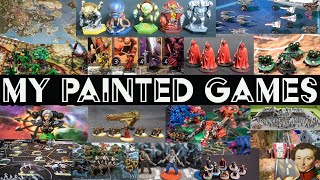
Click to watch at 13:37 · YouTube ↗
Overall sentiment (raw)
positive
Pros
- the Signar Army painting project shows dramatic complexity
- extensive weathering and runic features added depth
Cons
- high time investment; can be overwhelming
Thematic elements
Comparison games
- Warmachine/Hordes
Mechanics (from transcript analysis)
- mass_battle_system — large army scale, weathering and runic motifs
Video topics + discussion points
No key topics recorded for this video.
Quotes (from this video)
- paint for functionality over style and paint for speed when you can
- three minute board games does not do paid content keep us Independent by supporting us on patreon
- I'm not an expert painter
- the best thing is to paint the models so they look good while you're playing
References (from this video)
No references stored for this video.
Transcript Navigation
Showing 1–15 of 15