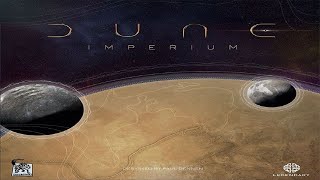
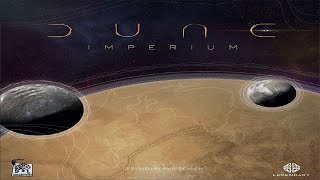
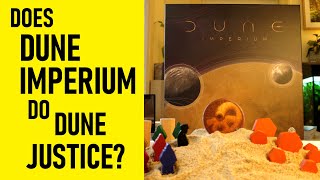
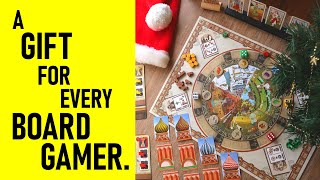
Dune: Imperium is a game that finds inspiration in elements and characters from the Dune legacy, both the new film from Legendary Pictures and the seminal literary series from Frank Herbert, Brian Herbert, and Kevin J. Anderson. As a leader of one of the Great Houses of the Landsraad, raise your banner and marshal your forces and spies. War is coming, and at the center of the conflict is Arrakis – Dune, the desert planet. Dune: Imperium uses deck-building to add a hidden-information angle to traditional worker placement. You start with a unique leader card, as well as deck identical to those of your opponents. As you acquire cards and build your deck, your choices will define your strengths and weaknesses. Cards allow you to send your Agents to certain spaces on the game board, so how your deck evolves affects your strategy. You might become more powerful militarily, able to deploy more troops than your opponents. Or you might acquire cards that give you an edge with the four political factions represented in the game: the Emperor, the Spacing Guild, the Bene Gesserit, and the Fremen. Unlike many deck-building games, you don’t play your entire hand in one turn. Instead, you draw a hand of cards at the start of every round and alternate with other players, taking one Agent turn at a time (playing one card to send one of your Agents to the game board). When it’s your turn and you have no more Agents to place, you’ll take a Reveal turn, revealing the rest of your cards, which will provide Persuasion and Swords. Persuasion is used to acquire more cards, and Swords help your troops fight for the current round’s rewards as shown on the revealed Conflict card. Defeat your rivals in combat, shrewdly navigate the political factions, and acquire precious The Spice Must Flow cards to lead your House to victory!
Per Dire Wolf Digital, retailers may not advertise or sell any product below MSRP for the first 12 mo. of release. Retailers may not promote Dire Wolf game products at a price below 20% off of MSRP at any time while they are actively available from distributors. Exceptions to this policy may only be granted by written communication with Dire Wolf. For more information, see https://direwolfdigital.com/mapp/ !
- cards in your hand interact with board spaces
- end-of-round conflicts create tension
- Lost Ruins of Arnak
Mechanics (from transcript analysis)
Video topics + discussion points
Quotes (from this video)
- blue lagoon is a great game
- it's got so colorful so much fun
- there's this great moment in blue lagoon where you just realize that you've got a certain island secured
- it's a sandbox style pirate game
- i'm going to buy this for myself 100
- Ethnos is an awesome very simple area majority game
- Ticket to Ride Europe
- Nidavellir
- Dune Imperium
- Code Names is just so great that it's word games are just easy for no i shouldn't say they're easy for everyone to get into
References (from this video)
- enjoys the worker placement restrictions tied to cards and symbols
- low scoring encourages careful, early decisions
Mechanics (from transcript analysis)
Video topics + discussion points
Quotes (from this video)
- it's just such a satisfying game for me to play
- the scoring is so low it makes every point matter so much
- this is a voting game that you are going after you're interested in manipulating tokens on the board
- Mission Deep Sea is the Pinnacle version of the crew
- Ghost Stories is fantastic cooperative game
- Cascadia is such a great game
- Kingdom Builder ... it goes up to five to six players
- KeyForge unlike anything else I've played out there
References (from this video)
- Strong hybrid of two classic mechanics (worker placement + deck-building)
- Expansions add modules without replacing base game
- IP appeal with ongoing publisher commitment (Rise of EX, Immortality, Bloodlines)
- Can be dense for new players
- Some players may prefer lighter entries
- political intrigue, area influence, factional warfare
- Dune universe, Arrakis and the political machinations surrounding the spice harvest
- IP-driven, immersive
Mechanics (from transcript analysis)
- Combination of deck-building and worker placement — Two core mechanics operate in concert, enabling strategic depth.
- Deck building — Players build a personal deck to fuel actions and engine building.
- deck-building — Players build a personal deck to fuel actions and engine building.
- worker placement — Players place workers to take actions on various board locations.
Video topics + discussion points
Quotes (from this video)
- It's approachable enough that new players can learn it in one session, but deep enough that you're still finding new strategies after 30 plays.
- The expansions add modules instead of replacing the base game. So, you're building a collection, not cycling through versions.
- It's Dune. That IP isn't going anywhere. As long as people are watching Dune movies, they're going to want to play Dune games.
- The magic is in the gear shift mechanism.
- It's creating a new genre, strategic deduction.
- "No, you're a ghost now. You still matter."
- "The objectives change every game."
References (from this video)
- Deep strategic decision making
- varied deck outcomes create different play styles
- Turn order variance can punish specific draws; early-game feel can be unforgiving
- strategy and resource management in a shared economy
- space-faring political intrigue on Arrakis
- Dune-inspired but abstracted board-game engine
Mechanics (from transcript analysis)
- Deck building — drafts and uses cards to fuel actions and affect turn order.
- deck-building — drafts and uses cards to fuel actions and affect turn order.
- economic engine — resources and influence determine location activation and scoring.
Video topics + discussion points
Quotes (from this video)
- It's not engagement. It's everyone doing their own puzzle in the same room.
- Gorgeous production quality, but multiple simultaneous subsystems that can feel complex initially for new players.
- Turn order determines a lot in this game's economy.
- One wrong move with how the link network system works, and you've completely invalidated your entire strategy.
- The clue giver walks a razor line between clever and intuitive that new players haven't calibrated.
- Eight-hour day commitment, full group attendance, full mental energy required throughout.
References (from this video)
- Deep card interactions
- Thematic integration
- Potential stagnation on the Imperium Row if players are not buying
Mechanics (from transcript analysis)
- conflict_resolution — Engage in battles through card-driven mechanics.
- Deck building — Cards manage actions and abilities.
- deck-building — Cards manage actions and abilities.
- worker placement — Place workers to take actions and gain outcomes.
Video topics + discussion points
Quotes (from this video)
- The bottom line, if you're going to buy these games, implement the house rule on day one. Don't suffer through the official rules.
- We refuse to play without these house rules. We get the games we actually wanted.
References (from this video)
- Widely beloved in the hobby; strong presence on top shelf
- Smooth integration of deck-building with worker placement
- deck-building and worker-placement with combat
- Sci-fi political intrigue across a universe including Arrakis
- theme-driven, strategy
Mechanics (from transcript analysis)
- combat_and_conflict — combat resolution as part of the game
- deck_building — build a deck to enable actions and combat
- hand management — manage cards for optimal actions
- hand_management — manage cards for optimal actions
- worker placement — place workers to take actions on the board
- worker_placement — place workers to take actions on the board
Video topics + discussion points
Quotes (from this video)
- Zenith is honestly just really addicting.
- Playing Zenith is why I'm feeling so conflicted on it.
- Are you bribing me by having Castles of Burgundy and Feast Froen not only having top shelf billing, but also getting their own cubes just for themselves? Because if so, it's working.
- 10 out of 10. Best collection we've ever received.
- Extra points for a Gricola being one shelf lower than Fused and only showing the spine of the box. Well played.
- a full cube of Dungeons and Dragons stuff.
References (from this video)
- great end game
- well balanced
- engaging, tactical decisions
- IP familiarity can be a turnoff for some
- two-player AI and upkeep can be heavy
- strategy, control of areas, and factional maneuvering
- Dune universe, political intrigue and empire-building
- hybrid deck-building and worker placement
Mechanics (from transcript analysis)
- Deck building — build a deck to enable better actions and combos
- deck-building — build a deck to enable better actions and combos
- racing to 10 points — tight scoring where points are hard to come by
- worker placement — select actions by placing figures to control areas and gain resources
Video topics + discussion points
Quotes (from this video)
- this is one of the cutest games in our collection
- the art is absolutely adorable
- it's so well balanced. Don't let the IP throw you off, maybe still just give it a shot because it is a great game in its own right
- it's almost that combination between worker placement and dice placement
- Architects of the West Kingdom has become a worker placement staple for us
References (from this video)
- Strong alignment with Dune theme; token artwork and actual movie art style
- Multiple viable paths to victory and many strategic options
- Balanced player counts 2-4 with a good bot implementation for solo play
- Compact playtime around an hour with depth and tension
- Engaging combination of deck-building and worker placement mechanics
- Card quality is fine and sleeves optional; upgrade pack to plastic minis announced
- Board design some feel sparse but fits the desert setting
- Some players may find the learning curve moderate due to rule complexity
- Political strategy, resource management, and intrigue on a distant desert world
- Arrakis, a harsh desert planet with political intrigue, resource control (spice and water) and warfare.
- Theme-driven, with flavor from Dune universe; art references from the upcoming film
- Clank!
Mechanics (from transcript analysis)
- combat/bidding system — Conflict where players bid and resolve battles for control.
- Deck building — Players use a personal deck to perform actions and gain resources.
- deck-building — Players use a personal deck to perform actions and gain resources.
- Endgame scoring — Points come from various tracks and card bonuses; game ends when a faction reaches 10 VP or the military deck runs dry.
- Intrigue cards — Secret cards that provide sneaky abilities affecting combat and turns.
- leader abilities — Leaders grant unique innate powers influencing strategy.
- Unique player powers — Leaders grant unique innate powers influencing strategy.
- worker placement — Each turn, a player assigns a worker to a space to perform actions.
Video topics + discussion points
Quotes (from this video)
- Dune: Imperium might be our favorite new game of 2020.
- it's gonna more than satisfy dune fans
- there's not a lot of rules overhead and a play time that stays around an hour
- the art on them is great
- easily controlled with a deck of cards that makes it clear where it goes and what it does
- this dune is a two to four player game and it works well at all counts
- the board which some think is a bit sparse
- it's fun to use oscar isaacs or batista
- does a terrific job of capturing a tricky theme
References (from this video)
Mechanics (from transcript analysis)
Video topics + discussion points
Quotes (from this video)
- the bones of the game are so simple
- I love bag Builders
- the tracks are so continuously rewarding
- you can see so much of kind of the DNA of Clank
- it's so satisfying to slide those workers into that Mech
- this feels like a Dungeon Crawler but with Euro systems
- I love horror movies
References (from this video)
- Striking, functional board with clear planet spaces and a large central resource flow
- High production quality: chunky tokens, well-made chits, and attractive art that fits the Dune theme
- Asymmetric character options create varied playstyles and high replayability
- Deep, multi-layered deck-building that interacts with work replacement and diplomacy
- Strong tension from conflicts and alliances that keeps players engaged and interactive
- Two-player rule presentation is confusing (square rulebook + side sheet issues) and lacks quick concrete guidance
- Rulebook organization and presentation can hinder learning mid-game
- Plans Within Plans and some late-game cards can feel overbearing or overpowered in certain builds
- Deck progression can stagnate at times, limiting aggressive engine-building in some games
- 1-3 player games rely on robots, which reduces human-to-human tension and can alter strategic flow
- Array
- Arrakis (Dune universe)
- Asymmetric, character-driven, multi-layered decision making
- Dominion
- Takanoko
Mechanics (from transcript analysis)
- Area/Conflict Resolution — Conflicts are resolved each round with troops; victory provides victory points.
- Deck building — Players acquire and upgrade a personal deck; cards provide actions and payouts.
- diplomacy/alliances — Factions can be aligned with to gain tracks and bonuses, influencing VP through diplomacy tracks.
- hand management — Players manage a hand, reveal and discard cards to activate bottom parts and trigger card effects.
- Hand Management / Card Reveal — Players manage a hand, reveal and discard cards to activate bottom parts and trigger card effects.
- Influence Points — Factions can be aligned with to gain tracks and bonuses, influencing VP through diplomacy tracks.
- Resource management — Spice, water, and money are spent to buy cards, hire troops, and advance tracks.
- resource/economy management — Spice, water, and money are spent to buy cards, hire troops, and advance tracks.
- worker placement — Players place workers to activate spaces and gain resources and effects.
Video topics + discussion points
Quotes (from this video)
- dune imperium is easy to get started with the rulebook which is mostly awesome
- this game is a steal
- spice must flow for a ton of points
- the spice melange too never seen that in a game before
- it's a euro you'll hear these familiar work replacement terms
- the art style here
- we would have wanted half the space to be a fact instead of them just chickening out and putting it all online
- 9 out of 10
- 8 out of 10
References (from this video)
- Rich thematic integration with Dune universe
- Multiple viable strategic paths and faction-specific playstyles
- Strong engagement for Johnny and Spike archetypes
- Steep learning curve; heavy rule-set
- Possibly less accessible for Timmy players seeking lighter moments
- Array
- Science fiction political strategy based on Dune universe
Mechanics (from transcript analysis)
- Deck building — Players build and optimize a personal deck to execute actions and influence the board.
- deck-building — Players build and optimize a personal deck to execute actions and influence the board.
- Worker/Influence Placement — Influence tracks and board actions simulate political maneuvering and faction control.
Video topics + discussion points
Quotes (from this video)
- "Patchwork, right? Very popular two-player game."
- "This game is actually a very spike game."
- "The Timmy is really into it because oh, the concept is oh we get to have a bunch of birds and they all have abilities and they have like Latin text on them."
- "There are a lot of ways you can pilot your faction"
- "negotiation is a big appeal for all three archetypes"
- "What better game to talk about negotiation than Twilight Imperium?"
- "Pandemic Legacy is the quintessential Johnny game"
- "The Crew cooperative trick taking game"
- "one straight line. There's one optimal way to solve it"
References (from this video)
- deck-building is dull
- resource conversion is dull
- worker placement is boring
- bidding battles could be more exciting
- scores often stop around a dozen points
- political intrigue, empire-building
- Dune universe
- thematic, strategy-driven
- Race for the Galaxy
Mechanics (from transcript analysis)
- Area Control — Score through influence and strategic positioning
- area control / scoring — Score through influence and strategic positioning
- Deck building — Use a card-based action system to plan and execute moves
- deck-building — Use a card-based action system to plan and execute moves
- worker placement — Place workers to gain resources, influence, and actions
Video topics + discussion points
Quotes (from this video)
- No parts of this game work well together. There are a zillion different interactions, none of which are emergent.
- Imagine if Race for the Galaxy had many more icons and none of them interacted with each other in any way.
- The game is extremely frustrating to play.
- Memorizing cards/combos doesn't make this fun.
References (from this video)
- Integrated theme with mechanics
- Multiple viable faction plays
- Lore-heavy setup could deter new players
- Some rules integration can be dense
- Deck-building + worker placement + asymmetric powers
- Dune universe with factional intrigue and space politics
- Looter/strategy with cinematic lore awareness
- Lost Ruins of Arnak
- Dune Imperium vs Lost Ruins of Arnak
- Concordia
Mechanics (from transcript analysis)
- Deck building — Assemble a powerful deck to take actions and fight for influence
- deck-building — Assemble a powerful deck to take actions and fight for influence
- worker placement — Place agents to collect resources and deploy combat actions
Video topics + discussion points
Quotes (from this video)
- it's a wonderful starter game for nearly anyone.
- how have I not played dominion
- when I played Dominion I just felt like an absolute idiot
- the quintessential racing game out there
- it's an absolutely brilliant game
- the best network builder of all time
References (from this video)
- strong theme integration with mechanics
- tight, crunchy decisions each round
- blending deck-building with worker placement well
- race to 10 points adds tension
- artwork/graphic design considered flat by some
- can be swingy or punishing for new players
- political intrigue, resource control, warfare through spice economy
- Arrakis, a desert planet in the Dune universe
- epic sci-fi frontier with empire-building
- Dune Imperium Uprising
Mechanics (from transcript analysis)
- Card/Chit Market — buy cards from market with spice and influence; victory points awarded by round outcomes
- combat / conflict resolution — cards determine combat strength, influence, spice, and victory points
- Deck building — players build a personal deck to bid for actions and resources
- deck-building — players build a personal deck to bid for actions and resources
- spice economy / market — buy cards from market with spice and influence; victory points awarded by round outcomes
- worker placement — place agents on action spaces to gain combat, influence, and resources
Video topics + discussion points
Quotes (from this video)
- it's a tremendous strategy game
- it's a race to just 10 points
- you can't have tun without sand worms
References (from this video)
- deep asymmetry between factions
- great theme integration
- strong player interaction
- can be heavy for newcomers
- politics, warfare, and resource control
- Dune universe with intrigue and empire building
- asymmetric factions with card-driven actions
- Uprising
- Dune Imperium: Uprising
Mechanics (from transcript analysis)
- area majority / combat variants — players compete for control of key locations and engage in combat when necessary.
- Deck-building / card-driven actions — players draft and play cards to perform board actions and manipulate outcomes.
Video topics + discussion points
Quotes (from this video)
- it's the magic of editing
- this is the game of the month that we love the most, the most that we play
- Harmony is an easy buy, for yeah it's a good place price point and an excellent production
- Patchwork with bees, or Flower Fields, is absolutely lovely
- we love all of the reward stuff, we love all of that
- we're building together with you guys
- Different Strokes for Different Folks
- Ironwood was our November 2024 game of the month
References (from this video)
- tight integration of IP with thematic, crunchy decisions
- replayability via rotating scoring and factions
- well-balanced competition between factions
- can feel reliant on the expansion curve to reach full potential
- initial learning curve is steep for new players
- spice economy, factional power, and tactical battles
- Dune universe, politics and resource control
- layered strategy with movie-television tie-ins
- Dune: Imperium vs. Uprising (upcoming expansion comparison)
Mechanics (from transcript analysis)
- Compound Scoring — scoring changes with cards and influence cards each round.
- Deck building — build and optimize a personal deck to enable actions.
- deck-building — build and optimize a personal deck to enable actions.
- variable scoring — scoring changes with cards and influence cards each round.
- worker placement — place agents to harvest spice, fight, and influence at key locations.
Video topics + discussion points
Quotes (from this video)
- IP games are something of a red flag for us
- it's amazing accessibility
- a sea of average games there
- the licensed IP and game design is a perfect match
- Dune Imperium is an amazing game
References (from this video)
- strong thematic integration for Dune fans
- high production quality and polished design
- widely regarded as a standout title of the 2020s
- steeper learning curve for new players
- longer playtime in longer sessions
- spice-driven politics, factional power, intrigue and warfare
- Dune universe, Arrakis
- campaign-like, deck-building and action selection shaping the story
- Dune
Mechanics (from transcript analysis)
- Area Control — control key locations to gain influence and victory points.
- combat for influence — resolve skirmishes to expand power and control on Arrakis.
- Deck building — build a personal deck to enable stronger actions and combos.
- deck-building — build a personal deck to enable stronger actions and combos.
- worker placement — players place workers to gain actions, influence, or resources.
Video topics + discussion points
Quotes (from this video)
- this one adds a couple of those extra thematic Elements which if you're a fan of Dune makes it even better
- I will get Uprising uh if you need to buy a new one
- you're fine with D Imperium it still stays one of the best greatest games last years
- Dune is an amazing amazing
References (from this video)
- Tension and depth in endgame scoring create meaningful, hard-fought races.
- Asymmetry between factions yields varied experiences per play.
- Dune Imperium's factions and mechanics interact in a cohesive, thematic way.
- Flexible pacing; can be brisk on shorter sessions or extended on longer games.
- Some players may find the setup and rulebook dense.
- The game can feel lengthy for casual players who want quick sessions.
- deck-building with worker-placement and asymmetric faction paths.
- Dune universe; political intrigue, factional power, and desert warfare.
- epic and tense; endgame tension hinges on point pacing and faction strength.
Mechanics (from transcript analysis)
Video topics + discussion points
Quotes (from this video)
- I love Ark Nova.
- Bees in space best theme ever.
- This game is just always buzzing in my ear.
- The actions are distilled down to such a great system.
References (from this video)
- Strong player interaction
- Tight strategic decisions under VP pressure
- Theme not for everyone
- Politics, intrigue, and warfare on Arrakis
- Dune universe
- Epic, thematic
- Lost Ruins of Arnack
Mechanics (from transcript analysis)
- combat/battle — Resolve battles in the central area to gain VP.
- Deck building — Play cards to activate actions and gain resources.
- deck-building — Play cards to activate actions and gain resources.
- worker placement — Place workers to claim actions and influence battles.
- worker-placement — Place workers to claim actions and influence battles.
Video topics + discussion points
Quotes (from this video)
- Concordia is fantastic.
- Endgame scoring is so cool and unique.
- Obsession is such a fun game.
References (from this video)
- deck-building and combat with engine feel
- rules and pacing can be dense
Mechanics (from transcript analysis)
- deck-building / worker placement — cards fuel actions; workers execute actions on the map
Video topics + discussion points
Quotes (from this video)
- Castles of Burgundy oh my goodness I love this game so much
- Cascadia is definitely one of the lighter of the bunch
- I would freaking love in the future to compete in this
References (from this video)
- tight card/board interaction, strong two-player potential, thematic depth
- risky to expand with many players due to interaction density
- deck-building plus worker placement with direct conflict
- Dune universe, intrigue and conflict on a strategic map
- faction-driven political intrigue with faction-specific powers
- Innovations: A Neo-Mechanic
- Neon Knight (thematic overlap)
Mechanics (from transcript analysis)
- conflict-driven incentives — commitment to conflicts to gain influence and rewards
- Deck building — build a deck that determines actions and timing
- deck-building — build a deck that determines actions and timing
- worker placement — take actions on board via limited locations
Video topics + discussion points
Quotes (from this video)
- the narrative it does ends up being a fun experience
- it's the story. there's almost I find when I'm playing it and horrible things are happening
- through the ages... a grand historical journey
- epic and full-day experience
- you can draft up to your point level and duke it out to the end
References (from this video)
- strong combat/battle feel
- intrigue cards add variability and strategy
- some may find the faction balance or setup heavier
- space opera with imperial intrigue
- Dune universe-inspired intrigue with political/army conflict
- epic, strategic
Mechanics (from transcript analysis)
- Deck building — build a personal deck to fuel actions and battles
- deck-building — build a personal deck to fuel actions and battles
- Intrigue cards — special cards to manipulate battles and endgame scoring
- worker placement — place workers to gain resources and power in conflicts
Video topics + discussion points
Quotes (from this video)
- I love this game so much
- I freaking love it
- you are somebody's reason to smile
- I will see you guys in the next board game video
- bye friends
References (from this video)
Mechanics (from transcript analysis)
Video topics + discussion points
Quotes (from this video)
- I want to make this the greatest board game platform in the history of the world.
- We need more data. We need more reviews on those top 100 games.
- So go influence me right this second in the Discord.
- I just want to make this a cool place for you to hang out in.
- I'm trying to figure this out on the fly.
- I'm really excited to see how this top 100 compares to the BGG top 100, frankly.
- So, I need you.
References (from this video)
- The base game is well-regarded and has a strong, thematic feel that many players enjoy
- There is broad public interest and positive perception around the Dune: Imperium experience, which amplifies curiosity about expansions
- There is hesitation or reluctance to engage with the new expansion or variant suggested by the term 'Uprising'
- The shift from the base game to potential expansion content can introduce complexity and learning curve that may deter some players
- Power politics, faction influence, spice economy, ecological stewardship under scarcity
- Arrakis (Dune universe), distant future with interstellar houses vying for power and influence
- Strategic, negotiation-driven with asymmetric power dynamics; victory through alliance-building and control of resources
- Dune: Imperium
Mechanics (from transcript analysis)
- Deck building — Players curate a personal deck of character and action cards, drawing hands each turn to fuel actions and explore path to power.
- deck-building — Players curate a personal deck of character and action cards, drawing hands each turn to fuel actions and explore path to power.
- Influence and conflict resolution — Influence tracks and combat outcomes determine control over factions, alliances, and endgame positioning; conflict resolution shapes territorial control and scoring opportunities.
- Influence Points — Influence tracks and combat outcomes determine control over factions, alliances, and endgame positioning; conflict resolution shapes territorial control and scoring opportunities.
- worker placement — Agents are placed on various board locations to gain resources, draw cards, gain influence, or trigger special abilities.
Video topics + discussion points
Quotes (from this video)
- Dune Imperium Uprising
- I don't want to play it
- the last Dune Imperium it was actually a good game
- everybody seem to think it's good
- even though I don't want to I'm going to try it
References (from this video)
- tight integration of deckbuilding and placement
- strong theme
- board may not look fancy
- deck can clog early if not built well
- deck-building meets worker placement
- Dune universe
- theme-forward, strategic
Mechanics (from transcript analysis)
- Deck building — cards define where you can place workers and give abilities
- deck-building — cards define where you can place workers and give abilities
- engine building — balance deck and board actions to fight for position
- engine-building and combat — balance deck and board actions to fight for position
- worker placement — place workers on board based on card choices
Video topics + discussion points
Quotes (from this video)
- one of my absolute favorite cooperative games of all time
- this is another time travel themed game
- it's a ton of fun
- the solo mode is so quick and simple
- it's just a great worker placement Deck Builder
- the theme really works
References (from this video)
- Strong thematic integration with mechanics
- Good mix of deck-building and worker placement
- Expansions add depth and variety
- Rule complexity can be intimidating
- Combat elements may not appeal to all players
- Lost Ruins of Arnak
- Clank
- Concordia
Mechanics (from transcript analysis)
- Deck building — Players assemble a personal deck from gained cards and use them to perform actions.
- deck-building — Players assemble a personal deck from gained cards and use them to perform actions.
- hand management — Cards in hand determine available actions and resources; optimizing draw and play order is key.
- Hand management / resource engine building — Cards in hand determine available actions and resources; optimizing draw and play order is key.
- worker placement — On their turns players place workers, guided by card icons, to take actions on the board.
- Worker placement with card-driven actions — On their turns players place workers, guided by card icons, to take actions on the board.
Video topics + discussion points
Quotes (from this video)
- Clank in space is fantastic
- this is quite a popular deck building worker placement game
- Concordia is not really a deck building game but it is a deck building/hand configuration game
- Lost Ruins of Arnak... the act of getting the most done on a turn as you possibly can
References (from this video)
- strong thematic integration
- solid tactical engine
- board state can feel opaque to new players
- political intrigue and deck-building
- dune/space opera
- lived-in saga with conquest and planning
- Meadow
Mechanics (from transcript analysis)
- Deck building — Build a deck to gain resources and actions each turn.
- deck-building — Build a deck to gain resources and actions each turn.
- worker placement — Place agents on locations to gain benefits and combo with other actions.
Video topics + discussion points
Quotes (from this video)
- First Call of the night is Tiny towns
- I didn't love Meadow
- I honestly really enjoy it
- Spirit Island is staying
- we're keeping viticulture
- Penny's here too
- it's a party of puppies
References (from this video)
- layered strategy and IP familiarity
- strong thematic integration
- learning curve and setup complexity
- factional power, intrigue, and resource management
- Dune universe, political intrigue and spacefaring conflict
- thematic, immersive strategy
Mechanics (from transcript analysis)
- Worker placement / deck-building fusion — Combine actions from workers with deck-building to execute plans
Video topics + discussion points
Quotes (from this video)
- yelling is cathartic, it's good for you
- my asian parents won't be too disappointed
- it's the warm-up, but you're doing great
References (from this video)
- high interactivity between players
- strong thematic integration with card/board interplay
- engaging combat decisions
- learning curve
- can be lengthy to play
- political intrigue, control, and warfare across a desert world
- Dune universe with spice economy and house politics
- card-driven strategy set against a thematic space opera backdrop
Mechanics (from transcript analysis)
- controlled battles and rewards — round-based combat with visible competition for battle rewards
- Deck building — hand cards influence actions and strategic options
- deck-building — hand cards influence actions and strategic options
- worker placement — place workers to access board actions and battles
Video topics + discussion points
Quotes (from this video)
- Age of Innovation feels like it delivers the pinnacle experience of that kind of whole system.
- Twilight Struggle is a borderline masterpiece.
- The arc of Twilight Struggle is so exciting; tension grows across the board.
- This is Mage Knight Ultimate Edition—changing it to cooperative mode is incredible; I’d never go back.
- Eldritch Horror highs are the top board game experiences I’ve had.
- Agricola is the best board game we have ever played and it has stayed at the top for years.
References (from this video)
- rich theme, highly replayable
- integrates combat and politics well
- can be heavy and longer than expected
- some factions feel unbalanced early in learning
- deck-building and area control
- Dune universe political intrigue
- epic, conflict-driven
- Terraforming Mars
- Twilight Imperium
Mechanics (from transcript analysis)
- Deck building — acquire cards to fuel actions and special abilities
- deck-building — acquire cards to fuel actions and special abilities
- work replacement with agents — send agents to perform actions and influence conflict
- worker placement — send agents to perform actions and influence conflict
Video topics + discussion points
Quotes (from this video)
- my pick is colorado
- it's the perfect board game for people right after let's play
- unlock is the best escape room game that i have ever played
- it's like Waldo, the board game
- Spirit Island ... highly highly suggested as a heavy game for a couple
- my wife’s all-time favorite game
- it's a really decent economic game
References (from this video)
- Strategic factional control
- Dune universe with intrigue, politics, and combat
- Sci-fi political strategy
Mechanics (from transcript analysis)
Video topics + discussion points
Quotes (from this video)
- I'm absolutely pumped and I'm going to get every question 100% correct there will be no guessing I will definitely know all the answers exactly.
- we'll see how good your semic Curren board game knowledge is all right we'll see so let's go to the first picture and name this game.
- I have to check this out I'm so interested.
- these were all deck builders and so very nice.
References (from this video)
- Tons of interaction
- Super fun
- Combination of mechanics works well
- Top 10 has gotten it correctly
- Houses competing for control of Arrakis
- Dune universe
- Sci-fi political intrigue
Mechanics (from transcript analysis)
- Combat — Send troops to fight for rewards
- Deck building — Build deck of cards that send agents to board
- worker placement — Place agents on the board to take actions
Video topics + discussion points
Quotes (from this video)
- Board Game Geeks top 100 sometimes feels like random people voting random stuff
- This is the way by two random people from Latvia
- Your mind feels like a fog after playing Spirit Island
- Frodo really doesn't want to destroy ring at the end he's like nah I'll go home
- It's a fine game it's super boring it just the same thing over and over
- Wrongfully not in the top 20 yet
References (from this video)
- strong theme
- strategic depth
- learning curve
- setup time
- faction-based area control and deck-building
- Dune universe
- Twilight Imperium
- Terraforming Mars
Mechanics (from transcript analysis)
- Area Control — Controlling influence on planets.
- deck-building — Drafting and playing cards to perform actions.
Video topics + discussion points
Quotes (from this video)
- this is the board game quiz show
- it's a board game play through series that's over 400 episodes now
- we're rough on you but we're having fun today
References (from this video)
- Strong thematic immersion
- Solid engine and cohesion between mechanics
- Complex rules and potential downtime
- Political strategy, resource control, and military maneuvering
- Arrakis; interstellar politics and intrigue
- Epic sci-fi with strategic depth
- Ark Nova
- Terraforming Mars
Mechanics (from transcript analysis)
- Conflict / negotiation — Influence, alliances, and combat decisions shape outcomes.
- deck-building — Cards drive actions, influence, and combat options.
- worker placement — Place agents to take actions and gain resources.
Video topics + discussion points
Quotes (from this video)
- Ark Nova faster than I do
- Ark Nova is welcoming
- Atmosphere is everything
- Think beyond yourself
- Don't be a jerk
- Celebrating the moments, not just the wins
References (from this video)
- beloved intellectual property
- engaging world
- fun mechanics
- includes game-changing worm element
- somewhat desolate/dark theme
- science fiction
- desert planets
- political intrigue
Mechanics (from transcript analysis)
Video topics + discussion points
Quotes (from this video)
- We need to respect one another regardless of race, creed, color, gender
- Let's just try to work together and be more proactive and productive as a society
- Games that just make us smile - when I think about them I just go yeah this makes you smile
- You can smile on every game because you win all of them
- I love the world that Ryan Loughton put together and it makes me smile
- When I know we're gonna put Dune on the table, I smile
- Parks gives me these pleasant memories
- I know I'm gonna have fun with my family and friends playing Ticket to Ride
- Now I can play in that Star Wars universe with Boba Fett and it makes me smile
- Our lists are like night and day
References (from this video)
- Tight, intentional design that forces players to optimize actions and decisions each turn.
- Strong integration of deck-building with worker placement for varied strategies.
- Engaging solo experience with AI opponents that provide legitimate counterplay and tension.
- Deck cycling can be tight; limited card trashing and recycling options may slow some players who want rapid engine turnover.
- Early economy and space costs can feel restrictive for new players until they understand the tempo.
- Solo AI can lack some of the emotional drama of human opponents, making some turns feel predictable.
- Resource control, influence, diplomacy, and military dominance within a high-stakes sci-fi sandbox.
- Desert planet Arrakis in a sprawling political and military power struggle featuring factions like the Fremen, the Spacing Guild, and the Emperor.
- Strategic, theme-forward with eurogame pacing and direct combat tension embedded in a political backdrop.
- Dune Imperium (base game)
Mechanics (from transcript analysis)
- Conflict and combat resolution — Each round includes a central combat area where troops can be deployed; combat results in losses but yields strategic rewards and positioning power.
- Deck building — Players start with a basic deck and add cards from the market as the game progresses to improve actions and options.
- deck-building — Players start with a basic deck and add cards from the market as the game progresses to improve actions and options.
- Endgame trigger and score pacing — First to 10 victory points triggers endgame; balancing timing and point accrual is critical as other players catch up.
- Influence and alliances — Gaining leverage with factions (Fremen, Bene Gesserit, Spacing Guild, Emperor) translates into victory points and special abilities.
- Influence Points — Gaining leverage with factions (Fremen, Bene Gesserit, Spacing Guild, Emperor) translates into victory points and special abilities.
- Limited Points — First to 10 victory points triggers endgame; balancing timing and point accrual is critical as other players catch up.
- worker placement — Players deploy agents to spaces on the board to take actions, gain resources, and influence factions.
Video topics + discussion points
Quotes (from this video)
- it's just so tight the game really chokes you out in terms of actions that you're able to take
- combat down here is a very brutal enterprise because basically everybody who has soldiers in combat will lose them all
- I think it's worth playing solo
- one of those expansions that almost feels like it should have just been in the game in the first place
- the expansion makes the green symbols more valuable
- it's the kind of expansion that should have been part of the base game from the start
References (from this video)
- strong thematic integration with Dune IP
- deep engine-building and strategic choice
- rule complexity can be daunting
- longer playtime for some groups
- politics, resource control, factional influence
- Dune universe; Arrakis; political maneuvering
- franchise-themed, lore-informed
- Dune: Imperium (base game) related titles
- Dune expansions
Mechanics (from transcript analysis)
- Area Control — influence locations and resolve contests via cards and units
- area control / combat influence — influence locations and resolve contests via cards and units
- deck-building / card drafting — draft and play cards to power actions and engines
- worker placement — place workers to take actions and gain resources
Video topics + discussion points
Quotes (from this video)
- This is what it looks like to actually play a game.
- Step up your game. You're kind of you're kind of bad in games.
- The vibe is very very uh pleasant and is a lot of collegiality.
- It's amazing when you hear your mother in your ear, man. This is crazy town.
- Thank you for hosting this amazing event.
References (from this video)
- Great tight Euro experience
- More tactical than strategic
- Excellent Dune theme integration
- All mechanics work together well
- High replayability
- Satisfying gameplay
- More accessible than some heavier games
- Lower ranking than expected in speaker 2's list (21st)
- Dune universe
- Political conflict
- Desert warfare
- Space opera
- Dune: Uprising
Mechanics (from transcript analysis)
Video topics + discussion points
Quotes (from this video)
- there's so many games you will never have time to play all of them
- thematically it's so well represents the theme it feels amazing
- it's one of the most unique designs I've ever played
- don't trust your friends
- every time you win or lose you always feel satisfied about with this game because this is what I build
- what else you want from board games got good times and good stories
- it's Simplicity is what amazes me
- one of my favorite games because of the experiences it gives you
- no two games were the same which I really loved about it
References (from this video)
- great theme integration
- strong player interaction
- tightly designed engine
- ramp-up can be slow for new players
- deck-building + worker placement
- Dune universe, political and strategic conflit
- franchise-driven, thematic
- Lost Ruins of Arnak
- Terraforming Mars
- Dune: Imperium is compared to other engine-builders
Mechanics (from transcript analysis)
- deck-building — build a deck to perform actions and win influence
- worker placement — place leaders and agents to gain resources and keys
Video topics + discussion points
Quotes (from this video)
- it's a fight and we're fighting
- analysis paralysis is here to stay
- it's a brain burner
- it's not that heavy there's a lot to do
References (from this video)
- Strong thematic integration with the Dune IP and spice-politics motif
- Solid hybrid of deck-building and worker placement that scales with players
- Asymmetric leaders and faction mechanics add strategic depth
- Clear sense of engine-building with meaningful choices each round
- Steep learning curve due to multiple card types, locations and faction rules
- Setup and table presence can be lengthy for new players
- Some players may find balance and interaction heavy or fiddly
- political intrigue, alliance-building, resource control
- Arrakis with spice economy and inter-faction politics
- asymmetric factional play with deck-driven actions and board-based consequences
Mechanics (from transcript analysis)
- Allegiance/influence tracks — Faction allegiance tracks advance influence and award bonuses; reaching thresholds yields points or abilities.
- Card-based action triggering — Imperium and intrigue cards grant diverse actions and bonuses, shaping turn options and momentum.
- Conflict/central combat — A central combat area allows troops to contest locations for rewards and control.
- deck-building — Each player cycles a personal deck and can acquire new cards to improve engine and capabilities.
- Resource management — Players manage water, spice, solari, and influence to pay costs and fuel scoring opportunities.
- worker placement — Players place agents on board locations to gain bonuses, influence, or gateway effects for future actions.
Video topics + discussion points
Quotes (from this video)
- it's a game for one to four players
- the round structure is very simple
- now it's time to talk a bit more about the four factions
- a very fresh and popular game
References (from this video)
- Strong thematic integration
- Engaging strategic tension
- Rule complexity for new players
- political intrigue, empire management
- Dune universe, Arrakis
- grim, strategic
- Terraforming Mars
- Dominion
Mechanics (from transcript analysis)
- deck-building — assemble a deck to gain stronger actions
- worker-placement — place agents to perform actions and gather resources
Video topics + discussion points
Quotes (from this video)
- it's mechanics that make the game
- the Rondale (rondel) mechanic is strong
- Survive is the most treacherous blood curdling game in our household
- Starla month
References (from this video)
- Full of intrigue and interaction
- Thematic to Dune
- One of their favorite games of all time
- For daredevil players
- More complex game
- Dune universe
- Intrigue
- Political conflict
Mechanics (from transcript analysis)
Video topics + discussion points
Quotes (from this video)
- When starting out in this hobby, losing is a huge pressure on the newbie. But what if you lose and win together? That's why horrified is a perfect cooperative game
- Monopoly is simple. You usually roll two dice and have a bad time. Well, in this game, you roll two dice and have a good time
- Engine builders are really cool because you always start with nothing and then build up from that point on and it makes you feel fantastic
- This is a game that drew me into this hobby and I'm happy I'm here
- And we went throughout this whole segment without saying that Monopoly sucks. Isn't that great?
References (from this video)
- Strong thematic integration with Dune IP
- High strategic depth and variability
- Good cause-effect chaining between actions
- Long setup and playtime
- Potential analysis paralysis and learning curve
- AP can slow down player turns
- Empire-building, intrigue, and resource control
- Dune universe; political intrigue on Arrakis, spice economy
- episodic, IP-driven with modular campaigns
Mechanics (from transcript analysis)
- combat and intrigue cards — Resolve battles and political actions using a combat/intrigue card system.
- deck-building — Players use a personal action deck which they improve and cycle to access actions and abilities.
- worker placement — Place agents to gain influence, resources, and to trigger board events.
Video topics + discussion points
Quotes (from this video)
- we will make independent board game reviews, they will be biased by things like our mood and how annoyed our friends were when we asked them to play the same game for the seventh time
- we don't accept sponsorships from anyone, we don't even accept review copies
- if you can afford it please consider supporting us on patreon
- two voices subliminally influencing you to buy more board games
- we film, edit, write everything ourselves
- whatever we end up making this year whatever we succeed or fail at I can guarantee you one thing we will always take time to look after ourselves
- we are developing a new series that is exclusive for Patron only called only €
References (from this video)
- Strong thematic integration
- Resource and economics-focused
- Excellent hybrid game design
- Spice trade mechanic is engaging
- None explicitly mentioned
- Spice trade
- Faction influence
- Political intrigue
- Terraforming Mars
Mechanics (from transcript analysis)
- Asymmetric Mechanics
- Combat System
- Combat: Damage Based
- Deck building
- Deck building elements
- Hybrid mechanics
- Resource management
- worker placement
Video topics + discussion points
Quotes (from this video)
- You get resources, you get resources, everybody gets resources
- Euro games are games all about economics, resources, selling resources to get more resources, and at the end of the game somebody gets points and usually wins
- Dune is a better game but Terraforming Mars is a better euro game
- The most unique thing about this game is the actions and how they play out
- It's a fantastic way how to mess up everybody's plans
- This game does the thing all games I think should do is make you feel like you've progressed and built something
References (from this video)
- Solid deck-building
- Strong theme
- Complex rules for new players
- political intrigue and space empire
- Dune universe
- deck-building with area control
- Pillars of Eternity
- Twilight Imperium
Mechanics (from transcript analysis)
- deck-building — Players build a deck to perform actions and gather resources.
Video topics + discussion points
Quotes (from this video)
- it's time to rate your shelfies
- I'm good with numbers
- this collection is crazy gamer like
- Dune Imperium good choice, my preferred mechanic is deck building
- Star Wars Clone Wars uses the Pandemic system
- the bigger the Box the better with this guy
- I'm not into board games at all
References (from this video)
- Fast-paced and brutal battlefield action
- Easy to learn, approachable for casual players
- Strong gateway title that captures Dune flavor
- Interesting combat wheel mechanics that reward planning
- Solid thematic fit for fans of the books/films
- Streamlining reduces depth and replayability for veteran players
- May feel hollow compared to the original game for some enthusiasts
- Depth of strategic choices can be shallower than the classic version
- Resource control, political power, and spice-driven economy
- Sci-fi desert planet Arrakis, political factions vie for control and spice wealth
- Strategic, competitive territorial conquest with thematic flavor
- Small World
Mechanics (from transcript analysis)
- Area Control — Control strongholds and spice-rich regions to accumulate spice and victory points.
- Combat wheel — Battles are resolved with a rotating combat wheel using battle cards and power counters.
- deck-building — Build a personal deck to gain actions, combat options, and bonuses.
- Leader recruitment / influence — Acquire leaders and leverage their powers to affect battles and control.
- Market card system — Market cards offer phase-specific bonuses that influence timing and costs.
- Resource management — Manage spice and other resources to deploy units, draw cards, and revive units.
Video topics + discussion points
Quotes (from this video)
- the Mind Games around the combat wheel and figuring out your battle plans
- fast-paced and incredibly brutal
- an excellent Gateway game
- one that casual gamers will enjoy
- fast to play and easy to learn
References (from this video)
- Iconic IP with well-integrated mechanics
- Strong player interaction and strategic depth
- Rulebook can be dense for new players
- Thematic focus may overwhelm lighter strategy fans
- Gritty factional struggle and alliance-building
- Dune universe, strategic political and military play
- Epic, science-fiction political intrigue
- Earth
- Arc Nova
Mechanics (from transcript analysis)
- deck-building with engine-building — Decks dictate actions, with engine-building through factions and artifacts.
- worker placement with combat and intrigue — Placement to gain resources and score, with conflict decisions.
Video topics + discussion points
Quotes (from this video)
- Summit it's a big one and it's competitive cooperative
- we loved earth and we did a preview for it and we can tell you now since without a preview we love that you love it
- Sea Change first one is called sea change
- what game do you most hope to play at dice tower west
- it's an investment in family
- we will spend money on what we want
- board games are an investment in family
- we're going to video a lot
- don't be afraid to go into board game stores
- beyond monopoly quit talking about monopoly, get beyond it
References (from this video)
- strong thematic fit with accessible rules
- rich strategic choices
- asymmetrical factions can imbalance learning curve
- worker interaction with deck-building strategy
- Dune universe politics and resource control
- thematic engine-building with combat and intrigue
Mechanics (from transcript analysis)
- deck-building — build a deck to access actions and combat options
- worker placement — place workers to trigger affiliations and campaigns
Video topics + discussion points
Quotes (from this video)
- "this is a very welcoming and very friendly community"
- "no bs and no tolerance when it comes to toxicity"
- "you should actually say to you welcome back because you were on season one episode two"
- "we really want to create and what we strive to do is create a welcoming inclusive space for everybody"
- "it's a very welcoming awesome group"
References (from this video)
- tight, well-designed blend of card-driven engine building and spatial worker-placement elements that interact fluidly
- the conflict sub-game injects round-to-round variety and a sense of momentum without devolving into direct, constant confrontation
- intrigue/plot cards introduce meaningful variance, enabling creative and adaptive playstyles across sessions
- no useless cards claim: every card in your deck has a purpose, either for placing workers or for revealing/triggering effects
- cards prompt diverse strategic avenues, rewarding thoughtful hand management and adaptive planning
- thematically rich enough to feel like a Dune-inspired title, even if the execution focuses on mechanics more than narrative theater
- theme and tone can feel misaligned with the iconic, high-confrontation flavor some players expect from Dune lore; the game's flavor is more procedural than epic warfare
- thematic delivery can come across as bloodless or non-confrontational in a setting known for high-stakes politics and brutal power plays
- for some players, the balance may tilt toward analysis rather than organic storytelling, potentially reducing immersion for those seeking a more dramatic experience
- a portion of players may desire more aggression or sharper thematic clashes, which the design intentionally minimizes in favor of a puzzle-like optimization experience
- Power consolidation through resource control (spice), political intrigue between factions, and tactical placement of agents in a shifting landscape of locations and conflicts; the game blends theme with mechanics to create a workflow that mimics a spice-driven empire building scenario.
- Arrakis, a harsh and strategically vital desert world where control of the spice melange determines political power, military strength, and interstellar travel; the board game translates the harsh desert politics of a distant future into tactile mechanics and spatial decisions.
- Mechanistic and procedural storytelling where the flavor emerges primarily through system interactions (cards, tokens, conflicts) rather than explicit narrative cards or lore text; flavor is conveyed via the theme-relevant mechanics (spice economy, faction track progress, alliance tokens, and the central conflict sub-game) rather than a traditional story arc.
- Lost Ruins of Arnak
- Dune
Mechanics (from transcript analysis)
- Area Control — players push for control of key regions or zones that provide ongoing benefits or end-game scoring bonuses. Faction locations on the side of the board require matching symbols on your characters, and advancing on faction tracks can yield victory points or alliance bonuses, influencing long-term tactical trajectories.
- area_control_and_faction_tracking — players push for control of key regions or zones that provide ongoing benefits or end-game scoring bonuses. Faction locations on the side of the board require matching symbols on your characters, and advancing on faction tracks can yield victory points or alliance bonuses, influencing long-term tactical trajectories.
- card_buying_and_bidirectional_costs — the cost to buy new cards is displayed on the card, and players can acquire multiple cards when affordable. This creates a fluid economy where the composition of your hand is shaped by both early choices and late-game opportunities, affecting the range of available strategies and the pace of card-cycle evolution.
- conflict_sub_game — each round features a combat-oriented sub-game where players vie for regional control. Troops contribute to a scoring pool (with each troop worth two points in the conflict), and the outcome can grant control of regions or special bonuses. The sub-game injects periodic direct competition, elevating the sense of competition without requiring open aggression in every moment.
- Deck building — players start with a core deck of basic cards and repeatedly acquire new, more versatile cards. Each card can contribute to multiple actions, and the grey bands on cards unlock additional effects when played. This creates a diverse, evolving toolkit that supports multiple viable strategies across different playthroughs.
- deck-building — players start with a core deck of basic cards and repeatedly acquire new, more versatile cards. Each card can contribute to multiple actions, and the grey bands on cards unlock additional effects when played. This creates a diverse, evolving toolkit that supports multiple viable strategies across different playthroughs.
- intrigue_and_plot_cards — the game introduces intrigue/plot cards that add variance and strategic depth. These cards can be drawn, held, and played to influence the current round or long-term planning. They enable sudden shifts in strategy and create tension as end-of-round timing and card visibility affect decision making.
- Resource management — spice and money serve as core resources that power actions, purchases, and location access. Managing these resources amid the cost structures of locations and cards creates important trade-offs: do you buy a card now, invest in a faction location, or save for an end-game card? The balance of resource income and expenditure underpins strategic planning.
- resource_and_spice_management — spice and money serve as core resources that power actions, purchases, and location access. Managing these resources amid the cost structures of locations and cards creates important trade-offs: do you buy a card now, invest in a faction location, or save for an end-game card? The balance of resource income and expenditure underpins strategic planning.
- worker placement — players deploy workers to various locations on the map to gain corresponding benefits. Each location is gated by icon matching on the played card, adding a layer of card management to spatial planning. The mechanism ties the card you drew to the spaces you can utilize, creating a direct link between hand management and board control.
- worker_placement — players deploy workers to various locations on the map to gain corresponding benefits. Each location is gated by icon matching on the played card, adding a layer of card management to spatial planning. The mechanism ties the card you drew to the spaces you can utilize, creating a direct link between hand management and board control.
Video topics + discussion points
Quotes (from this video)
- Dune imperium is a very tightly designed game with a lot of good decision points and its combination of card play and worker placement makes for a compelling and interesting game
- the conflict sub game is especially good and gives every round a special goal and a different feel
- the intrigue cards add a degree of variance to the game that you might not normally expect in worker placement
- and generally the cards you obtain allow for very different approaches and strategies to play out. What you buy and how you manage your hand is key
- so this is really a game for people who want a good mix of mechanics to keep them thinking but who don't want a game that's too complex
- the best thing about this game is that there's no useless card anything you don't use to place workers can be used in the reveal phase
- however, the theme is a tricky one here as it's strong enough to make the worker placement spots make sense
- But the game is incredibly bloodless and non-confrontational for a setting like Dune
- it's a great game but i don't think it's a great Dune game
- Dune imperium: not spicy just mild
References (from this video)
- deep strategic feel
- variety in playstyles per faction
- learning curve is steep
- conquer-and-control metas may slow down at times
- area control, faction politics, deck-driven actions
- Dune universe, political intrigue on Arrakis
- strategic, epic
- Star Wars: The Deck-Building Game
- Cosmic Encounter
- Quacks of Quedlinburg
Mechanics (from transcript analysis)
- deck-building with worker placement — use cards to activate leaders, perform actions, and control territories
Video topics + discussion points
Quotes (from this video)
- start the game with superpowers give each player a starting ability of equal value or let them pick between two
- simultaneous turns at the start of every round plan as a team then everyone takes their actions and encounters at the same time
- you paid for the game you better make sure you have fun playing it
- this small tweak helps to keep the tension without the headache of constant noise building up
- if this video gets 500 likes we'll dust off that Eldritch Horror house rule video
- the last game loses and the next one gets picked, adding an extra layer of strategic fun