/pic202312.jpg)
This 18xx game takes the basic mechanics from Tresham's 1829 and adds several new elements. Players seek to make the most money by buying and selling stock in various rail companies located on a German map. The board itself is actually a fairly abstract hexagonal system, with track tiles placed on top of the hexes. Players buy and sell stock in various share companies, whose actions are controlled by the majority stockholder. The stock manipulation aspect of the game is not as brutal as in 1830. Plus each 18xx title adds new and different elements to the game.
This game features minor rail companies, layered stock offerings, and the formation of the Prussian railroad from the minor companies. A game is finished when the bank runs out of money, and the player with the greatest personal holdings wins.

1930 - Learn While Playing

Mechanics (from transcript analysis)
Video topics + discussion points
Quotes (from this video)
- this is parfume this is by Queen games and this is a game about building fragrances and selling them to Merchants
- elisium now I would love to show you a box of elisium but we're sold out two days it didn't take long but AUM is a great great strategic game about using the powers of the Gods to be able to manipulate and create Legends
- I just got done uh demoing the game uh with Isaac showing us how to play it and let me just tell you my mind is blown
- ashes is a LCD kind of a um expandable card game format um you are playing the role of a phoenix BN in which you are trying to store the other Phoenix BNS in order to collect their ashes and gain more power
- everybody's going Gaga over the art I've seen this is the final production product absolutely gorgeous
References (from this video)

- potential distilled two-hour 18xx experience
- investing in airlines; stock market
- early stages of Aviation
Mechanics (from transcript analysis)
- stock tokens with dividend payouts — tokens provide Ready Cash via dividend payouts during income action; tokens can increase in value over the game and be cashed out at the end
Video topics + discussion points
Quotes (from this video)
- I'm incredibly biased and I'm not going to sit here and tell you to back the Kickstarter campaign for this one
- I wrote the rulebooks for all these four games
- distilled two-hour 18nxx experience
- I judge games by their cover; Katamino Tower looks cool
- Clover really surprised me with how much I've enjoyed it
References (from this video)

Mechanics (from transcript analysis)
Video topics + discussion points
Quotes (from this video)
- BGGCon is still essentially one of my favorite weeks of the year it's just an absolute blast
- it's just basically dreamland, hanging out with friends for ludicrous hours
- I played 44 is new to me games at the convention
- shifting shelf got surprisingly large, it's essentially a two-month shifting shelf
- I'm planning on doing a radar Vlog in a couple of weeks to cut the three months in half essentially
References (from this video)

- railroads
Mechanics (from transcript analysis)
Video topics + discussion points
Quotes (from this video)
- I love half the that game I think half that game is as good as anything in the hobby period and the merger mechanism I actually had this conversation with Yun back at uh the Gathering of friends I think it was last year and I was like how has nobody taken that merger mechanism in Indonesia and then used it in their game he goes it surprises me and yours all the time that nobody has blows me away no idea
- Bonanza is my number 10 game of all time
- The juice the juice wasn't worth the squeeze
- F James you know he's not getting it he's not doing anything to the point where it was just I was like why don't you just bring your your hat
- I think the game the manual even says like don't go too close to each other on setup and we were all just like oh that looks like a really good spot it's like yeah that does look like a really good spot I'm going there too
References (from this video)
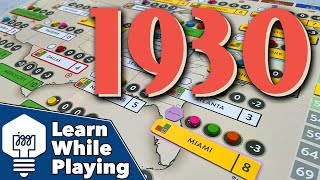
- investment in airlines, stock-based actions, and competitive growth
- set in the year 1930, focusing on early aviation and airline industry expansion
- instructional demonstration
Mechanics (from transcript analysis)
- bank, reserves, and bankruptcy — stocks liquidated at game end for current prices; bankruptcy occurs if certain conditions are met, removing stocks and gates/hubs from the board
- Contracts — private contract cards provide targeted payouts or effects; require airlines to have gates in certain cities; impact stock values and incomes
- contracts and payouts — private contract cards provide targeted payouts or effects; require airlines to have gates in certain cities; impact stock values and incomes
- end of turn adjustments / stock market penalties — penalties applied if airlines do not fly; stock prices adjust at end of turn; penalties depend on city counts and technology differentials
- expand/gate placement — placing gates to increase income; gates come from the supply; cities have gate slots; expanding also depends on technology level
- fly action — the CEO of a company (largest holder) selects a reward/delivery option when a flight occurs; dividends, tech upgrades, gates, and hub implications may follow
- hub action — place hub tokens to boost airline efficiency and unlock hub-related benefits; hubs connect to cities with hub icons and gates
- operation phase — each stock token represents an action for the corresponding airline; up to seven actions per round per player pairwise; players must act if possible
- relocate gates — move gates to different cities with constraints; must not reduce overall income; hubs constrain relocation
- stock phase — players buy stocks for airlines; initial stock phase sets up starting conditions and prices
- tech track and upgrades — advancing technology increases reach to cities and enables upgrades; affects income and where gates can be placed
- upgrading cities — upgrade cities to higher technology levels; increases base income for all airlines with gates in upgraded cities
Video topics + discussion points
Quotes (from this video)
- the goal of the game is to make as much money as possible
- each Airline can fly a maximum of once per overall turn
- you must perform an action if you have a legal action to do
- the game ends after six full rounds
References (from this video)
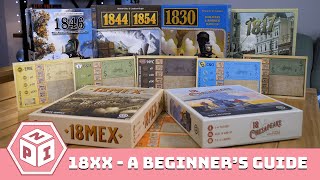
- Foundational entry point into the 18xx system
- Clear framework for learning and expanding to other versions
- Still long and complex compared to lighter eurogames
- Requires extensive preparation and study
- corporate finance, stock market dynamics, and rail network growth
- mid- to late-19th-century American railroad expansion
- systematic industrial saga with personal strategy
- 1829
- Chesapeake
- 1844
Mechanics (from transcript analysis)
- dividends_and_reinvestment — decide payout versus keeping funds in the company
- float_and_floatation — new company becomes active when enough shares are purchased
- par_value — set par value to determine starting funds and share price
- railway_growth_and_route_planning — build rail lines and upgrade to improve profitability
- stock_round — buy/sell shares; presidency share and par price drive influence
Video topics + discussion points
Quotes (from this video)
- 18xx games are long, complicated, require more math than your kids' trigonometry homework.
- the pornographically named 18xx genre is trixie
- as i would watching a PT Anderson film
- it's like one enormous sand pit
- ambition of greed arrogance hubris gambling and ultimately downfall
- you'll start sneezing cardboard hexes out of your nose
- the rulebook is the second worst that we've read in this system
References (from this video)
- Rules simpler than reputation suggests
- Deep strategic gameplay
- Excellent multiplayer experience
- Strong gaming community
- Good for extended play sessions
- Teaches valuable strategy lessons
- Very long play time (6+ hours common)
- Reputation for complexity oversells actual rules complexity
- Second half of gameplay can feel slower
- Railway operation
- Stock investment
- Economic simulation
- 1889
Mechanics (from transcript analysis)
Video topics + discussion points
Quotes (from this video)
- most of what i look for in a train game is about emergent alliances
- the more people you get in there the more entangled it gets and that's what's really exciting for me about train games
- definitions are useful when they highlight affinities and they cease to be useful when they're used to exclude
- i will call it a train game because it will piss off how to train gamers
- this is the game that invented everything i rip off in my games
- it feels very much like a train game that would have been designed like in 2010
- the rules are really very simple they're just they just take a long time to play
- soft spot for games that are designed just for me as a solo player
- i really enjoy automated opponents and seeing what they're capable of
References (from this video)
- Thematic focus on a stock-market style shared incentive concept.
- Personal stance in the video suggests it may be too niche or overstated for some groups.
Mechanics (from transcript analysis)
- Negotiation / interaction around markets — Players influence each other through market-driven actions and strategic alliances.
- Shared incentives / stock market — Players manage stock shares and corporate actions within a shared incentive framework.
Video topics + discussion points
Quotes (from this video)
- I love the card game I designed and she made the game.
- Spring cleaning is officially up for pre-order.
- Not a whole lot of views on these things obviously because they are exclusives but that doesn't matter.
- Ten years later, I designed a game and you could go out and buy it right now.
- Is this going to be a thing I continue to do for another ten years? Time will tell.
- I could have a whole lot more views if I changed things around to target getting a lot more views, but I would have stopped this channel years ago.
References (from this video)
- gentle surface with deep, emergent strategy
- strong two-player head-to-head pace
- availability may be limited due to indie status
- competitive precision and strategic timing
- two-player climbing/sh shedding game with card-driven tempo
- tight, tactical duel
- Ank
- Netrunner
Mechanics (from transcript analysis)
- deep hand management — learn curve yields more strategies over repeated plays
- end-of-round optimization — observe sums and push for advantage while anticipating opponent moves
- trick-taking style progression — play cards in a sequence and respond to opponent actions
Video topics + discussion points
Quotes (from this video)
- it's just a great game at getting people to talk to each other because it's always obvious what your opponent is doing when they've done it but it's not obvious until they've done it
- Luna means the space between things
- the idea isn't that different from Magic the Gathering you have followers which are kind of like creatures and then you have these location cards
- the nuclear option as in you blow everything up