/pic3678404.png)







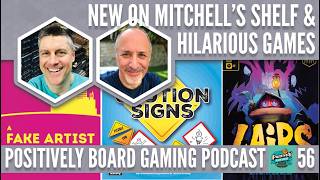













A Fake Artist Goes to New York Deep Dive
What the Community Thinks About A Fake Artist Goes to New York
A Fake Artist Goes to New York is celebrated as one of the finest lightweight social deduction party games in existence. The community consistently praises its elegant design, accessibility, and ability to create hilarious moments with groups of all sizes. Reviewers describe it as a fresh take on drawing games that works brilliantly even for non-artists, finding particular appeal in the chaos that unfolds when players try to hide their knowledge while simultaneously identifying the impostor among them.
Core Mechanics That Define A Fake Artist Goes to New York
Hidden Role Social Deduction
At its heart, the game is a social deduction experience where one player is secretly the fake artist. Everyone receives a category like "animal" or "film," but the fake artist only sees a question mark in place of the specific word. This asymmetric information creates the entire tension of the game. All players know the category, but only the legitimate artists know whether they are drawing a dolphin, a lion, or a parrot. The fake artist must blend in by making educated guesses about what the group is drawing while trying not to give themselves away. When players vote to identify the fake artist, those who guessed correctly score a point, but if the fake artist successfully identifies the word before being voted out, they win two points instead.
Collaborative Drawing with Individual Perspectives
The central mechanic involves all players taking turns adding exactly one continuous line to a communal drawing. Each player uses their own color pen, so their contribution remains visible and traceable. This constraint forces constant strategic decisions. Legitimate artists must be vague enough that the fake artist cannot immediately deduce the word, yet clear enough that other real artists recognize what is being drawn. The result is intentionally chaotic artwork that becomes increasingly surreal as more hands contribute to it. Players describe this as creating "wonderful abstract art" that evolves unpredictably, with each stroke either helping to reveal the subject or muddying the waters further.
The A Fake Artist Goes to New York Experience
Lighthearted Social Deduction Without the Pressure
Unlike more intense social deduction games, this game maintains a comedic atmosphere throughout. Reviewers emphasize that nobody gets upset, making it ideal for casual gatherings and family events. The drawing element adds a layer of absurdity that prevents the game from becoming confrontational. Instead of tense accusations, players laugh together at the ridiculous artwork being created. This lightness makes it accessible to groups that might shy away from games like Avalon or Secret Hitler, where social tension can escalate. The game prioritizes fun over victory, and even the fake artist getting caught feels more like a shared joke than a personal defeat.
Comedy Through Misinterpretation and Bluffing
The true magic happens when players misunderstand what others are drawing. One reviewer describes moments where a football becomes a smiley face, or an elephant turns into something unrecognizable. These misinterpretations create the funniest moments. The fake artist plays a different game of bluffing and hope, sometimes throwing down a random line and hoping nobody notices. Real artists occasionally gamble by drawing something intentionally vague to prevent the fake artist from guessing, only to confuse their teammates as well. The discussion phase before voting often devolves into arguments about what people were actually trying to depict, generating continuous laughter.
What Makes A Fake Artist Goes to New York Stand Out
Tiny Package, Massive Enjoyment
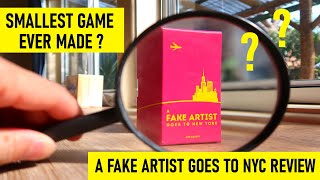
Published by Oink Games, this game arrives in one of the tiniest boxes in modern board gaming. Multiple reviewers highlight how they casually throw it in their bags for travel and impromptu game nights. The compact size belies the gameplay depth and entertainment value. It requires minimal setup, needs only dry erase cards and pens, and plays in roughly 20 minutes. Yet despite its modesty, the game consistently ranks among favorite party games and gets brought out repeatedly at social gatherings. The production is elegant without being flashy, proving that limitations in physical form do not constrain gameplay potential.
Inclusive Design for All Skill Levels
The game's genius is that you do not need to be good at drawing to excel or enjoy it. In fact, terrible drawing often enhances the comedy. Bad drawings are harder to interpret, which actually helps the fake artist blend in while making real players laugh harder at the absurd results. This removes one of the biggest barriers to party games for non-artistic players. Someone who cannot draw a recognizable stick figure will have just as much fun as someone with genuine artistic talent. The chaos is the point, and embracing that chaos creates a welcoming environment for everyone at the table.
Potential Drawbacks
Extremely Fast Games
The game can wrap up in just a few minutes, which some see as a limitation. If players are too obvious about what they are drawing in the first round, the fake artist might guess the word immediately. Conversely, if all legitimate players are too cagey, nobody can figure out what is being drawn. This unpredictability means some games finish before players feel satisfied. Reviewers suggest this actually works in the game's favor for filler purposes, but groups seeking longer engagement might want multiple consecutive rounds.
The Tension Between Transparency and Secrecy
Players face a constant delicate balance. Real artists must provide enough information that other real artists recognize the subject, but not so much information that the fake artist can guess the word and win. This creates a puzzle within the game itself that not all groups intuitively grasp on the first play. Some games devolve into frustration when players accidentally reveal the answer too quickly or, conversely, make the drawing so abstract that nobody can figure out what was intended. This tension requires buy-in from the group to work properly.
If You Enjoy A Fake Artist Goes to New York
Players consistently recommend Chameleon for a similar blend of hidden role social deduction and bluffing mechanics, though Chameleon works with word clues rather than drawing. Spyfall offers comparable tension through hidden information, with one player trying to deduce what location everyone else knows while others ask questions. Pictionary and Telestrations provide the drawing element without the hidden role aspect, making them natural alternatives for groups who love the artistic side but want more straightforward gameplay. For those who prefer drawing-based games without the deduction angle, Dixit offers beautiful surreal imagery and collaborative interpretation. Secret Hitler and Avalon deliver the intense social deduction experience but with significantly more confrontation than A Fake Artist affords.
What Reviewers Are Saying
A fantastic kind of bluffing but not really more like social deduction with a light touch. The concept of the game is super simple and super clever. Everyone has a different color pen, one person doesn't know what the subject is, everyone else does. They have to draw one line on a piece of paper, then pass it along, and the fake artist needs to blend in by guessing what everyone else is drawing.
— Board Stupid
A party drawing game where one player assigns a word and everyone draws one continuous line. You end up with these bits of paper that are just wonderful abstract art. It's such a cool challenge and comes in a tiny box. This is one of the best party games there is.
— Actualol
A game of unintelligible illustrations where you will all collectively draw the same thing by taking turns adding a detail with your color pen. The fake artist has no idea what you are drawing. You end up with the worst depiction ever produced with accusations flying everywhere. Fake artist is brilliant and will have you drawing like Picasso and crying like Van Gogh.
— Actualol