/pic3146943.png)







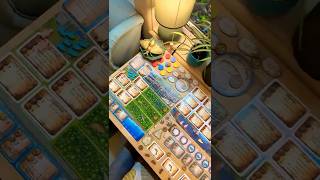






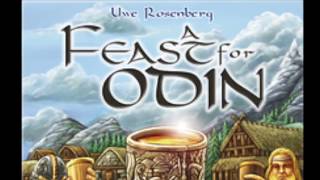










A Feast for Odin Deep Dive
What the Community Thinks About A Feast for Odin
A Feast for Odin occupies a unique position in the board gaming landscape. It is a game that reviewers approach with both reverence and candor. Designers appreciate it as an ambitious sandbox; casual players often grapple with its complexity. Yet across different gaming circles, a consensus emerges: this is Uwe Rosenberg at his most expansive, combining nearly every design mechanic from his prior work into one sprawling Viking-themed engine builder. Some players call it his masterpiece. Others admit it took several plays before they learned to love it. What remains constant is that people keep returning to it.
Core Mechanics That Define A Feast for Odin
Worker Placement
At its heart, A Feast for Odin is a worker placement game, though one on a staggering scale. The action board contains roughly 60 spaces, organized into four columns. The first column costs one worker, the second two, the third three, and the fourth four. This escalating cost structure creates constant tension. Stronger actions demand more workers, forcing difficult decisions about commitment. Players navigate a labyrinth of options: hunting expeditions that involve dice rolls and weapons, exploration voyages to distant islands, trading actions, crafting stations, and immigration mechanics. The sheer volume of choices is intentional. Rosenberg built the game to feel like an open-world adventure where viable strategies branch in multiple directions. Some players race to secure ships early. Others focus on occupation cards that compound into engines. Still others prioritize filling their home board with resource tiles. All paths can lead to victory, though none feels obviously optimal.
Polyomino Tile Placement
Layered atop the worker placement sits an elegant polyomino puzzle. Each player receives a home board covered with negative-point spaces. These gaps must be filled with irregular tetromino-like tiles and treasures collected throughout the game. The puzzle is not merely decorative. Covering negative spaces directly scores points. Certain tile placements trigger income bonuses and special powers. Adjacency matters. Color restrictions apply. This sub-game transforms from a secondary afterthought into a crucial pathway to victory. Advanced players learn that the true engine of A Feast for Odin is not the worker actions alone, but the synergy between gathering the right tiles and placing them to maximize both coverage and income production.
The A Feast for Odin Experience
Satisfying Engine Building
Reviewers repeatedly describe an arc of mastery. Early turns feel overwhelming. There are too many levers, too many options. But as the game progresses and players construct their wealth engines, something clicks. By mid-game, carefully placed tiles and occupation cards begin multiplying resources. Workers generate income automatically. Raiding returns treasure. The economy hums. Players feel powerful in a way that mirrors a protagonist's journey from struggling settler to established landowner. This arc is deliberate. Rosenberg designed the game so early turns establish foundations, while later turns feel fluid and rewarding.
Ambitious and Expansive
A Feast for Odin embraces maximalism. It does not strip down mechanics for elegance. Instead, it piles concept upon concept: thematic flavor for Vikings, exploration, trading, combat with dice, breeding animals, feuds with other players via raiding, miniature civilization building. Most games choose one or two big ideas. Rosenberg chose them all. This abundance can feel intimidating. Yet for players who embrace the sandbox, it creates a sense of possibility. There are so many ways to win, so many emergent stories across a table.
What Makes A Feast for Odin Stand Out
Endless Strategic Variety
The combination of a massive action board with a personal tile-placement puzzle generates remarkable replay value. Occupation cards add strategic depth via card drafting mechanics. Random weapon draws introduce controlled chaos. Each game develops differently depending on which islands become available, which occupations appear, and what opponents do. Reviewers note that even after dozens of plays, new strategies emerge. Adapting to available resources rather than executing a fixed plan keeps the game fresh.
Thematic Coherence Across Mechanics
Rosenberg invested research into Viking history and Norse culture. The game reflects this care in small details. Raiding yields artifacts like crowns and crucifixes that sit thematically in Norse mythology. Hunting actions involve actual weapons and reward animal components. Immigration at game end reflects historical Viking settlement patterns. The feeding mechanic, which some Rosenberg games make punitive, here feels less like a trap and more like a survival curve. Starvation costs resources and points, but it is recoverable. This thematic integration elevates the systems beyond abstraction. Players are not manipulating numbers. They are building a Viking settlement.
Potential Drawbacks
Steep Complexity and Learning Curve
The game's ambition is also its barrier to entry. Sixty action spaces bewilder new players. The rulebook is comprehensive. Setup takes time. Teaching requires patience. Some players bounce off the initial experience, convinced the game is a confusing mess. Reviewers who persevered report the confusion dissipates after a few turns, but that friction exists. This is not a gateway game. It demands players willing to invest in understanding before enjoyment arrives.
Expansion Dependency Debate
The Norwegian expansion has become nearly essential to the community. It addresses the random element of weapon cards by providing more predictable resources and adding new strategic tiles. Some players argue the base game feels incomplete without it. Others push back, noting that the base game works fine and the expansion simply adds variety. The expansion costs substantial money, creating a perception that A Feast for Odin demands financial investment beyond the box price to shine. For some, this is a dealbreaker.
If You Enjoy A Feast for Odin
Players drawn to A Feast for Odin often gravitate toward other Uwe Rosenberg designs. Agricola shares the worker placement foundation and personal board puzzle, though with a farm rather than Viking settlement. Caverna offers a looser, more expansive take on the same formula. Fields of Arle strips down some complexity while retaining the resource wheel and production arc. For those seeking the polyomino puzzle without the full weight, Patchwork delivers that satisfaction in a brisk two-player format.
Beyond Rosenberg's catalog, players who value massive action spaces and sandbox gameplay appreciate Ora et Labora, which layers farming and building into a single rich tapestry. Those seeking the engine-building satisfaction without the Viking theme might explore Caverna: The Cave Farmers. Ultimately, A Feast for Odin appeals to players who view board games not as quick entertainment but as avenues for long-term mastery and emergent storytelling.
What Reviewers Are Saying
"The amount of different ways I've played and won this game is absolutely unbelievable. And every single time I play this game, I find something new that makes me fall in love with it again."
— Board With Steve
"This thing's not particularly intuitive. It frankly gives you, you know, it is kind of like an open world worker placement game. I mean, there's a lot of different options, there's too many. Any game that needs that many different actions to make it work, it just seems like that thing, if redesigned, could be significantly more simplified."
— Neon Gorilla
"A Feast for Odin is widely considered one of the biggest, like, sandbox and, like, kitchen sink games, where there's just so much different stuff in this game. The basis of this game, of course, is a giant, giant worker placement game where there's like 60 different places you can put your workers."
— The Brothers Murph