/pic3476604.jpg)












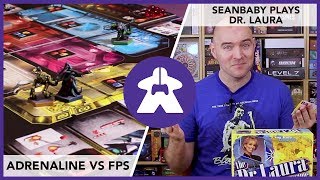
Adrenaline Deep Dive
What the Community Thinks About Adrenaline
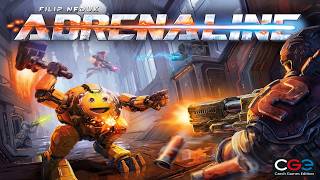
Adrenaline translates one of gaming's most beloved digital genres straight to the tabletop. Reviewers consistently emphasize that it succeeds because it captures the essence of competitive arena shooters, delivering the frenetic energy and tactical positioning that made the genre compelling. Board Game Spotlight frames it as the obvious pick for households with teenagers raised on Fortnite and Overwatch, while JestaThaRogue and Watch It Played walk through it as a faithful gladiatorial-combat puzzle. Players drawn to first-person shooters find in Adrenaline a board game that actually feels like the real thing: grab weapons, deal damage, score for kills.
Core Mechanics That Define Adrenaline
Action Points and Spatial Positioning
Each turn you spend up to two actions, choosing from three core options: move up to three spaces across the arena, grab items or weapons from spawn points, or shoot at opponents you can see. The elegance is that you can repeat the same action, so a turn might be two grabs, two moves, or one of each. Line of sight is the crucial constraint, designed by Filip Neduk and published by Czech Games Edition: you can see anyone in your room and into adjacent rooms through connecting doors, which makes where you stand as important as what you do. JestaThaRogue stresses that positioning, not just firepower, decides who scores.
Compound Scoring and the Kill Economy
Scoring flows from damage dealt, not kills alone. When a fighter takes enough damage they fall, and points are awarded by how much each attacker contributed: the player who dealt the most damage scores the most, with descending rewards for the rest, plus a bonus for drawing first blood. This creates a scoring economy where landing the final blow can still earn nothing if others dealt more damage overall. Watch It Played highlights the tension this builds, since players must weigh chasing a guaranteed kill against maximizing their share of the damage. A skull track counts down with each kill, triggering a final-frenzy endgame that gives everyone one last burst of action.
The Adrenaline Experience
Weapons, Power-Ups, and Escalating Capability
The weapon economy drives moment-to-moment play. At spawn points around the arena, players pick up weapon cards paid for with colored ammo cubes; once owned, a weapon is loaded and ready. Power-up cards do double duty, either paying costs or triggering effects like teleporting across the board or shoving an opponent before you act. As you take damage, you unlock adrenaline abilities that let you move further before grabbing or shooting, which creates comeback potential but also signals danger to opponents watching your damage track climb. JestaThaRogue and Watch It Played both dwell on how the escalating arsenal keeps every round unpredictable.
The Tension of the Hunt
Adrenaline generates the constant low-level dread of an arena shooter: you are always both predator and prey. Standing in a room with good loot means exposure; retreating to safety means missing the action where points are scored. The mark system adds another layer, letting weapons tag opponents so that future damage lands harder, rewarding players who set up their attacks a turn in advance. Board Game Spotlight emphasizes how naturally the digital-shooter fantasy survives the translation, so even players who have never touched a console understand the loop of spawn, arm up, hunt, and cash in.
What Makes Adrenaline Stand Out
Translating Digital Gameplay to the Physical Table
Adrenaline understands what makes arena shooters tick and replicates those feelings without a screen. The modular board supports a range of player counts, and you choose the number of skulls at setup to adjust game length. Reviewers note that the weapon variety keeps turns surprising, since no two draws play the same, and the ammo economy prevents any single weapon from dominating indefinitely. JestaThaRogue frames the core fantasy clearly: you are the chosen champion of your faction trying to win a tournament in a virtual arena by outscoring everyone else.
Accessibility and Thematic Coherence
Rules teach quickly. A new player understands movement, grabbing, and shooting within minutes, yet the compound scoring and power-up effects create surprising depth. The theme is not bolted on: line of sight makes map control meaningful, weapon costs model scarcity, and adrenaline abilities reward accumulated damage just like a health bar ticking down. For families with teenagers who play shooters online, Board Game Spotlight pitches Adrenaline as the bridge between the digital arena and the dining-room table, fast enough to keep younger players engaged but tactical enough to challenge veterans.
Potential Drawbacks
Swing and Inexperience
Combat outcomes depend partly on which weapons you draw, and an unlucky early game can leave a player underequipped. Those who fall behind in the damage race can feel frozen out if they never catch up, and newcomers facing veterans often struggle to claim good spawn points before they are picked clean. Beyond the adrenaline abilities, there is little formal catch-up, so a player hurt early can stay hurt, which a few reviewers flag as the game's main balance wrinkle.
Final Frenzy and Endgame Imbalance
The final-frenzy phase tries to give everyone one more meaningful turn, but a heavily damaged player enters it under restricted options while healthier rivals still have room to maneuver. This can widen rather than close scoring gaps. Some groups skip final frenzy in their first plays to simplify the ending, which changes the strategic calculus and can leave new players unsure how the endgame should shape their decisions.
If You Enjoy Adrenaline
If Adrenaline connects with you, explore games that share its design pillars. King of Tokyo delivers a similar risk-reward damage race, though it leans on dice rather than spatial positioning. BattleLore and Nexus Ops scratch the tactical-combat and area-control itch with units fighting over a contested board. Blood Rage brings simultaneous combat and bold all-or-nothing plays wrapped in mythic theme. And for asymmetric powers that drive every interaction the way Adrenaline's weapons do, Cosmic Encounter offers endlessly varied confrontations at the table.
What Reviewers Are Saying
"Adrenaline is a first-person shooter as a board game, so if you've got teenagers that like Fortnite, they like Overwatch, they like any of the first-person shooter games that are out there on the market, this is a great game to get and play with them."
— Board Game Spotlight
"You are the chosen champion of your faction. Try to win the Adrenaline tournament in the virtual arena by shooting as many people as you can while trying to score the most points."
— JestaThaRogue
"Here you'll be trapped with other combatants in a futuristic arena. Draw first blood or go for the kill shot; all's fair in this first-person-shooter styled game of gladiatorial combat."
— Watch It Played