/pic2958289.jpg)














Adventure Land Deep Dive
What the Community Thinks About Adventure Land
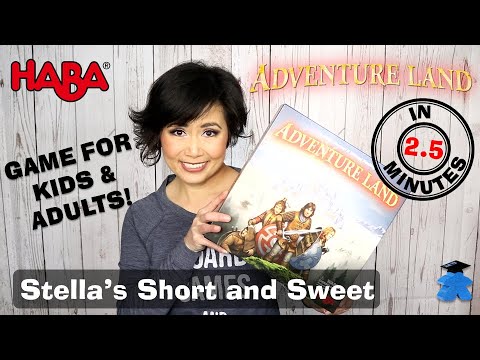
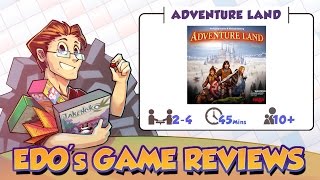
Adventure Land has quietly become one of the most underrated gems in Wolfgang Kramer and Michael Kiesling's design portfolio. Released in 2015 by Harbor Games, this family-friendly adventure occupies an unusual space in the gaming landscape: it looks deceptively simple on first glance, yet delivers remarkable depth through elegant mechanical design. Reviewers consistently express surprise at how engaging and unique the experience becomes once the game is in motion, with many calling it a hidden gem that deserves far more recognition than it typically receives.
Core Mechanics That Define Adventure Land
Grid Movement With One-Way Constraints
The signature mechanism that makes Adventure Land tick is its directional movement system. Players control a team of adventurers who start in the top-left corner of a gridded map and can move freely along any row or column as far as they wish, but with one crucial restriction: they can only move right or down. They can never backtrack left or up. This deceptively simple constraint creates a constant tension between immediate gratification and long-term planning. Do you rush your adventurers far down the board to grab a high-value treasure immediately, knowing you'll forever forfeit access to items higher up? Or do you pace them carefully, working in multiple directions to ensure you can respond to whatever emerges on the map? The mechanic echoes games like Takido but feels distinctly fresh in execution because players are managing multiple adventurers along both horizontal and vertical axes simultaneously.
Cards, Dice, and Tactical Depth
What separates Adventure Land from typical family games is how deliberately it uses chance. Players draw cards that place items, monsters, and obstacles onto the grid. Combat encounters require dice rolls, but crucially, players can spend collected swords and gold to improve those rolls, and items picked up along the way augment their effectiveness in battle. This transforms what could be a luck-driven experience into one where player agency dominates. You're not discovering what happens to you randomly; you're equipping yourself strategically with the tools the map provides, then using those tools decisively when challenges arise.
The Adventure Land Experience
Accessibility Wrapped Around Meaningful Decisions
Adventure Land succeeds in the rare space where complete newcomers can understand what to do within minutes, yet experienced players wrestle with genuinely difficult positional decisions. The game comes with three distinct scenarios that scale difficulty and shift objectives without requiring rule variations. Some scenarios emphasize collecting specific items and companions (granting multiplier bonuses the more you collect of each type), others focus on area majority control of regions, and some center on combating fog monsters that block valuable pathways. This scenario structure means the game never feels stale; returning to it offers fresh strategic puzzles without teaching overhead.
Pacing Creates Narrative Tension
The one-way movement creates natural story beats. Early in the game, players must make their first critical decision: push aggressively toward visible treasures or hedge their bets and keep options open? Mid-game becomes tense as players realize they've committed adventurers to positions that now feel suboptimal. Late game transforms into a scramble as the most rewarding locations become inaccessible to those who moved too hastily. The physical act of moving pieces down and right, never reversing, reinforces the theme of venturing deeper into hostile territory from which retreat is impossible.
What Makes Adventure Land Stand Out
A Design That Doesn't Announce Itself
Adventure Land's greatest strength is how its innovation hides in plain sight. The grid movement mechanic, the restriction on direction, the interplay between card placement and player choice, the way monsters function as both blocking threats and scoring opportunities, none of these feel flashy. Yet together they create a game that feels unlike anything else in its weight class. Multiple reviewers noted genuine surprise upon learning how compelling the gameplay was; the game doesn't shout about its cleverness, it simply delivers it.
Respects Both Family and Strategic Play
Harbor Games is known for games in bright yellow boxes aimed at young children. Adventure Land was one of their first forays into family-strategy games, and it succeeds by never talking down to players while remaining genuinely accessible. A six-year-old can move pieces and fight monsters. A serious gamer sees the movement optimization puzzle, the encounter resolution trade-offs, and the area-control competition for key locations. It works across skill levels because the depth isn't hiding behind complicated rules, it's embedded in the core mechanism.
Potential Drawbacks
Theme and Presentation Are Secondary to Mechanics
The fantasy adventure theme, while serviceable, exists mainly to justify the mechanical structure. The grid is labeled with regions (forests, mountains, cities) and the pieces are called adventurers, but the theme doesn't drive memorable moments or create strong thematic coherence. Players care about the game because the mechanics are rewarding, not because the narrative grips them. For players who primarily seek thematic immersion, Adventure Land may feel thin.
Limited Interactivity in Pure Competition Form
The game operates largely in parallel: each player manages their own adventurers while competing for area control and items. There's minimal direct player-on-player interaction or blocking, which some competitive-focused players find underwhelming. Monsters and items are shared resources, which creates some indirect friction (rushing to claim something before an opponent reaches it), but this isn't the same as direct tactical combat or take-that mechanics. The game prioritizes elegant, independent decision-making over high-friction player confrontation.
If You Enjoy Adventure Land
Players who love Adventure Land typically gravitate toward Takido for its similar movement constraints and area control focus. They appreciate games like Azul for accessibility paired with tactical depth, Torres for grid-based positioning puzzles, and Savannah Park for their focus on careful placement and optimization. Fans of the Kramer-Kiesling design tradition should explore El Grande for its deeper area control systems, Mexico for its sophisticated action-point design, and Karuba (Harbor's other strategy game) for similar family-friendly accessibility with route-building depth.
What Reviewers Are Saying
"The movement mechanism is really, really good, you can go forwards and you can never go back again. It didn't feel like any other game I'd ever played, and that's quite rare to me because I've played a lot of games."
— Adam in Wales
"I love finding those gems that I haven't yet played. Adventure Land, that is the best game that I played today. It's like Write Down where you can only go kind of over and down, over and down."
— The Dice Tower
"The grid moving mechanism just makes the game so much more interesting. I think it's an excellent deal and I really like how mechanically driven it is. This grid moving mechanism is really something special."
— Board Game Dad