/pic6946121.png)





















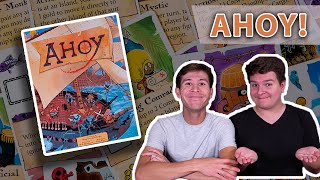

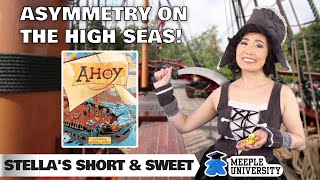















Ahoy Deep Dive
What the Community Thinks About Ahoy
Ahoy has earned strong recognition as an accessible entry point into asymmetrical gaming from the community that brought Root and Oath to the table. Reviewers consistently describe it as a surprisingly sophisticated yet light game that delivers meaningful strategic choices without heavy rules overhead. The game launched with significant early enthusiasm at Gen Con 2022, where it made surprise appearances and immediately captured attention across the gaming community. What stands out most from community discussions is how Ahoy manages to feel both easy to teach and deeply engaging once players understand the ecosystem of its three distinct playstyles.
Core Mechanics That Define Ahoy
Asymmetrical Area Control and Pickup-and-Deliver
The genius of Ahoy lies in its core asymmetry: two players battle for area control across the map while additional players operate an entirely different economic system. The Bluefin Squadron and Mollusk Union compete for territorial dominance, earning fame by controlling regions on the modular board. Meanwhile, the Smugglers play a parallel game of pickup-and-deliver, collecting cargo from islands and delivering it to increase wealth values. This creates a dynamic where the area-control players must constantly monitor what the Smugglers are doing, since each smuggler delivery increases regional wealth dice, making certain territories more valuable. The Smugglers, for their part, have incentive to care about area control through their pledge system, where they secretly bet on which faction will control specific regions, earning fame if their prediction proves correct. This interconnected design means all player types have overlapping interests without directly competing on identical mechanics.
Dice Placement with Variable Player Powers
Each round, players roll action dice and allocate them to action spaces on their faction boards, with the Bluefin Squadron receiving five dice compared to four for others. Actions range from universal choices like sailing, placing cannons, and recruiting crew to faction-specific powers. The Bluefin Squadron spreads patrol figures across the map and can bombard entire islands, while the Mollusk Union plays a special deck of cards that let them perform disruptive actions and place comrades in strategic patterns. This dice-placement framework creates meaningful turn-by-turn tension: players must decide which actions to take, potentially modify die values with gold, and manage the consequences of their choices rippling into opponents' turns. The system is tight enough that every placement matters, yet loose enough that players rarely feel completely locked out of viable options.
The Ahoy Experience
Breezy Yet Competitive
Despite the strategic depth, Ahoy plays at a refreshing pace. Games typically conclude in 45 to 60 minutes even with four players, and reviewers consistently note that the experience feels quicker than expected for a medium-weight asymmetrical game. The competitive tension never feels oppressive; instead, it creates a nautical sense of adventure where factions pursue different paths to fame. Players describe the atmosphere as lively and interactive without devolving into quarterbacking or analysis paralysis. The variable map setup ensures each game feels distinct, as new region tiles introduce different crews, wealth values, and strategic possibilities with every play.
Accessible Yet Strategic
Ahoy strikes a rare balance between teachability and strategic reward. The core actions are intuitive: sail your ship, load cannons, hire crew, and pursue your faction's specific win conditions. New players can grasp these basics in a single explanation. However, the deeper layers emerge quickly: optimizing turn order, managing crew synergies, deciding when to engage in battle versus economic play, and reading the table to anticipate smuggler pledges. This accessibility makes it an excellent gateway to more complex asymmetrical systems like Root, while remaining engaging for experienced players who appreciate the puzzle of coordinating multiple playstyles on one board.
What Makes Ahoy Stand Out
Elegant Asymmetry Without Overwhelming Complexity
Leder Games has become synonymous with asymmetrical factions, but Ahoy refines this tradition for a broader audience. Unlike Root, where each faction operates under completely different rulesets, Ahoy uses a shared vocabulary: all factions can sail, recruit, and engage in battle. Where they differ is in capability and scale. The Bluefin Squadron can field many patrols and leverage strong artillery. The Mollusk Union spreads influence through cards and comrades. The Smugglers focus on movement and economic trades. Players learning their faction can see themselves in the larger game design immediately, rather than needing multiple plays to decode how their powers fit into the ecosystem.
Kyle Ferrin's Evocative Art Direction
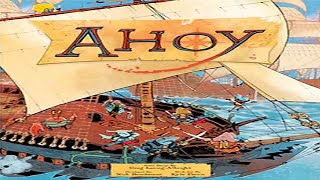
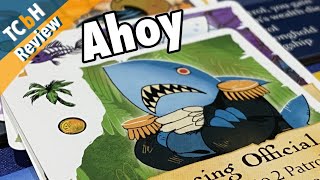
The game's visual identity reinforces its theme and accessibility. Kyle Ferrin's illustrations bring the high seas to life with whimsical character designs that evoke the playful spirit of Root while maintaining a distinct nautical aesthetic. The board tiles, faction boards, and crew cards all feature art that tells visual stories about the game world, helping newer players intuitively understand actions and faction identities. This production quality signals that Ahoy is a game from the Leder Games design house without requiring players to navigate dense rulesets to enjoy the theme.
Potential Drawbacks
Two-Player Balance and Learning Curve
In two-player games, the dynamic shifts significantly: no Smugglers exist to keep area-control factions in check through cargo delivery mechanics. Some reviewers found the Bluefin Squadron particularly challenging to balance against the Mollusk Union in this configuration, citing the Squadron's extra die and aggressive bombardment action as creating a momentum advantage that can be difficult to overcome. Additionally, the Mollusk Union requires more strategic finesse and card familiarity to compete effectively. Players learning the game report that understanding how to pilot the Mollusk Union takes practice, whereas the Bluefin Squadron's direct aggression is immediately accessible. This can lead to one-sided early games as familiarity improves.
Player Engagement and Downtime
While the game moves efficiently overall, some players report downtime concerns at higher player counts, particularly if opponents spend considerable time planning their deliveries or evaluating board states. The smuggler role, while thematic and enjoyable, can sometimes feel removed from the area-control tension. In three-player games with only one Smuggler, reviewers noted that the Smuggler has slightly more freedom to pursue independent goals while the two area-control factions manage mutual threats. This creates a different feel than the designers may have intended, where the Smuggler occasionally wins with relative ease. Extended plays at four players reportedly deliver the intended balance, but the experience varies noticeably by player count and table composition.
If You Enjoy Ahoy
Players attracted to Ahoy typically gravitate toward Root and Oath for deeper asymmetrical experiences, or toward games like Fort for faction-driven competition. Those who love the smuggler mechanics might explore Dead Reckoning, which pairs ship management with cargo delivery in a pirate theme. Enthusiasts of tighter dice-placement systems should consider games like Cascadia, while players who appreciate modular maps and exploration will find similar joy in Spirit Island or Everdell. The breezy competitive nature makes Ahoy a perfect pairing with party games or lighter dexterity games for a balanced evening.
What Reviewers Are Saying
"Ahoy is a nice surprise for me; it's a lesser but fun route. A good gateway into the idea of asymmetrical factions that would eventually get these players into Root."
— Might I Suggest A Game
"The action economy in it is really tight so you have to make sure that every single turn counts and even though you had to make tough decisions every turn we were still able to finish this one out at about 30 minutes per player even on our first try."
— Foster the Meeple
"I think it is an excellent two-player game it's just learning to find that right approach for it, the game is designed sort of as this asymmetric ecosystem it's like the smuggler's function is to increase those wealth dice."
— Before You Play