/pic975416.jpg)

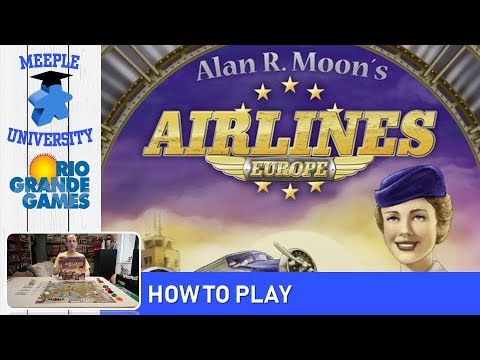











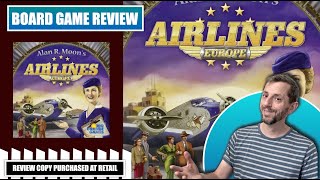

Airlines Europe Deep Dive
What the Community Thinks About Airlines Europe
Airlines Europe sits at a unique crossroads in the board game landscape. Reviewers consistently highlight it as one of the most elegant stock-market games ever created, a title that feels substantial given its deceptive simplicity. Drive Thru Games called it one of the most excellent designs they have ever seen, praising how it keeps unraveling new ideas across many plays, while Adam in Wales frames it as a natural next step for Ticket to Ride fans. The game has earned quiet but passionate devotion, the kind of design that feels obvious once learned yet required genuine brilliance to achieve.
Core Mechanics That Define Airlines Europe
Stock Holding Meets Route Building
At its heart, Airlines Europe fuses two core mechanisms: stock speculation and network expansion. Players are not running airlines themselves but acting as investors, buying shares in competing carriers and placing planes on routes to increase those airlines' values. This inversion of the typical theme, where you earn victory points from stock appreciation rather than company control, creates the game's central tension. Designer Alan R. Moon's genius lies in how tightly these systems interlock. When you place a plane on a route, you pay money to the bank, and that cost directly increases the airline's stock value. Every decision to expand a route immediately affects how much your shares are worth, creating a feedback loop reviewers describe as nearly perfect in its balance.
Hand Management and Timing
The game distills turn options into four elegant actions: buy route licenses and gain a stock card, play stock cards into your portfolio for dividends, trade cards for shares in the special Air ABACUS airline, or simply take money from the bank. This lean decision space keeps turns snappy, so players never face analysis paralysis despite rich strategic possibility. The hidden victory point system means you cannot fully read opponents' standings, forcing calculated guesses about position. Stock cards sit in your hand until played, creating a satisfying moment when you finally commit your investment in front of the table, signaling which airline you are backing. Published by ABACUSSPIELE, the game makes deciding what to play and when the entire puzzle.
The Airlines Europe Experience
Breezy Economic Depth
Airlines Europe succeeds in packing genuine stock-game sophistication into a 75-minute playtime. Unlike the heavy 18xx-style train games that can stretch for hours, it delivers the same feeling of watching your investments grow and anticipating when rivals might complete routes that boost your holdings. Reviewers consistently note that it captures the emotional core of economic games, that satisfying moment when something you invested in becomes valuable, without the procedural overhead. The game moves quickly enough that players stay engaged, but slowly enough that strategy matters. Each turn, someone can position to benefit from another player's move, sometimes entirely by accident, creating moments of delightful synergy.
Gateway Game with Hidden Teeth
Airlines Europe occupies the sweet spot between accessibility and depth. New players find it easy to learn, since the rules explanation takes only minutes, yet the game never reveals all its layers immediately. On first play, the board-placement phase feels most important. By the third or fourth game, players recognize that timing stock plays and reading opponents' hand strength becomes the actual contest. The game draws people in with its tactile, Ticket to Ride-like network building, then gradually exposes them to deeper stock-market psychology. The publisher edition includes bonuses for completing specific long routes, adding a wrinkle that rewards planning and opportunistic route blocking while naturally balancing airlines with fewer planes.
What Makes Airlines Europe Stand Out
Elegant Design Hiding Sophisticated Mechanics
Reviewers repeatedly reach for the word genius when discussing this game, pointing to how much quality emerges from a simple rule set. The game accomplishes several complex ideas, including majority scoring on stocks, variable airline strength, route bonuses, and hidden scoring, yet feels instantly approachable. Alan R. Moon's background with Ticket to Ride clearly influenced the accessibility, but the stock mechanics elevate it into territory few games reach. Drive Thru Games called it one of the most excellent designs they have ever seen, emphasizing that it rewards multiple playthroughs as new strategic dimensions reveal themselves, since each replay uncovers why certain decisions matter in ways the first play did not make obvious.
Interactive Without Being Cutthroat
The game creates positive-sum moments alongside competitive tension. When you invest in an airline that another player is also building, their route expansion increases your stock value, so you are both winning. This dynamic encourages players to watch the board and react rather than playing in isolation. The scoring rounds, triggered at randomized points in the deck, force everyone to adapt rather than execute preset plans. Sometimes a scoring card appears early and catches players unprepared; sometimes it comes late and everyone is heavily invested. That unpredictability adds replayability and keeps experienced players from solving the game into an algorithm.
Potential Drawbacks
Setup and Scoring Overhead
Setup presents a notable friction point. Shuffling the three scoring cards into the deck at specific intervals requires attention, and adjusting the bank's money based on player count adds a step before play begins. Once in motion the game flows smoothly, but that initial setup can feel fiddly. The scoring round itself also demands care, since players must evaluate the majority in each airline in order, potentially making change with victory point tokens if denominations run out. One reviewer noted that a simple paper score sheet would feel less cumbersome, though they acknowledged the hidden scoring adds suspense. This is a minor issue that disappears after a play or two but bears mentioning for new groups.
Availability and Component Clarity
Airlines Europe has spent periods out of print, frustrating collectors and new players seeking a copy, and secondary market prices inflate accordingly. The small plane components, with each airline color represented by a tiny plastic aircraft, can prove visually confusing, particularly the red and orange airlines, which look nearly identical on the board from a distance. While this does not break the game, it is an ergonomic niggle that a future printing could address with subtle color refinement or printed icons.
If You Enjoy Airlines Europe
Fans of Airlines Europe typically gravitate toward other Alan R. Moon designs, particularly Ticket to Ride, which shares the route-building DNA and accessible elegance. Stock-game enthusiasts should explore Acquire and the heavier Union Pacific for deeper economic play while still craving Airlines Europe's breeziness. Chinatown offers negotiation-driven area control, and Power Grid delivers dynamic resource pricing that captures some of the same economic satisfaction. For a lighter train-stock hybrid, Chicago Express is a natural companion.
What Reviewers Are Saying
"It's got that same feel, that same tactile feel, the same aesthetic quality. It's got the card play mechanic from Ticket to Ride in there and the network connecting things, so that tends to draw people in and they see it as a next step, which I think is a perfectly reasonable way to look at it."
— Adam in Wales
"Airlines Europe is one of the most excellent designs I've ever seen. We've played the heck out of this with the family so many times, and the cool thing is I keep unraveling new things. A genius made this."
— Drive Thru Games
"I really like the game Airlines Europe, where you've got control of a number of different airlines, you're laying out planes around the board, and every now and then there's a scoring round and you score points based on who has the most of certain airlines. I find that really satisfying."
— Adam in Wales