



































Alibis Deep Dive
What the Community Thinks About Alibis
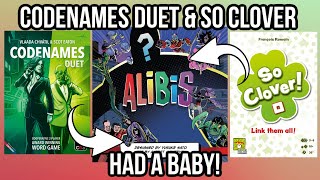
Alibis has struck a chord with the board gaming community as one of the most refreshing party experiences of 2025. Reviewers consistently praise it as a natural evolution of popular word association games, combining the deductive challenge of Codenames with the word-linking fun of So Clover, while adding a cooperative twist that eliminates the competitive tension that sometimes mars team-based games. The game has become a household favorite among gaming families and plays at the table with remarkable consistency, earning multiple spots on year-end top 10 lists and becoming a go-to choice for game night gatherings.
Core Mechanics That Define Alibis
Cooperative Deduction Through One-Word Clues
At the heart of Alibis lies an elegant deduction system where each player receives two secretly assigned suspects from a grid and must create a single-word clue that connects them together. Rather than shouting clues to teammates as in Codenames, every player works simultaneously and independently, crafting their own clue without pressure from partners. Everyone then reveals their clues at the same time, and all players attempt to deduce which two suspects each person was trying to connect. The cooperative structure means that the entire table shares both success and failure equally, creating a unified goal where everyone wins together or learns together. This removes the friction that emerges in competitive word association games where players can feel blamed for failed communication or questioned on the validity of their clues.
Process of Elimination Under Heat Pressure
After each round of clue guessing, players track their deductions on a personal sheet and work toward identifying the culprit: the one suspect left standing without a matching pair. For every correct identification of another player's suspect pair, the team removes heat from their shared stash. If everyone correctly identifies the perpetrator at round's end, they remove even more heat. The game concludes after three rounds, and the players win by eliminating all their heat before time runs out. This compound scoring system creates mounting tension as players must be accurate not just once but consistently across three separate rounds, requiring both sharp logical thinking and careful note-taking to track what other players have likely been assigned based on the clues given.
The Alibis Experience
The Satisfaction of Intellectual Challenge and Recognition
Players describe the emotional arc of Alibis as deeply rewarding. Unlike the accessibility-first design of many party games, Alibis presents a genuine challenge that makes players feel smart when they crack it. Grant Lyon noted the difficulty level sits meaningfully higher than comparable word association games, offering enough intellectual friction that successful rounds trigger genuine satisfaction. When players correctly identify another person's suspect pairing based on a cleverly linked clue, it creates a moment of pride. This challenge level means the game appeals strongly to experienced gamers who want more strategic depth than typical party fare without abandoning the collaborative spirit that makes parties enjoyable.
The Hilarity of Defending and Explaining Your Choices
The magic of Alibis emerges around the table as players begin defending their clue choices and justifying why they believed a particular one-word connection worked. A clue designed to link two specific characters generates conversations, inside jokes, and memorable moments where players discover entirely different reasoning paths they had not considered. Might I Suggest a Game highlighted how the game leads to funny situations and people defending their choices. The repetition of playing creates an accretion of shared understanding where references become callbacks, and the game becomes woven into the fabric of how that friend group talks and laughs together.
What Makes Alibis Stand Out
Cooperation Without Sacrifice of Engagement
Alibis solves a genuine problem in word association gaming: how to maintain the intellectual demand and fun of deduction games while removing the team-based friction that can make Codenames feel combative or stressful. By shifting from a team structure to a fully cooperative model where everyone contributes equally and wins or loses together, Alibis creates an environment where players feel supported rather than let down by their teammates. No one is left feeling blamed for a bad clue or poor communication. The simultaneous clue-writing means no player has to wait for slow teammates to finish their turn. Everyone stays engaged throughout, and the final deduction moment becomes a collective moment of success rather than a moment where one team celebrates and another deflates.
Thematic Accessibility with Genuine Depth
The whodunit framing transforms So Clover's pure word association into a narrative container that makes sense of what players are actually doing. Instead of finding random connections between words, you are playing detectives eliminating innocent alibis and identifying a criminal. This thematic layer brings new players into the game more easily and makes the experience feel more cohesive, yet it creates no additional rules complexity. The theme is purely presentational, which means players new to the hobby can grasp the objective immediately while experienced gamers appreciate the elegant design that props up meaningful gameplay.
Potential Drawbacks
Difficulty as a Double-Edged Sword
While the game's challenge level creates deep satisfaction for experienced players, it can be a barrier for groups of casual gamers or players unfamiliar with word association conventions. The jump in difficulty from Codenames means that players expecting a lighter experience may find themselves frustrated during early plays. Groups with players of significantly different gaming experience levels might find the game less forgiving than lighter party games, since getting the culprit wrong requires teamwork and precision rather than luck or simple pattern recognition.
Heat Tracking and Multi-Round Fatigue
The compound scoring system and heat tracking across three rounds creates a layer of bookkeeping that can slow down plays, especially in larger groups. Players must carefully note not just what they guess, but also track the evolving picture of suspects across multiple rounds. The mental load of maintaining an accurate deduction board while simultaneously creating and interpreting clues means that energy can dip toward the end of a longer play session, and a failed final deduction after two successful rounds can feel disproportionately painful when so much careful work has already been invested.
If You Enjoy Alibis
Fans of Alibis should explore the rich ecosystem of cooperative word games that share its DNA. Codenames remains the gold standard for deduction game clarity and scalability. So Clover offers lighter, punchier word association without the deduction layer. Decrypto presents a different kind of communication puzzle where teams send encoded messages rather than guessing. Just One challenges players to guess words based on a single-word clue from each other player. Each game attacks the problem of collaborative communication from different angles, and players who love the challenge and laughter of Alibis will find much to enjoy in exploring how other designers have tackled similar spaces.
What Reviewers Are Saying
"This game is a step up in difficulty from Codenames and So Clover. So if you want a challenge with your word association, this is a game for you. And also because it's hard, you feel pretty clever when you get stuff right."
— Grant Lyon
"It's a very thinky game where you are trying to do word association. My family absolutely loves this. My sisters, their families, we play this one so much. So good."
— The Dice Tower
"Alibis is a really really clever game and I love that it's cooperative because sometimes in Codenames people get a little too testy with the two teams. This is a really great solution for that problem because everybody's coming up with their own clues on their own time and when you win the game you win together so everybody's happy."
— Might I Suggest a Game