/pic5871397.png)
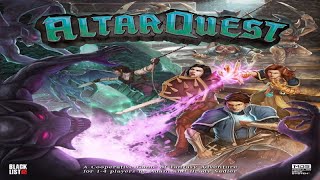
In Altar Quest, each player chooses to play as a hero with their own cards and equipment. The players choose a quest deck to undertake, a threat deck to serve as the main enemy forces, and a sinister villain deck. Each of these decks are fixed and require no assembly, but can be mixed and matched to create a wide variety of combinations. In addition the enemies in the chosen threat deck, the danger of lurkers is always present in every quest. Lurkers are represented by a deck of various types of enemies that add to the variety of enemies heroes must defeat in the game.
While heroes attempt to complete their quest before drawing the attention of the almighty villain, the unstable magic of the altars constantly affect the game. The altar dice are tied to the mystical powers known as "rhunes," which can enhance cards in different ways. Each time an altar die is used (either by the heroes or the enemy), that die is rolled to create an ever-changing mix of rhunes to draw upon.
Inspired by the modular deck system that was introduced in Street Masters and Brook City, Altar Quest is an epic fantasy adventure game that provides a deep game experience whether as a one-off game or an engrossing campaign.
-description from publisher

Altar Quest: Discussion

Altar Quest Part 1
- Unlimited replayability due to the modular deck system.
- The game offers a different experience each time.
- The modular deck system allows for easy customization by swapping out decks.
- The mechanics being the same across games makes it easy to learn new Blacklist titles.
- Each character is unique with their own deck and abilities.
- Story cards help put the player in the headspace of the game.
- The game is slower and less stressful than other titles.
- Enemies are manageable and not as overwhelming.
- The game is balanced with opportunities for one-shot kills and challenging encounters.
- Feats and reactions are free actions, allowing for more to be done on a turn.
- Characters start with equipment.
- Movement is more free-flowing.
- The use of characters and altar dice is cool.
- The game makes players feel like a badass within the world.
- The villain mechanic is interesting and creates a presence.
- A certain vagueness to the threats requires players to lend a lot to their imagination.
- The game does not provide a lot of theme, requiring players to put in imagination.
- The game is slower feeling due to the amount of minions that come out.
- There isn't a real pressing time limit or outside force that stresses the player.
- The game only comes with five dice, and extra dice are sold as add-ons, which is annoying.
- The lurker deck is annoying as it requires searching through minis.
- The lurker deck doesn't always fit the theme.
- The reference card for threat tokens looks the same as the regular deck, leading to confusion.
- Searching for an item, finding clues to an altar, obtaining the item, and escaping.
- Thematic flavor text from story cards that are drawn each round.
- Brook City
- Street Masters
- Hour of Need
- Dire Alliance
Mechanics (from transcript analysis)
- Card Play — Players can buff their cards with altar dice, and enemies can do the same with their attacks.
- Dice Rolling — Dice are used for actions, and some have exploding results. Threat tokens can also be gained from dice rolls.
- Modular deck system — The core system involves a variety of different decks that add replayability. One deck can be swapped out for another to change the experience.
- Threat tokens — These tokens represent a poisonous sludge-like substance. Characters gain them when suffering damage from a threat card, and discard them instead of healing damage.
- Villain Mechanic — The villain has a presence but cannot be confronted until their cards run out, at which point they become a powerful antagonist.
Video topics + discussion points
Quotes (from this video)
- It's honestly one of the better systems out there that that combination of just having a variety of different decks just adds to almost unlimited replayability.
- Excuse me is can I get this to the table and feel like I've had a different experience because I don't want to play something where it's like man I've done this before.
- The mechanics are the same right but I think that actually makes it kind of nice because then you can buy a Blacklist game and be like okay I understand how to play roughly you know.
- I can certainly see I feel like there can be there might be a complaint for some people is like a certain vagueness to the threats because I know it's like definitely in Brook City I think more than this game but I felt it a little bit this game because it's like you have to lend a lot to your imagination like what exactly you're doing.
- Unlike one of the other ones we also played tonight that was trash this one at least gave you that ability to put in your own thematic ties definitely versus it just being so abstract that you're just like the the art's cool you know.
- This one actually took me by surprise when we when Kat and I first played it because unless I'm missing something this game is a lot slower than the other two.
- I did not feel as stressed in this game I felt like all the enemies were very manageable.
- The fact that they include as add-ons extra dice is extremely annoying.
- I really don't like this lurker deck.
- Brook City's theme was just a lot of fun I had a lot of like I felt like I mean just I mean I complained about the vagueness but I just had a good time like just imagining that.
- I like the fantasy theme, I like the sense of exploration here, I like the use of characters and the Altar Die I think is really cool.
References (from this video)
- Fluid movement
- Interesting character abilities
- Engaging quest mechanics
- Challenging enemies and encounters
- Good use of resources
- Satisfying combat with weapon actions
- Can be tough if you don't manage resources well
- Dice can be unforgiving
- Questing to find artifacts near altars and escape evil forces
Mechanics (from transcript analysis)
- Armor Tokens — Armor tokens are used to mitigate damage.
- Bounty cards — Bounty cards can be attached to enemies to provide benefits or track them.
- Card Play — Players use action cards, feats, and reaction cards to perform actions and influence the game.
- clue cards — Clue cards are collected as part of the quest and have associated penalties or effects.
- Combat — Players engage in combat with various enemies.
- Dice Rolling — Dice are used for tests, attacks, and possibly other game resolutions.
- Lurker Cards — Lurker cards can be drawn, adding further challenges.
- questing — Players undertake quests to find artifacts and reach an exit point.
- Resource Management — Players manage resources such as focus, supply, and armor tokens.
- Threat deck — Drawing threat cards introduces challenges and enemies.
Video topics + discussion points
Quotes (from this video)
- The newest game by Blacklist Games the Sadler Brothers
- We're doing the search and going up against the frocks and their villain Bulks the Belch Lord
- Once we find the altar and once we place quest tokens on it then as we're trying to get back to the stairs to win we're gonna be drawing thread each time the quest goes
- Bounty cards can be good because it sucks them up that's cool
- I'm Gronin Boss, I have Crossock Endurance, I too can exhaust the diamond and they discard up to three armor tokens then I may heal one damage for each armor token discarded
- The movement's pretty fluid for you to be able to kind of at least get there at least get close
- Nature's weird
- This guy's gross
- The wetlands that poison the southern borders of Eritica are home to the unsavory tribes of Frogs.
- Each hero must either discard one focus or one supply
- Toxic tactics
- I think what I will do is I'm going to play uh well equipped
- My blades are real
- The altar doesn't oh the altar does do something each hero may discard one card to change one altar die to a result of their choice
- Altar found
- We need to find that [ __ ] altar
References (from this video)

- Space Economy/Exploration
- Space
Mechanics (from transcript analysis)
Video topics + discussion points
Quotes (from this video)
- Yes, Ollie is joining us today to ward off the bad luck that has been plaguing me this last week.
- But Ollie has a steep price, and that's constant pets.
- I'm going to need you to unpack that for me.
- That brain space had been dedicated to rubbing a dog, so I hadn't thought that far ahead.
- I'm changing it so we don't have the same answer and because I've decided dragons tell riddles.
- Don't correct me on camera, Google.
- That's And that's the problem with artificial intelligence. Unnecessary. So uppity.
- BoardGameGeek was built around a copy of Acquire, and that's the foundation of it.
- I need you to get one wrong if I'm going to catch up.
- If you're going through hell, keep going.
References (from this video)
- variety of characters with distinct playstyles
- fast setup and minimal fiddliness beyond the map layout
- overall enjoyable and accessible
- adventure with discovery-driven progression
- fantasy dungeon crawl leveraging a modular deck system
- expansive exploration on a broad map
Mechanics (from transcript analysis)
- discovery-driven exploration — large map with many rooms to uncover and explore
- Modular Board — uses a modular deck system (Blacklist/Sadler brothers) to drive actions
- Modular deck system — uses a modular deck system (Blacklist/Sadler brothers) to drive actions
Video topics + discussion points
Quotes (from this video)
- this is a list that is purely subjective and what i mean by that is this is purely the games that i like to play the most
- the numbers 5 through 10 or maybe even 4 through 10 might change on any given day
- one and two are really really close
- it's light-hearted it has a strong story
- the dice are fun
- the real joy of gloomhaven is just the card play
- i love exploding dice
- the artwork and minis look really good
References (from this video)

- Mechanics are amazing
- Not over the top migraine-inducing like Gloomhaven can be
- Meaty with lots to chew on
- Cool combos and effects
- Decks work differently
- Procedurally generates dungeons, quests, monsters, and bosses
- Works really well solo and with multiple players
- Mechanically the best dungeon crawl
- Missing a really good solid big epic narrative arc
- Would be better with a campaign like Gloomhaven or Descent
- Dungeon crawl
- narrative campaign
- Gloomhaven
- Descent: Legends of the Dark
- Hero Quest
- Shadows of Brimstone
- Warhammer Quest
Mechanics (from transcript analysis)
- Deck Building — the car deck building part of it is amazing to me it fires gloomhaven with it
- Dungeon Crawl — it's another dungeon crawl game
- Modular Board — it has a hero quest style board so instead of doing you know tiles laying out going around the board around the table you have a board and you have like little doorways and stuff and rooms that are already printed on the board
- Procedural generation — the way that they sort of procedurally generate the dungeon and the quests and the the monsters and the bosses and all that stuff is really neat
Video topics + discussion points
Quotes (from this video)
- Man that really makes it sing
- All the other parts of the game just really make it a fun fun play
- This one boy Ankh is really good man
- This is one of my favorite games of all time now by far
- The solo app is freaking amazing
- It's like a subversion of about what power is
- The way that those all those things kind of swirl together is really really cool
- Don't sleep on this one if you can get it
- Heroquest is great
- The solo mode is really cool though
- The solo mode is really really well done
- Third edition has been great mostly like mostly great
- The narrative stuff is what sucks it and pulls it all the way at the top of the list again
- This is basically the same game as clash of cultures it's just way better
- Clash of cultures is definitely in my top 10 games of all time
- Which is totally new game but also kind of just Frostgrave in space
- I've had a really a lot of fun playing Stargrave
- The solo stuff is much better I think in Stargrave than it is in Frostgrave
References (from this video)
Mechanics (from transcript analysis)
- contrast paints — The host notes that contrast paints were used on some of these models.
Video topics + discussion points
Quotes (from this video)
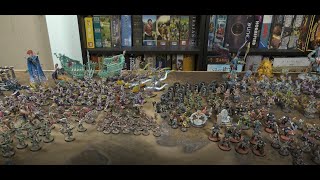
- I paid in 494 miniatures in the year 2020
- this year I was kind of curious if I could try to beat 500 and I did I got to 580
- I don't really enjoy that game at all
- the miniatures are amazing
- I just don't think the game mechanics really lived up to it
- this is an experiment here because I actually did almost pure contrast on the death watch
- this is part of why I like the paint job on this so much as the bases
- Won the one of the monthly boardgamegeek.com painting contests with that model there
- I've played the game probably a dozen times now and really been enjoying it
- it's actually really good
References (from this video)

- Really like it solo, it's fun to play as one hero because you get the little companions the allies that go through the game so it kind of helps you feel like you're more part of a big group a big fight.
- It is really just a ton of fun solo.
- It is better with other players.
- It's a little difficult to juggle, you know, two or even three characters at once which you can do with some other games on this list.
Mechanics (from transcript analysis)
- Campaign — I've actually played through this campaign twice.
- Playing multiple characters — It's a little difficult to juggle, you know, two or even three characters at once.
Video topics + discussion points
Quotes (from this video)
- The expansion takes the solo game from like an eight... up to a 10.
- You have all that kind of good crunchy competitive mechanics but then whoop now we disappeared into this way crazy fantasy Indiana Jones.
- It's actually a little bit more difficult with less players... you might get your butt kicked like the first couple of times.
- Portals to alternate realities and there's like science fiction aliens and dinosaurs and snake people and Cthulhu's type monsters and you know zombies every I mean it's like everything in there.
- I would rather play this solo than with players but I would still play with players.
- I want one where I can kind of build and tweak decks all on my own don't worry about playing against other players and stuff and just you know throw them at different villains and see how they work.
- They just need to straight up reprint that sucker.
- It scratches that D&D itch like nothing else.
- It just immerses you unlike anything that I've that I've played anywhere on this list or anywhere else.
References (from this video)

- Clever system for procedural generation
- Card-driven deck builder mechanics
- Cool crunchy mechanics
- Asymmetry between characters
- Great for a short campaign experience
- Fun and has a dungeon crawly feel
- Blacklist Games is going through a tough time, making it hard to find
- Lost their best developers (Sadler brothers)
- Company had Kickstarter and shipping issues
- Dungeon Crawl
- Oathsworn
- Descent Legends of the Dark
- Mage Knight
Mechanics (from transcript analysis)
- card-driven gameplay — The game's mechanics are heavily driven by cards.
- Deck Building — The game is described as essentially a deck builder.
- Quest mixing — Features a system of mixing and matching different quests and alters for procedural generation.
Video topics + discussion points
Quotes (from this video)
- I hate that it bugs the crap out of me
- I don't want to have a list I don't want to order these I don't want to have a favorite out of these you know like don't make me choose
- It's just so easy to quick pick up and play you just won't really have to remember too much too many rules or anything
- it's cheap you go buy twenty dollar book
- it has the Tactical fun combat
- it's just pure Wizards and spells and you can just cook up all of these cool scenarios
- I think you need the first expansion in my opinion it adds enough variety and stuff to the cards to just make it a lot more replayable and just give you some other kind of fun sort of you know strings to pull on
- Don't believe anybody that tells you that because I have seen somebody win the game who had the ability to beef up their dreadnoughts and then never built a single dreadnought and won the game
References (from this video)
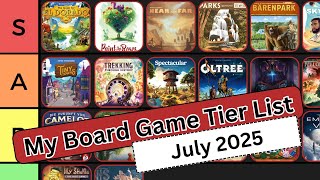
- Really surprised at how good it is
- Very cool theme
- Very cool way stories are told
- Potential to rise to S rank
- Preventing bad things, getting through a story
- Castle outskirts
- Story-driven with building elements
- Ghost Stories
Mechanics (from transcript analysis)
- cooperative play — Implied by the description of preventing bad things and fighting a final confrontation.
- Grid Movement — Features a grid of locations in the middle of the castle and outskirts.
- Storytelling — Emphasizes getting through the story and building buildings.
Video topics + discussion points
Quotes (from this video)
- This is like a polyomino game, which you may know that I really love.
- The production quality is great. The art style is great. The theme is pretty cool, but the game somehow didn't work for us at all.
- This one really, really surprised me. This is good.
- And I think it's very well designed, but that's almost a given with Ryan Lockett games.
- Parks always gets an S tier, especially the first edition.
- Spirit Island is rising up in rank higher and higher. It has always been S tier game for me, but it's like rising up my like list of most favorite games.
- This game is very polarizing. I understand that some people really love this and some don't like it at all.
- Deal of merchants. Always Srank. This is like one of my most favorite deck builders ever.
- It can be kind of broken, a little bit unbalanced, very luck heavy, but it's a very, very good design as well.
References (from this video)

- Favorite hack and slash action RPG.
- More involved than some other games in the genre.
- Set in a cool, messed-up Greek setting.
- Fought Greek demons, gods, and demigods.
- Very smooth with lots of interesting ways to play.
- Fantastic game with cool skills and mechanics.
- Can be played on phone and Switch.
- Great compared to Diablo.
- Titan Quest 2 is in early access, which the host avoids.
- Criminally overlooked despite its quality.
- People talk about Grim Dawn more, even though Titan Quest is considered better by the host.
- Ancient Greece
- Diablo
- Grim Dawn
Mechanics (from transcript analysis)
- action RPG combat — Core gameplay involves hack and slash combat.
- Dual Classing — Allows players to combine two different classes for unique skill sets.
- Skill trees — Features a lot of cool skill trees that add depth to character builds.
Video topics + discussion points
Quotes (from this video)
- The car combat and upgrades are really satisfying.
- It's like a ballet of death.
- You're constantly managing your resources in the middle of combat.
- The difficulty is the main talking point, but it's fair.
- It's just so addictive.
- It's a game about connection in a world that wants you to be isolated.
- It's definitely not for everyone, but it's a unique experience.
References (from this video)
- Having a blast playing a custom campaign
- OPR Grimdark Future
Mechanics (from transcript analysis)
Video topics + discussion points
Quotes (from this video)
- OPR is the GURPS of wargaming.
- 40K rules as deep, I would call it artificially deep.
- Star Wars Legion terrain is almost always the best.
- OPR skirmish is a breath of fresh air compared to Kill Team.
- The damned stuff is supposed to be out, but it's not out yet, unfortunately.
References (from this video)
- Great system for trying out OPR.
- Supports solo and co-op play.
- Adventure
- Fantasy dungeon crawl
- Grim Dark Future
Mechanics (from transcript analysis)
- Campaign play — The game includes campaign elements, though the host has only played the standard scenarios rather than dedicated campaign books.
- Solo/Co-op play — The game supports solo and co-op play where opponents are controlled by a set of rules or an 'AI'.
Video topics + discussion points
Quotes (from this video)
- OPR is the GURPS of wargaming.
- 40K rules as deep, I would call it artificially deep.
- Star Wars Legion terrain is almost always the best.
- OPR skirmish is a breath of fresh air compared to Kill Team.
- The damned stuff is supposed to be out, but it's not out yet, unfortunately.
References (from this video)
Mechanics (from transcript analysis)
Video topics + discussion points
Quotes (from this video)
- OPR is the GURPS of wargaming.
- 40K rules as deep, I would call it artificially deep.
- Star Wars Legion terrain is almost always the best.
- OPR skirmish is a breath of fresh air compared to Kill Team.
- The damned stuff is supposed to be out, but it's not out yet, unfortunately.
References (from this video)
- Great system
- Includes campaign elements
- OPR Grimdark Future
Mechanics (from transcript analysis)
- Campaign play — Includes campaign elements, though the speaker has only played the standard version.
Video topics + discussion points
Quotes (from this video)
- OPR is the GURPS of wargaming.
- 40K rules as deep, I would call it artificially deep.
- Star Wars Legion terrain is almost always the best.
- OPR skirmish is a breath of fresh air compared to Kill Team.
- The damned stuff is supposed to be out, but it's not out yet, unfortunately.
References (from this video)
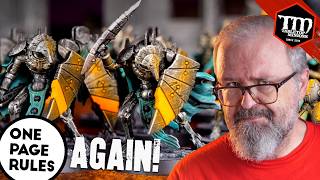
Mechanics (from transcript analysis)
- Horde Mode — A new free add-on that adds a horde mode to the game, reminiscent of roguelike video games. The horde mode for Star Quest and Fantasy Quest focuses on staying alive for a high score rather than individual missions.
Video topics + discussion points
Quotes (from this video)
- However, the folks at OnePage Rules did something really interesting recently, and I thought I'd talk about it here by talking a little bit about video games first.
- Now, I'll admit I'm absolutely looking forward to playing GTA 6 as soon as that comes out this fall.
- Mostly these days I play, you know, rogue likes and rogue lights.
- And honestly, it reminds me very much of a roglike style video game, except that you're not playing as an egg named potato, you know, but other than that.
- As is the way with games from one page rules, how you play is always up to you.
- As you fight, you will start to gain bonuses that you can apply to your troops or war bands or heroes, whatever, which is also very much like video game rogue likes.
- I love that OnePage Rules continues to add new free ways to play their already very, very inexpensive games.
- I also find it interesting when the world of tabletop wargaming borrows things from the world of like video games.
References (from this video)
- Fixed table space is a refreshing change from sprawling tile-laying dungeon crawls.
- Procedural generation within a fixed board offers exploration without inconvenience.
- Thematic alter dice and magic system add a unique layer to gameplay.
- Balanced difficulty that is not too simple or too hard.
- Good resource management, especially the strategic use of 'supplies' in campaign play.
- Card play and mechanics feel satisfyingly crunchy, less complex than Gloomhaven.
- Unique world-building with distinct races and societal structures.
- The search mechanic is well-implemented and engaging.
- Campaign system is simple, succinct, and effective.
- Engaging dice manipulation mechanics that are thematically integrated.
- Not currently readily available due to stock issues, though a reprint is planned.
- Miniature bases can be tight and potentially peel paint if not handled carefully (though the reviewer painted theirs to mitigate this).
- Players are trying to control altars that offer great magical power, facing ancient evils and various enemy types.
- The game uses a story deck for campaigns with flavor text and choices between game sessions.
- Hero Quest
- Shadows of Brimstone
- Blackstone Fortress
- Warhammer Quest
- Gloomhaven
- Claustrophobia
- Alien Frontiers
Mechanics (from transcript analysis)
- Altar Dice — Special dice that can be activated by abilities to provide temporary effects or twists to combat, similar to 'winds of magic'.
- Altars — Altars are central to the game's narrative and mechanics, often acting as key objectives or sources of power.
- Campaign play — The game can be played as a six-part story campaign or a procedurally generated campaign, with persistent upgrades between games.
- Card Play — Players use a hand of action cards to perform abilities and actions.
- cooperative play — The game is designed for 1-4 players working together.
- Dice Rolling — Player actions and adversary attacks involve rolling dice with successes, focus, and exploding symbols.
- Dungeon Crawl — The core gameplay involves players exploring a dungeon environment.
- Fixed Board — The game uses a single large board for its rooms, unlike tile-laying games.
- Modular deck system — The game utilizes various decks that change gameplay and generate procedural elements.
- Resource Management — Players manage resources like 'supplies' which can be used to heal or add dice, and 'focus' which can be spent to convert rolls into successes.
- Search Actions — Searching terrain features is a mechanic that becomes progressively harder as search tokens are used.
- Variable player powers — Each hero has unique stats, abilities, and starting equipment.
Video topics + discussion points
Quotes (from this video)
- The amount of table space is kind of defined already by the board so you're not going to have the dungeon kind of growing off in different directions.
- The amount of space that the game takes up is fixed but you still have kind of an organic procedurally exploratory type of vibe kind of thing going on.
- The search action here is really neat that's something that all of these dungeon crawls kind of struggle with is like searching and how to like make that fun how to make it balanced and all that stuff.
- The difficulty wise i think it's about perfect.
- This has just right kind of underneath that level of sort of complexity and crunchiness with the card play.
- The alter dice are kind of like the shifting winds of you know combat so because sometimes they can favor the villain sometimes they can favor you and stuff.
- It's got that nice balance of the crunchy euro-y kind of mechanics with a really cool theme.
References (from this video)

- adorable art
- solo mode available
- not deeply thematic for some players
- light fantasy exploration
- cute critter adventure in a dungeon/forest motif
- cozy, approachable
Mechanics (from transcript analysis)
- Tile Placement — Tile-based exploration with cute theme
- tile_placement — Tile-based exploration with cute theme
Video topics + discussion points
Quotes (from this video)
- Sparks is a conversation game inspired by late nights Under the Stars
- Town 77 has been an oink game that I've wanted to grab for a while
- River Valley Glass Works is a wonderful puzzly game
- Darwin's Journey is one that I've been wanting to grab
References (from this video)
- Free core rules and beginner's guide available for download
- Flexible solo and co-op play
- Accessible for new players
- Limited published material; relies on community content
- heroic space battles, squad-level conflict
- Galactic frontier, space opera skirmish
- campaign-driven, hero progression
- Warhammer 40,000
- Star Wars: Legion
Mechanics (from transcript analysis)
- Bag Building — Assemble a contingent within a resource/point budget using an army forge approach.
- Cooperative Game — Supports solo or cooperative play with a scalable rules framework.
- force_building — Assemble a contingent within a resource/point budget using an army forge approach.
- hero_creation — Create a hero with selectable class and abilities; assign a name and role.
- solo_coop_play — Supports solo or cooperative play with a scalable rules framework.
Video topics + discussion points
Quotes (from this video)
- Daylight savings is awful. Just pick one.
- Star Quest is a game that you can play with one to four players, which means you can play it solo if you want to.
- Star Quest is a skirmish game, and it's all free. They do download the rules and the core rules is two pages.
- Miniature agnostic is the way to go.
- We designed Death Wizards with Knuckle Bones Miniatures, and we have a 50/50 revenue split for the first two years.
References (from this video)

Mechanics (from transcript analysis)
- deck-driven character actions — cards together drive character choices and outcomes.
- dungeon crawl with modular decision points — scenarios provide varying paths and replayability.
Video topics + discussion points
Quotes (from this video)
- I'm really into this now yeah so it's Catan but you know I had my top 50 games of all time list a long time ago a few months ago and I always kind of forget about cities and nights because I really loved that game.
- Catan star farers now this is the sort of a remake of star fares of Catan which is basically to be glib about at Catan in space but this carries with it a lot of the mechanics…
- it's basically that sort of more complex longer winded Catan that I really like but in space and I'm like super all into this now yeah so it's Catan but you know
- Combat Arena... it's set in the 40k universe and it's gonna deal a little bit more with the range combat
- Return to Dark Tower... I remember sitting in it and you know hitting the buttons and the stuff would talk and he'd move around the right moves
- Zombicide Green Horde I really enjoyed it I think it's a really good co-op idea
References (from this video)
- Engaging dual-form mechanic and thematic richness
- Deep, modular setup with multiple decks providing variability
- Strong cooperative play with allies and synergy
- Dynamic dice system with burst and focus mechanics
- Opportunity for strategic planning via action tokens and resource management
- Complex setup with many moving parts can overwhelm new players
- Requires careful tracking of tokens and counters to avoid confusion
- Some interactions rely on exact timing and rule familiarity
- Heroic fantasy adventure focused on cooperative exploration, combat, and escalating danger
- Fantasy dungeon crawl in the Rahuna world, with a central dungeon and exploration of a mysterious altar and villain lair.
- Campaign-style, scenario-driven with quest and interrogation mechanics
- Hero Quest
Mechanics (from transcript analysis)
- Ally and ally-rez mechanics — Allies like Loxley provide powerful support options and can be reassigned or moved to aid.
- Altar dice and altar pool — Altar dice of different elements feed into special effects and healing; can be changed to specific results.
- Deck-driven quest and encounter modules — Separate quest deck, interrogation deck, feature and villain decks, with activation effects and threats.
- Dual-form character system — Characters can switch between elf form (Lacin Pines) and werewolf form, with form determining which card types can be played and abilities available.
- Queue-based action sequencing — Turns progress through hero phase, threat phase, villain phase, and quest phase with interleaving actions.
- Resource and action economy — Action tokens, focus tokens, supply, armor tokens and exhaust mechanics drive actions and tests.
- Threat tokens and minions — Threat tokens represent stealth and minions spawn from threat points; threat affects defense and spawn logic.
- Unique dice system — Custom dice with symbols for successes, focuses, bursts; burst allows extra dice; focus can turn into extra successes.
Video topics + discussion points
Quotes (from this video)
- this looks a lot like hero quest
- alterquest is by far a superior game
- ton of different moving pieces in this game
- not overly complicated
- check out mike's playthrough as well
- watch that
- mike's playthrough
References (from this video)
- Modular deck system
- New shrink-wrapped base box
- Base box included with extra copy offered
- Connection to a Kickstarter preview via The Dice Tower
- US-only shipping restrictions
- 18+ age requirement
- Gleam entry actions (social media) may be burdensome
- Modular exploration and combat through customizable decks
- Fantasy world with modular deck-building components and encounter cards
- Modular, encounter-driven adventure
Mechanics (from transcript analysis)
- Deck Building — Players build and optimize a personal deck from modular cards to resolve encounters.
- deck-building — Players build and optimize a personal deck from modular cards to resolve encounters.
- Hand Management — Efficiently managing cards in hand to maximize actions and outcomes.
- hand-management — Efficiently managing cards in hand to maximize actions and outcomes.
- Modular Board — Game structure is changed by rearranging modular deck components for different games/encounters.
- modular_components — Game structure is changed by rearranging modular deck components for different games/encounters.
Video topics + discussion points
Quotes (from this video)
- hey gamers this is liz davidson from beyond solitaire
- i was accidentally sent two copies of altar quest
- here's mine it's a modular deck system
- be 18 and over
- shipping's on me
- and stay tuned for some more gaming videos in the near future
- happy gaming
References (from this video)
- High replayability through randomized room population
- Cooperative play with distinct hero play styles
- Strong thematic hooks (alchemy desks, modular features)
- Mix-and-match deck system allows customizable scenarios
- Nostalgic feel with modern Euro design influences
- Potentially steep setup and learning curve due to modular components
- Balancing concerns when mixing multiple modules
- Uncertain release timing beyond 'early next year'
- Cooperative exploration and modular storytelling via cards
- Fantasy dungeon crawl with modular, board-driven exploration
- Procedural, card-driven scenarios with room-by-room discovery
- Street Masters
- Hero Quest
Mechanics (from transcript analysis)
- Cooperative play for 1-4 players — Team-based dungeon crawl with individual hero abilities.
- Dice-driven combat — Uses a dice system similar to Street Masters for resolving actions.
- Feature-specific cards — Each feature (like an alchemy desk) has its own card that applies effects when found.
- Modular deck system — Heroes have their own decks and shared villain/threat/quest/feature decks that can be mixed to create varied scenarios.
- Room-based exploration with card draws — Opening a room populates it with a quest card and a feature card; threats are drawn to determine enemies.
Video topics + discussion points
Quotes (from this video)
- "Alter Quest is a cooperative game for one to four players"
- "every single feature has a card associated with it"
- "this is reminding me a lot of the old classic Hero Quest value"